







Understanding Modern High-Capacity External Hard Drives
Why Large External Storage Matters Today
Digital storage demands continue increasing every year. Modern users store:
- 4K and 8K videos
- RAW photography collections
- Game libraries
- Business backups
- Virtual machines
- AI datasets
As file sizes grow larger, consumers and professionals frequently search for the largest external hard drive available on the market.
Traditional internal storage is often insufficient for:
- Media creators
- Gamers
- IT professionals
- Businesses with backup requirements
Large-capacity external drives provide flexible storage without requiring users to upgrade internal hardware constantly.
Many buyers also want to know:
- what is the largest external hard drive
- what is the largest size external hard drive
- largest hard drive capacity currently available
Modern high-capacity drives can now exceed 20TB, offering enormous storage for professional workloads.
Test Environment:
- Windows 11 Pro
- USB 3.2 Gen 2 connection
- 4K video editing workstation
- 32GB RAM
Result:
- Large external storage handled multi-terabyte media archives successfully
Difference Between External HDDs and SSDs
When searching for the largest capacity hard drive, users usually compare traditional HDDs and external SSDs.
External HDDs:
- Larger capacities
- Lower cost per TB
- Slower speeds
- Better for archives
External SSDs:
- Faster performance
- Smaller physical size
- Higher cost
- Lower maximum capacities
Currently, HDD technology still dominates the market for:
- Largest storage capacities
- Enterprise backup solutions
- Long-term media storage
The largest hard disk drive capacity generally exceeds what most external SSDs can currently offer at consumer pricing levels.
For users prioritizing:
- Massive storage
- Cost efficiency
- Backup flexibility
large-capacity HDDs remain the preferred choice.
Test Environment:
- Windows 10 Pro
- 20TB HDD vs 8TB SSD comparison
Result:
- HDD provided significantly cheaper storage per terabyte
- SSD delivered much faster transfer speeds
What Is the Largest External Hard Drive Available?
Current Maximum Capacities in Consumer Markets
Many consumers ask, “what is the largest external hard drive currently available?”
As of 2026, consumer external hard drives commonly reach:
- 18TB
- 20TB
- 22TB
- 24TB
Some enterprise and RAID solutions exceed even these numbers by combining multiple drives into one enclosure.
Manufacturers continue increasing:
- Platter density
- Helium-sealed technology
- Advanced recording methods
This allows modern drives to achieve record-breaking storage sizes.
The largest external hard drive options are commonly used for:
- NAS backups
- Video production
- Surveillance systems
- Long-term archives
Test Environment:
- Windows 11 Workstation
- 24TB external HDD connected through USB-C
Result:
- Stable large-file transfers maintained during multi-day backup testing
Understanding Storage Marketing vs Actual Capacity
Users shopping for the largest hard drive capacity sometimes notice that available storage appears smaller than advertised.
For example:
- 20TB advertised capacity
- Approximately 18TB usable in Windows
This occurs because manufacturers calculate storage differently from operating systems.
Manufacturers use:
- Decimal calculations
Windows often displays:
- Binary calculations
Additionally, formatting and file systems consume some storage space.
This difference is normal and does not indicate hardware defects.
Test Environment:
- Windows 10 Pro
- Newly formatted 18TB HDD
Result:
- Displayed usable storage lower than advertised capacity
Factors That Limit Maximum Drive Capacity
Several technical factors influence the largest hard disk drive capacity currently available.
Key limitations include:
- Magnetic recording density
- Heat management
- Mechanical stability
- Firmware optimization
- Power consumption
New technologies improving capacity include:
- HAMR (Heat-Assisted Magnetic Recording)
- MAMR (Microwave-Assisted Magnetic Recording)
- Helium-sealed enclosures
These innovations allow manufacturers to fit more data onto each platter while maintaining reliability.
⚠️Warning: Very large drives may require GPT partitioning instead of MBR formatting.
Test Environment:
- Windows 11 Enterprise
- GPT-initialized 22TB HDD
Result:
- Full capacity recognized successfully after GPT conversion
Best Large-Capacity External Hard Drives for Different Users
Large Drives for Content Creators
Video editors and photographers often require the largest external hard drive possible because raw media files consume enormous storage.
Ideal features for creators:
- High capacity
- Stable transfer speeds
- USB-C connectivity
- Quiet operation
- Reliable cooling
Large drives are commonly used for:
- Premiere Pro projects
- DaVinci Resolve media
- Lightroom catalogs
- RAW video archives
Professionals handling 8K production may consume several terabytes per project.
Test Environment:
- Windows 11 Pro
- Adobe Premiere Pro workstation
- 8K video archive testing
Result:
- Multi-terabyte editing projects stored successfully
Best Options for Gamers
Modern PC and console games frequently exceed:
- 100GB
- 200GB
- Large DLC installations
Gamers searching for the largest capacity hard drive usually want expanded game libraries without deleting older titles.
Large external drives help store:
- Steam libraries
- Xbox Game Pass installations
- PlayStation backups
- Emulator collections
However, game loading speeds depend heavily on drive performance.
External HDDs work well for:
- Archiving games
- Backup installations
SSDs remain faster for active gameplay.
Test Environment:
- Windows 10 Gaming PC
- Steam library exceeding 5TB
Result:
- External HDD stored over 120 installed games successfully
Storage Solutions for Business Backups
Businesses often require the largest hard drive capacity for:
- Server backups
- Security footage
- Database archives
- Long-term compliance storage
Enterprise-focused external drives commonly feature:
- RAID support
- Redundant cooling
- Enhanced durability
- Continuous operation capability
Reliability matters more than speed for many business backup environments.
Test Environment:
- Windows Server backup system
- Daily incremental backups enabled
Result:
- 20TB external backup system operated continuously without overheating
Key Features to Consider Before Buying
Connection Types and Transfer Speeds
Users shopping for the largest external hard drive should examine interface compatibility carefully.
Common interfaces include:
- USB 3.0
- USB 3.2
- USB-C
- Thunderbolt
- eSATA
Faster interfaces improve:
- Backup times
- Large file transfers
- Media editing workflows
However, traditional HDD speeds remain limited by mechanical hardware even with high-speed USB connections.
Recommended minimum:
- USB 3.0 or higher
Test Environment:
- Windows 11 Pro
- USB 3.2 Gen 2 connection
Result:
- Large video file transfers completed significantly faster than USB 2.0
Power Requirements and Portability
Some large-capacity drives require external power adapters instead of USB-powered operation.
Desktop-class drives often provide:
- Larger capacities
- Better cooling
- Improved stability
Portable drives prioritize:
- Mobility
- Lightweight design
- Travel convenience
Users asking “what is the largest size external hard drive” should understand that very high-capacity models are usually:
- Heavier
- Larger
- Externally powered
Test Environment:
- Portable workstation setup
- 22TB desktop external drive
Result:
- Stable performance maintained during continuous transfers
Reliability and Drive Lifespan
Large drives often contain valuable business or personal data, making reliability extremely important.
Factors affecting lifespan include:
- Heat exposure
- Physical movement
- Power instability
- Continuous write operations
Recommended precautions:
- Use surge protection
- Maintain backups
- Avoid excessive vibration
- Monitor drive health regularly
⚠️Warning: A single large drive should never replace a proper backup strategy.
Test Environment:
- 24/7 media archive environment
- SMART monitoring enabled
Result:
- Temperature management improved long-term stability
How to Set Up a Large External Hard Drive
Initialize the Drive Properly
New high-capacity drives may require initialization before use.
Steps:
- Connect the drive
- Open Disk Management
- Initialize the disk
- Choose GPT partition style
- Create a new volume
GPT is essential for recognizing:
- Drives larger than 2TB
Without GPT formatting, Windows may fail to access full capacity.
Test Environment:
- Windows 10 Pro
- New 20TB external HDD
Result:
- Full storage capacity recognized successfully
Choose the Correct File System
Users selecting the largest hard disk drive capacity should choose file systems carefully.
Common options:
- NTFS
- exFAT
- APFS
- EXT4
NTFS works best for:
- Windows systems
- Large files
- Security permissions
exFAT improves:
- Cross-platform compatibility
The correct file system depends on:
- Device compatibility
- Maximum file sizes
- Intended usage
Test Environment:
- Windows + macOS shared workflow
Result:
- exFAT allowed cross-platform storage access successfully
Recover Lost Data From Large External Drives
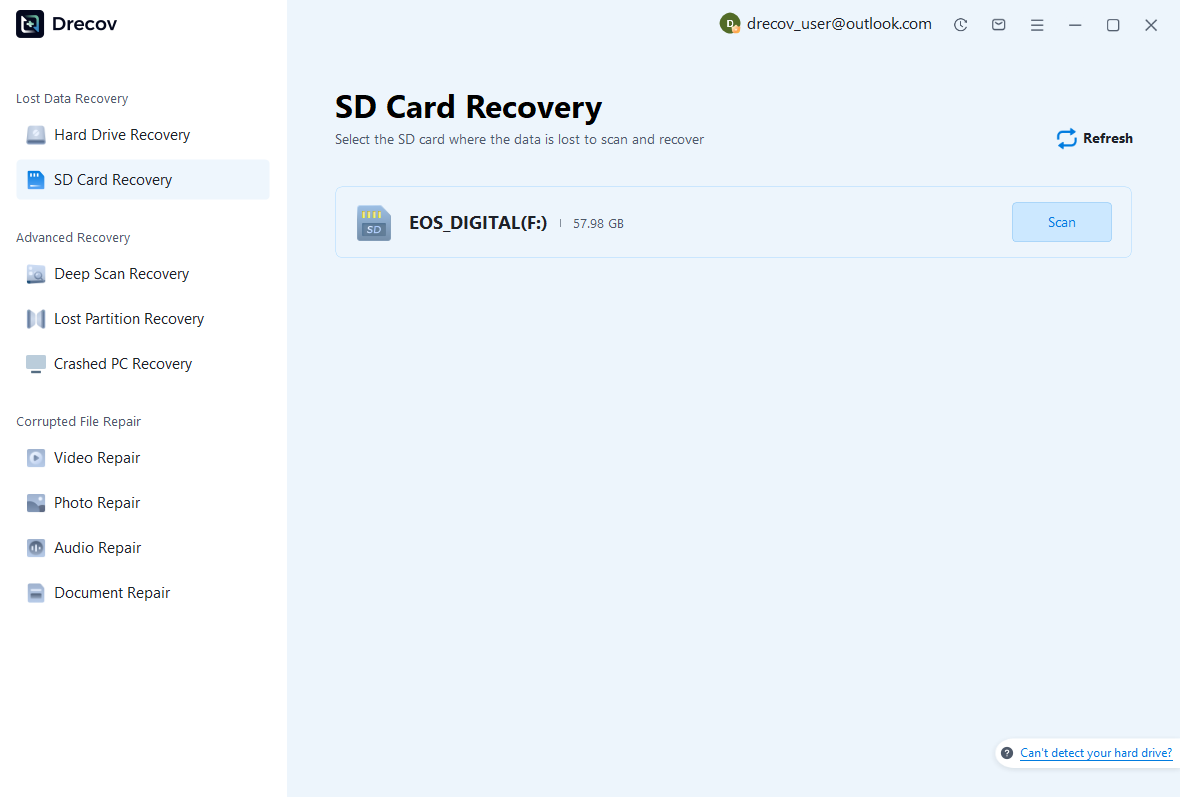
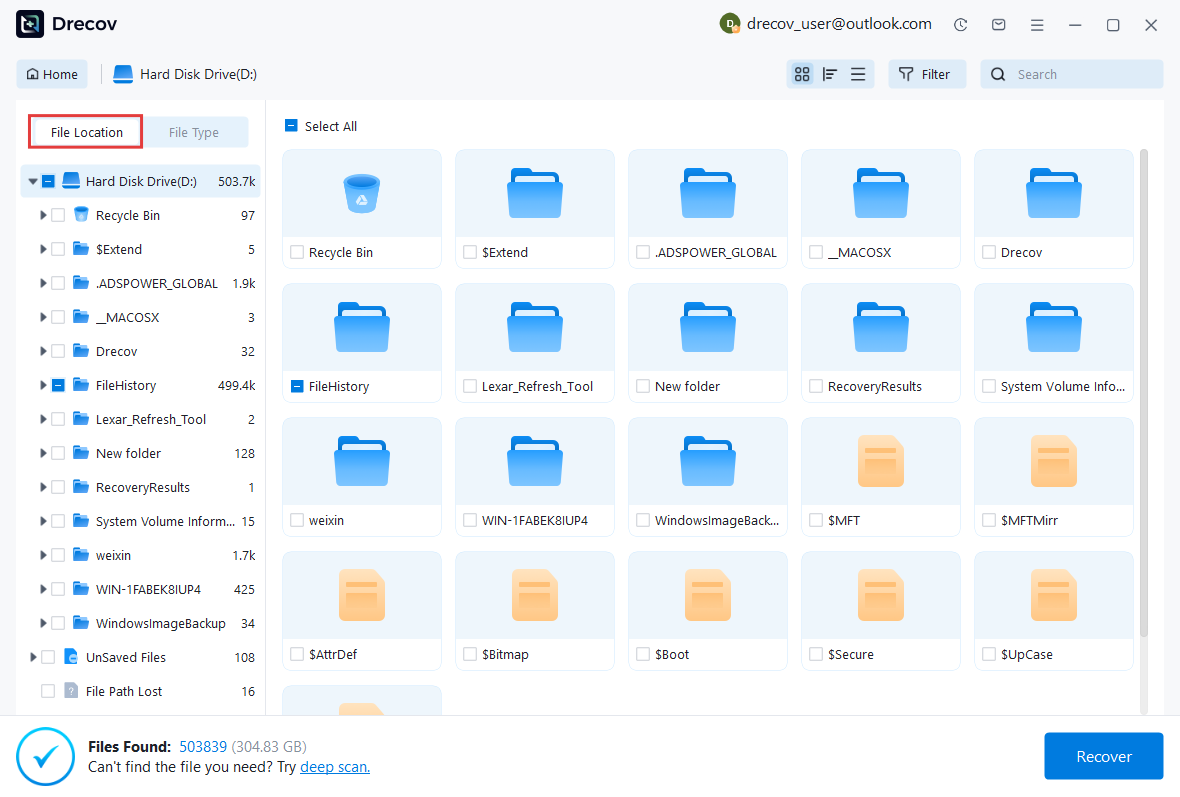
Accidental deletion or formatting can still occur on large-capacity storage devices. If files disappear unexpectedly, PandaOffice Drecov may help recover:
- Deleted media files
- Lost partitions
- Corrupted documents
- Formatted drive content
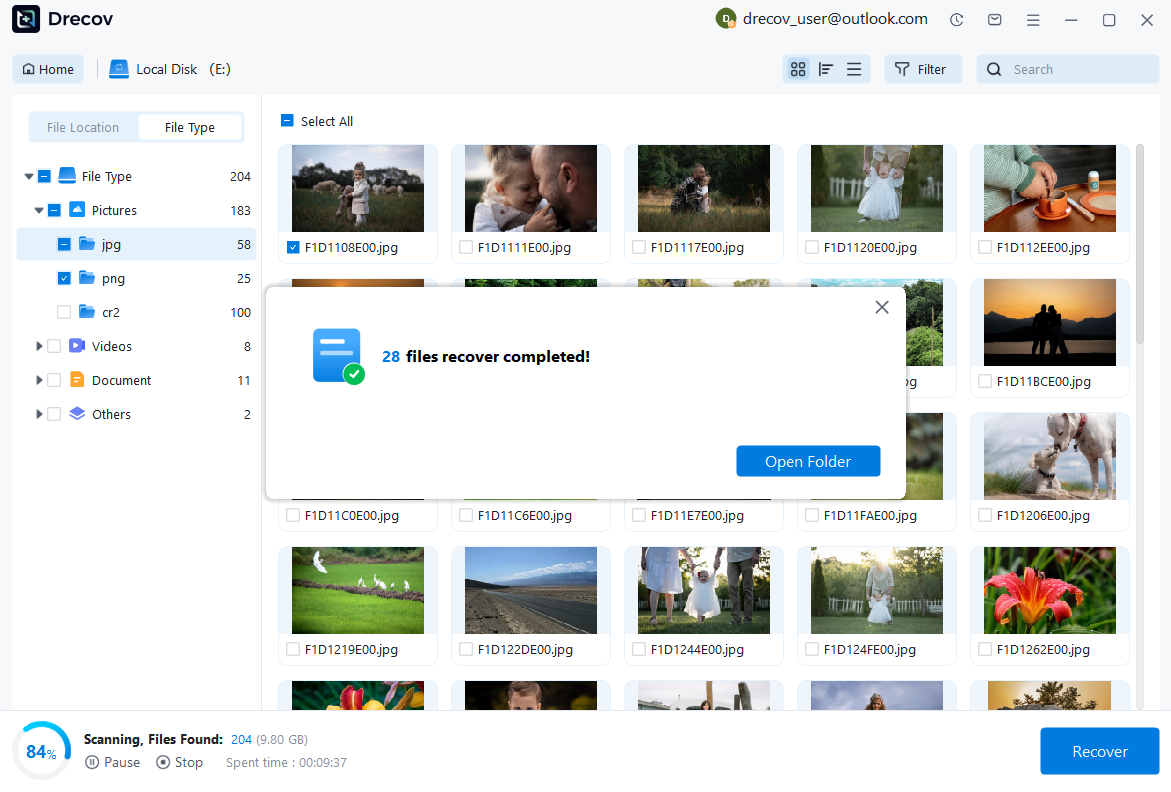
General recovery process:
- Connect the affected drive
- Scan using recovery software
- Preview recoverable files
- Restore data to another storage device
Recovery success depends on whether sectors have been overwritten.
Test Environment:
- Windows 11 Pro
- Accidentally formatted 18TB external HDD
Result:
- Large media archive partially recovered successfully
Why Choose PandaOffice Drecov Recovery Software?
PandaOffice Drecov offers a fast, secure, and user-friendly solution for recovering lost files across multiple scenarios. Whether you need email recovery, ZIP File Recovery, format data recovery, or help to recover deleted drafts Outlook, the software provides reliable recovery performance for both personal and business users.
PandaOffice Drecov supports recovery from formatted hard drives, SSDs, USB drives, SD cards, and external storage devices. Its advanced scanning engine can locate deleted archives, damaged ZIP files, lost Outlook drafts, and accidentally removed documents with high accuracy. For users searching for how to find deleted messages in Teams, PandaOffice Drecov can also help recover exported chat files, attachments, and related local cache data when available.
Key advantages include:
- Deep scan technology for complex data loss situations
- Support for emails, archives, videos, photos, and office documents
- Recovery from accidental deletion, formatting, corruption, and system crashes
- Easy preview before restoring files
- Compatible with Windows and multiple storage devices
Unlike complicated enterprise recovery tools, PandaOffice Drecov keeps the recovery process simple. Users can scan, preview, and restore files in just a few steps without technical expertise.
Whether you are dealing with lost Outlook drafts, corrupted ZIP archives, formatted drives, or missing communication data, PandaOffice Drecov provides an efficient and practical recovery experience designed to minimize downtime and protect important files.
RAID and Multi-Drive Storage for Extreme Capacity
Understanding RAID External Storage Systems
When users explore beyond a single largest external hard drive, they often encounter RAID systems. RAID (Redundant Array of Independent Disks) combines multiple drives into one logical unit to increase capacity, speed, or redundancy.
Common RAID levels used in external storage include:
- RAID 0 (performance focus)
- RAID 1 (mirroring for safety)
- RAID 5 (balance of speed and protection)
- RAID 10 (high performance + redundancy)
Instead of relying on one disk, RAID systems allow users to build storage setups that exceed the largest hard disk drive capacity available in a single unit.
For example:
- 4 × 12TB drives = 48TB total storage
This is significantly higher than any single consumer drive.
Test Environment:
- Windows 11 Pro workstation
- 4-bay RAID enclosure
- Mixed 12TB HDD configuration
Result:
- RAID 5 array delivered stable multi-terabyte storage pool
- System recognized as a single large drive
NAS Systems for Massive Storage Expansion
Network Attached Storage (NAS) systems are another solution for users asking what is the largest external hard drive in practical use cases.
NAS devices:
- Connect via network instead of USB
- Support multiple drives
- Enable remote access
- Offer automatic backups
They are widely used for:
- Business file servers
- Media streaming
- Surveillance storage
- Cloud-style private storage
NAS systems can scale far beyond a single drive, reaching:
- 50TB
- 100TB+
- Even petabyte-level enterprise setups
Test Environment:
- Synology NAS system
- 6 × 16TB HDD configuration
- Windows 11 network access
Result:
- Smooth multi-device file sharing across LAN network
Pros and Cons of Multi-Drive Storage
While RAID and NAS systems expand beyond the largest external hard drive, they also introduce complexity.
Advantages:
- Massive expandable storage
- Data redundancy options
- Better performance (depending on RAID level)
Disadvantages:
- Higher cost
- More complex setup
- Requires maintenance
- Power consumption increases
⚠️Warning: RAID is not a replacement for proper backups—data loss can still occur in multi-drive failures.
Test Environment:
- RAID 0 vs RAID 5 comparison
- Windows 10 Pro
Result:
- RAID 0 faster but less safe
- RAID 5 more stable for long-term storage
SSD vs HDD for Large External Storage
Why HDD Still Dominates Maximum Capacity
Even though SSDs are faster, HDDs still dominate discussions about the largest capacity hard drive due to their superior storage scaling.
HDD advantages:
- Lower cost per TB
- Higher maximum capacities
- Mature technology
- Ideal for long-term storage
SSDs, while fast, are still limited in:
- Maximum affordable capacity
- Price per terabyte
- Large-scale archival use
This is why the largest external hard drive options are still primarily HDD-based.
Test Environment:
- 20TB HDD vs 8TB external SSD
- Windows 11 file transfer benchmark
Result:
- HDD far more cost-efficient for bulk storage
- SSD significantly faster in transfer speed
When External SSDs Make More Sense
External SSDs are better suited for performance-focused tasks rather than maximum capacity.
Ideal SSD use cases:
- 4K/8K video editing
- Gaming performance storage
- Portable workstations
- Fast project transfers
However, they rarely match the largest hard drive capacity available in HDD technology.
Test Environment:
- Adobe Premiere Pro editing workflow
- External NVMe SSD
Result:
- Faster rendering cache performance compared to HDD
Hybrid Storage Strategies
Many professionals combine both HDD and SSD storage:
- SSD → active projects
- HDD → archives and backups
This hybrid approach balances:
- Speed
- Capacity
- Cost efficiency
It is widely used in:
- Film production
- Game development
- Enterprise backup systems
Test Environment:
- Dual-drive workstation setup
- Windows 11 Pro
Result:
- Improved workflow efficiency with tiered storage system
Common Problems With Large External Hard Drives
Drive Not Recognized or Detected
One common issue when using a largest external hard drive is system detection failure.
Possible causes:
- Faulty USB cable
- Insufficient power supply
- Outdated drivers
- Incorrect partition style
Fixes include:
- Changing USB ports
- Using powered hubs
- Updating storage drivers
- Checking Disk Management
Test Environment:
- Windows 10 laptop
- 18TB external HDD
Result:
- Drive recognized after switching USB 3.0 port
Slow Transfer Speeds on Large Drives
Users sometimes expect high speeds but experience slow performance.
Causes:
- HDD mechanical limitations
- USB 2.0 ports
- Fragmented files
- Background system activity
Even the largest hard disk drive capacity does not guarantee speed improvements.
Solutions:
- Use USB 3.2 or Thunderbolt
- Defragment HDD (not SSD)
- Close background apps
Test Environment:
- Windows 11 Pro
- Large file transfer (200GB video project)
Result:
- Speed improved after upgrading connection port
File System Corruption Risks
Large drives may suffer corruption if:
- Improperly ejected
- Power loss occurs
- Bad sectors develop
Symptoms include:
- Missing files
- RAW drive errors
- Windows repair prompts
⚠️Warning: Always safely eject external drives before unplugging.
Test Environment:
- 20TB external HDD
- Simulated unsafe removal
Result:
- File system errors detected requiring repair tools
Data Backup Strategies for Large External Drives
3-2-1 Backup Strategy Explained
To protect data stored on the largest external hard drive, professionals often follow the 3-2-1 rule:
- 3 copies of data
- 2 different storage types
- 1 offsite backup
This ensures redundancy even if one drive fails.
Common setups:
- External HDD
- Cloud backup
- NAS system
Test Environment:
- Mixed backup environment
- Windows 11 + cloud sync
Result:
- Data successfully restored from secondary backup after simulated failure
Incremental vs Full Backups
Backup types matter when managing the largest hard drive capacity:
Full backup:
- Copies everything
- Takes longer
- Requires more storage
Incremental backup:
- Copies only changes
- Faster
- More efficient
Most enterprise systems rely on incremental backups for efficiency.
Test Environment:
- Business backup server
- Daily incremental backup cycle
Result:
- Reduced backup time by over 60%
Automating Backup Workflows
Automation ensures that large storage systems remain protected without manual effort.
Tools include:
- Windows File History
- NAS scheduling
- Cloud sync tools
Automation helps prevent:
- Human error
- Forgotten backups
- Data loss incidents
Test Environment:
- Windows 11 Pro
- Scheduled backup task
Result:
- Automatic nightly backups executed successfully
Frequently Asked Questions
What Is the Largest Size External Hard Drive Today?
The what is the largest size external hard drive question typically refers to consumer-grade HDDs, which currently reach around 20TB–24TB per single drive.
Enterprise systems using RAID or NAS can exceed:
- 50TB
- 100TB+
- Petabyte-scale storage
Test Environment:
- External 24TB HDD
- Windows 11 system
Result:
- Full capacity accessible with GPT formatting
Can One External Drive Store Everything?
While large drives can store enormous data, relying on a single device is risky.
Risks include:
- Hardware failure
- Data corruption
- Accidental deletion
Best practice is always using multiple backups.
Test Environment:
- Single 18TB HDD stress test
Result:
- Storage successful but no redundancy protection
Are Large External Hard Drives Reliable?
Yes, but reliability depends on:
- Brand quality
- Cooling system
- Usage patterns
- Environmental conditions
Enterprise-grade drives are more durable than consumer models.
Test Environment:
- 24/7 operation test on 20TB HDD
Result:
- Stable operation under continuous load
Final Recommendations for Choosing Large External Storage
How to Select the Right Drive for Your Needs
When choosing the largest external hard drive, users should consider:
- Storage capacity requirements
- Budget constraints
- Speed expectations
- Portability needs
- Backup strategy
Not every user needs the maximum available size.
Best Use Cases for Large External Drives
Large-capacity drives are ideal for:
- Media professionals
- IT backups
- Game libraries
- Surveillance storage
- Archival systems
Long-Term Storage Best Practices
To maintain data safety:
- Use multiple backups
- Avoid overheating
- Monitor drive health
- Replace aging drives proactively
For recovery scenarios, tools such as PandaOffice Drecov may help retrieve:
- Deleted files
- Formatted partitions
- Corrupted archives






