







Understanding Disk Drive Benchmarking and Why It Matters
Modern computers rely heavily on storage performance. Whether you are using a traditional hard disk drive for personal files, gaming, business data, or backups, understanding how well your drive performs can help prevent bottlenecks and identify potential hardware issues. A disk drive benchmark is a testing process that measures the speed and responsiveness of a storage device under different workloads.
Unlike simple file transfers, benchmarking provides detailed information about read speeds, write speeds, access times, and throughput. These measurements help users determine whether a drive is operating within expected parameters or showing signs of degradation. A comprehensive hard drive benchmark can also help users compare multiple storage devices before purchasing new hardware.
As storage capacities continue to increase, performance evaluation becomes more important. Large multimedia files, virtual machines, games, and professional applications place greater demands on storage systems than ever before. Running periodic benchmark tests can reveal performance trends and help users make informed upgrade decisions.
Many users assume that a hard drive either works or fails completely. In reality, storage performance often declines gradually. Benchmark testing allows you to identify these changes before they impact productivity or lead to data loss.
What Is a Disk Drive Benchmark and How Does It Work?
A benchmark test simulates various storage operations and records how quickly a drive responds. Most benchmark applications perform sequential and random read/write tests using files of different sizes. The results are then compared against expected performance standards.
A typical hard disc benchmark evaluates several important metrics:
- Sequential read speed
- Sequential write speed
- Random read performance
- Random write performance
- Access time
- Input/output operations per second (IOPS)
These metrics provide a complete picture of storage performance. Sequential operations measure how quickly large files can be transferred, while random operations indicate responsiveness when dealing with many smaller files.
The testing process typically writes temporary data to the drive and then measures how efficiently the drive can retrieve that information. This methodology helps determine whether the storage device is functioning properly under realistic workloads.
Key Performance Metrics Measured During a Hard Drive Benchmark
When using a disk benchmarking tool, understanding benchmark metrics is essential for interpreting the results correctly.
Sequential speed measures performance when reading or writing large blocks of contiguous data. This metric is especially important for video editing, large file transfers, and backup operations.
Random speed measures how quickly the drive accesses scattered data blocks. Operating systems, applications, and databases often rely heavily on random operations.
Access time indicates how long the drive takes to locate requested data. Traditional HDDs generally have higher access times than SSDs because they rely on spinning platters and moving read/write heads.
IOPS represents the number of input/output operations a drive can perform within a second. Higher IOPS values generally indicate better multitasking capabilities and improved responsiveness.
By analyzing these measurements together, users gain a deeper understanding of overall storage health and efficiency.
When You Should Run a Hard Disc Benchmark on Your Storage Device
Benchmark testing is useful in many situations. New drives should be tested after installation to verify that they meet manufacturer specifications. Existing drives can be benchmarked periodically to detect performance degradation.
Common situations where benchmarking is recommended include:
- After installing a new HDD
- Following a Windows update
- Before and after hardware upgrades
- When experiencing slow system performance
- Prior to cloning or migrating drives
- During routine maintenance
⚠️ Warning: Avoid running intensive benchmark tests while performing critical work, as testing may temporarily reduce system responsiveness.
Regular benchmarking creates a performance baseline that can help identify changes over time. If benchmark scores decline significantly, further investigation may be necessary.
What Can a Hard Disk Drive Benchmark Reveal About Your HDD?
Benchmarking is not simply about obtaining speed numbers. A proper hard disk drive benchmark can uncover hidden performance issues and provide valuable insights into the overall condition of a storage device.
Performance analysis is particularly important for older hard drives that have accumulated years of usage. Mechanical wear, fragmentation, firmware problems, and environmental factors can all impact drive performance.
Understanding what benchmark results reveal enables users to take corrective action before problems become severe.
Identifying Slow Read and Write Speeds
One of the most common reasons people run a hard disk benchmark tool is to determine whether their drive is performing as expected.
Slow read speeds may indicate:
- Aging hardware
- Excessive fragmentation
- SATA controller issues
- Driver conflicts
- Background processes consuming resources
Slow write speeds can result from:
- Insufficient free space
- File system errors
- Cache problems
- Hardware degradation
Benchmark reports make it easier to pinpoint these issues because they provide measurable performance data rather than relying on subjective observations.
If benchmark results are significantly lower than manufacturer specifications, additional troubleshooting may be necessary.
Detecting Performance Degradation and Hardware Issues
Storage devices rarely fail without warning. In many cases, performance deterioration appears long before complete hardware failure occurs.
Repeated testing with a hard drive benchmark software solution can help identify:
- Increasing access times
- Declining transfer rates
- Inconsistent performance patterns
- Unusual latency spikes
These symptoms often suggest developing mechanical or electronic problems.
For example, if benchmark results show substantial fluctuations between test runs, the drive may be struggling to access data consistently. Such behavior can indicate bad sectors or emerging hardware defects.
⚠️ Warning: If benchmark scores suddenly drop and unusual noises are coming from the drive, back up important files immediately.
Combining benchmark data with SMART monitoring tools provides a more complete assessment of drive health.
Comparing HDD Performance Before and After Upgrades
Benchmarking is an excellent way to measure the effectiveness of system upgrades.
Users often install:
- Faster SATA controllers
- Additional RAM
- New motherboards
- Updated storage drivers
Without benchmarking, it can be difficult to quantify the actual impact of these changes.
By recording baseline results before an upgrade and comparing them afterward, users can determine whether improvements justify the investment.
This approach is commonly used by IT professionals when evaluating storage infrastructure changes.
Evaluating Storage Performance for Gaming and Professional Workloads
Different workloads place different demands on storage systems.
Gamers frequently benchmark drives to evaluate:
- Game loading times
- Texture streaming performance
- Open-world environment loading
Professional users may benchmark storage devices for:
- Video editing
- CAD applications
- Database operations
- Virtual machine performance
A reliable hard drive benchmark utility helps users determine whether their current storage solution is sufficient for specific tasks.
Although HDDs generally provide slower performance than SSDs, benchmark testing can still identify drives capable of handling demanding workloads effectively.
Best Methods to Perform a Hard Drive Benchmark on Windows
Several methods are available for evaluating storage performance. Some solutions rely on built-in Windows utilities, while others provide advanced testing features and detailed reports.
The best approach depends on your experience level and testing requirements.
Method 1. Recover Important Data Before Troubleshooting HDD Performance Issues with PandaOffice Drecov
Test Environment
- Operating System: Windows 11 Pro 64-bit
- Storage Device: 1TB SATA HDD
- Available Space: More than 20GB
- Scenario: HDD experiencing abnormal slowdown or suspected failure
Before running intensive benchmark tests on a problematic hard drive, it is often a good idea to secure important files first. If an HDD shows symptoms such as unusual noises, frequent freezes, read errors, or dramatically reduced performance, data protection should take priority over performance testing.
PandaOffice Drecov is a professional data recovery solution designed to recover deleted, formatted, inaccessible, or lost files from hard drives, SSDs, USB drives, SD cards, and other storage devices.
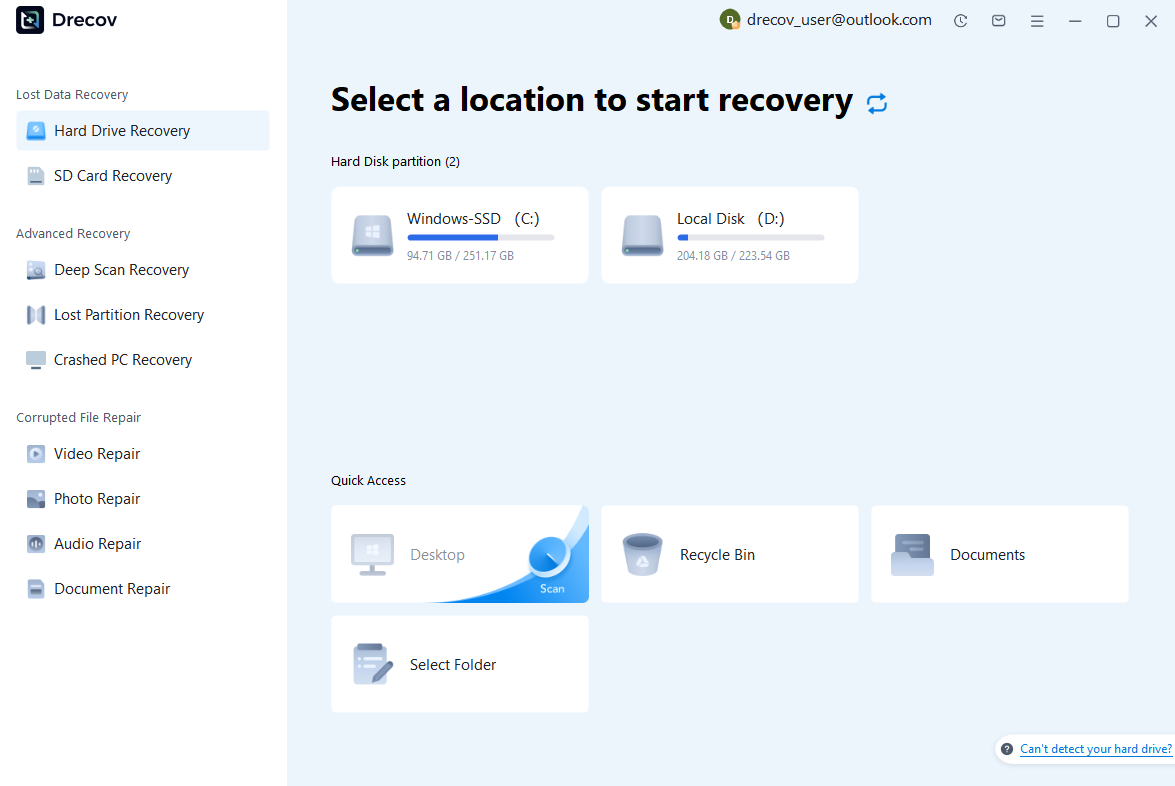
Step 1: Scan the Storage Device (SD Card / Hard Drive / USB)
Connect your device (SD card, HDD/SSD, or USB drive) to your computer and launch PandaOffice Drecov. Select the target device and start the scan. The software will perform a quick scan and deep scan to detect lost or deleted data.
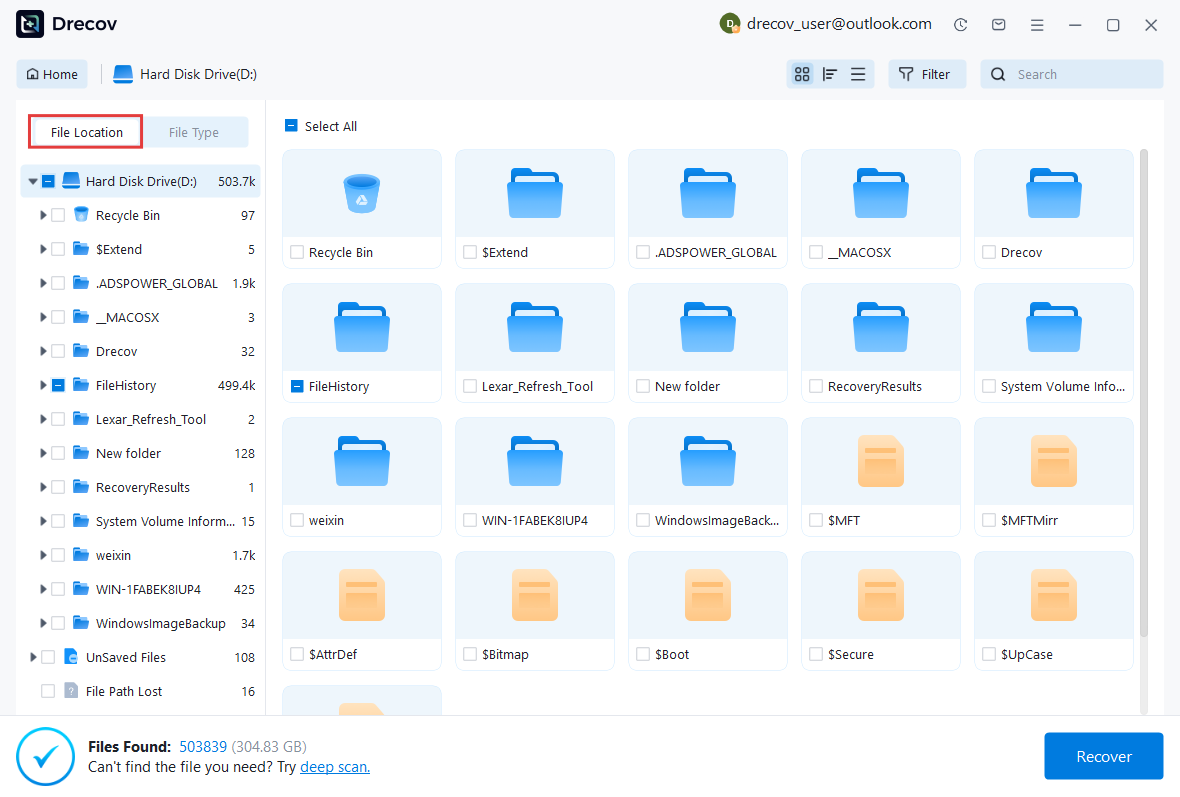
Step 2: Locate and Preview Lost Files
After scanning, browse the detected files and use the preview feature to check recoverable data. You can preview documents (Word, Excel, PDF), photos, and videos to ensure file integrity before recovery.
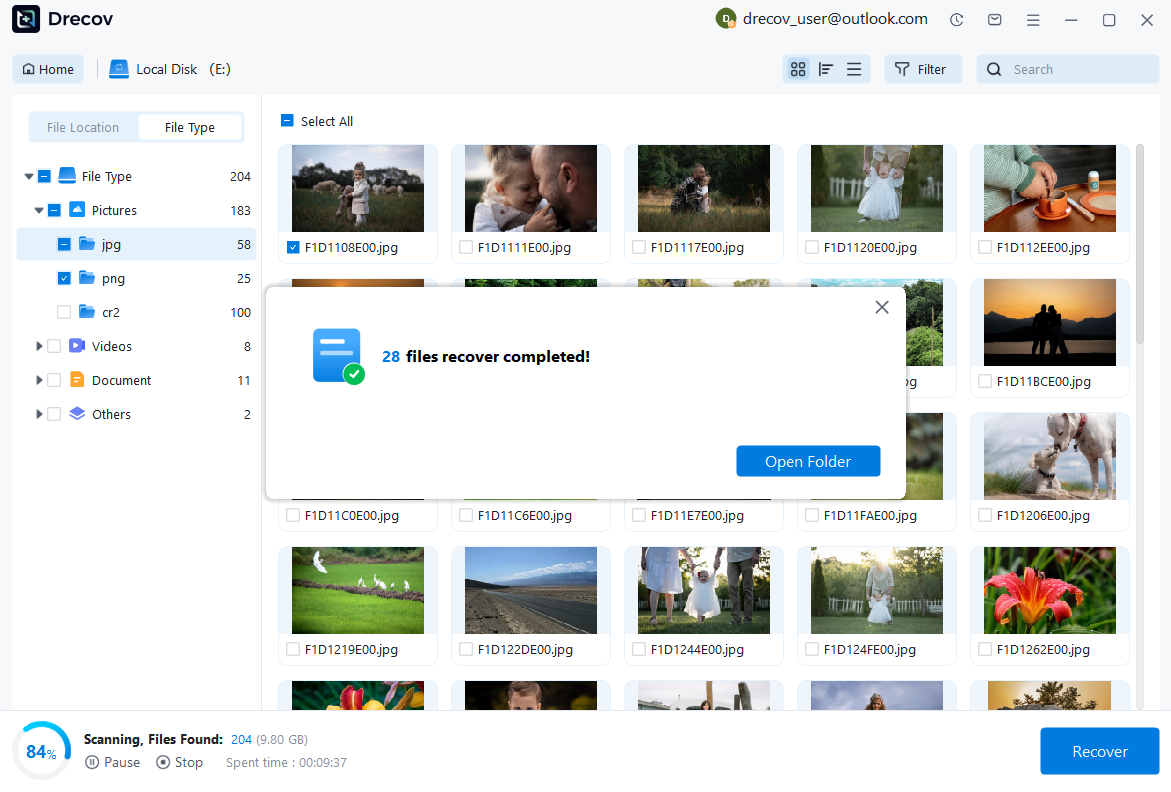
Step 3: Recover and Save to a New Location
Select the files you want to restore and click recover. Save all recovered data to a different drive or location (not the original device) to avoid overwriting lost data.
Why Choose PandaOffice Drecov Recovery Software?
PandaOffice Drecov offers a fast, secure, and user-friendly solution for recovering lost files across multiple scenarios. Whether you need email recovery, ZIP File Recovery, format data recovery, or help to recover deleted drafts Outlook, the software provides reliable recovery performance for both personal and business users.
PandaOffice Drecov supports recovery from formatted hard drives, SSDs, USB drives, SD cards, and external storage devices. Its advanced scanning engine can locate deleted archives, damaged ZIP files, lost Outlook drafts, and accidentally removed documents with high accuracy. For users searching for how to find deleted messages in Teams, PandaOffice Drecov can also help recover exported chat files, attachments, and related local cache data when available.
Key advantages include:
- Deep scan technology for complex data loss situations
- Support for emails, archives, videos, photos, and office documents
- Recovery from accidental deletion, formatting, corruption, and system crashes
- Easy preview before restoring files
- Compatible with Windows and multiple storage devices
Unlike complicated enterprise recovery tools, PandaOffice Drecov keeps the recovery process simple. Users can scan, preview, and restore files in just a few steps without technical expertise.
Whether you are dealing with lost Outlook drafts, corrupted ZIP archives, formatted drives, or missing communication data, PandaOffice Drecov provides an efficient and practical recovery experience designed to minimize downtime and protect important files.
Disk imaging ensures that even partially corrupted drives can be preserved. This is often the safest approach before attempting any aggressive repair operations for fix bad sectors on hard drive situations.
⚠️ Warning: If your hard drive is making clicking, grinding, or repeated spinning noises, recover important files immediately before performing benchmark tests or repair operations.
Method 2. Use Windows Command-Line Utilities for Basic Testing
Test Environment
- Windows 10 or Windows 11
- Administrator privileges enabled
- Internal or external HDD connected
Windows includes built-in command-line utilities that can provide basic storage performance information without requiring third-party software.
Common tools include:
- Command Prompt
- Windows Performance Toolkit
- PowerShell diagnostics
To perform a simple assessment:
Step 1. Open Command Prompt as Administrator.
Step 2. Run storage-related diagnostic commands.
Step 3. Monitor response times and transfer performance.
Step 4. Compare results against previous records.
Although built-in tools may not offer the detailed visual reports available in specialized benchmarking applications, they remain useful for quick evaluations and troubleshooting.
Users who require more advanced metrics can combine command-line utilities with dedicated benchmark software discussed in the next section.
Method 3. Measure HDD Performance with Windows Performance Monitor
Test Environment
- Operating System: Windows 11 Pro 64-bit
- CPU: Intel Core i5/i7 or equivalent
- Memory: 8GB RAM or higher
- Storage Device: Internal SATA HDD
- System Status: Minimal background applications running
Windows Performance Monitor is a built-in monitoring utility that provides real-time insights into storage activity. While it is not a dedicated hdd benchmark tool, it can help users analyze disk throughput, queue length, latency, and other storage-related metrics.
To use Performance Monitor:
Step 1. Press Win + R, type perfmon, and press Enter.
Step 2. Expand Monitoring Tools and select Performance Monitor.
Step 3. Click the Add Counter button.
Step 4. Choose disk-related counters such as:
- Disk Read Bytes/sec
- Disk Write Bytes/sec
- Avg. Disk Queue Length
- Avg. Disk sec/Read
- Avg. Disk sec/Write
Step 5. Perform normal workloads or file transfers while monitoring results.
This method is particularly useful for identifying storage bottlenecks during real-world usage. Unlike synthetic benchmark tests, Performance Monitor reflects actual system activity.
Users can save logs for later comparison and determine whether performance changes occur after software updates, driver installations, or hardware modifications.
Method 4. Benchmark a Drive Using Dedicated HDD Benchmark Software
Test Environment
- Windows 10/11
- At least 10% free disk space
- HDD connected through SATA or USB
- Background downloads paused
Dedicated hdd benchmark software often provides the most accurate and detailed performance analysis.
A professional hard disk benchmark software solution typically includes:
- Sequential read tests
- Sequential write tests
- Random access measurements
- Access latency evaluation
- Performance comparison reports
To benchmark a drive:
Step 1. Install the selected benchmarking application.
Step 2. Launch the software and select the target drive.
Step 3. Choose the desired test profile.
Step 4. Start the benchmark process.
Step 5. Review generated reports and compare results with expected specifications.
Many users prefer a dedicated hard drive benchmark program because it offers easy-to-understand charts and historical performance tracking.
⚠️ Warning: Avoid running multiple benchmark applications simultaneously, as this may produce inaccurate results.
For the most reliable results, close unnecessary applications before testing and ensure the drive is not performing background tasks such as indexing or antivirus scanning.
How to Interpret Hard Drive Benchmark Results Correctly
Running a benchmark is only the first step. Understanding what the numbers mean is equally important. Many users see benchmark results but struggle to determine whether their drive is performing well or showing signs of trouble.
A good interpretation process involves comparing multiple metrics rather than focusing on a single score.
Understanding Sequential Read and Write Performance
Sequential performance measures how quickly a drive can read or write large continuous files.
Common activities affected by sequential performance include:
- Video editing
- File backups
- Large software installations
- Disk cloning operations
Higher sequential speeds generally indicate better throughput when handling large data sets.
For example, if a benchmark shows significantly lower sequential speeds than the manufacturer advertises, possible causes include:
- SATA configuration issues
- Outdated drivers
- Background disk activity
- Aging hardware
When using a disk benchmark tool, compare sequential results with official specifications while considering system configuration differences.
Remember that manufacturer ratings are often measured under ideal laboratory conditions.
Evaluating Random Access Speed and Latency
Random performance is often more important than sequential performance in everyday computing.
Operating systems constantly access thousands of small files, making random read and write performance a critical factor in responsiveness.
Metrics to watch include:
- Random read speed
- Random write speed
- Access latency
- IOPS
High latency values may indicate:
- Fragmented storage
- Mechanical wear
- Controller issues
- Insufficient system resources
A reliable hard disk benchmark utility helps identify whether poor responsiveness originates from storage hardware or other system components.
If applications take unusually long to launch despite adequate CPU and memory resources, random disk performance may be the root cause.
Recognizing Signs of a Failing Hard Drive
Benchmark tests can sometimes reveal early indications of hardware failure.
Potential warning signs include:
- Sudden drops in transfer speed
- Extremely inconsistent benchmark results
- Large increases in access time
- Frequent read/write errors
- Significant performance fluctuations between tests
While no benchmark can predict every failure, recurring abnormalities deserve attention.
⚠️ Warning: If benchmark results deteriorate rapidly over a short period, create a backup immediately before continuing diagnostics.
Additional symptoms that often accompany poor benchmark results include:
- Unusual clicking sounds
- System freezes
- Corrupted files
- Frequent blue screen errors
Combining benchmark data with SMART monitoring information provides a more complete picture of drive health.
Comparing Results Against Manufacturer Specifications
Many users become concerned when benchmark results differ from advertised performance figures.
However, several factors influence real-world performance:
- Drive capacity
- Interface version
- Controller configuration
- Available free space
- Operating system activity
When evaluating a hard drive benchmark utility, compare results against realistic expectations rather than marketing numbers alone.
For example, a nearly full HDD may perform noticeably slower than the same drive when empty.
Similarly, USB-connected drives may experience limitations imposed by the enclosure or interface rather than the drive itself.
Maintaining a historical record of benchmark results allows users to identify meaningful changes over time.
Frequently Asked Questions About Hard Disk Benchmark Tools
Is a Disk Benchmark Tool Safe for My HDD?
Yes. Most benchmark applications are designed to test storage performance safely.
A standard disk benchmarking tool performs controlled read and write operations that should not damage a healthy drive.
However, excessive testing on an already failing HDD may place additional stress on mechanical components.
If the drive contains critical data and exhibits signs of failure, prioritize backups before running extensive benchmarks.
What Is the Best Hard Disk Benchmark Utility for Beginners?
The best option depends on the user’s goals.
Beginners often prefer tools that provide:
- Simple interfaces
- One-click testing
- Easy-to-read reports
- Basic performance comparisons
More advanced users may prefer software offering detailed latency analysis, queue depth testing, and custom benchmark profiles.
A good hard disk benchmark tool should balance ease of use with accurate reporting.
How Often Should I Run a Hard Drive Benchmark Program?
For most users, testing every few months is sufficient.
Recommended situations include:
- After installing a new drive
- Following major system updates
- Before upgrading hardware
- When troubleshooting performance issues
Routine testing with a hard drive benchmark program helps establish a performance history and identify gradual degradation.
Business environments may choose to benchmark storage devices more frequently as part of preventive maintenance procedures.
Can HDD Benchmark Software Improve Drive Performance?
No benchmark application can directly increase hardware performance.
Instead, hdd benchmark program tools measure and report existing performance levels.
The results may help users identify issues that can be corrected, such as:
- Disk fragmentation
- Driver problems
- Controller configuration errors
- Insufficient free space
After resolving these issues, benchmark scores may improve, but the software itself does not make the drive faster.
Final Thoughts on Choosing the Right Hard Drive Benchmark Utility
Selecting the appropriate benchmarking solution depends on your goals, technical experience, and the level of detail you require.
Some users only need a quick overview of storage performance, while others require advanced analytics for troubleshooting or hardware evaluation.
Key Factors to Consider When Selecting a Disk Benchmark Tool
When comparing benchmark solutions, consider:
- Ease of use
- Accuracy
- Reporting features
- Historical tracking
- Compatibility with your operating system
A high-quality disk benchmark tool should provide consistent and repeatable results while minimizing system interference.
Users working with multiple storage devices may also benefit from tools that support side-by-side comparisons.
Best Practices for Accurate Benchmark Testing
To achieve reliable benchmark results:
- Close unnecessary applications.
- Pause downloads and updates.
- Ensure adequate free disk space.
- Run multiple tests and calculate averages.
- Use consistent testing conditions.
Following these practices reduces variability and improves the accuracy of measurements.
⚠️ Warning: Avoid benchmarking a drive while performing critical data recovery operations or system migrations.
Consistent testing conditions make it easier to compare results across different dates and hardware configurations.
Summary of Hard Drive Benchmark Software Options
A reliable hard drive benchmark software solution provides valuable insights into storage performance, health, and stability.
Whether you choose a built-in Windows utility, a specialized hdd benchmark tool, or a comprehensive hard drive benchmark utility, regular testing can help identify problems before they affect productivity or data integrity.
Benchmarking is particularly valuable when:
- Evaluating new hardware
- Troubleshooting slow systems
- Monitoring aging drives
- Comparing upgrade options
By understanding benchmark metrics and following proper testing procedures, users can make informed decisions about storage maintenance, upgrades, and long-term reliability.
Ultimately, a well-executed hard disk drive benchmark is one of the most effective ways to understand how your storage device performs under real-world conditions and whether it continues to meet your computing needs.





