







Understanding Floppy Disk Data Recovery
What Is Floppy Disk Data and Why It Still Matters
Although floppy disks are no longer widely used, many people still have valuable files stored on these legacy storage devices. Business records, family documents, academic projects, software archives, and historical data may exist only on floppy disks created years or even decades ago.
A standard 3.5-inch floppy disk stores approximately 1.44MB of information. While this amount is tiny compared to modern storage devices, floppy disks were once the primary method for storing and transferring digital files. As technology evolved, floppy drives disappeared from most computers, making access to old disks increasingly difficult.
Today, users often seek ways to recover floppy disk contents after discovering important files on aging media. Because floppy disks rely on magnetic storage technology, they are vulnerable to physical wear, environmental damage, accidental deletion, and data corruption.
Fortunately, modern floppy disk data recovery techniques can often retrieve lost or inaccessible files. Recovery success depends on the condition of the disk, the type of damage involved, and how quickly recovery efforts begin after data loss occurs.
Understanding the causes of data loss is the first step toward selecting the most effective recovery method.
Common Situations That Require Floppy Disk Data Recovery
Several scenarios commonly lead users to search for floppy data recovery solutions.
These situations include:
- Accidentally deleting files
- Formatting a floppy disk by mistake
- Corrupted file systems
- Read errors when opening the disk
- Virus-related file loss
- Hardware compatibility issues
- Aging magnetic media
In some cases, files still exist but cannot be accessed because the operating system cannot properly read the disk structure. In other situations, files have been deleted but remain recoverable because they have not yet been overwritten.
Acting quickly after data loss significantly improves recovery success rates.
Can Data Be Recovered from Old Floppy Disks?
Many people assume that decades-old floppy disks are beyond recovery. While aging certainly creates challenges, successful recovery is still possible in many situations.
Several factors influence recovery potential:
- Physical condition of the floppy disk
- Exposure to heat and humidity
- Presence of scratches or contamination
- Quality of the floppy drive
- Whether data has been overwritten
Even when a disk initially appears unreadable, specialized recovery methods may still extract usable information. This is why data recovery from floppy media remains a practical option for recovering valuable historical files.
Why Floppy Disk Data Becomes Inaccessible
Physical Damage to Aging Floppy Disks
Physical deterioration is one of the most common causes of inaccessible floppy disks.
Over time, floppy disks may develop:
- Surface scratches
- Dust contamination
- Mold growth
- Warped housings
- Broken protective shutters
Unlike modern solid-state drives, floppy disks rely on direct contact between the magnetic surface and the drive head. Physical defects can therefore prevent files from being read correctly.
When attempting floppy disc data recovery, carefully inspect the disk before inserting it into a drive. Severe damage may require professional recovery assistance.
Magnetic Degradation and Data Corruption
Floppy disks store information using magnetic signals. As years pass, these signals gradually weaken.
This degradation can result in:
- Missing files
- Corrupted documents
- Bad sectors
- Read failures
- Incomplete file recovery
Environmental factors such as high temperatures, humidity, and exposure to magnetic fields can accelerate the deterioration process.
Even when magnetic degradation occurs, recovery may still be possible if enough data remains intact.
Floppy Drive Read Errors and Compatibility Problems
In some situations, the floppy disk is not the source of the problem. Instead, the floppy drive itself may be malfunctioning.
Common drive-related issues include:
- Dirty read heads
- Mechanical wear
- Faulty USB adapters
- Driver problems
- Alignment issues
Before beginning floppy drive data recovery, verify that the drive functions correctly by testing another known-good floppy disk.
Accidental Deletion or Formatting of Floppy Disk Data
Human error remains a frequent cause of lost files.
Examples include:
- Deleting the wrong files
- Formatting the wrong disk
- Overwriting important documents
- Incorrect archive management
Fortunately, deleted files are often recoverable if new data has not replaced the original storage sectors.
This is where file recovery floppy disk techniques become valuable.
Virus Attacks and File System Damage
Older storage media frequently encountered malware and file system corruption.
Virus infections may:
- Hide files
- Damage directory structures
- Corrupt allocation tables
- Prevent file access
In some situations, files still exist but become inaccessible because the file system is damaged.
Repairing the logical structure may restore access without requiring advanced recovery procedures.
How to Recover Files from Floppy Disk
Method 1: Check the Floppy Disk on Another Compatible Drive
Test Environment
- Windows 10 Pro 22H2
- USB External Floppy Drive
- 3.5-inch 1.44MB Floppy Disk
- Additional Tested Floppy Drive
One of the simplest recovery approaches involves testing the floppy disk with multiple drives.
Because floppy drives contain mechanical components, read failures may occur even when the disk itself remains healthy.
Verifying Whether the Problem Is the Disk or Drive
- Insert a known working floppy disk into the drive.
- Confirm that files can be viewed normally.
- Test opening several files.
- Verify that file copying works correctly.
- Compare results with the problematic floppy disk.
If the known-good disk works but the target disk does not, the problem likely involves the floppy media itself.
Reading the Disk on Alternative Hardware
- Connect another floppy drive.
- Insert the floppy disk.
- Check whether the contents appear correctly.
- Try a different USB floppy drive if available.
- Test on an older desktop with a built-in floppy controller.
Different drives sometimes read aging media differently. A disk unreadable on one device may work on another.
This simple procedure often resolves problems before more advanced data recovery floppy methods become necessary.
Recovering Accessible Files Immediately
If the floppy disk becomes readable:
- Create a folder on your computer.
- Select all accessible files.
- Copy the files to the hard drive.
- Verify that copied files open correctly.
- Create at least one backup copy.
Aging floppy disks may deteriorate further over time, making immediate backup extremely important.
⚠️Warning: Avoid repeatedly opening and closing files on a failing floppy disk. Excessive access attempts may worsen media degradation.
Method 2: Recover Files Using Command Prompt Utilities
Test Environment
- Windows 11 Pro 24H2
- USB Floppy Drive Connected
- Floppy Disk Showing Read Errors
Windows includes several built-in utilities that can help repair logical file system issues.
Although these tools cannot repair physical damage, they may restore access to files affected by corruption or directory errors.
Using CHKDSK to Repair File System Errors
- Connect the floppy drive to the computer.
- Open File Explorer and identify the drive letter.
- Launch Command Prompt as Administrator.
- Enter the following command:
chkdsk A: /f
- Replace A: with the appropriate drive letter if necessary.
- Allow Windows to complete the scan.
- Review any detected errors and repair results.
The utility attempts to correct file system inconsistencies and restore access to damaged directories.
Copying Accessible Data to a Safe Location
If CHKDSK successfully repairs the floppy disk:
- Create a recovery folder on the computer.
- Copy all visible files immediately.
- Verify file integrity.
- Back up recovered data to another storage device.
- Consider creating a disk image for long-term preservation.
When dealing with aging media, preservation should always be the priority.
Limitations of Built-In Windows Tools
While useful, Windows utilities have limitations.
They cannot:
- Repair severe physical damage
- Recover overwritten files
- Restore heavily degraded magnetic media
- Reconstruct extensively corrupted data structures
If these tools fail, more advanced floppy disk data recovery solutions may be required.
Method 3: Perform Floppy Disk Data Recovery with Pandaoffice Drecov
Test Environment
- Windows 11 Pro
- USB Floppy Drive
- Corrupted or Deleted Files
- Pandaoffice Drecov Installed
When files have been deleted or become inaccessible due to logical corruption, dedicated recovery software can provide additional recovery options.
Pandaoffice Drecov can scan legacy storage media and search for deleted or lost file records that no longer appear in normal file browsing.
Scanning the Floppy Disk for Recoverable Files
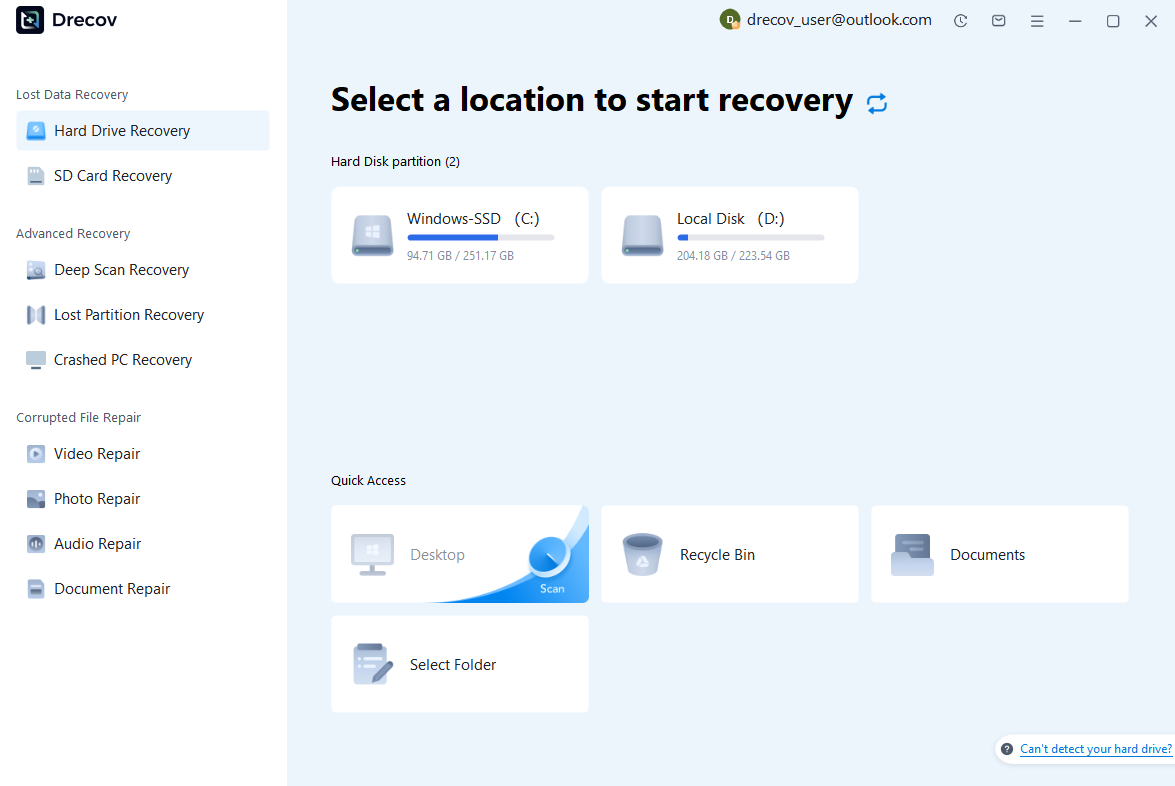
Step 1: Connect the Drive / USB)
Connect your device (SD card, HDD/SSD, or USB drive) to your computer and launch PandaOffice Drecov. Select the target device and start the scan. The software will perform a quick scan and deep scan to detect lost or deleted data.
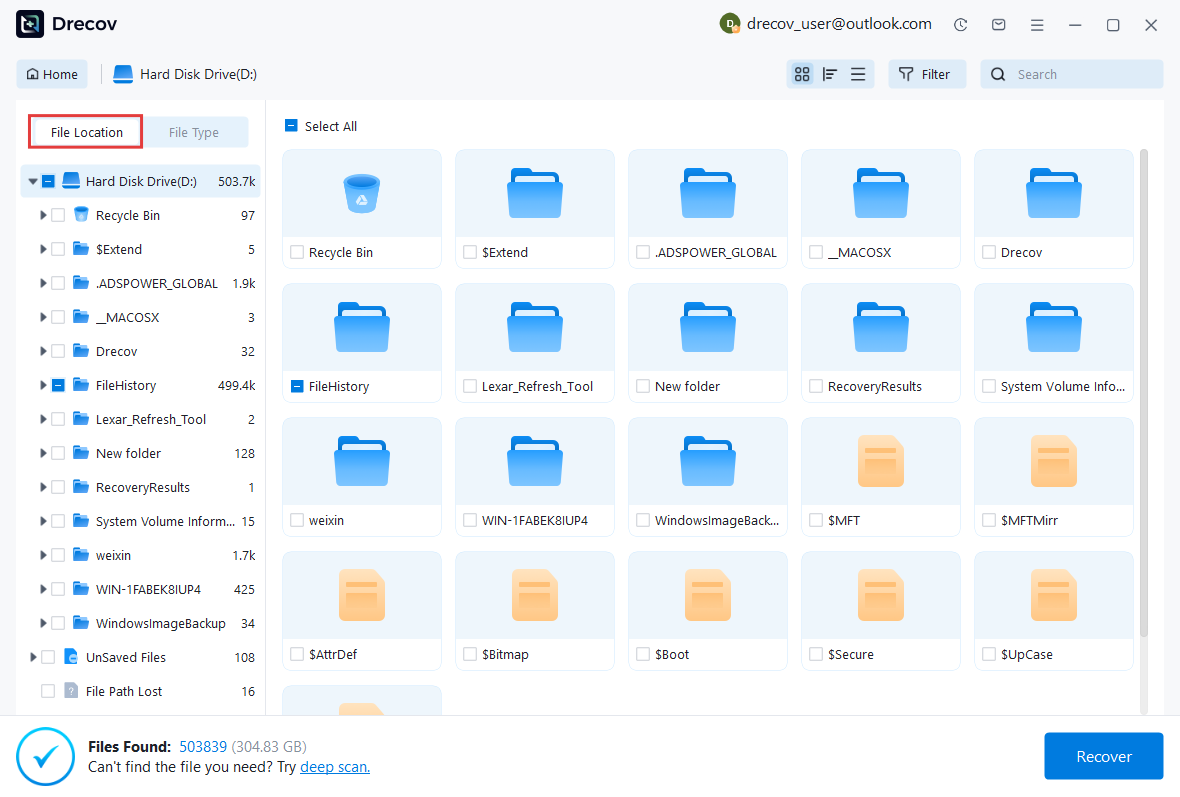
Step 2: Locate and Preview Lost Files
After scanning, browse the detected files and use the preview feature to check recoverable data. You can preview documents (Word, Excel, PDF), photos, and videos to ensure file integrity before recovery.
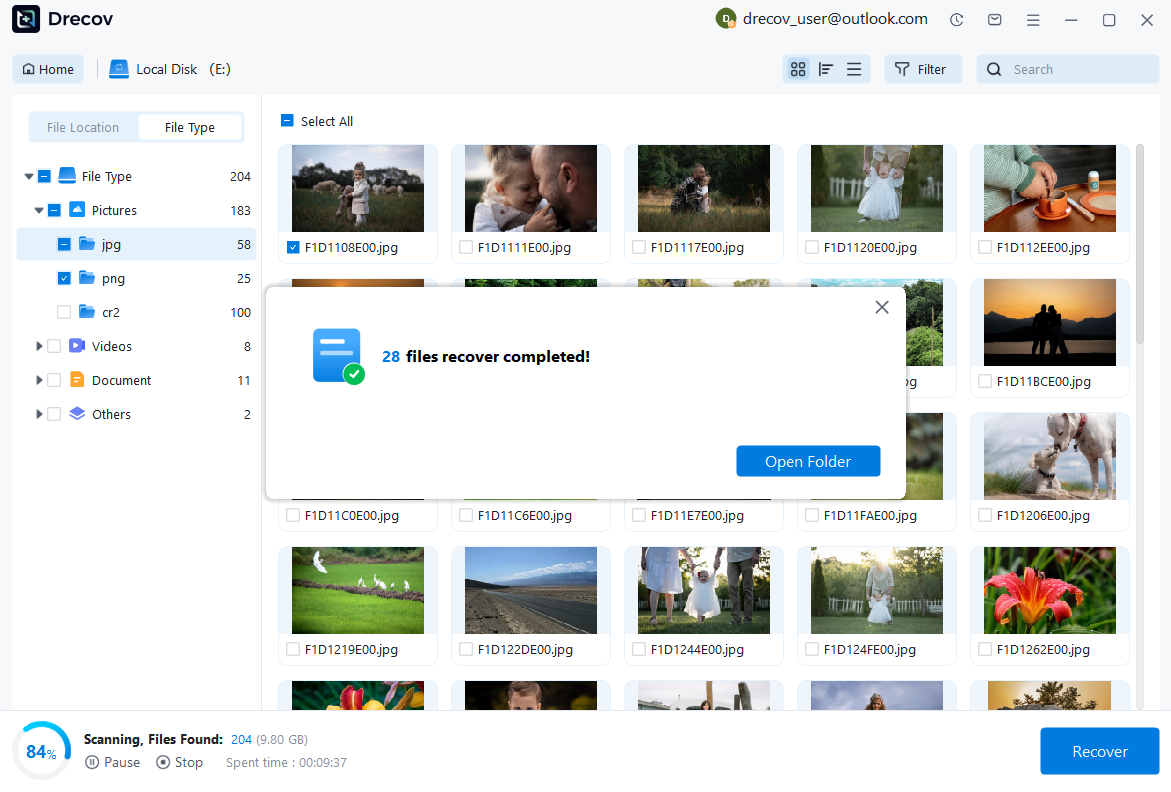
Step 3: Recover and Save to a New Location
Select the files you want to restore and click recover. Save all recovered data to a different drive or location (not the original device) to avoid overwriting lost data.
Why Choose PandaOffice Drecov Recovery Software?
PandaOffice Drecov offers a fast, secure, and user-friendly solution for recovering lost files across multiple scenarios. Whether you need email recovery, ZIP File Recovery, format data recovery, or help to recover deleted drafts Outlook, the software provides reliable recovery performance for both personal and business users.
PandaOffice Drecov supports recovery from formatted hard drives, SSDs, USB drives, SD cards, and external storage devices. Its advanced scanning engine can locate deleted archives, damaged ZIP files, lost Outlook drafts, and accidentally removed documents with high accuracy. For users searching for how to find deleted messages in Teams, PandaOffice Drecov can also help recover exported chat files, attachments, and related local cache data when available.
After recovery, test the file again. If the audio stream was damaged because of storage issues, a recovered version may play normally.
This method is particularly useful when only a few files exhibit audio problems while VLC works correctly with all other media.
This method can help users recover files from floppy disk storage after accidental deletion, formatting, or logical corruption.
Previewing and Recovering Lost Data
After the scan finishes, Pandaoffice Drecov typically displays recoverable files in categories based on file type and location.
To recover the detected files:
- Browse the scan results.
- Locate the desired documents, images, or archives.
- Use the preview feature when available.
- Select the files you wish to restore.
- Choose a recovery destination on a different storage device.
- Start the recovery process.
- Verify the recovered files after completion.
Saving recovered files to another device helps prevent accidental overwriting of recoverable data.
Best Practices for Successful Floppy Data Recovery
To improve the success rate of floppy data recovery, follow these recommendations:
- Stop using the floppy disk immediately after data loss.
- Avoid formatting the disk again.
- Minimize repeated read attempts.
- Use a reliable floppy drive.
- Create a disk image whenever possible.
The sooner recovery begins, the higher the probability of retrieving intact files.
⚠️Warning: Never save recovered files back to the original floppy disk. Doing so may overwrite remaining recoverable data.
Method 4: Recover Data from a Floppy Disk Image
Test Environment
- Windows 10 Home 22H2
- USB Floppy Drive
- Disk Imaging Software Installed
- Aging Floppy Disk with Read Errors
When dealing with old or fragile media, creating a disk image before recovery is often the safest approach.
A disk image is an exact copy of the floppy disk stored as a file on a modern storage device. Working with the image instead of the physical disk reduces wear and protects the original media from additional damage.
Creating a Disk Image Before Recovery
- Connect the floppy drive.
- Insert the floppy disk.
- Open your disk imaging utility.
- Select the floppy disk as the source device.
- Choose a location on the hard drive for the image file.
- Start the imaging process.
- Verify that the image file was created successfully.
If the floppy disk contains weak sectors, the imaging software may recover more data than normal file-copy operations.
Extracting Files from the Disk Image
Once the image has been created:
- Open the disk image using compatible software.
- Browse the file structure.
- Identify the files that need to be recovered.
- Copy the files to a secure location.
- Verify that the files open correctly.
- Create backup copies.
- Preserve the image file for future reference.
This method is particularly useful when performing data recovery from floppy media that shows signs of physical deterioration.
Advantages of Image-Based Recovery
Image-based recovery offers several benefits:
- Reduces wear on aging floppy disks
- Preserves the original media
- Allows repeated recovery attempts
- Creates a permanent archive
- Improves recovery workflow
For particularly old disks, creating an image should often be the first recovery step.
Method 5: Seek Professional Floppy Drive Data Recovery Services
Test Environment
- Physically Damaged Floppy Disk
- Severe Read Errors
- DIY Recovery Attempts Failed
- High-Value Data Stored on Media
Some floppy disks suffer damage beyond the capabilities of standard recovery tools.
Examples include:
- Broken media surfaces
- Severe magnetic degradation
- Water damage
- Mold contamination
- Mechanical destruction
In these cases, professional recovery services may provide the only realistic chance of success.
When Professional Recovery Is Necessary
Consider professional assistance if:
- The floppy disk is physically damaged.
- The drive cannot recognize the media.
- The disk produces unusual noises during access.
- Recovery software cannot detect files.
- The stored data is highly valuable.
Professionals often have specialized hardware unavailable to typical users.
What Specialists Can Recover
Professional recovery laboratories may be able to recover:
- Deleted files
- Corrupted documents
- Damaged directory structures
- Partially degraded sectors
- Legacy software archives
While no recovery is guaranteed, specialists frequently achieve better results with severely damaged media.
Factors Affecting Recovery Success Rates
Several variables influence recovery outcomes:
- Physical condition of the floppy disk
- Age of the media
- Storage conditions
- Extent of data corruption
- Number of previous recovery attempts
Early intervention generally improves recovery success.
⚠️Warning: Continuing to use a physically damaged floppy disk may cause additional deterioration and reduce the chances of successful recovery.
Protecting Floppy Disk Data from Future Loss
Create Digital Copies of Legacy Media
The best long-term preservation strategy is converting floppy disks into digital archives.
Recommended practices include:
- Copy all accessible files to modern storage.
- Create disk images of important floppy disks.
- Store copies on multiple devices.
- Verify archive integrity periodically.
- Maintain organized file structures.
Digital copies eliminate many of the risks associated with aging magnetic media.
Store Floppy Disks in Proper Environmental Conditions
Environmental conditions significantly affect floppy disk longevity.
To maximize lifespan:
- Store disks in a cool location.
- Maintain low humidity levels.
- Keep disks away from magnetic fields.
- Use protective storage cases.
- Avoid direct sunlight exposure.
Proper storage can slow media degradation and preserve floppy disk data for longer periods.
Use Reliable Backup Strategies for Archived Files
No recovery method is as reliable as a good backup.
Recommended backup practices include:
- Local backups
- External drive backups
- Cloud backups
- Disk image archives
- Multiple backup generations
Redundant backups greatly reduce the need for future file recovery floppy disk procedures.
Check Older Storage Media Regularly
Many users store floppy disks for years without testing them.
Periodic inspection helps identify problems before complete failure occurs.
Suggested maintenance:
- Test disks annually.
- Verify file accessibility.
- Create updated backups.
- Replace deteriorating media.
- Monitor storage conditions.
Proactive preservation is often easier than recovery.
⚠️Warning: Exposure to heat, moisture, and magnetic fields can permanently destroy floppy disk data.
Frequently Asked Questions About Floppy Disk Data Recovery
Can Data Recovery from Floppy Disks Still Be Successful Today?
Yes. Modern recovery tools can often retrieve information from floppy disks, especially when the media remains physically intact.
Success rates depend on:
- Disk condition
- Type of data loss
- Recovery timing
- Hardware quality
Many users successfully perform floppy disk data recovery even on media that is decades old.
How Long Does Floppy Disk Data Last?
There is no exact lifespan.
Under good storage conditions, floppy disks may remain readable for many years. However, magnetic degradation gradually increases over time.
Factors affecting lifespan include:
- Temperature
- Humidity
- Handling practices
- Manufacturing quality
Regular backups remain the safest approach.
What If My Computer Does Not Have a Floppy Drive?
Most modern computers no longer include floppy drives.
Possible solutions include:
- USB floppy drives
- Legacy desktop systems
- Professional recovery services
- Specialized archival hardware
USB floppy drives are usually the simplest option for accessing old disks.
Can Formatted Floppy Disks Be Recovered?
In many cases, yes.
If new data has not overwritten the original sectors, recovery software may still locate deleted file entries and restore usable files.
This is a common situation encountered during data recovery floppy operations.
What Is the Difference Between Logical and Physical Damage?
Logical damage involves software-related issues such as:
- Deleted files
- Corrupted file systems
- Formatting errors
Physical damage includes:
- Scratches
- Broken media
- Magnetic degradation
- Mechanical defects
Logical damage is generally easier to recover than severe physical damage.
Conclusion
Most Effective Ways to Recover Files from Floppy Disk
There are several proven methods for recovering data from legacy floppy disks:
- Testing alternative floppy drives
- Using Windows repair utilities
- Performing floppy data recovery with Pandaoffice Drecov
- Creating and analyzing disk images
- Seeking professional recovery assistance
The best approach depends on the condition of the disk and the type of data loss involved.
Choosing the Right Recovery Method
Simple read errors, testing another drive may be sufficient.
Deleted files, recovery software can often help.
Aging or damaged media, disk imaging may provide the safest option.
Severe physical damage, professional recovery services typically offer the highest chance of success.
Preserving Valuable Legacy Data for the Future
Old floppy disks often contain irreplaceable information. Whether you’re attempting to recover floppy disk files today or preserve historical archives for the future, proactive backups remain the most effective protection.
By following the methods outlined above, users can improve their chances of successful floppy drive data recovery while safeguarding valuable legacy data for years to come.






