







Understanding DiskPart Formatting in Windows
What Is DiskPart and How Does It Format Drives?
DiskPart is a built-in Windows command-line utility designed for managing disks, partitions, and volumes. Unlike the graphical Disk Management tool, DiskPart allows users to perform advanced storage operations directly through Command Prompt. One of its most common uses is diskpart format operations, which prepare storage devices for use by applying a file system such as NTFS, FAT32, or exFAT.
Many IT professionals prefer formatting using diskpart because it offers greater control over storage devices and can be used even when graphical tools fail to work properly. Whether you need to erase an old hard drive, prepare a USB flash drive, or initialize a newly installed SSD, DiskPart provides an efficient solution.
The process usually involves selecting a disk, creating or choosing a partition, and running the appropriate diskpart format command. Because commands are executed directly by Windows storage services, the process is typically fast and reliable.
However, DiskPart should be used carefully. Unlike graphical interfaces that often display confirmation prompts, DiskPart commands can immediately affect storage devices. Selecting the wrong disk may result in data loss.
For this reason, users should always verify the target drive before executing commands. When used correctly, diskpart format drive operations can solve many storage-related issues and help maintain healthy disk performance.
When to Use DiskPart Instead of Disk Management
Windows includes Disk Management, a graphical utility that handles many common disk tasks. However, there are situations where format by diskpart becomes a better option.
One example is when a drive becomes inaccessible or corrupted. Disk Management may fail to detect the partition properly, while DiskPart can still communicate directly with the storage device. Likewise, some USB drives and external disks cannot be formatted successfully through File Explorer but can be repaired through DiskPart commands.
Another reason to use DiskPart is automation. Administrators often deploy storage configurations across multiple computers. Instead of repeating the same actions manually, they can create scripts that use the diskpart command format process to configure disks automatically.
DiskPart is also useful when preparing installation media, troubleshooting partition issues, removing damaged partition tables, or converting storage devices between MBR and GPT layouts.
Although Disk Management remains suitable for casual users, DiskPart provides deeper control over storage operations. As long as users understand the commands involved, format drive with diskpart can be faster and more flexible than graphical alternatives.
⚠️Warning: Always back up important files before performing formatting operations because formatting may make existing data inaccessible.
Why You May Need to Format a Drive with DiskPart
Common Situations That Require Disk Formatting
There are many scenarios where users need to format disk in diskpart before using a storage device.
A common example is installing a new hard drive. Fresh drives often contain unallocated space that must be partitioned and formatted before Windows can store data on them. Similarly, replacing an older HDD with an SSD may require formatting to establish a clean file system.
Formatting is also helpful when storage devices develop file system corruption. Unexpected shutdowns, malware infections, hardware failures, or interrupted write operations can damage a partition structure. In such cases, the operating system may report that the drive must be formatted before it can be accessed.
External storage devices frequently require formatting as well. USB flash drives used across multiple operating systems may need a compatible file system such as exFAT. Likewise, users preparing drives for gaming consoles, media devices, or backup systems often perform format disk diskpart operations to ensure compatibility.
Another reason involves privacy and security. Before selling, donating, or recycling a drive, formatting helps remove existing file system information and prepares the device for its next owner.
Because storage devices are used in many different environments, knowing how to apply the correct format command in diskpart is an important skill for both home users and IT professionals.
Benefits of Formatting Using DiskPart
Using DiskPart for formatting offers several advantages over traditional methods.
First, it provides precise control over storage devices. Users can target specific disks, partitions, or volumes without navigating through multiple graphical menus. This level of control is especially valuable when managing multiple drives.
Second, diskpart format disk procedures often succeed when other formatting methods fail. Drives that appear inaccessible or unresponsive in File Explorer can sometimes be repaired through DiskPart commands.
Third, DiskPart supports various file systems, including NTFS, FAT32, and exFAT. This flexibility allows users to configure storage devices according to their needs. For example, NTFS is typically used for internal drives, while exFAT is often preferred for portable storage.
Another advantage is efficiency. Once familiar with the commands, users can complete disk management tasks quickly. Many organizations automate formatting using diskpart through scripts to reduce deployment time.
Finally, DiskPart works directly within the Windows command environment and does not require additional software. This makes it readily available whenever disk maintenance is necessary.
Despite these advantages, users should still approach formatting with caution. The process may erase existing file system structures and should only be performed after important data has been backed up.
How to Format a Drive Using DiskPart Commands
Method 1: Format an Existing Partition with DiskPart
Purpose: Format an existing partition while keeping the overall disk structure intact.
Test Environment
- Windows 10 Pro 22H2
- 512 GB SSD
- NTFS file system
- Administrator Command Prompt
This method is useful when a partition becomes corrupted, needs a different file system, or requires a fresh start.
Instructions
1. Open Command Prompt as Administrator.
2. Launch DiskPart.
diskpart
3. Display all available volumes.
list volume
4. Locate the volume you want to format and select it.
select volume 3
5. Execute the diskpart format command.
format fs=ntfs quick
To use exFAT instead:
format fs=exfat quick
6. Assign a drive letter if needed.
assign letter=F
7. Wait for the process to finish and verify that the partition appears in File Explorer.
Result
The selected partition receives a new file system and becomes ready for data storage. This approach is commonly used when a partition experiences file system errors or when users want to clear existing contents before reusing the volume.
⚠️Warning: Formatting a partition may make existing files inaccessible. Verify backups before continuing.
Method 2: Format a New Hard Drive with DiskPart
Purpose: Prepare a newly installed hard drive for use in Windows.
Test Environment
- Windows 10 Pro 22H2
- 1 TB SATA HDD
- Unallocated disk space
- Administrator privileges
When a new drive is installed, Windows may detect the hardware but not display a usable partition. In such cases, users must initialize, partition, and format the drive.
Instructions
1. Open Command Prompt as Administrator.
2. Launch DiskPart.
diskpart
3. Display available disks.
list disk
4. Select the newly installed drive.
select disk 1
5. Create a primary partition.
create partition primary
6. Select the new partition.
select partition 1
7. Run the format command in diskpart.
format fs=ntfs quick
8. Assign a drive letter.
assign letter=G
9. Exit DiskPart and verify that the drive appears in File Explorer.
Result
The new hard drive becomes fully functional and ready to store files, applications, backups, or operating system data. This is one of the most common situations where users format drive with diskpart to prepare storage devices for daily use.
By creating a clean partition structure and applying a supported file system, the drive can immediately begin serving its intended purpose within Windows.
Method 3: Format an External USB Drive Using DiskPart
Purpose: Format a USB flash drive or external storage device using DiskPart when standard formatting tools fail.
Test Environment
- Windows 10 Pro 22H2
- 128 GB USB flash drive
- USB 3.0 connection
- exFAT and FAT32 testing
External storage devices often become unreadable due to file system corruption, improper removal, or compatibility issues. In many cases, File Explorer may be unable to complete the formatting process. Using format by diskpart can provide a more reliable solution.
Instructions
1. Connect the USB drive to your computer.
2. Open Command Prompt as Administrator.
3. Launch DiskPart.
diskpart
4. Display all connected disks.
list disk
5. Identify and select the USB drive.
select disk 2
6. Remove existing partition information if necessary.
clean
7. Create a new primary partition.
create partition primary
8. Select the partition.
select partition 1
9. Apply a file system.
format fs=exfat quick
For FAT32:
format fs=fat32 quick
10. Assign a drive letter.
assign
Result
The USB drive is reformatted and becomes accessible again. This method is useful when removable media becomes corrupted or needs to be prepared for use with gaming consoles, cameras, or multiple operating systems.
Method 4: Clean and Format a Corrupted Disk with DiskPart
Purpose: Repair a drive that contains damaged partitions or file system errors.
Test Environment
- Windows 10 Pro 22H2
- 1 TB HDD
- Corrupted partition table
- NTFS file system
A damaged partition structure may prevent Windows from recognizing a drive correctly. In severe cases, users may receive error messages indicating that the drive must be formatted before use.
Using format disk diskpart procedures can help rebuild the storage structure from scratch.
Instructions
1. Open Command Prompt as Administrator.
2. Start DiskPart.
diskpart
3. View available disks.
list disk
4. Select the affected drive.
select disk 1
5. Verify the disk information.
detail disk
6. Remove the damaged partition structure.
clean
7. Create a new primary partition.
create partition primary
8. Select the partition.
select partition 1
9. Perform the diskpart command format operation.
format fs=ntfs quick
10. Assign a drive letter.
assign letter=H
Result
The corrupted drive receives a fresh partition table and file system, making it usable again.
⚠️Warning: The clean command removes all partition information from the selected disk. Verify the correct disk before proceeding.
Method 5: Recover Files After an Accidental DiskPart Format with Pandaoffice Drecov
Purpose: Recover important files after an unintended formatting operation.
Test Environment
- Windows 10 Pro
- 512 GB SSD
- NTFS partition
- Accidental format scenario
One of the biggest risks associated with diskpart format drive operations is accidental data loss. If the wrong partition or disk is selected, valuable files may become inaccessible.
Fortunately, data recovery may still be possible if new data has not overwritten the original files.
Instructions
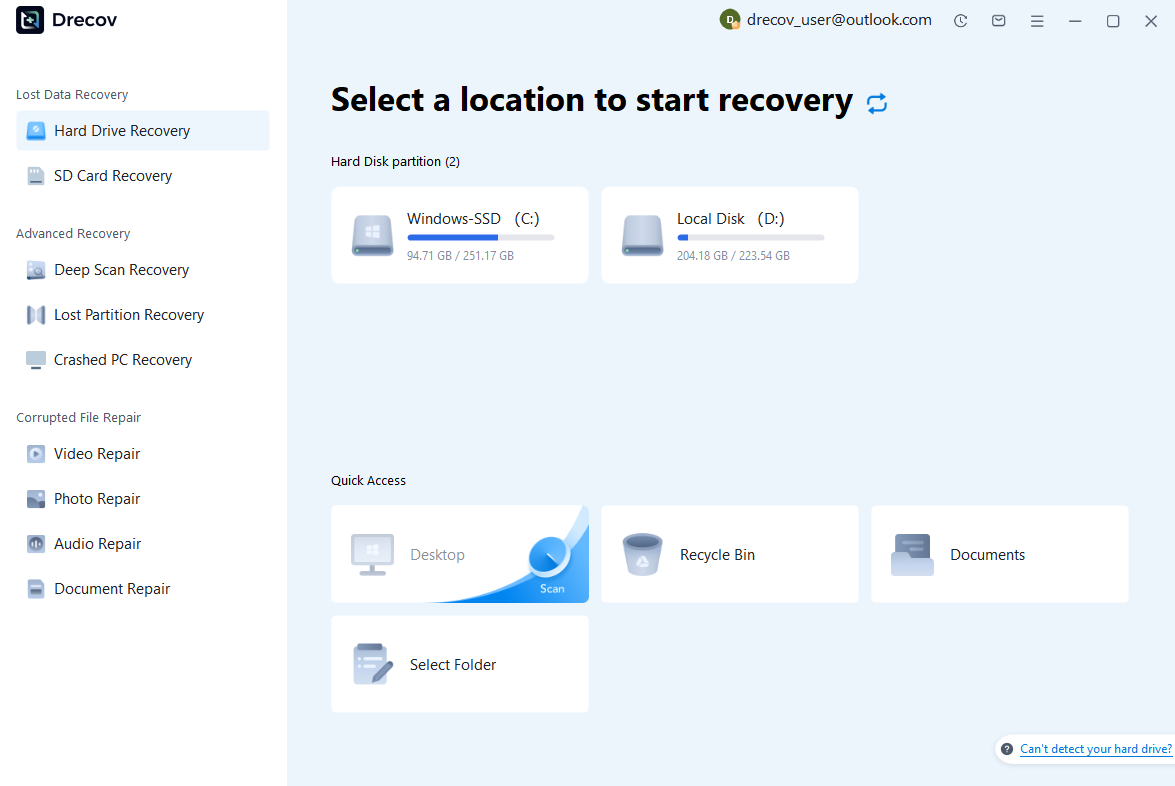
Step 1: Connect the Drive / USB)
Connect your device (SD card, HDD/SSD, or USB drive) to your computer and launch PandaOffice Drecov. Select the target device and start the scan. The software will perform a quick scan and deep scan to detect lost or deleted data.
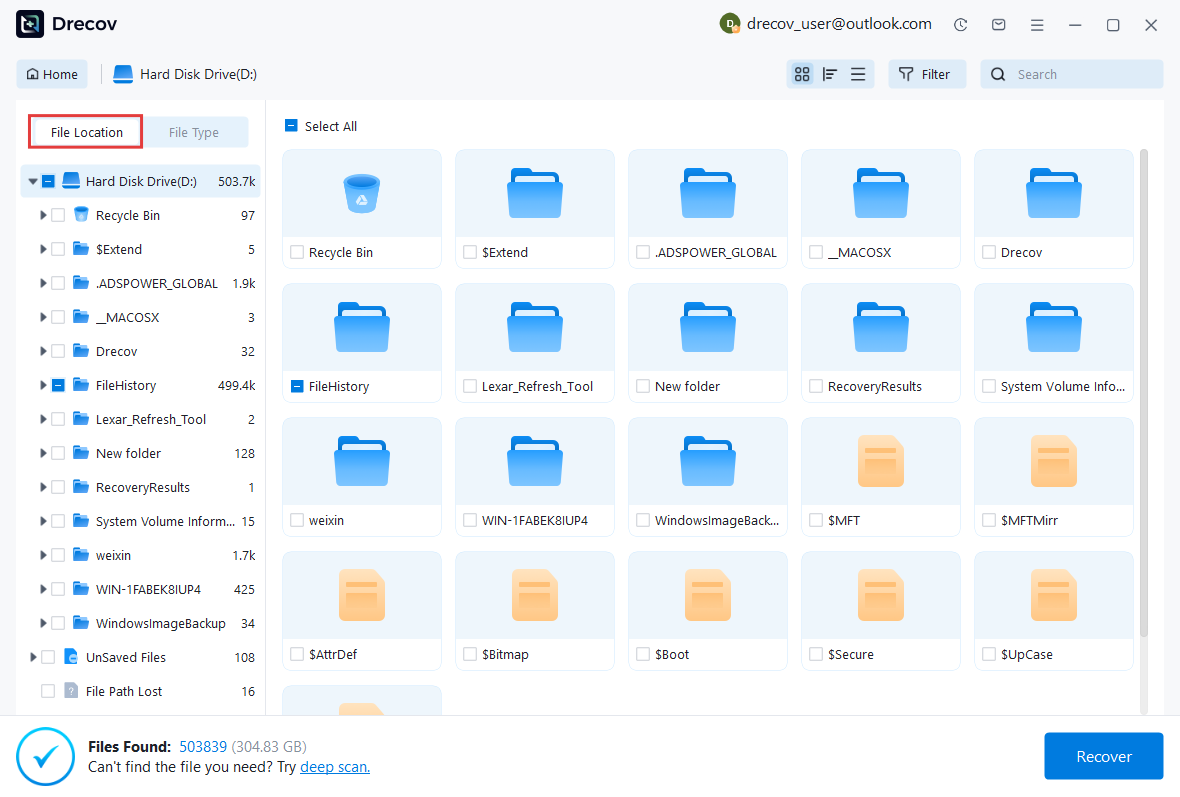
Step 2: Locate and Preview Lost Files
After scanning, browse the detected files and use the preview feature to check recoverable data. You can preview documents (Word, Excel, PDF), photos, and videos to ensure file integrity before recovery.
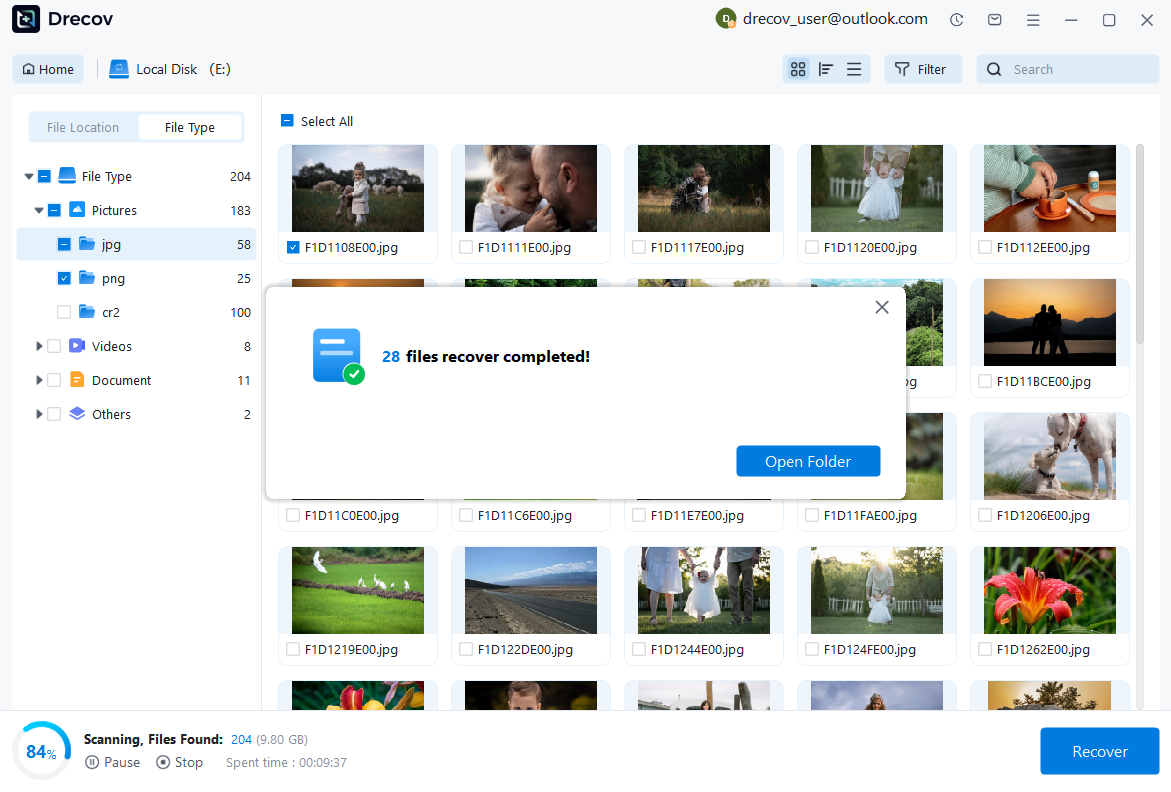
Step 3: Recover and Save to a New Location
Select the files you want to restore and click recover. Save all recovered data to a different drive or location (not the original device) to avoid overwriting lost data.
Why Choose PandaOffice Drecov Recovery Software?
PandaOffice Drecov offers a fast, secure, and user-friendly solution for recovering lost files across multiple scenarios. Whether you need email recovery, ZIP File Recovery, format data recovery, or help to recover deleted drafts Outlook, the software provides reliable recovery performance for both personal and business users.
PandaOffice Drecov supports recovery from formatted hard drives, SSDs, USB drives, SD cards, and external storage devices. Its advanced scanning engine can locate deleted archives, damaged ZIP files, lost Outlook drafts, and accidentally removed documents with high accuracy. For users searching for how to find deleted messages in Teams, PandaOffice Drecov can also help recover exported chat files, attachments, and related local cache data when available.
After recovery, test the file again. If the audio stream was damaged because of storage issues, a recovered version may play normally.
This method is particularly useful when only a few files exhibit audio problems while VLC works correctly with all other media.
This method can help users recover files from floppy disk storage after accidental deletion, formatting, or logical corruption.
Result
Pandaoffice Drecov can help recover documents, photos, videos, archives, and other file types that become inaccessible after accidental formatting. The sooner recovery begins, the better the chances of restoring lost data.
⚠️Warning: Do not save recovered files back to the same drive being recovered.
Troubleshooting DiskPart Format Issues
DiskPart Access Is Denied
This error usually appears when Command Prompt lacks administrative privileges or when the target drive is write-protected.
Common solutions include:
- Running Command Prompt as Administrator.
- Removing write protection from the device.
- Closing applications currently using the drive.
- Checking user account permissions.
In many cases, simply reopening Command Prompt with elevated privileges resolves the issue.
Virtual Disk Service Errors During Formatting
Virtual Disk Service errors may occur when Windows cannot communicate properly with the storage device.
Possible causes include:
- Damaged USB connections.
- Faulty storage controllers.
- Corrupted partition information.
- Hardware failures.
Recommended solutions:
1. Disconnect and reconnect the drive.
2. Restart the computer.
3. Use the following command to rebuild the partition structure:
clean
4. Create a new partition and retry the formatting process.
Many Virtual Disk Service errors disappear once damaged partition information is removed.
DiskPart Cannot Format the Selected Volume
Sometimes Windows reports that the selected volume cannot be formatted.
Potential reasons include:
- The partition is currently in use.
- The volume contains system files.
- Hardware problems exist.
- File system corruption is severe.
Possible solutions:
- Close applications accessing the drive.
- Run CHKDSK to check for file system issues.
- Boot from external media if the system partition must be formatted.
- Recreate the partition using DiskPart.
These steps often resolve situations where the diskpart format disk operation cannot complete successfully.
Frequently Asked Questions About DiskPart Formatting
What Is the DiskPart Format Command?
The diskpart format command applies a file system to a selected partition or volume.
A common example is:
format fs=ntfs quick
This command creates an NTFS file system and performs a quick format.
Other supported file systems include FAT32 and exFAT.
Can DiskPart Format a System Drive?
DiskPart cannot format the currently running Windows partition while the operating system is active.
To format a system drive, users must:
- Boot from Windows installation media.
- Use Windows Recovery Environment.
- Access Command Prompt before Windows starts.
This prevents accidental removal of active system files.
What File Systems Does DiskPart Support?
DiskPart commonly supports:
- NTFS
- FAT32
- exFAT
The best choice depends on the intended use of the drive.
NTFS is generally preferred for Windows system drives, while exFAT is often recommended for portable storage devices that require cross-platform compatibility.
How Long Does DiskPart Formatting Take?
The required time depends on:
- Drive capacity
- Storage type
- File system
- Quick or full format selection
A quick format may finish within seconds, while a full format on a large hard drive can require significantly more time.
SSDs usually complete formatting faster than traditional hard drives.
Key Takeaways for Formatting Drives with DiskPart
Best Practices Before Running DiskPart Commands
Before executing any formatting operation, users should:
- Back up important files.
- Verify disk numbers carefully.
- Disconnect unnecessary storage devices.
- Confirm the selected partition.
- Use administrator privileges.
Following these precautions can significantly reduce the risk of accidental data loss.
How to Avoid Data Loss During Disk Formatting
Most formatting mistakes occur because users select the wrong disk or partition.
To stay safe:
- Always run list disk before selecting a drive.
- Use detail disk to verify the target device.
- Review commands before pressing Enter.
- Keep current backups of critical files.
Taking a few extra seconds to verify information can prevent hours of recovery work later.
Conclusion
Learning how to use diskpart format operations effectively can help users manage storage devices, repair corrupted drives, prepare new disks, and configure removable media. Whether you need to format disk in diskpart, rebuild a damaged partition, or prepare a newly installed hard drive, DiskPart provides powerful tools for disk management directly from the command line.
This guide covered the most common formatting using diskpart procedures, including formatting partitions, external drives, and damaged disks. It also explored troubleshooting techniques and recovery options when accidental formatting occurs. By understanding the proper format command in diskpart and following recommended safety practices, users can confidently manage their storage devices while minimizing the risk of data loss.






