







Many Windows users encounter a frustrating situation where a hard drive suddenly appears as unknown disk not initialized in Disk Management. When this happens, the drive may become inaccessible, stored files may disappear, and Windows may prompt users to initialize the disk before use.
This issue can affect internal hard drives, external storage devices, SSDs, memory cards, and USB drives. Although the error often looks serious, it does not always mean the drive has failed permanently. In many cases, data can still be recovered and the disk can be repaired.
This guide explains why the disk unknown not initialized error occurs, how to determine whether the drive is recoverable, and several proven methods to fix the problem while protecting your data.
Understanding the Unknown Disk Not Initialized Problem
What Does Unknown Disk Not Initialized Mean?
When Windows displays a drive as unknown disk not initialized, it means the operating system cannot properly identify the disk structure.
Instead of showing normal partitions, the drive may appear as:
- Unknown
- Not Initialized
- Unallocated
- Offline
As a result, Windows cannot access the file system or stored data.
Many users first discover the problem while opening Disk Management and noticing messages such as:
- Disk Unknown Not Initialized
- Disk Not Initialized
- Unallocated Space
- Unknown Partition Structure
The issue can occur on both new and previously functioning drives.
How Windows Detects Storage Devices
Every storage device contains critical information that helps Windows recognize and access data.
This information includes:
- Partition tables
- Boot records
- Disk signatures
- File system metadata
If any of these components become corrupted, Windows may no longer identify the drive correctly.
The result is often the disk unknown not initialized status.
Can Data Still Be Recovered?
In many situations, yes.
When a drive appears as disk 1 unknown not initialized, the data itself may still exist on the storage media. The problem often involves damaged metadata rather than deleted files.
Recovery success depends on:
- Drive condition
- Hardware health
- Cause of the error
- Whether new data has been written
⚠️ Warning: Do not initialize the drive immediately if important files are stored on it. Initialization may complicate data recovery efforts.
Common Causes Behind Disk Unknown Not Initialized Errors
Corrupted Partition Tables
The partition table tells Windows how data is organized on a drive.
Corruption may occur because of:
- Improper shutdowns
- Software crashes
- Malware infections
- Power interruptions
Without a valid partition table, Windows may label the disk as unknown.
Damaged Master Boot Record
The Master Boot Record (MBR) contains essential startup information for storage devices.
When the MBR becomes damaged:
- Partitions may disappear.
- Drives may become inaccessible.
- Windows may report initialization errors.
This is a common cause of the unknown disk not initialized issue.
Connection Problems
Hardware connectivity issues can also trigger the error.
Examples include:
- Faulty SATA cables
- Damaged USB cables
- Loose connections
- Defective USB ports
Before attempting advanced repairs, users should always verify physical connections.
Bad Sectors and Drive Failure
Storage devices naturally wear out over time.
Bad sectors may prevent Windows from reading important disk information.
Signs of hardware failure include:
- Clicking sounds
- Slow performance
- Read errors
- Random disconnections
When physical damage exists, recovery becomes more challenging.
Virus and Malware Damage
Some malware specifically targets partition structures and boot information.
As a result, drives may suddenly appear as:
- Unknown
- Unallocated
- Not initialized
Running security scans can help identify potential infections.
How to Check Whether the Drive Is Recoverable
Verify Disk Detection in BIOS
Before attempting software repairs, confirm that the drive is recognized by the system firmware.
Check:
- BIOS
- UEFI settings
- Device detection lists
If the drive appears here, recovery chances are generally better.
Inspect Disk Management Status
Open Windows Disk Management and review the drive status.
Common scenarios include:
| Status | Recovery Possibility |
|---|---|
| Unknown Not Initialized | High |
| Unallocated | High |
| RAW | Medium to High |
| Offline | High |
| Not Detected | Low to Medium |
Understanding the status helps determine the most appropriate recovery method.
Listen for Mechanical Symptoms
A healthy drive should operate quietly.
Warning signs include:
- Clicking
- Grinding
- Beeping
- Failure to spin
Mechanical issues often require professional assistance.
Check SMART Attributes
SMART monitoring can reveal:
- Pending sectors
- Read errors
- Reallocated sectors
- Drive health indicators
These values help determine whether the hardware remains stable enough for recovery.
⚠️ Warning: If SMART values indicate serious degradation, create a backup image before attempting repairs.
Methods to Recover Data and Fix Unknown Disk Not Initialized
Recover Files with PandaOffice Drecov Before Initializing
Test Environment
- Operating System: Windows 11 Pro
- Storage Device: 2TB HDD
- Error Status: Disk Unknown Not Initialized
- Connection Type: SATA III
- Data Loss Scenario: Corrupted partition table
When important files exist on the affected drive, data recovery should usually come before repair attempts.
PandaOffice Drecov can scan inaccessible drives and search for recoverable files even when Windows cannot access the partition normally.
Steps to Recover Data
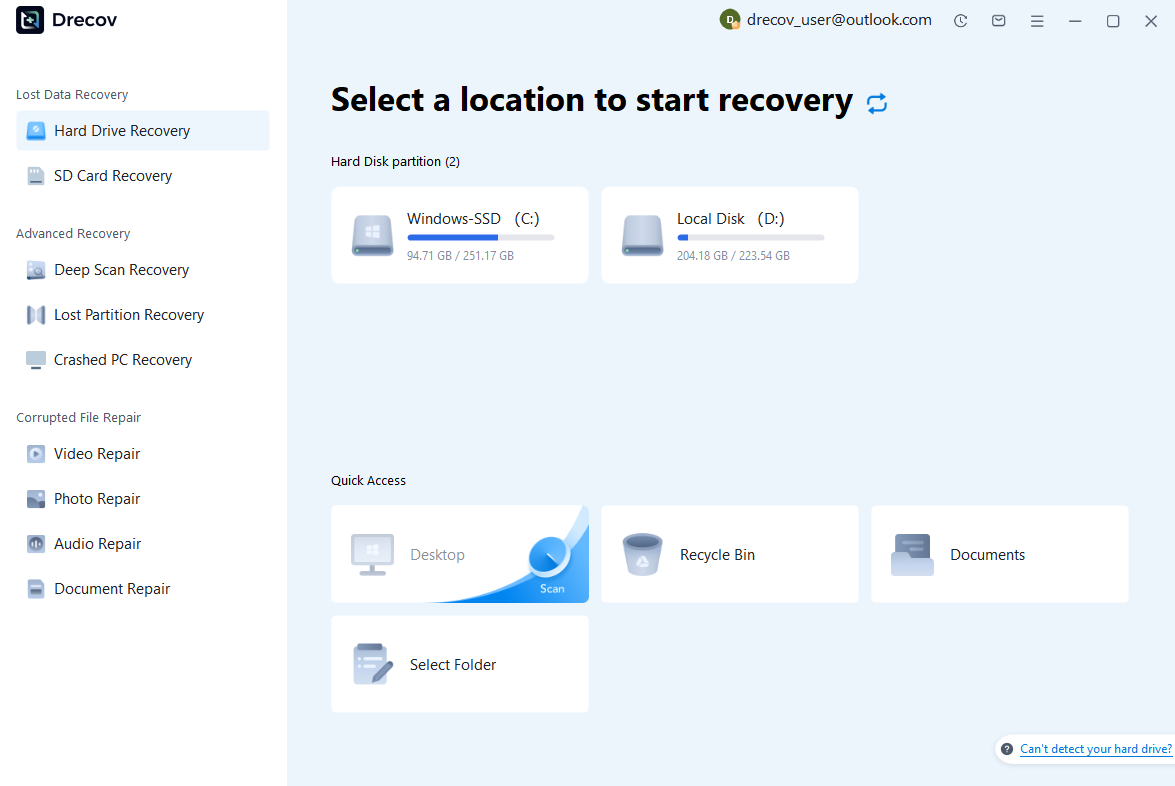
Step 1: Connect the Drive / USB)
Connect your device (SD card, HDD/SSD, or USB drive) to your computer and launch PandaOffice Drecov. Select the target device and start the scan. The software will perform a quick scan and deep scan to detect lost or deleted data.
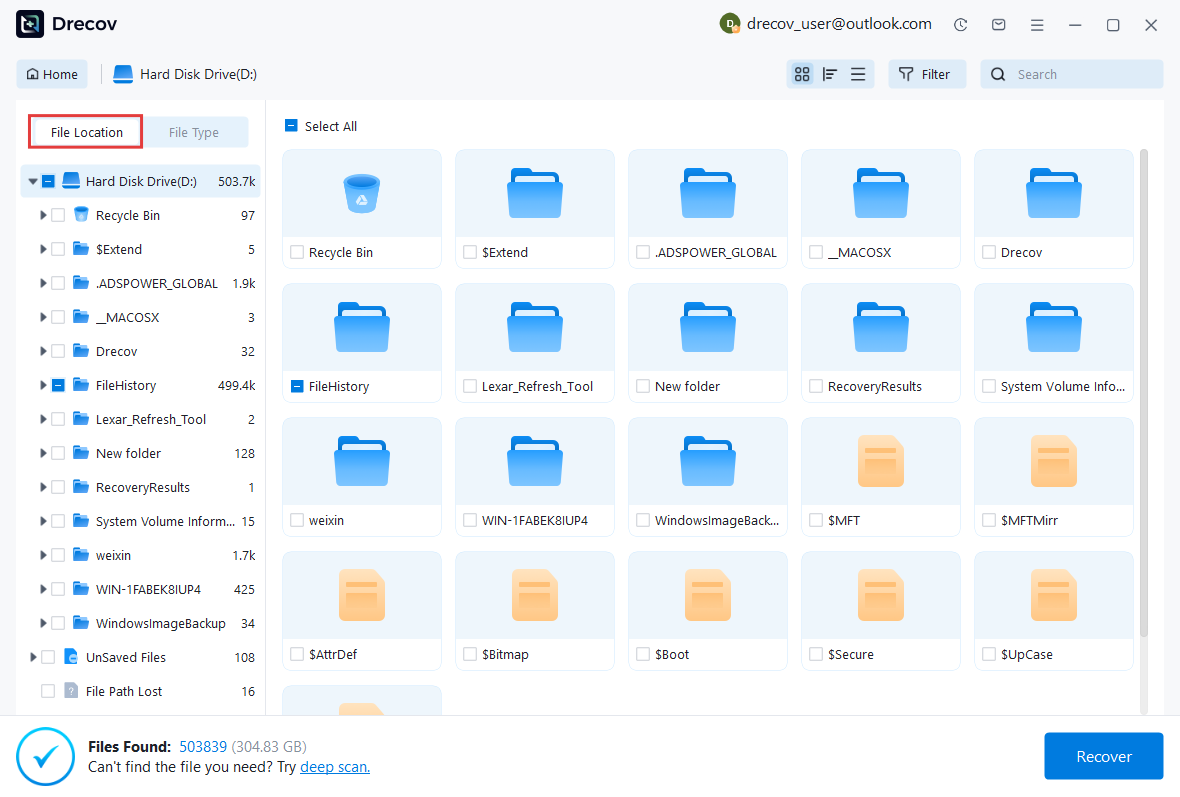
Step 2: Locate and Preview Lost Files
After scanning, browse the detected files and use the preview feature to check recoverable data. You can preview documents (Word, Excel, PDF), photos, and videos to ensure file integrity before recovery.
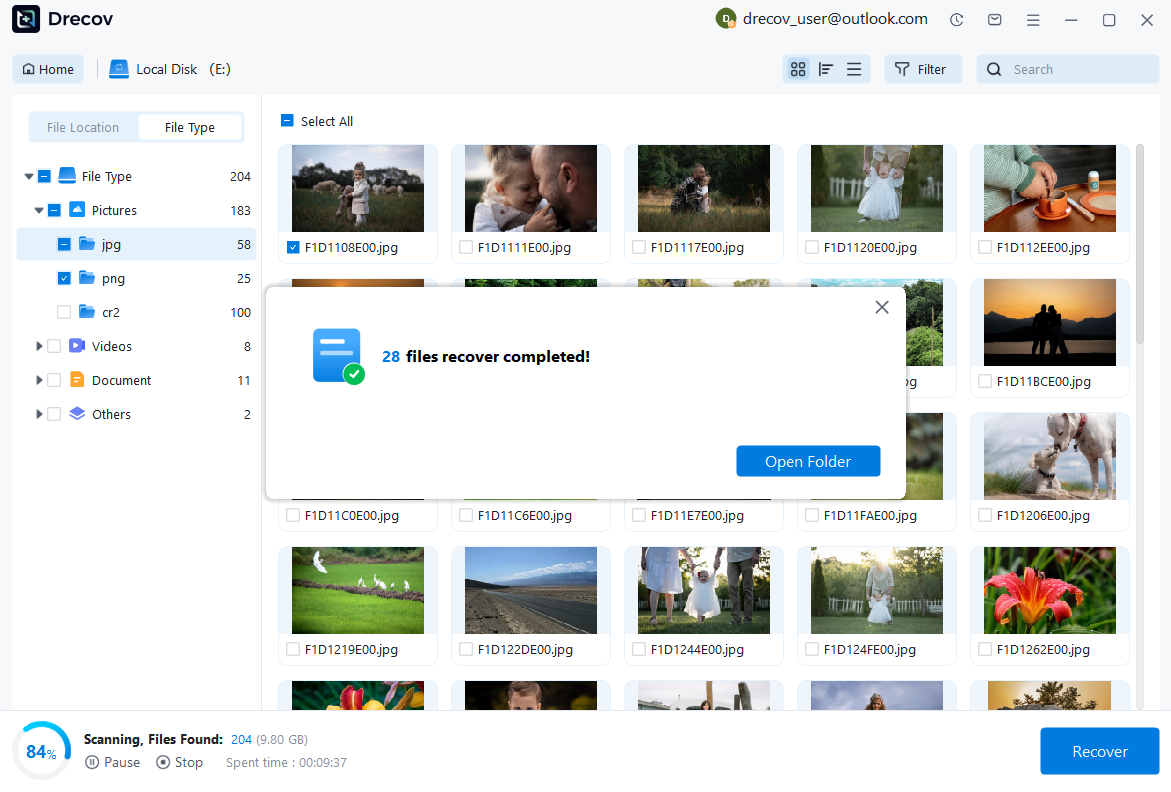
Step 3: Recover and Save to a New Location
Select the files you want to restore and click recover. Save all recovered data to a different drive or location (not the original device) to avoid overwriting lost data.
Why Choose PandaOffice Drecov Recovery Software?
PandaOffice Drecov offers a fast, secure, and user-friendly solution for recovering lost files across multiple scenarios. Whether you need email recovery, ZIP File Recovery, format data recovery, or help to recover deleted drafts Outlook, the software provides reliable recovery performance for both personal and business users.
PandaOffice Drecov supports recovery from formatted hard drives, SSDs, USB drives, SD cards, and external storage devices. Its advanced scanning engine can locate deleted archives, damaged ZIP files, lost Outlook drafts, and accidentally removed documents with high accuracy. For users searching for how to find deleted messages in Teams, PandaOffice Drecov can also help recover exported chat files, attachments, and related local cache data when available.
After recovery, test the file again. If the audio stream was damaged because of storage issues, a recovered version may play normally.
This method is particularly useful when only a few files exhibit audio problems while VLC works correctly with all other media.
This method can help users recover files from floppy disk storage after accidental deletion, formatting, or logical corruption.
Advantages
- Protects files before repair attempts.
- Supports deep sector scanning.
- Works with many file types.
Limitations
- Cannot repair physical damage.
- Recovery success depends on disk condition.
⚠️ Warning: Save recovered files to a separate storage device to prevent overwriting recoverable sectors.
Initialize the Disk Through Disk Management
Test Environment
- Operating System: Windows 10 Pro
- Storage Device: 1TB HDD
- Error Status: New drive showing as unknown
- Connection Type: SATA
If the drive is brand new and contains no important files, initialization may resolve the issue quickly.
Steps to Initialize a Disk
- Press Windows + X.
- Open Disk Management.
- Locate the affected disk.
- Right-click the disk label.
- Select Initialize Disk.
- Choose MBR or GPT.
- Confirm the operation.
Advantages
- Fast and simple.
- Allows partition creation.
- Suitable for new drives.
Limitations
- May affect existing partition information.
- Not recommended before recovering important data.
Repair Corrupted System Files Using CHKDSK
Test Environment
- Operating System: Windows 11
- Storage Device: External HDD
- Error Status: Intermittent accessibility
- File System: NTFS
Sometimes logical file system damage contributes to drive recognition issues.
Steps
- Open Command Prompt as Administrator.
- Enter:
chkdsk X: /f /r - Replace X with the drive letter.
- Allow the scan to complete.
- Restart the system if necessary.
Advantages
- Built into Windows.
- Repairs file system errors.
- May restore accessibility.
Limitations
- Not suitable for severe hardware damage.
- Cannot fix every initialization problem.
Rebuild the Master Boot Record (MBR)
Test Environment
- Operating System: Windows 11 Pro
- Storage Device: 1TB HDD
- Error Status: Partition inaccessible after unexpected shutdown
- Partition Style: MBR
- Connection Type: SATA III
A damaged Master Boot Record can prevent Windows from identifying a drive correctly. In some cases, rebuilding the MBR restores communication between the operating system and the storage device.
This method is especially useful when the disk previously worked normally but suddenly appears as unknown disk not initialized after a crash, malware attack, or power interruption.
Steps to Rebuild the MBR
- Boot into Windows Recovery Environment.
- Open Command Prompt.
- Enter the following commands one at a time:
bootrec /fixmbr
bootrec /fixboot
bootrec /scanos
bootrec /rebuildbcd
- Wait for each command to complete.
- Restart the computer.
- Check Disk Management again.
Advantages
- Repairs damaged boot records.
- May restore lost partition visibility.
- Does not require third-party utilities.
Limitations
- Primarily applies to MBR disks.
- Ineffective for severe hardware failures.
- May not repair heavily corrupted partition structures.
Many users facing a disk unknown not initialized issue discover that a damaged MBR is the underlying cause.
Update or Reinstall Disk Drivers
Test Environment
- Operating System: Windows 10 Pro
- Storage Device: External SSD
- Error Status: Device detected inconsistently
- Connection Type: USB 3.1
Driver corruption can occasionally cause Windows to misidentify a storage device.
When drivers fail, the disk may appear as:
- Unknown
- Offline
- Uninitialized
- Unallocated
Updating or reinstalling storage drivers may restore normal functionality.
Steps to Reinstall Drivers
- Press Windows + X.
- Open Device Manager.
- Expand Disk Drives.
- Locate the affected device.
- Right-click the drive.
- Select Uninstall Device.
- Restart the computer.
- Allow Windows to reinstall the driver automatically.
Advantages
- Simple procedure.
- No risk to stored files.
- Useful for driver-related issues.
Limitations
- Does not repair partition corruption.
- Ineffective for physical damage.
If a disk 1 unknown not initialized error appears after a Windows update, driver issues may be worth investigating.
Check and Replace Cables or USB Adapters
Test Environment
- Operating System: Windows 11
- Storage Device: External HDD
- Error Status: Random disconnects
- Connection Type: USB-to-SATA Adapter
Physical connectivity problems are often overlooked during troubleshooting.
A damaged cable may interrupt communication between the drive and Windows, causing the disk to appear unavailable.
Items to Test
- SATA cable
- USB cable
- USB hub
- Power adapter
- Motherboard port
- External enclosure
Troubleshooting Steps
- Disconnect the drive.
- Inspect cables for visible damage.
- Replace the cable with a known-good alternative.
- Test another USB port.
- Connect the drive to a different computer.
- Check whether the disk appears normally.
Advantages
- Fast diagnostic procedure.
- No risk of data loss.
- Often resolves simple hardware issues.
Limitations
- Will not repair corrupted storage structures.
- Cannot fix failing hard drives.
Many apparent unknown disk not initialized errors are eventually traced back to faulty cables or unstable power delivery.
Use Professional Data Recovery Services
Test Environment
- Storage Device: 4TB Enterprise HDD
- Error Status: Not detected in BIOS
- Symptoms: Clicking noises and read failures
- Data Importance: Critical business records
When software solutions fail and hardware damage is suspected, professional recovery services may be the best option.
Recovery laboratories use specialized tools to:
- Repair firmware issues
- Replace damaged components
- Access inaccessible sectors
- Clone unstable drives
- Extract recoverable files
These services are often used when valuable data cannot be replaced.
Situations Requiring Professional Recovery
- Drive not detected anywhere
- Clicking sounds
- Water damage
- Electrical failure
- Severe bad sectors
- Business-critical data loss
Advantages
- Advanced diagnostic equipment.
- Experienced recovery engineers.
- Higher success rates for damaged hardware.
Limitations
- Can be costly.
- Recovery is not guaranteed.
- Turnaround time varies.
⚠️ Warning: Repeatedly powering on a failing drive may worsen the damage and reduce recovery chances.
How to Prevent Unknown Disk Not Initialized Errors
Safely Disconnect Storage Devices
Unexpected disconnections can damage partition information and file systems.
Before unplugging a storage device:
- Close active applications.
- Finish file transfers.
- Use the Safely Remove Hardware feature.
- Wait for confirmation.
This simple habit significantly reduces corruption risks.
Maintain Reliable Power Sources
Power interruptions can damage storage structures.
To minimize risk:
- Use surge protectors.
- Install an uninterruptible power supply (UPS).
- Avoid forced shutdowns.
- Keep batteries healthy on laptops.
Stable power helps protect partition tables and boot information.
Monitor Disk Health Regularly
SMART monitoring tools can identify early warning signs before major failures occur.
Watch for:
- Reallocated sectors
- Read error rates
- Pending sectors
- Excessive temperatures
Early detection allows users to back up data before problems become severe.
Keep Malware Protection Updated
Some malware targets storage structures directly.
Regular security scans can help prevent:
- MBR corruption
- Partition damage
- Hidden file manipulation
- Storage-related malware attacks
⚠️ Warning: Always maintain current antivirus protection when using external storage devices.
Frequently Asked Questions About Unknown Disk Not Initialized Errors
What Causes an Unknown Disk Not Initialized Error?
Common causes include:
- Corrupted partition tables
- Damaged MBR records
- Hardware failures
- Driver problems
- Power interruptions
- Faulty cables
The exact cause varies depending on the device and circumstances.
Can Data Be Recovered Before Initializing the Disk?
Yes.
In many cases, files remain intact even though Windows cannot access the drive. Recovering data before initialization is usually the safest approach.
Should I Initialize the Disk Immediately?
Not if important files are stored on the drive.
Initialization may modify partition information and complicate recovery efforts. Always attempt data recovery first when valuable data is involved.
Why Does Disk 1 Unknown Not Initialized Appear?
The message typically indicates that Windows cannot read essential disk structures.
Possible causes include:
- Damaged partition tables
- Hardware communication issues
- Corrupted disk signatures
- Failing storage devices
Can CHKDSK Fix an Uninitialized Disk?
Sometimes.
CHKDSK may repair logical file system errors, but it cannot resolve every cause of initialization failures, especially hardware-related problems.
Does Initializing a Disk Delete Data?
Initialization itself primarily prepares the disk structure, but it can alter partition information.
If important files exist, recovery should be attempted first.
Can SSDs Experience This Error?
Yes.
Although SSDs lack moving parts, they can still suffer from:
- Firmware corruption
- Partition damage
- Controller issues
- Driver conflicts
The troubleshooting process is generally similar to traditional hard drives.
When Should I Seek Professional Help?
Consider professional recovery if:
- The drive clicks or beeps.
- BIOS cannot detect the disk.
- Recovery software cannot access the drive.
- The data is extremely important.
Can a Faulty USB Cable Cause This Error?
Absolutely.
Poor-quality or damaged cables can interrupt communication and make a healthy drive appear unavailable.
Always test alternative cables during troubleshooting.
Final Thoughts on Fixing Disk Unknown Not Initialized Errors
Encountering an unknown disk not initialized error can be alarming, especially when important files become inaccessible. Fortunately, this problem is often caused by corrupted metadata, damaged partition structures, driver issues, or connection problems rather than complete data loss.
Before making any major changes, evaluate the drive’s condition and attempt data recovery whenever valuable files are involved. Solutions such as PandaOffice Drecov, MBR rebuilding, driver updates, cable replacement, and disk initialization can often restore access to storage devices affected by disk unknown not initialized errors.
For drives suffering from physical damage or severe hardware failure, professional recovery services may provide the best chance of retrieving critical information.
By following proper backup practices, monitoring disk health, and maintaining stable hardware connections, users can significantly reduce the likelihood of seeing a disk 1 unknown not initialized error in the future.






