







Data loss and file corruption are the silent nightmares of the digital age. One moment you are finishing a critical presentation, and the next, you are staring at a cryptic error message. If you are wondering how to fix corrupted files windows 11, you have come to the right place. As the digital landscape evolves, Windows 11 has introduced robust security features, but files remain vulnerable to power surges, abrupt system shutdowns, and software glitches.
In this comprehensive guide, we will explore everything from basic built-in Windows utilities to professional-grade solutions like PandaOffice Drecov. We will move from the simplest command-line fixes to advanced recovery techniques, ensuring you can reclaim your digital life without breaking a sweat.
Understanding the Root Causes of File Corruption
Before we dive into the “how,” we must understand the “why.” File corruption occurs when the data within a file is organized incorrectly or written improperly to the storage medium. This results in the operating system being unable to read the file’s structure.
Common triggers include:
- Improper Shutdowns: Turning off your PC while a file is still being saved.
- Hardware Failure: Bad sectors on your Hard Disk Drive (HDD) or Solid State Drive (SSD).
- Malware Interruption: Viruses that intentionally scramble file headers.
- Software Crashes: Applications closing unexpectedly while processing data.
Phase 1: Basic System Repairs Using Native Tools
When you first encounter issues, Windows 11 offers several built-in tools that can solve internal file structure problems. These should always be your first line of defense.
How to Fix Corrupted Files Windows 11 Using SFC
The System File Checker (SFC) is a utility that allows users to scan for corruptions in Windows system files and restore them. If your OS is acting sluggish or specific system-related files won’t open, this is the tool for you.
- Step 1: Press the Windows Key and type
cmd. - Step 2: Right-click Command Prompt and select Run as Administrator. This is crucial; otherwise, the system will deny access to core files.
- Step 3: In the black window, type
sfc /scannowand press Enter. - Step 4: Wait for the process to reach 100%. If Windows finds errors, it will automatically replace the corrupted versions with cached copies stored in a compressed folder at
%WinDir%\System32\dllcache.
Phase 2: Handling Specific Storage Errors
Often, the problem isn’t the file itself but the “container” it lives in. If your drive has bad sectors, the data stored there becomes unreadable.
Repairing Files Showing 0 Bytes Windows 11
Finding your files showing 0 bytes Windows 11 is particularly distressing. It suggests that while the file name exists in the directory, the actual data content is missing or inaccessible. This often happens due to file system errors (like a corrupted Master File Table).
- Step 1: Open File Explorer and right-click the drive containing the 0-byte file.
- Step 2: Select Properties and navigate to the Tools tab.
- Step 3: Under the Error checking section, click Check.
- Step 4: Even if Windows says it hasn’t found any errors, click Scan drive. This forces a deep check of the file system integrity.
- Step 5: Once finished, restart your computer. In many cases, the file size will return to normal as the index is rebuilt.
Warning: If the 0-byte issue persists across many files, stop writing new data to that drive immediately. You might be experiencing a hardware failure.
Phase 3: Advanced Command-Line Solutions
If SFC fails to repair the corruption, you might need to repair the “Source of Truth” for your Windows image using the Deployment Image Servicing and Management (DISM) tool.
How to Fix Corrupted Files Windows 11 via DISM
- Step 1: Open Command Prompt as an administrator again.
- Step 2: Type the following command:
DISM /Online /Cleanup-Image /CheckHealth. This checks if corruption is present. - Step 3: To actually fix the corruption, type:
DISM /Online /Cleanup-Image /RestoreHealth. - Step 4: This process connects to Windows Update to download and replace damaged files. Ensure you have an active internet connection.
Phase 4: Resolving Application-Specific Blocks
Sometimes the file is perfectly fine, but the system’s security permissions or application links are broken.
The File is Corrupted and Cannot be Opened
When you see the error “the file is corrupted and cannot be opened,” specifically in Microsoft Office products (Word, Excel), it often relates to “Protected View” settings designed to stop files from the internet from harming your PC.
- Step 1: Right-click the problematic file and select Properties.
- Step 2: On the General tab, look for a section at the bottom called Security.
- Step 3: Check the box that says Unblock and click Apply.
- Step 4: If it still won’t open, open the application (like Excel), go to File > Open > Browse, select the file, and instead of clicking “Open,” click the arrow next to it and choose Open and Repair.
Phase 5: Professional Recovery with PandaOffice Drecov
When native Windows tools fail, it usually means the corruption is deeper than just a system link—it’s at the raw data level. This is where professional-grade software becomes essential.
Using PandaOffice Drecov Data Recovery Software
PandaOffice Drecov data recovery software is designed to bypass the operating system’s limitations. It reads the raw sectors of your storage device to reconstruct files that Windows has “given up” on. Whether you are dealing with a formatted drive, a deleted partition, or severe corruption, Drecov offers a high success rate.
⚠ Warning: Install it on a drive different from the one where your data was lost to prevent overwriting.
Step 1: Select the Location
Launch the software. You will see a list of available drives. Select the partition where your corrupted files are located and click Scan.

Step 2: Deep Scan Execution
The software will initiate a Quick Scan followed by a Deep Scan. The Deep Scan is particularly effective for how to fix corrupted files windows 11 scenarios because it searches for file signatures rather than just directory entries.

Step 3: Filter and Preview
Once the scan is complete, use the sidebar to filter by file type (e.g., .docx, .jpg, .mp4). PandaOffice Drecov allows you to Preview files before recovery. If you can see the preview, the file is 100% recoverable!
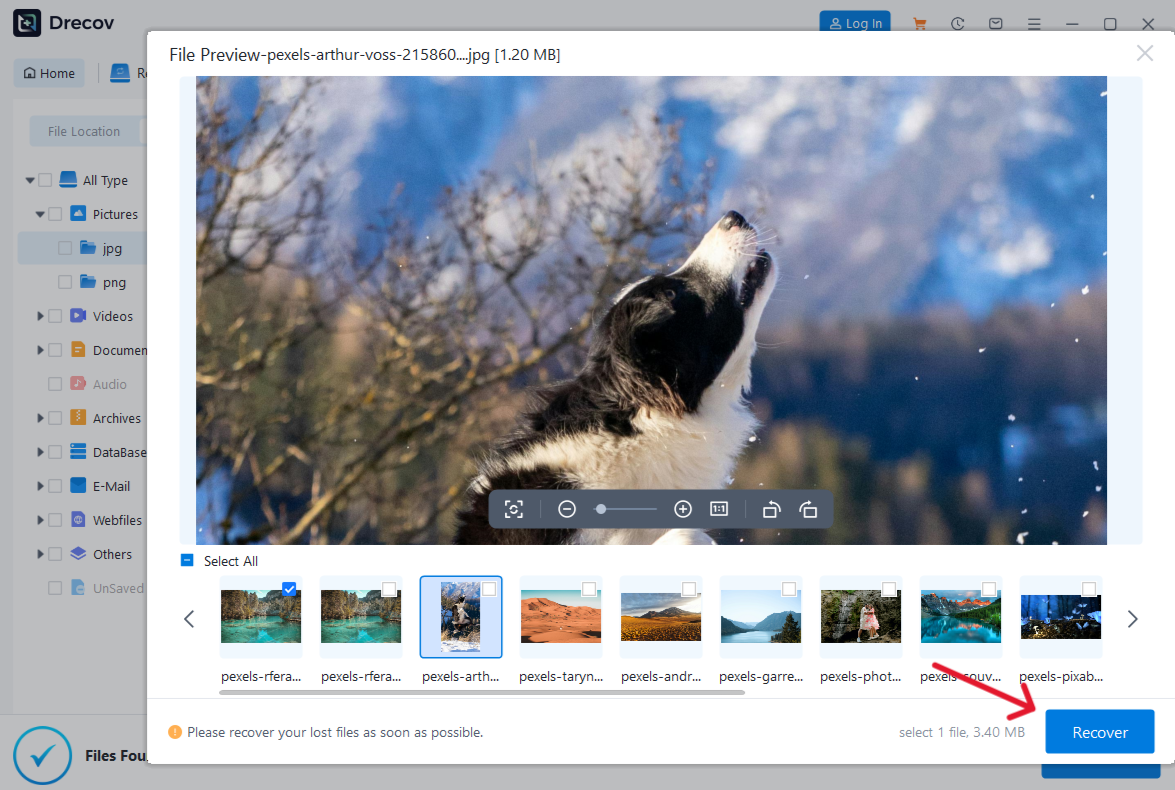
Step 4: Recover and Save
Select the files you need and click Recover. Choose a safe destination—ideally an external hard drive or a cloud storage folder.
Key Operation Point: Always use the “Deep Scan” feature if the “Quick Scan” does not show your files. It takes longer but is significantly more thorough.
Phase 6: The “Nuclear” Option – OS Repair
If the corruption is so widespread that you cannot even launch recovery tools, you must address the OS itself.
Repair Windows 11 Without Losing Data
Many users fear that fixing the OS means a factory reset. However, you can repair windows 11 without losing data by performing an “In-place Upgrade.” This replaces the Windows system files while keeping your personal files, apps, and settings untouched.
- Step 1: Visit the official Microsoft Windows 11 Download Page.
- Step 2: Under Create Windows 11 Installation Media, click Download Now.
- Step 3: Run the Media Creation Tool and select Upgrade this PC now.
- Step 4: During the process, ensure the option “Keep personal files and apps” is selected.
- Step 5: Click Install. The system will reboot several times. This essentially gives you a fresh, uncorrupted OS while your data remains exactly where you left it.
Post-Recovery: Organizing and Maintaining Your Drive
Once you have successfully learned how to fix corrupted files windows 11 and recovered your data, you should take steps to ensure it doesn’t happen again. Proper drive maintenance is the best prophylactic against data loss.
If your drive was severely corrupted, it might be time for a fresh start. Learn more about how to format a hard drive on Windows 11 to clear out bad file structures.
If you accidentally deleted files while trying to fix the corruption, don’t panic. There are specialized guides on how to recover deleted files Windows 11 that can walk you through the undelete process.
Lastly, for those using external media, understanding the nuances of different file systems is key. Check out this guide on how can I format a hard drive on Windows 11 to choose between NTFS, exFAT, or FAT32 for maximum stability.
Proactive Tips to Prevent Future Corruption
- Use a UPS: Uninterruptible Power Supplies prevent corruption caused by sudden power outages.
- Regular Backups: Always follow the 3-2-1 rule: 3 copies of data, 2 different media types, 1 off-site (cloud).
- Monitor Drive Health: Use tools like CrystalDiskInfo to monitor the S.M.A.R.T. status of your drives.
- Safely Remove Hardware: Always click “Eject” before pulling out a USB drive. It sounds old-school, but it prevents cached data from being “orphaned.”
Fix Corrupted Files Windows 11 FAQs
1. Why does Windows 11 keep saying “the file is corrupted and cannot be opened” even after I restored it from a backup?
This often happens if the backup software itself encountered an error during the saving process, or if the backup drive has failing sectors. If your backup is also corrupted, your best bet is to use PandaOffice Drecov data recovery software to scan the original source drive. It can often find older, intact versions of the file that haven’t been overwritten yet.
2. Can a virus cause files showing 0 bytes Windows 11 users often see?
Yes, absolutely. Certain types of malware or ransomware don’t just encrypt your data; they may damage the File Allocation Table (FAT) or the Master File Table (MFT). This makes the operating system believe the file has no content. If you suspect a virus, run a full system scan with Windows Defender before attempting to fix corrupted files Windows 11 methods, as the malware might re-corrupt the files as soon as you fix them.
3. Is it possible to repair Windows 11 without losing data if my PC won’t boot at all?
Yes. You will need to create a bootable USB drive using the Windows 11 Media Creation Tool on a working computer. Boot your “broken” PC from that USB, select your language, and then click Repair your computer (not Install now). From there, navigate to Troubleshoot > Reset this PC > Keep my files. This allows you to perform a system-level repair even when the desktop is inaccessible.
4. How long does the “Deep Scan” in PandaOffice Drecov usually take?
The duration depends entirely on the size and speed of your storage device. A standard 1TB HDD might take 1 to 3 hours, while a modern NVMe SSD could finish in under 30 minutes. Because the software is looking for specific data patterns (signatures) rather than just file names, it is much more effective at solving the mystery of how to fix corrupted files Windows 11 than a standard quick scan.
5. Does the SFC /scannow command fix my personal photos and documents?
No, and this is a common misconception. The SFC (System File Checker) tool is specifically designed to repair Windows system files (like .dll and .exe files required for the OS to run). To fix or recover personal documents, photos, or videos, you must use file-specific repair tools or professional recovery solutions like PandaOffice Drecov.
Conclusion
Learning how to fix corrupted files windows 11 is a skill every modern user needs. Whether you are dealing with files showing 0 bytes windows 11 or a stubborn message saying “the file is corrupted and cannot be opened,” there is almost always a path back to your data. By combining the power of Windows’ native tools with the deep-scanning capabilities of PandaOffice Drecov data recovery software, you can approach any technical glitch with confidence.
Remember, the moment you suspect corruption, stop writing new files to the disk. Act quickly, use the right tools, and your data will stay right where it belongs: in your hands.





