







Will a restore point recover deleted files? If you mean the traditional Windows System Restore feature, usually no. It rolls back system files, settings, drivers, and installed programs; it is not a personal-file backup. Check Recycle Bin, File History, cloud trash, and other copies first. If the file existed only on a local drive and was deleted, protect that drive from new writes before trying file recovery.
will a restore point recover deleted files: safe diagnosis
Windows uses the word restore for several operations. Traditional System Restore is designed to undo a system problem after a driver, update, app installation, or settings change. Microsoft says it reverts system files, registry settings, and installed programs without affecting personal files. That is exactly why it is not a reliable way to bring back a document you deleted yesterday. Reverting the system does not mean rewinding every folder to its earlier contents.
There are also file-specific backups such as File History and cloud version history. Those can contain an earlier copy of a personal file, but they are separate from System Restore. In some newer Windows environments, Microsoft also describes a distinct point-in-time restore feature that can roll back the entire system drive, including files. Its behavior, availability, and risks are different from traditional System Restore. Check the exact feature name and warning shown on your PC before assuming any “restore point” will save or preserve personal data.
Microsoft’s Windows recovery-options guide distinguishes these actions. The practical question is not whether a dated point appears on a screen; it is which feature created it and what that feature actually captures.
Choose the recovery route by where the file was stored
Before running any restore, identify the missing file’s last real location. A document in a OneDrive-synced Documents folder may have a cloud trash or version history. A file saved on a USB drive may not have entered the PC’s Recycle Bin at all. A document on a local Windows volume may still be in Recycle Bin, a File History backup, another folder, or recoverable storage space. The source changes the available options more than the date of a System Restore point.
| Last known location | Best first check | What System Restore contributes |
|---|---|---|
| Local Windows folder | Recycle Bin, File History, backup, then local recovery | Usually nothing for a deleted personal file |
| OneDrive or another cloud-synced folder | Correct account’s cloud trash and version history | Does not replace cloud-specific recovery |
| USB drive or SD card | Another copy, then stable-media recovery | A PC restore point does not back up the removable device |
| Application project with autosave | Application recovery list and project backups | May affect the app installation, not recreate missing edits |
| Unknown location | Search by name and file type across accounts and drives | Wait until the actual loss is identified |
If the file was not deleted but the app stopped finding it after a Windows change, the situation is different. Search the actual folders and account profiles before running a restore. A changed shortcut, library location, or sign-in account can make a file appear missing while the original remains intact. Do not scan or roll back a disk merely because a recent-files list is empty.
Try the non-scanning recovery paths first
Recycle Bin and cloud trash
Open Recycle Bin and search for the file name or browse by deletion date. Restore a matching file only after checking its original location so it does not overwrite a different copy. For a synchronized folder, sign in to the same cloud account and inspect that service’s deleted-items area. Confirm that the file’s name, size, and modified date match the missing item. A different account can show a perfectly healthy folder that simply never held your file.
File History and Previous Versions
If File History had been enabled before deletion, browse the folder that formerly contained the file and look for previous versions. Preview the older folder before restoring. When Windows offers Restore to, choose another location so you preserve the current folder. An entry on the Previous Versions tab can come from a backup mechanism; do not treat its mere presence as proof that ordinary System Restore is a file archive.
The already-published guide to restore a deleted file covers general first-response methods. This page answers a narrower decision: whether a restore point is the right source of a missing personal file.
Application copies and ordinary backups
Check the app that created the file for an autosave or recovery list. Word, Excel, photo editors, and game clients may keep their own copies, but each has a different rule for how long those copies remain. Look on external backup drives and other PCs as well. Verify a candidate by opening it and checking meaningful content, not just by matching the filename.
If none of these routes works and the file was truly deleted from stable local storage, stop saving new data to that source. The space may be reused. Installing recovery software on the same partition or downloading large updates can reduce the material left to scan. SSD TRIM can further limit prospects; no recovery product can guarantee an overwritten file.
When Drecov fits—and when it does not
PandaOffice Drecov is a Windows file-recovery option when a deleted document came from a stable PC drive, USB device, or memory card. It supports a read-only recovery mode, Quick Scan, Deep Scan, filtering, preview, and recovery to another healthy location. Lost Partition Recovery is available when a partition disappeared. These capabilities address eligible files on stable local storage; they do not turn a System Restore point into a personal-file backup, retrieve a cloud-only file from a provider’s server, repair a physically failing disk, or recreate data that has been overwritten.
⚠ Warning: Install it on a drive different from the one where your data was lost to prevent overwriting.
First decide whether the drive is safe to scan. If it clicks, disconnects repeatedly, reports severe read errors, or cannot maintain a stable capacity, stop direct attempts. Seek a specialist image or professional recovery. If the source is stable, prepare a different healthy drive with enough space for output. Do not install the software on the partition that held the deleted file.
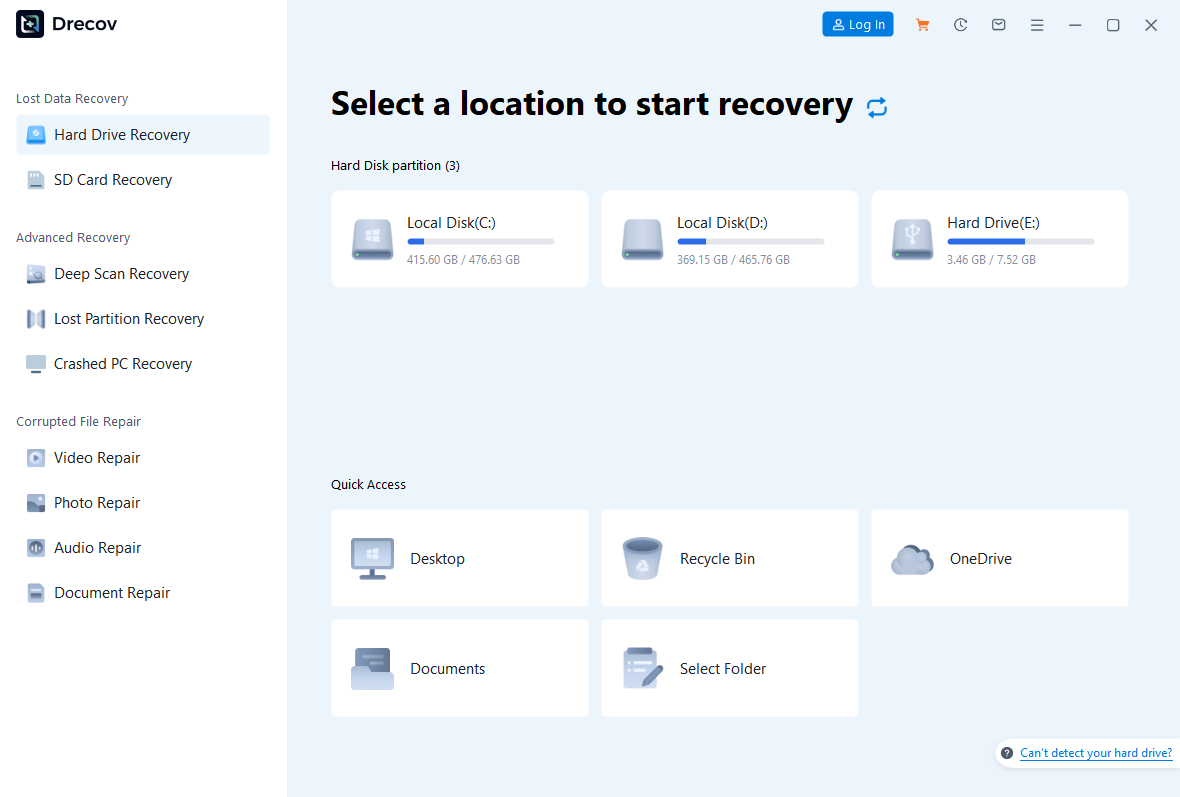
Step 1: Open Drecov and select the original loss location
Choose the Windows folder’s volume, USB device, or memory card where the file actually existed. Do not select the backup destination or a drive mentioned only in a recent-files shortcut. If the whole partition vanished, use the Lost Partition Recovery mode rather than creating a new partition first.
Step 2: Run Quick Scan and inspect likely locations
This check is especially useful for will a restore point recover deleted files. Start Quick Scan. Browse the former parent folder and filter by the file type or remembered name where those options are available. Record several plausible results if you edited or copied the file more than once. The closest filename is not necessarily the newest usable version.
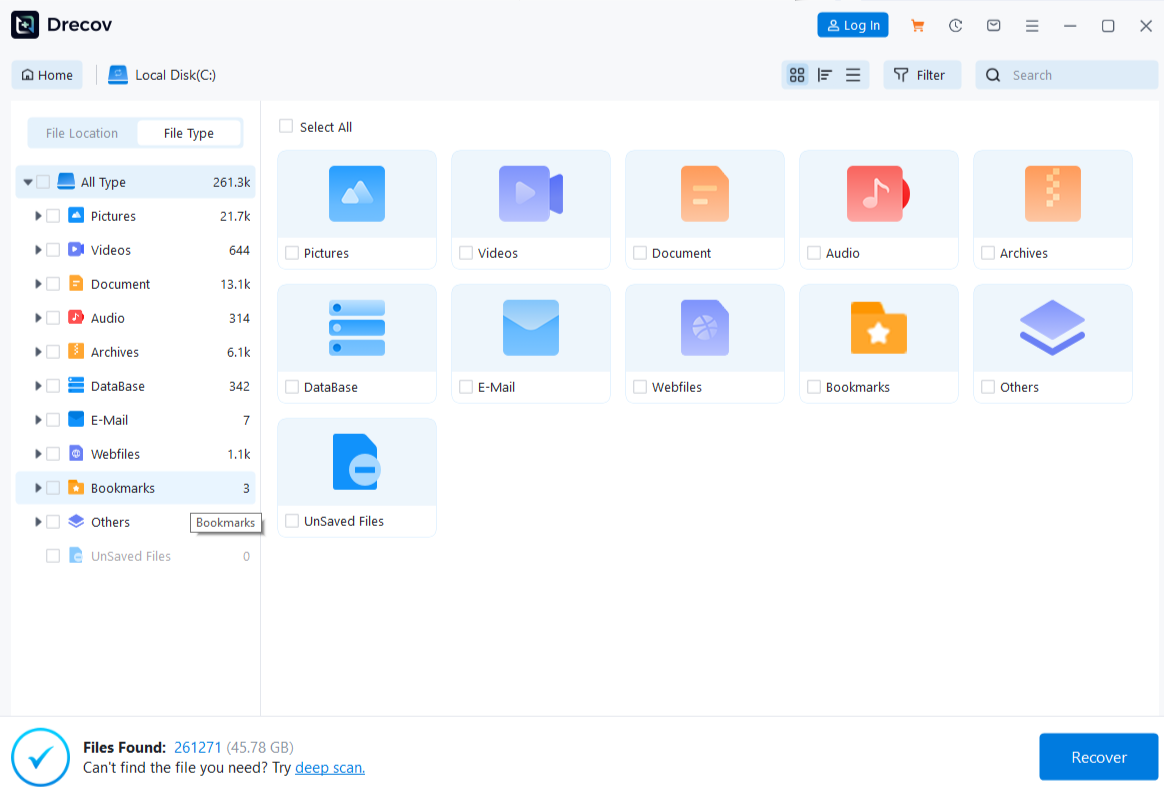
Step 3: Use Deep Scan only if Quick Scan misses the file
It helps diagnose will a restore point recover deleted files without changing the source data. When the drive remains stable and the needed file is absent, run Deep Scan. Some results may lose their former names or directory paths. Judge candidates by content, type, size, and available dates rather than one label. Stop if the source develops new hardware symptoms.
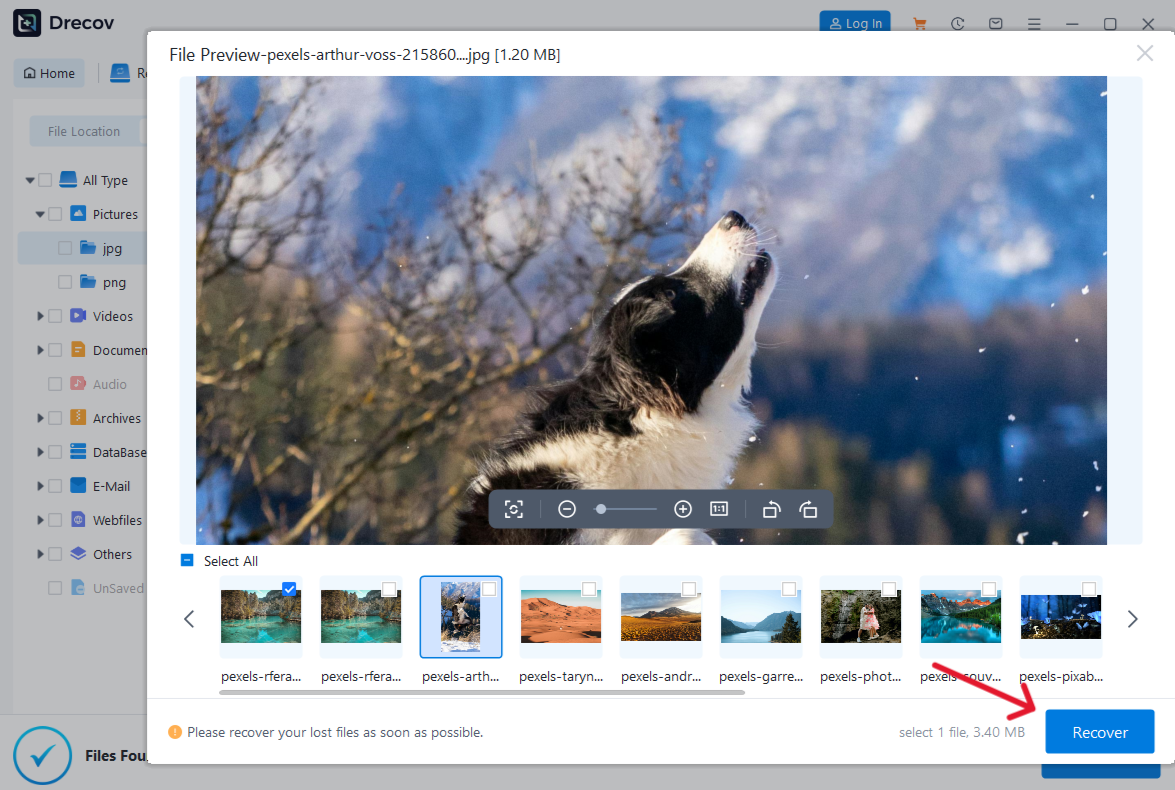
Step 4: Filter and preview representative candidates
Narrow the list by file category, former path, and available search terms. Preview more than one candidate when several versions exist. A successful preview indicates that the displayed sample can be read, but it does not guarantee every page, formula, frame, or linked asset is intact. Keep the original source unchanged while choosing.
Step 5: Recover elsewhere and verify the result
Restore selected files to the separate healthy drive, never to their original volume. Look in the Drecov folder or Recovery folder if the saved output is absent from your chosen path. Open the recovered files in their normal applications and inspect meaningful content. Compare them with backups if available. Only after verification should you consider a Windows restore, a repair operation, or another change to the source machine.
⚠ Warning: Install it on a drive different from the one where your data was lost to prevent overwriting.
The Drecov homepage is a product entry point. If the file was deleted from Recycle Bin as well, the separate emptied Recycle Bin guide addresses that narrower source state.
Why running System Restore first can complicate a file search
System Restore is useful for a system fault, but it changes system state. Apps and drivers installed after the selected point may be removed, and settings may revert. That creates extra variables while you are trying to identify where a personal file went. It can also consume time during which the original storage continues to be used. When the only problem is a deleted file, it is not the targeted first action.
If you truly need to roll back Windows because an update or driver broke the PC, preserve important files first. Confirm the exact feature name and read its warning. Traditional System Restore generally leaves personal files alone, while a broader point-in-time rollback may affect newer files on the system drive. A separate article on a failed Windows restore point is about fixing that operation, not obtaining a deleted document.
After any system recovery, check the intended file path, account, cloud service, and backups again. Do not assume an icon in a recent-files list proves the file itself has returned. Open it and inspect contents. If it is still absent, work from the original loss event rather than repeating system rollbacks.
Common questions about restore points and deleted files
Will a restore point recover a document deleted from the Desktop?
Traditional System Restore is not a Desktop-file backup. Check Recycle Bin, File History, cloud trash if the Desktop was synced, and local recovery.
Why does Previous Versions show a file if System Restore does not recover files?
The tab can expose copies created by file-backup mechanisms. Inspect which version is available and restore it to another location when possible.
Can I use System Restore after emptying Recycle Bin?
You can use it for an unrelated Windows problem, but it is not a reliable way to reverse Recycle Bin deletion. Protect the source and use backups or file recovery.
Does Drecov read files from a restore point?
Its role here is scanning eligible stable local storage for a deleted file. Do not treat Drecov as a tool for extracting a guaranteed personal-file archive from System Restore.
What if my Windows PC offers “Point-in-time restore”?
Read that feature’s own description and warning. It may roll back the system drive more broadly than traditional System Restore, so preserve newer files before considering it.
Conclusion
Traditional System Restore usually will not recover deleted personal files. Identify where the file lived, check Recycle Bin and actual file backups, then protect the local source if the file was truly deleted. Drecov can scan stable storage and recover eligible candidates to another healthy drive; verify those files before changing Windows. Treat a restore point as a system tool unless its specific feature documentation says otherwise.
⚠ Warning: Install it on a drive different from the one where your data was lost to prevent overwriting.





