







Have you ever wondered exactly how your computer syncs files to the cloud or how to rescue a document you accidentally deleted? Understanding these systems is essential for smooth digital management. In this comprehensive guide, we will explore the core functions of Microsoft cloud storage and explain what is onedrive so you can manage your files efficiently. While cloud services offer great convenience, file syncing errors or accidental deletions can still happen. When standard recovery methods fail, using a dedicated tool like PandaOffice Drecov data recovery software ensures that your important documents are never permanently lost.
Understanding the Basics of What is OneDrive
Microsoft OneDrive is a robust cloud-based storage platform designed to seamlessly bridge the gap between your physical devices and the digital cloud. At its core, the service acts as a secure virtual vault where you can upload, store, and organize digital assets. By moving files away from isolated local hard drives and into centralized remote servers, it fundamentally transforms how users interact with their personal and professional data.
How Cloud Storage Changes Data Management
The primary advantage of utilizing this infrastructure is universal access. Once a document, spreadsheet, or photo is uploaded to the cloud, it is no longer locked to a single machine. You can access, edit, or share that file from a desktop at work, a laptop at home, or a smartphone while traveling. Furthermore, the platform integrates deeply with Microsoft 365, enabling real-time collaboration. Multiple users can work on the exact same Word document or Excel spreadsheet simultaneously, eliminating the need to email scattered file versions back and forth.
Common Technical Challenges and Sync Glitches
Despite its advanced design, users frequently encounter synchronization issues that can disrupt daily workflows. Because the service relies on a constant internet connection to update files across devices, network drops can freeze the syncing process halfway through, leaving your data fragmented.
The most common challenges include:
- Bidirectional Sync Conflicts: This happens when a file is modified on two different devices simultaneously while offline. When connection is restored, the system may struggle to determine which version to keep, sometimes overwriting the newer file or causing files to completely disappear from the local drive.
- Credential Glitches: Sudden account logout errors that halt all file transfers without warning.
- Storage Limit Thresholds: Unnoticed account capacity overages that block incoming files from backing up.
What is OneDrive on My Computer?
When users ask what is onedrive on my computer, they are usually referring to the dedicated sync folder found in Windows File Explorer.
How the Local Integration Works
The application operates via a local client that replicates your cloud directory structure on your hard drive. This integration allows you to drag and drop files directly into the cloud folder just like any traditional local directory.
[Windows File Explorer]
       │
       ▼
[OneDrive Sync Folder] <═══ (Bidirectional Sync) ═══> [Microsoft Cloud Servers]
Storage Settings and States
The local client utilizes a feature called Files On-Demand to save storage space. This feature uses three primary icons to indicate the status of your data:
- Blue Cloud Icon: Indicates the file is stored only in the cloud and does not consume space on your local hard drive.
- Green Checkmark Icon: Indicates a locally available file that downloaded to your drive when opened, which can revert to a cloud-only state if disk space runs low.
- Solid Green Circle: Indicates a permanently pinned file that remains downloaded on your device for offline use at all times.
Understanding these states helps prevent confusion when managing local storage limits. However, changing these sync states incorrectly can sometimes cause files to go missing from your physical drive.
Advanced Recovery Using PandaOffice Drecov Data Recovery Software
When files disappear due to sync errors or a cleared Recycle Bin, you need a robust solution. This is where PandaOffice Drecov data recovery software becomes invaluable. Drecov is a professional-grade data retrieval utility engineered to scan deep storage sectors and rebuild fragmented file structures.
The software bypasses standard operating system limitations to locate files deleted by cloud synchronization conflicts. It supports over one thousand file formats, including documents, videos, and complex databases. Whether your files were lost due to a system crash, an accidental shift-delete command, or an improper OneDrive unlink, this utility restores them safely.
Technical Solutions for Common Storage Issues
If you are struggling with disappearing cloud folders, you can read about specialized file management techniques in our guide on how to remove OneDrive from File Explorer step-by-step guide. Additionally, if your web browser synchronization experiences similar glitches, check out our tutorial on how to get your Google Chrome bookmarks back.
⚠ Warning: Install it on a drive different from the one where your data was lost to prevent overwriting.
Step-by-Step Guide to Recovering Lost Files with Drecov
To retrieve lost data from your local storage drive, follow these exact steps.
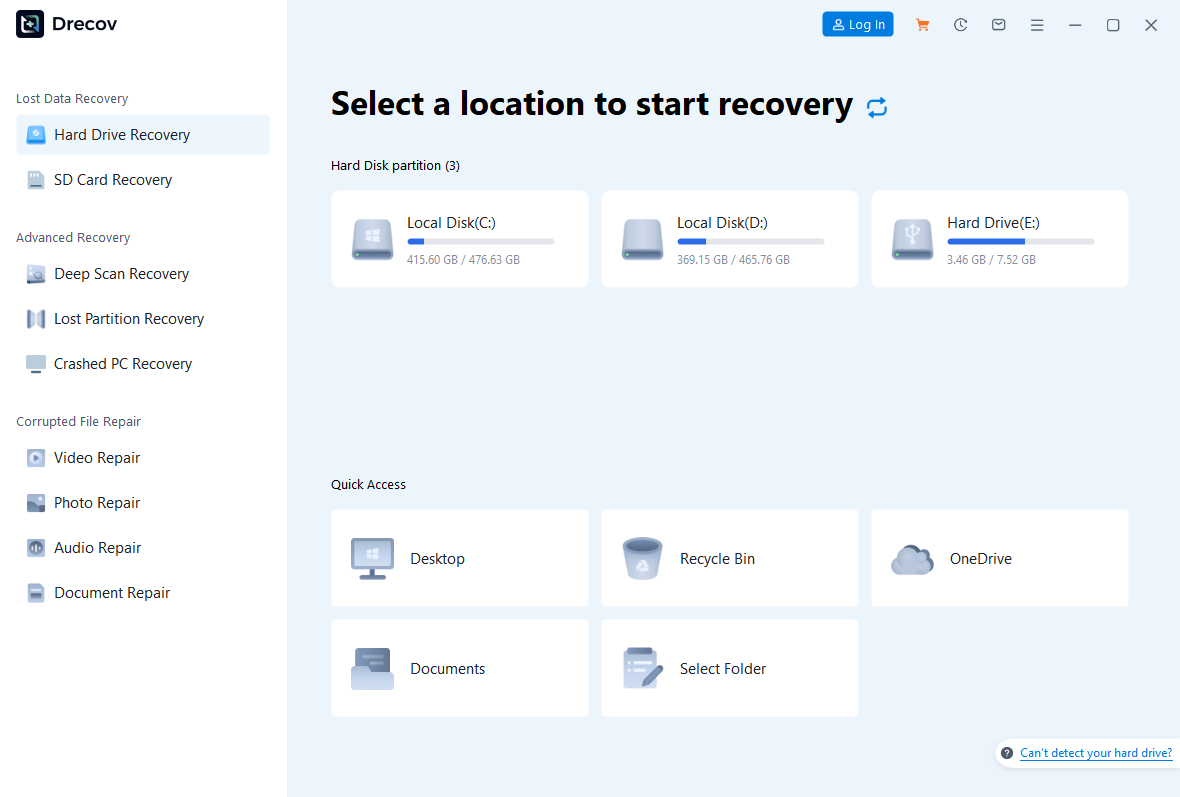
Step 1: Select the Target Location
Select the specific drive partition where your cloud sync folder was located. For most Windows configurations, this is the primary C drive. Click the Scan button to initiate the data search.
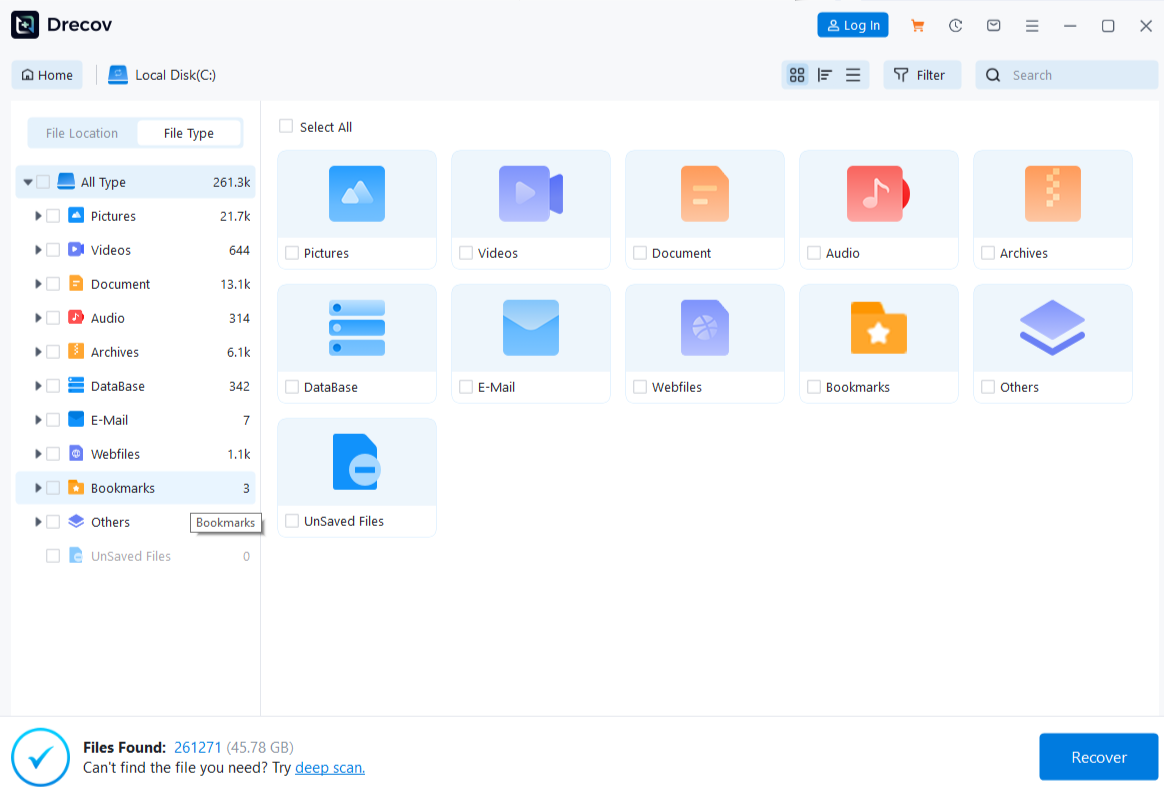
Step 2: Run the Scanning Process
The utility will execute a Quick Scan followed automatically by a Deep Scan. The Deep Scan reads raw data sectors to locate deep-set directory structures. You can monitor the progress bar at the top of the interface.
Step 3: Filter and Preview Found Files
Use the search bar or the file type filters in the left pane to locate your missing items. The software provides a built-in preview pane so you can verify the integrity of text documents and images before proceeding.
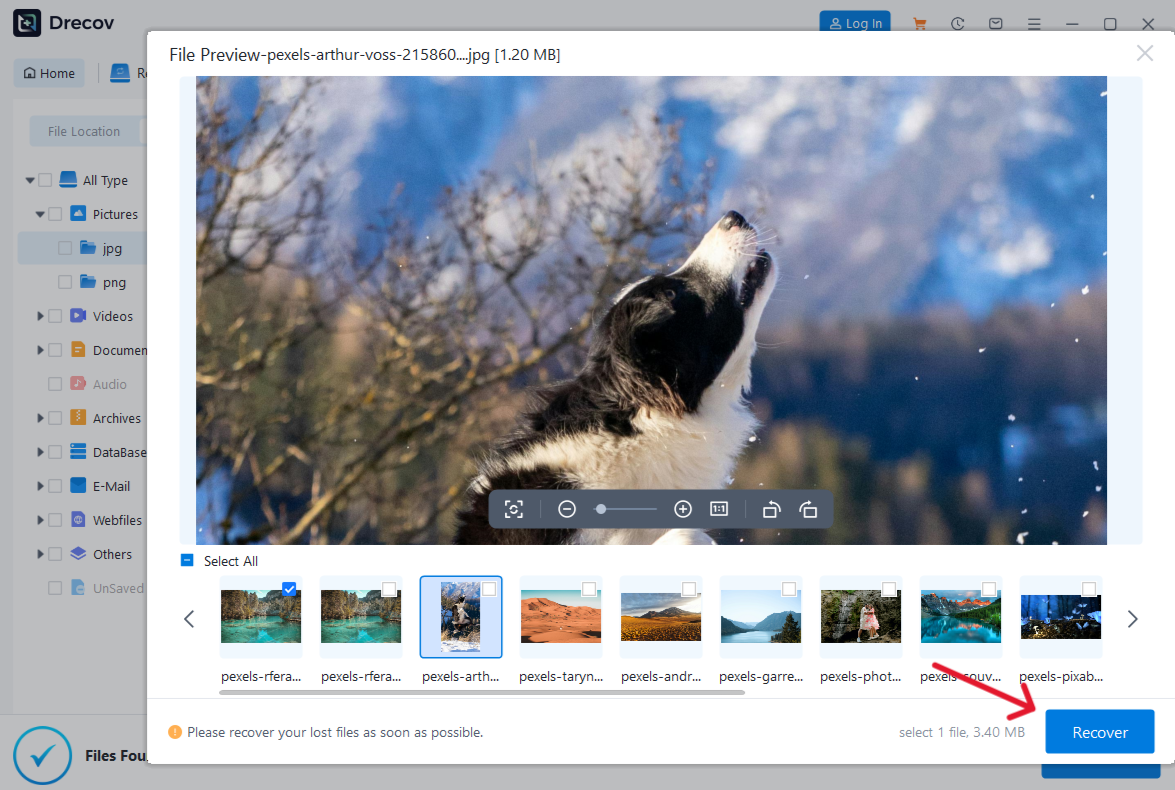
Step 4: Execute the Recovery Action
Check the boxes next to the folders you wish to restore. Click the Recover button and select a secure storage location, such as an external hard drive, to save your restored data safely.
Crucial Technical Warning: Never recover files directly back onto the same drive partition you are scanning. Doing so can overwrite the remaining deleted data fragments and cause permanent data corruption.
For more technical documentation regarding cloud sync infrastructure, visit the Microsoft Support Portal.
Alternative and Manual Methods to Recover Deleted Files OneDrive
If your data loss happened very recently, you might want to try manual recovery paths before utilizing external utilities. Microsoft provides built-in safety nets that can resolve basic deletions.
Method 1: The Cloud Recycle Bin
When you delete an item within your cloud folder, it moves to an online recycling repository.
- Navigate to the official web portal using your internet browser.
- Sign in with your Microsoft account credentials.
- Click on the Recycle Bin option located in the left navigation menu.
- Select the desired items and click the Restore button at the top of the screen.
Method 2: Windows Recycle Bin
If the file was stored locally before deletion, it may still reside in your local system trash. You can access this by double-clicking the Recycle Bin icon on your Windows desktop. Locate your item, right-click it, and select Restore.
Method 3: OneDrive Files-Only Second-Stage Recycle Bin
For administrators or business account users, items deleted from the standard cloud trash move to a secondary tier. You can find the link for the Second-stage recycle bin at the very bottom of the primary online recycle bin page.
Comparison Table of Recovery Methods
| Recovery Method | Success Rate | Time Limit | Best Suited For |
| PandaOffice Drecov Data Recovery Software | Exceptionally High | No time limit | Permanent deletions, drive formatting, severe sync corruption |
| Cloud Recycle Bin | High | 30 to 93 days | Recent accidental deletions via File Explorer |
| Local Windows Recycle Bin | Moderate | Until emptied | Temporary local deletions before syncing occurs |
How to Prevent Data Loss: OneDrive Recover Deleted Files Tips
The most effective approach to data management is preventing accidental loss entirely. Implementing specific workflows minimizes the need to search for ways to handle a onedrive recover deleted files scenario later on.
Enable the Files On-Demand Feature Properly
Make sure you choose which files stay offline intentionally. Right-click critical folders and select Always keep on this device to guarantee local access even during server interruptions.
Use Keyboard Hotkeys Judiciously
Be careful when cleaning up files on your computer. Avoid using the Shift and Delete key combination unless you are entirely certain you no longer need the selected data. The Shift and Delete command bypasses the Recycle Bin completely and removes the file pointers from the file allocation table.
Backup to External Storage Regularly
Cloud storage is an excellent synchronization tool, but it does not replace a dedicated cold backup. You should regularly clone your critical directories to a physical external drive. For detailed instructions on managing external media, refer to our comprehensive guide on how to recover deleted files from USB flash drive a complete guide.
Frequently Asked Questions
What is OneDrive and do I really need it?
It is a cloud-based storage solution integrated into Windows for backing up files and sharing documents online. You do not strictly need it to run your computer, but it provides a helpful layer of data redundancy and allows easy cross-device access.
What is OneDrive on my computer and how do I stop it from backing up everything?
It is a local desktop application that mirrors your cloud account files. You can change its behavior by right-clicking the cloud icon in your system tray, selecting Settings, navigating to the Backup tab, and clicking Manage Backup to toggle specific folders off.
How do I recover deleted files onedrive after the Recycle Bin is emptied?
If your online trash can is completely empty, you must use specialized software to scan the local hard drive sectors where the files were originally mirrored. Using PandaOffice Drecov data recovery software provides the highest probability of restoring these permanently removed file fragments.
Can I change the default sync path for my cloud folder?
Yes, you can alter the location during the initial setup process. To do this, unlink your account via the software settings menu, log back in, and choose a new directory path when prompted by the configuration wizard.
Conclusion
Understanding what is onedrive and managing its local synchronization settings is key to maintaining an organized, safe digital workspace. Cloud storage provides outstanding accessibility, but sync conflicts and accidental deletions can still happen unexpectedly.
Fortunately, tools like the cloud recycle bin offer basic protection for minor mistakes. For severe data loss, permanent deletions, or corrupted drives, PandaOffice Drecov data recovery software delivers a dependable, professional solution to get your files back. Combine automated cloud backups with smart local data habits to ensure your important documents remain completely secure.






