







When a video is choppy, the file may be perfectly healthy. A busy computer, browser buffering, hardware decoding, mismatched display refresh rate, or slow external drive can produce stutter without changing the recorded frames. First play the same copy in another reliable player and on another device. Then compare it with the camera’s original. Do not convert or “repair” your only recording until you know whether the problem lives in playback or in the file itself.
video is choppy: safe diagnosis
Copy the source video to a healthy local drive, keeping the original untouched. Confirm that the copy has the expected size and duration. If the source is a camera card, phone, USB device, or external drive, do not edit it in place. Record the exact timestamp where the stutter occurs. The most informative question is whether the disturbance repeats at that same point on every player and device.
A repeatable gap at the same timestamp suggests missing or damaged frames in the source or export. Stutter that changes position between plays is more consistent with decoding load, storage throughput, background work, or a network issue. A stream that buffers but a downloaded local copy that plays smoothly points to delivery rather than recording damage. These are clues, not absolute diagnoses, but they determine which work is worth doing next.
Try a second player without changing the file
Use a current desktop player that supports the video’s container and codecs. Open the same local copy at the same timestamp. If one application stutters and the other does not, investigate the first application’s decoder, cache, extensions, or hardware-acceleration setting. Two files sharing an MP4 extension may use different video and audio codecs, so do not rely on the extension as a complete format description.
Try a second device with enough power
Copy the file to another computer or phone capable of the resolution and codec. A high-resolution or high-frame-rate video can exceed an older machine’s decode capacity while remaining intact. If the problem follows the file to a capable device at the same frames, examine the recording or export. If it stays with one PC, inspect that PC before altering the source.
Distinguish dropped playback frames from recorded gaps
Watch CPU, GPU, memory, and disk activity during a local test. Close heavy background work and replay the same section. If the system is saturated, lower player quality or resolution for diagnosis. Do not assume the fastest-looking setting is always best: toggling hardware acceleration can help or hurt depending on the graphics driver and codec. Change one setting, restart the player, and compare the same timestamp.
Move the local copy from a slow or unstable USB connection to a healthy internal drive. If the copy operation itself reports read errors, stop treating the issue as ordinary video lag. Preserve the source and assess the device. A healthy file copied from an unreliable card can become incomplete; repeated playback attempts on failing storage may worsen the situation.
For browser playback, compare another site and another browser. Check whether only one stream buffers, whether the network is congested, and whether an extension interferes. A downloaded file and a live stream should not be judged by identical rules. The browser may switch quality as bandwidth changes while the underlying video file remains sound.
Check display timing and the capture itself
A monitor refresh rate is not the same thing as the video’s frame rate. A 24 fps clip on a 60 Hz display can show uneven motion during pans because frames are repeated in a cadence. That is different from missing frames or a damaged file. Multiple monitors with different refresh rates can also affect playback on some Windows apps. Microsoft notes this in its official Windows video playback settings guidance.
Examine the recording settings and the source footage. A phone or action camera may use variable frame rate, especially in low light or under thermal pressure. A screen recording can drop frames when the computer is overloaded during capture. No later player setting can recreate motion that was never recorded. A converter can produce a constant-frame-rate copy that edits more predictably, but it may duplicate or interpolate frames rather than restore missing real-world moments.
If the footage became choppy only after editing, compare the raw capture with the export. A wrong timeline frame rate, aggressive optical-flow setting, heavy effects, or export preset can create judder. Export a short segment from an untouched project copy. Keep both raw and edited versions until you identify which stage introduced the problem.
When the file itself may be damaged
Damage is more plausible if every capable player freezes at the same timestamp, skips the same sequence, reports a decode error, or stops early. Compare the file size with the camera or sender’s copy. If a download was interrupted, obtain a complete copy from the original service before trying repair tools. If a transferred file differs from a known source hash, repeat the transfer to a healthy destination.
Work on a duplicate for any rewrap, conversion, or video-repair operation. Rewrapping can correct container metadata without recreating absent frames. Re-encoding may produce a playable file but can reduce quality and conceal the point of damage. Repair software may reconstruct playable structure in some cases, but an output that opens is not proof that all footage survived. Watch the beginning, affected timestamp, and end, and listen for audio sync.
Do not upload private family, business, or medical footage to an online repair site without understanding its storage and retention terms. Local testing on a duplicate keeps more control. If the only original sits on unstable media, prioritize an image or specialist rather than repeated conversion directly from that device.
Where Drecov fits when source footage is missing
This check is especially useful for video is choppy. Drecov cannot make a healthy video play smoothly, change a monitor cadence, restore never-recorded frames, or repair a graphics driver. It is useful only if the original recording was deleted, a camera card or drive became logically inaccessible, or a partition disappeared. Drecov is Windows data recovery software for PCs, HDDs, SSDs, external drives, USB devices, SD cards, and memory cards. Its read-only recovery mode, Quick Scan, Deep Scan, filters, preview, and Lost Partition Recovery can locate videos alongside photos, documents, email data, audio, and archives. It cannot repair physical damage or guarantee recovery of overwritten data.
⚠ Warning: Install it on a drive different from the one where your data was lost to prevent overwriting.
Check camera, phone, cloud, Recycle Bin, editing-project media folders, and previous exports first. If the original is truly gone, stop writing to the source. Prepare a separate healthy drive with enough room for large recordings. Do not install Drecov on the partition that held the lost footage. If the card or drive disconnects or produces serious read errors, stop direct scans and seek an image or professional recovery.
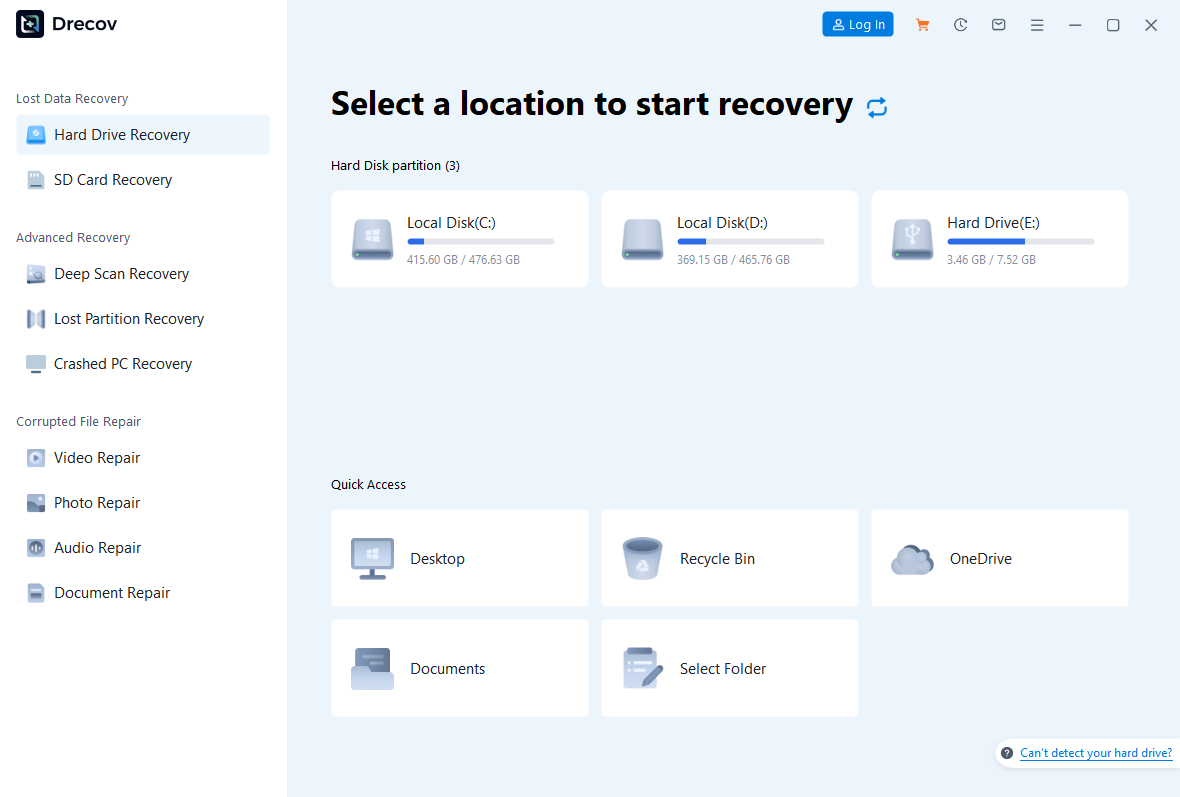
Step 1: Open Drecov and choose the original recording location
Select the camera card, USB device, external disk, or Windows folder’s partition where the raw footage existed. Identify the device by capacity rather than an assumed letter.
Step 2: Run Quick Scan for the raw file
Start Quick Scan and filter by video type, old folder, filename, capture date, and size. Compare candidates with the editing project’s media list or camera sequence.
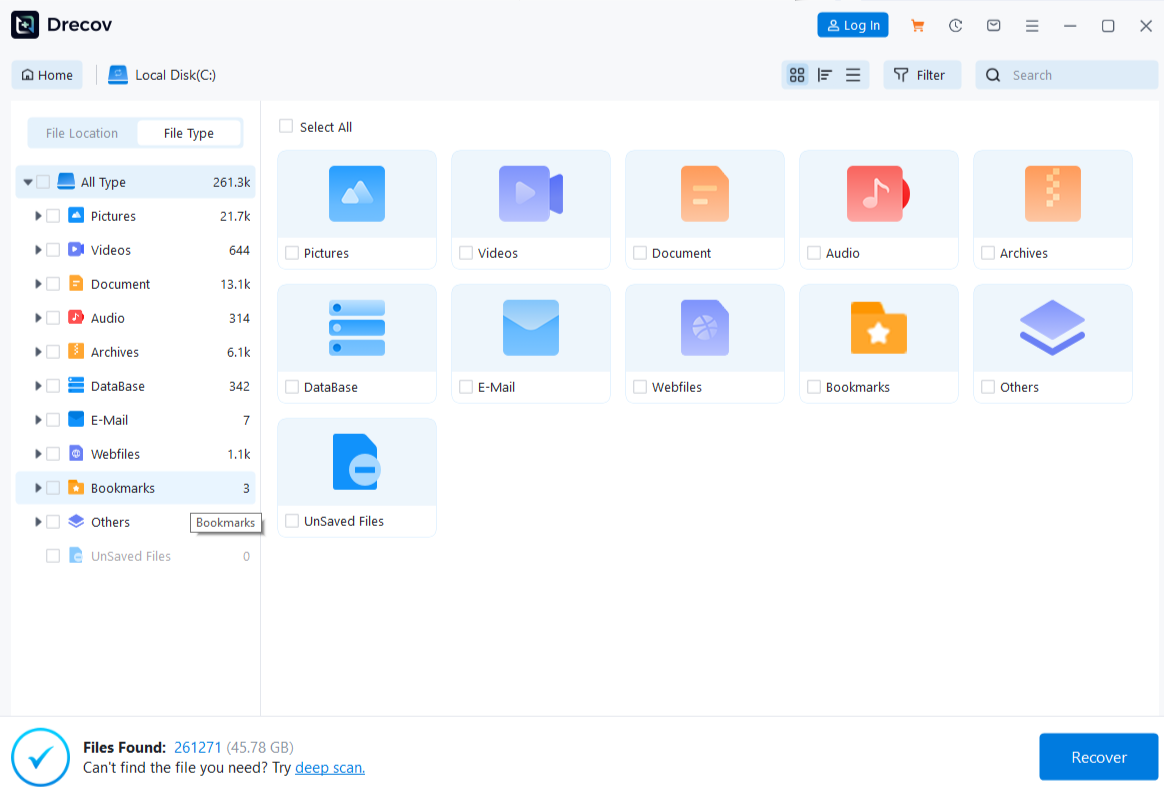
Step 3: Use Deep Scan only on stable storage
If Quick Scan does not find the needed original and detection remains reliable, use Deep Scan. Stop if the source overheats, clicks, disconnects, or develops severe read errors.
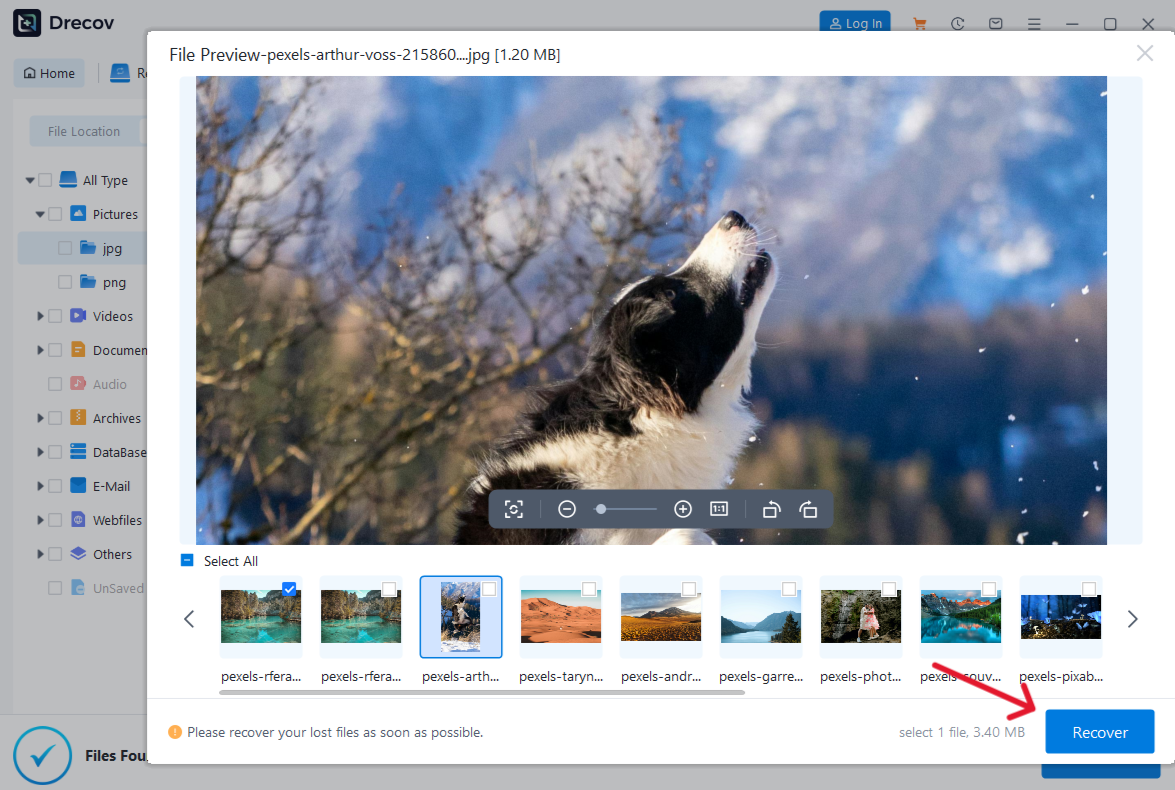
Step 4: Preview, recover elsewhere, and inspect motion
Preview representative supported candidates, but do not assume a preview certifies every frame or sound segment. Recover to the healthy destination, never the source. Check Drecov Folder or Recovery Folder if output is not where expected. Play the recovered file at multiple points and compare it with the choppy copy before deciding whether repair or re-encoding is necessary.
⚠ Warning: Install it on a drive different from the one where your data was lost to prevent overwriting.
Choose a fix that preserves the evidence
If only one player stutters, update or change that player and its decoding settings. If one computer struggles, reduce background load and investigate its graphics path. If an export introduced the problem, correct project frame-rate and effect choices on a duplicate. If the raw source itself contains dropped moments, keep expectations realistic: smooth motion generated afterward is not the same as original captured detail.
For adjacent topics, use the Drecov homepage, the guide to finding original video files, an explanation of video repair limits, and advice for site-specific playback problems. Each addresses a different stage of the video path.
FAQ
Why is the video smooth on my phone but choppy on my PC?
The PC’s player, codec support, GPU driver, display timing, or storage path may differ. Test a local copy in another player.
Will converting the file fix choppy footage?
It may improve compatibility or timing, but it cannot recreate frames missing from the original recording. Convert a duplicate.
Is a variable-frame-rate recording corrupted?
No. Variable frame rate can be normal. Some editors handle it poorly; compare the raw video with the export before changing it.
Does a smooth first minute prove the whole file is sound?
No. Test the problem timestamp and later sections, including audio synchronization.
Can Drecov repair stutter?
No. It recovers a missing original from eligible stable storage; playback performance and damaged video structure need separate work.
Conclusion
When a video is choppy, preserve the original and compare the same timestamp across players, devices, and copies. That reveals whether the cause is decoding, display timing, capture, export, network delivery, or file damage. Use Drecov only if the intact source recording is actually missing; recover it to another healthy drive and verify its motion before attempting repair on a duplicate.
⚠ Warning: Install it on a drive different from the one where your data was lost to prevent overwriting.





