







Maxtor data recovery begins with a simple question: does the drive stay readable at its expected capacity? If it does, missing files may be recoverable from a stable source. If it clicks repeatedly, vanishes during access, or reports a wildly wrong capacity, stop scanning and seek hardware-aware help. Powering an aging drive again and again can turn a recoverable problem into a harder one. Leave the original contents unchanged while you identify the failure.
maxtor data recovery: safe diagnosis
Maxtor is not one drive model. Seagate’s Maxtor support directory lists legacy internal and external families, including OneTouch, Basics, and other models. Their connectors, power arrangements, and enclosure behavior differ. Find the model printed on the device, then note whether it is a bare internal disk, a desktop external drive with a power adapter, or a portable USB drive. These details matter before you decide whether the disk itself or only its enclosure is failing.
Write down the last state in which the files were visible. Was the drive dropped, unplugged during copying, left unused for years, or connected to a new computer? Did Windows ask to format it, or did the drive simply disappear from File Explorer? A format prompt can occur when the file system cannot be mounted; it is not permission to format. A drive absent from firmware or Disk Management needs a different assessment from a recognized volume whose folder was deleted.
Check any existing backups first. Older Maxtor drives often served as backup targets, so an intact copy might live on the computer, another external disk, or a cloud account. Conversely, the Maxtor device may hold the only surviving original. Do not assume which is true. Verify file dates and open a sample from each copy before you retire or modify the old drive.
Sound and Detection Determine Whether DIY Scanning Is Sensible
Stable detection and ordinary operating noise
If the model appears consistently with a plausible capacity, stays connected, and reads without escalating errors, software recovery may be appropriate for deletion or a logical file-system problem. A light seek sound is not by itself proof of failure. Avoid making a diagnosis from one noise alone. The stronger evidence is a change in behavior: repeated resets, stalls, mechanical knocks, or growing read errors. Keep the drive in a stable position and use a known-good power supply or cable where the model requires one.
Repeated clicking, dropouts, or severe read errors
Stop using the disk. Do not run CHKDSK, a full diagnostic scan, or several recovery applications in succession. Each pass makes the drive work and can worsen damage. A specialist may image it with controlled hardware and work from the copy. If the files are irreplaceable, do not open the drive enclosure itself in an ordinary room. Software cannot repair heads, platters, or damaged electronics.
The external enclosure may be the weak link
A desktop Maxtor external drive may fail to spin correctly because its adapter or enclosure is defective. One careful check with a known-good compatible power source and cable can help distinguish a connection issue. Do not substitute a random adapter with the wrong voltage or polarity. If the drive’s identity changes or it disconnects during that check, stop. Opening an enclosure or moving a bare disk can introduce electrical, encryption, or handling risks; ask a qualified technician before doing so when the data matters.
What to Do When the Volume Is Visible but the Files Are Not
For a stable drive, start with simple non-writing checks. Confirm the correct drive letter and Windows account. Look for hidden folders and a second partition. If the old drive was used by backup software, its files may be inside application-managed containers rather than ordinary folders. Do not rename or rewrite those containers until you have copied them to a healthy destination and identified the program that created them.
If the files were deleted, check the Recycle Bin on the computer that performed the deletion. A cloud or system backup may contain older versions. If Windows can see the device but labels its partition RAW, decline the format prompt. Recover or image before trying to rebuild the file system. Our lost-partition explanation addresses the different case where the old volume no longer appears as a usable partition.
Do not copy a large replacement backup onto the Maxtor drive while searching. New data can overwrite deleted content. Keep the original as still as practical, prepare another healthy disk with enough space, and note the exact folders or file types you need. A targeted search is easier to verify than a blind attempt to recover every historical file on a decades-old disk.
A Safe Drecov Route for a Stable Maxtor Drive
PandaOffice Drecov is Windows data recovery software for stable PCs, HDDs, SSDs, USB storage, memory cards, and external drives. It uses a read-only recovery mode to search for lost files rather than treating source repair as the first task. Quick Scan and Deep Scan provide two levels of search; filtering and preview help identify usable results before export. Lost Partition Recovery can search files from a missing partition, but it does not repair a failing motor or guarantee that a partition table can be restored.
⚠ Warning: Install it on a drive different from the one where your data was lost to prevent overwriting.
This workflow applies only when the Maxtor drive is reliably recognized and stays connected. If it is physically unstable, stop direct scanning and consider imaging or a professional service. Do not install Drecov on the affected Maxtor volume. If the missing files were on an internal system drive, use a separate healthy installation location. Have a second storage device ready to receive the results. The Drecov home page is the appropriate starting point once those conditions are met.
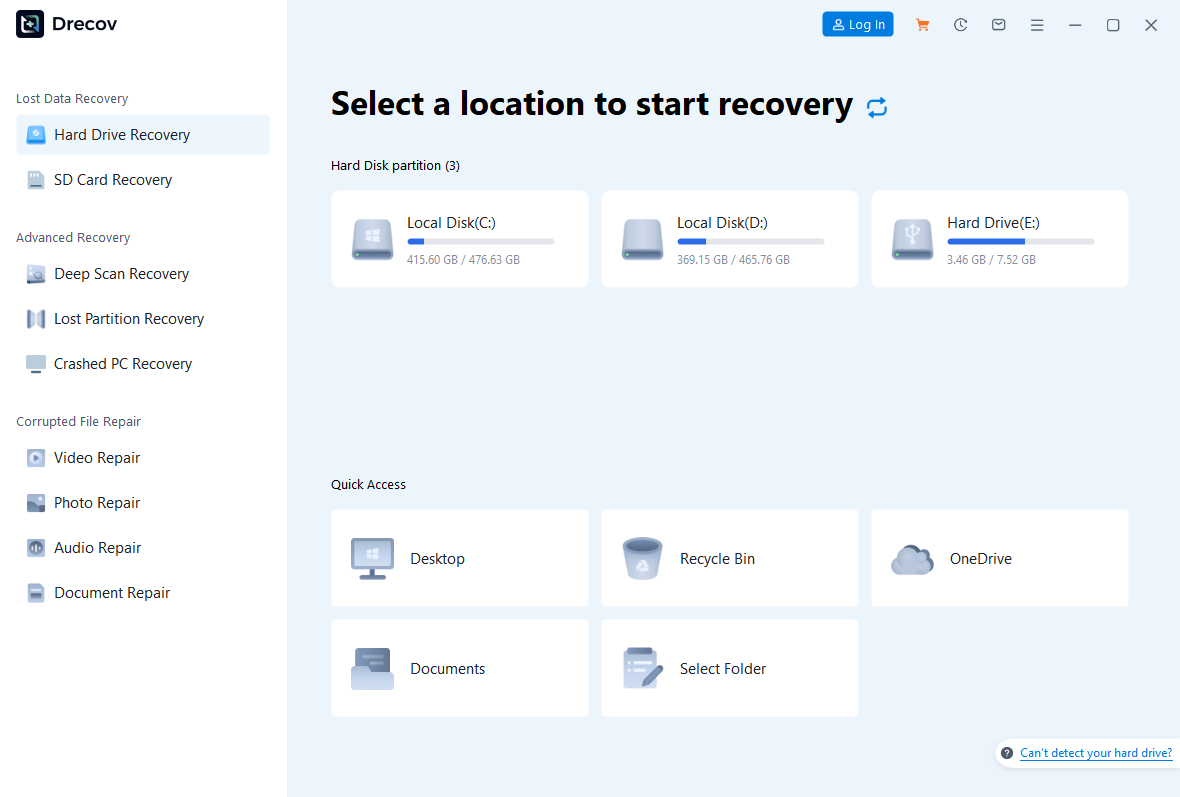
Step 1: Open Drecov and select the original Maxtor location
Open the application on the healthy Windows computer and select the Maxtor volume where the files lived. Check its capacity and label so you do not scan the recovery destination by mistake. If a former Maxtor partition is missing but the physical drive remains stable and detected, consider Lost Partition Recovery. Do not initialize the disk to make a volume appear.
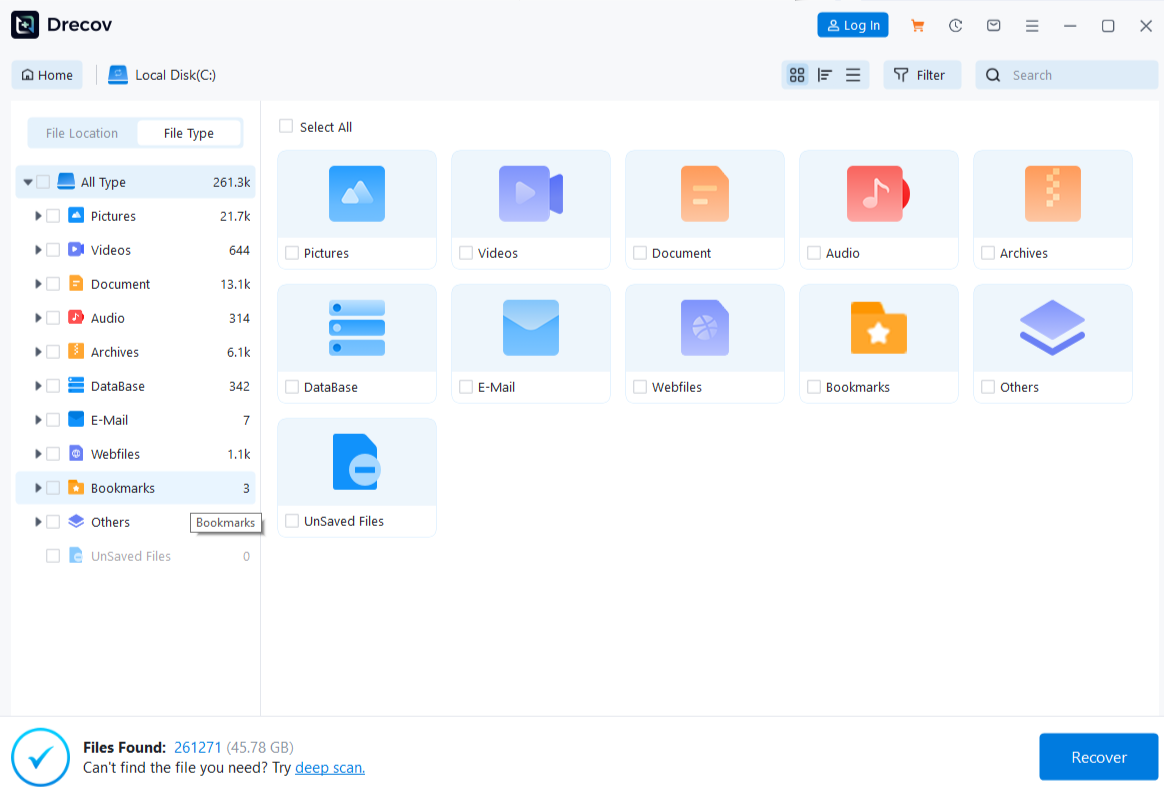
Step 2: Start Quick Scan
This check is especially useful for maxtor data recovery. Run Quick Scan and inspect the familiar folder names and file types. If the drive begins disconnecting, produces new mechanical sounds, or becomes extremely slow, stop the attempt. A scan result list is not worth additional damage to a fragile source. On a stable drive, record promising paths before deciding whether a further search is needed.
Step 3: Use Deep Scan only if the drive remains stable
If important files are absent from the first results, start Deep Scan on the same source. An older drive may take time to read, but repeated stalls or errors are not a reason to leave it scanning indefinitely. Deep results may lose original names or folder structure. Compare candidate sizes and content, not just dates. If read stability deteriorates, switch to an image-based or professional path.
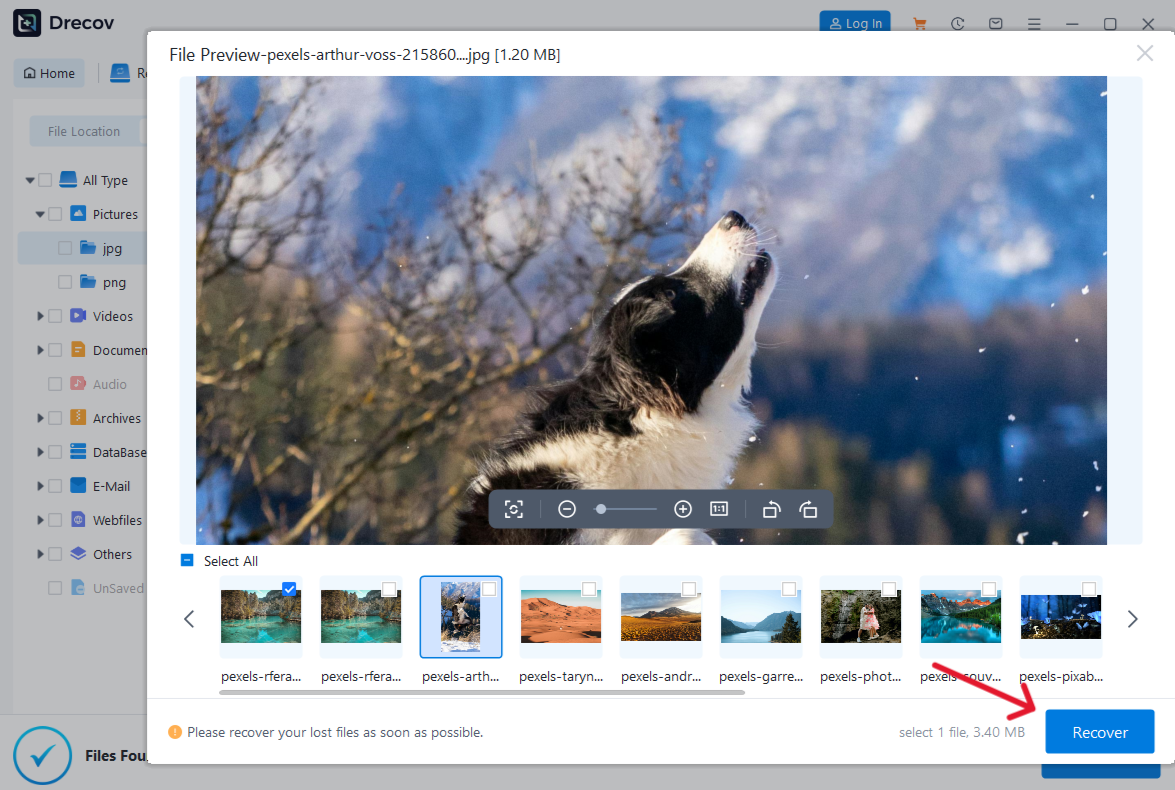
Step 4: Filter and preview a useful sample
Filter by file type, former path, or name where available. Preview several documents, photos, and videos from different periods. A thumbnail or first page does not establish that a whole file is intact. For an archive, later test extraction from the exported copy. Mark the files that actually open in preview rather than assuming every item in the result count is usable.
Step 5: Recover to another device and verify
Save chosen files to the healthy destination, never back to the Maxtor source. If you cannot locate exported output, check the Drecov folder or Recovery folder at the chosen destination. Open representative files and compare them with known originals or backups. Preserve the Maxtor disk unchanged until essential content has been verified and copied again. Only then consider whether the old drive is fit for reuse.
⚠ Warning: Install it on a drive different from the one where your data was lost to prevent overwriting.
Why Common “Fixes” Can Make an Old Drive Harder to Recover
CHKDSK can modify directory and file-system structures. It may be reasonable after the files are protected on a stable disk, but it is not a neutral first recovery step. Formatting and initialization write new storage metadata. DiskPart clean removes partition information. A factory reset or operating-system reinstall can create much larger writes. None of these operations repairs a mechanically failing Maxtor drive.
Be cautious with old diagnostic utilities as well. Some tools offer destructive erase or recertification options beside read-only checks. If the drive is already unstable, even a read-only stress test may be unwise. The safest sequence is to determine whether it can be imaged, extract important files from the source or image, verify them on another device, and only then decide whether repair or disposal makes sense.
If the issue is just a missing drive letter, do not confuse access repair with file recovery. Changing a letter may restore a path, but software and backup jobs that depend on the old path could break. Record the original state before making any change. For a separate USB connection problem, the USB drive diagnostic article covers checks that should not be mistaken for hard-drive repair.
Questions About Aging Maxtor Storage
Does a Maxtor label mean I need special recovery software?
Not necessarily. The model and failure state matter more than the label. A stable, Windows-recognized disk with deleted files can be assessed with a suitable logical recovery tool. A drive that cannot spin or stay connected requires hardware-aware handling regardless of its brand.
Can I put the bare disk into another enclosure?
Sometimes an enclosure is the failed component, but moving an old disk carries handling and compatibility risks. Some external products use enclosure-specific electronics or encryption. If the data is valuable, identify the model and ask a qualified technician before removing the disk. Do not treat a generic adapter as risk-free.
Should I make a clone first?
For a marginal but readable disk, a controlled image can protect against repeated direct scans. Ordinary cloning software may struggle with severe read errors or stress the device. If the drive clicks or vanishes, a professional recovery service is safer than trial-and-error home cloning. Keep the original until the image and recovered files are verified.
Can software restore an overwritten folder?
Not if the old bytes were fully overwritten. Check backups and version history. A scan can sometimes recover other deleted files from the same volume, but it cannot reconstruct content that no longer exists on the medium. This limitation applies to every brand of recovery software.
What should happen after I get the files back?
Verify important documents and media, make a second backup, and replace an unreliable drive. The external-drive backup checklist can help test that new copy. Do not put the only good copy back onto an aging disk simply because it mounts again. A successful recovery session says something about the files you exported, not the future health of the source.
Conclusion
A steady Maxtor drive with a logical loss may allow careful software recovery. Drecov can search that readable source, preview results, and export them to another healthy device. If the disk clicks, drops offline, or shows impossible capacity, stop direct scans and seek imaging or professional help. The point of Maxtor data recovery is not to make an old drive look normal again; it is to obtain and verify the files while the remaining evidence is still available.
⚠ Warning: Install it on a drive different from the one where your data was lost to prevent overwriting.





