







An external drive backup should be restorable, disconnected when not in use, and supplemented by another copy. Start by listing what must survive: personal files, application data, settings, or the entire Windows system. Choose manual copy for a simple snapshot, File History for file versions, or an image for full-system recovery. Verify representative restores instead of trusting a “completed” message.
Choose What the Backup Must Restore
A folder copy restores files but not an installed Windows environment. File History saves versions of personal files to an external drive or network location, as Microsoft explains in its File History documentation. A system image serves a different disaster-recovery goal. Define the restore result before buying or formatting the drive.
| What you observe | What it suggests | Safest next move |
|---|---|---|
| Documents and photos only | Manual copy or versioned file backup | Easy browsing and selective restore |
| Protection from accidental edits | File History or versioned backup | Keeps earlier versions |
| Move to a new PC | File copy plus app and account inventory | Applications usually need reinstalling |
| Recover a failed system disk | System image plus bootable restore media | Test that recovery media sees the image |
| Large media archive | Verified copy with checksums | Plan capacity growth and second copy |
| Ransomware resilience | Offline or disconnected rotation | Do not leave every copy writable |
Design the Restore Before Scheduling the Copy
For external drive backup, use the matching observation, make one reversible change, and then retest the original symptom.
If You See: Documents and photos only
Manual copy or versioned file backup becomes the leading explanation, but the observation does not justify a destructive change by itself. Easy browsing and selective restore.
When the Result Is: Protection from accidental edits
This result shifts attention toward file history or versioned backup. Use the narrow response: keeps earlier versions.
What Move to a new PC Changes
The practical implication is file copy plus app and account inventory. The next action should therefore be limited to this branch: applications usually need reinstalling.
Do Not Misread: Recover a failed system disk
It can indicate system image plus bootable restore media, yet it does not prove every other component is healthy. Start with test that recovery media sees the image.
The Safe Branch for Large media archive
Here, verified copy with checksums deserves priority over broad system repair. Plan capacity growth and second copy.
Escalation Point: Ransomware resilience
Treat this as a sign of offline or disconnected rotation. Beg
Prepare the External Drive and Backup Map
Use a healthy drive with enough capacity for current data, version growth, and verification. Record its model, file system, encryption key location, and included folders. Do not place the only backup beside the PC where theft, fire, or power damage can affect both. The USB backup article covers removable-copy basics, and the separate-device principle explains why source and backup must not be the same storage.
Create the Backup That Matches the Goal
Make a Clear Source Inventory
List Desktop, Documents, Pictures, Videos, project folders, browser exports, email archives, local application data, virtual machines, and any folders outside the user profile. Cloud-synced does not always mean every file is available offline.
Use Manual Copy for a Readable Snapshot
Create a dated top-level folder and copy selected data without deleting the source. Manual copy is transparent, but it does not automatically preserve versions or detect every later change.
Use File History for Personal-File Versions
Connect the external destination, select it in File History, and confirm the libraries and folders included. Restore a test file to another location so you understand version browsing before an emergency.
Use an Image for Bare-Metal Recovery
A system image can capture partitions needed to restore a computer, but it is less convenient for everyday file versions. Create bootable recovery media and test whether it can locate both the image and target disk.
Disconnect and Rotate
Eject the drive after a successful verified run. Rotate two destinations when possible so one copy remains offline. A connected backup can be deleted, encrypted, or corrupted alongside the source.
Recover Data When the Source or Backup Drive Fails
If files were deleted before a backup ran, or a stable backup drive becomes inaccessible, Drecov can recover supported data before formatting, initialization, or file-system repair. Within an external-drive backup plan, pandaOffice Drecov works in read-only recovery mode on Windows and supports PCs, hard drives, SSDs, external drives, USB drives, SD cards, and memory cards. For an external-drive backup plan, it can run Quick Scan or Deep Scan, filter results, preview supported files, and save selected data to a healthy destination. In an external-drive backup plan, it does not repair electronics or guarantee that overwritten content can be restored.
⚠ Warning: Install it on a drive different from the one where your data was lost to prevent overwriting.
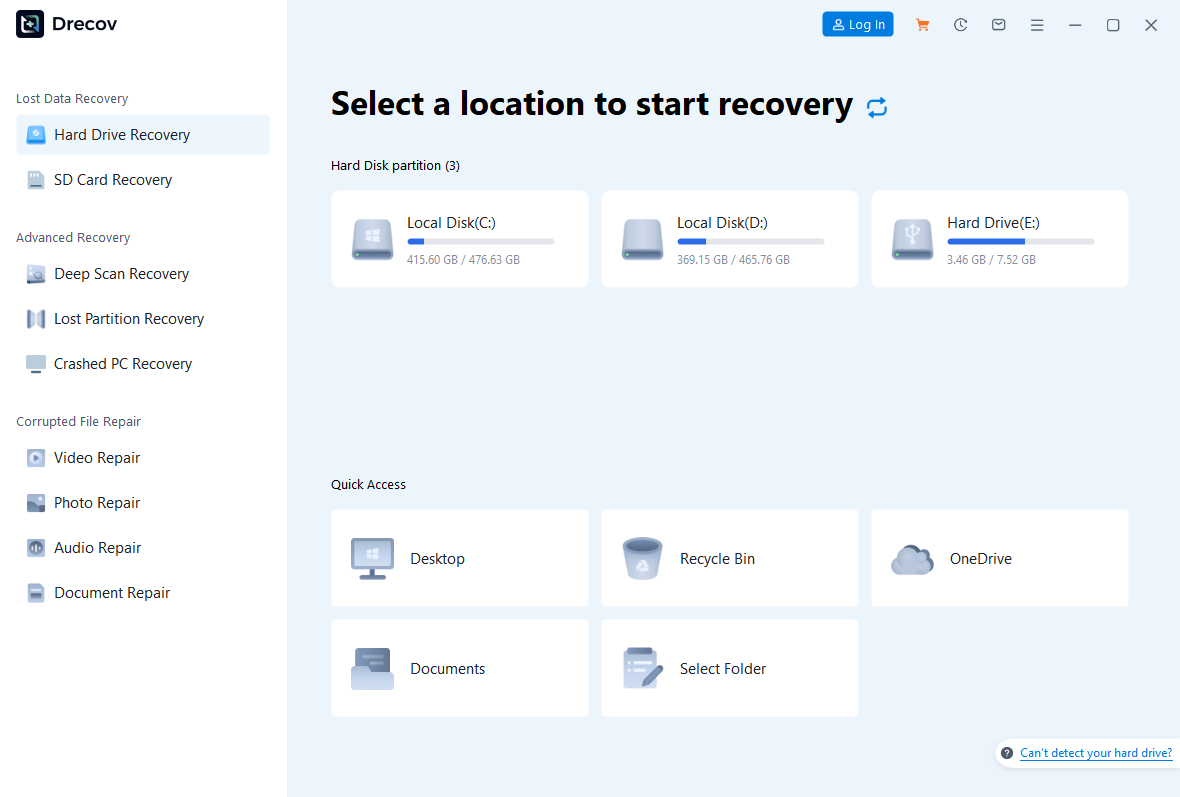
Step 1: Select the stable source or backup drive that originally held the missing files
Open PandaOffice Drecov and select the stable source or backup drive that originally held the missing files, not the empty destination prepared for recovered files. For an external-drive backup plan, if the device disconnects, clicks, reports implausible capacity, or freezes the computer, stop here. Within an external-drive backup plan, software scanning is appropriate only while the source remains stable and Windows can identify it consistently.
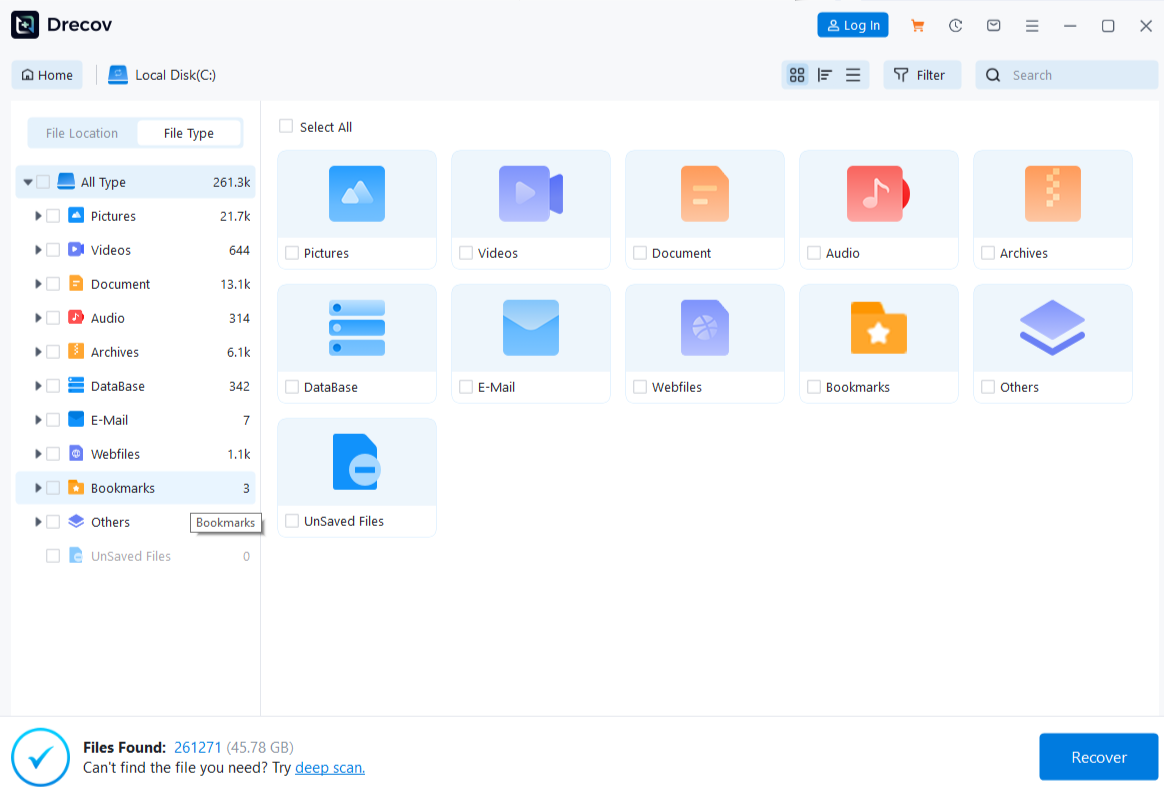
Step 2: Use Quick Scan Before Deep Scan
For an external-drive backup plan, start with Quick Scan for recently missing files or a simple logical loss. For an external-drive backup plan, move to Deep Scan when the quick result does not show the expected folders, when a file system is damaged, or when partition information is missing. In an external-drive backup plan, deep Scan reads more of the source, so do not use it to push unstable hardware through another long pass.
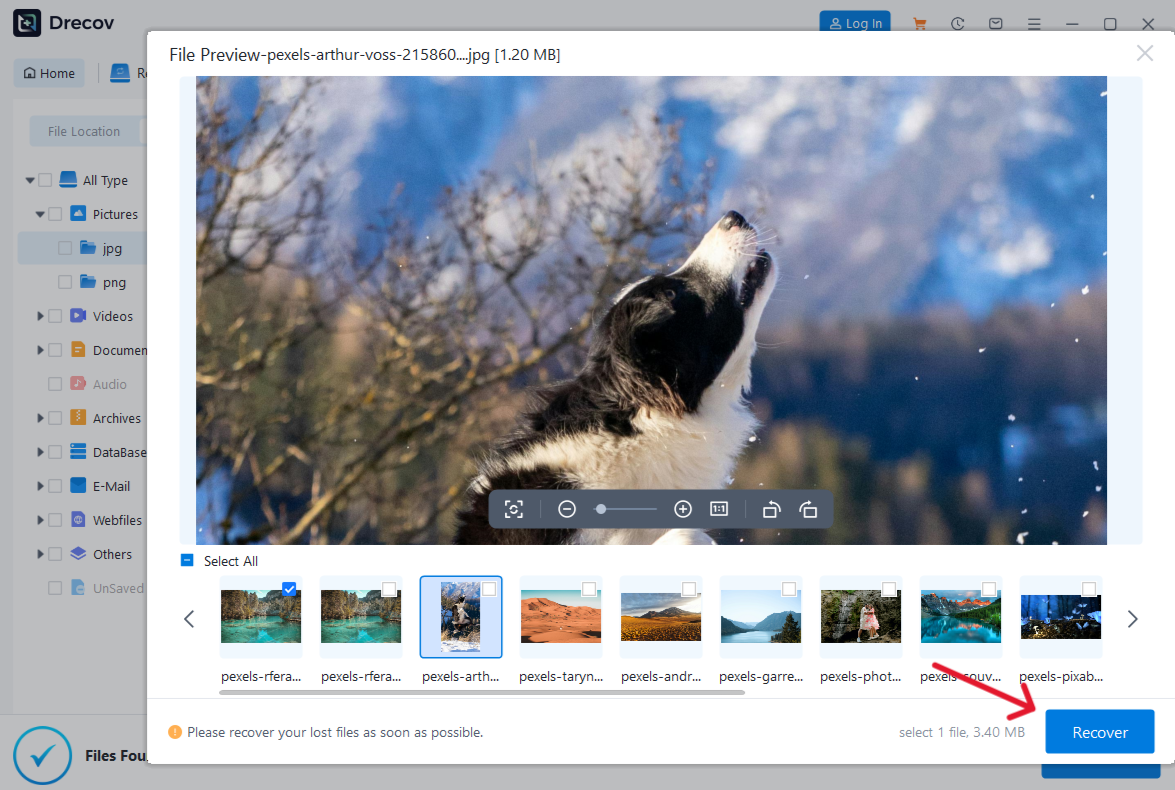
Step 3: Filter, Preview, and Recover Away From the Source
Within an external-drive backup plan, filter by file type, path, name, or date when those details are known. In an external-drive backup plan, preview representative documents, photos, videos, or archives before selecting a large set. Recover to another healthy device with enough free space. In an external-drive backup plan, if files are absent from the expected path, inspect the Drecov folder or Recovery folder and verify content rather than trusting names alone.
Test Restore, Integrity, and Rotation
Restore files to a temporary folder and open them. Compare counts, sizes, and timestamps; use SHA-256 for critical archives or images. The SHA-256 verification article explains content-level checks. Review backup logs, free space, exclusions, encryption recovery keys, and the age of the last successful run every month or after major folder changes.
- Calling a permanently connected single copy a complete backup strategy
- Copying shortcuts or cloud placeholders instead of file content
- Never testing a restore
- Using the backup drive as working storage
- Formatting an unreadable backup before attempting recovery
Write down three restore scenarios: one deleted file, one failed computer, and loss of the room containing both PC and drive. A manual folder copy may answer the first scenario but not the second; a system image may answer the second but be awkward for daily versions; neither answers the third if every copy is stored together. This exercise reveals whether you need file versions, boot media, application installers, account exports, an off-site copy, or all of them.
Verification should sample different data classes. Restore a recent document, an older version, a large video, an archive, and a file from a folder outside the usual profile. Open each restored item from a temporary location. For critical collections, compare checksums or an inventory rather than counts alone. Record the date, drive identity, backup method, exclusions, encryption-key location, and test result. When capacity becomes tight, add or rotate storage instead of silently shortening retention until the backup no longer meets its original restore goal.
External Drive Backup Questions
How large should the backup drive be?
It should exceed the protected data and leave room for versions and growth. Image and versioned backups often need substantially more than one current copy.
Is copying folders enough?
It can be enough for a simple file snapshot, but it does not restore applications, Windows, or historical versions. Match the method to the restore goal.
Should the backup stay connected?
Disconnect or rotate it after verified backups when practical. Offline copies reduce ransomware, accidental deletion, and electrical exposure.
Should I encrypt the external backup?
Encrypt sensitive portable backups, but store the recovery key separately. Lost keys can make a healthy backup inaccessible.
Can Drecov replace a backup program?
No. Drecov recovers lost files from supported storage. It does not schedule, version, rotate, or maintain backups.
Conclusion
An external drive backup is reliable only when its restore goal, protected folders, version history, offline rotation, and recovery keys have been tested. Restore representative files instead of trusting a completion message. If a stable source or backup drive later loses accessible files, Drecov can scan and preview recoverable data before saving it to another healthy device. Recovery remains a fallback, not a substitute for verified backups.






