







For lost dir means, protect the original data first. LOST.DIR means your Android device has a place for file-system fragments that may be reconnected after a card problem. The folder’s presence alone is not proof that photos are missing. If it contains numbered files and your gallery has lost pictures, stop using the SD card. Copy its contents to a healthy device before renaming or testing anything. A fragment in LOST.DIR may be a usable file, a partial file, or data that cannot be identified from its name.
lost dir means: safe diagnosis
Android’s storage code creates a LOST.DIR folder on some removable FAT-style volumes so file-system checking has a place to reconnect lost cluster chains. The Android source comment states this purpose explicitly. In plain language, the system may find storage blocks that appear to contain data but no longer have a normal directory entry. It can place a reconnected item in LOST.DIR rather than discard it immediately.
This mechanism is not the same as a full backup or an automatic reconstruction of the original filename. A numbered item might represent a photo, part of a video, an app file, or material that cannot be opened. Folder names and dates can be missing because the directory information that connected the file to its original location was damaged. That is why a gallery can show missing photos while LOST.DIR contains unfamiliar items.
The folder can also exist on a healthy card with no useful files inside. Android may prepare it for future use. Do not delete it merely because it looks unfamiliar. If all expected photos and videos are present and the card works normally, the folder alone is not an emergency. If its size grows after crashes, unsafe removals, or repeated card errors, investigate the medium and make verified backups.
First Separate a Normal Folder From an Actual Loss
Check whether the gallery is filtering folders or displaying only cloud copies. Browse DCIM, Pictures, and the relevant app folders on the card. Verify which storage location the camera app used. A phone may switch from SD card to internal storage after a card error, making newer photos appear missing from the card even though they were saved elsewhere.
If files are genuinely absent, stop recording, downloading, and moving content to the card. These actions can overwrite recoverable blocks. Do not run a format command or a file-system repair utility before preserving what remains. Remove the card safely and connect it through a reliable reader if the card is configured as portable storage. If Android configured it as adopted internal storage, it may be encrypted or tied to the phone; do not assume a Windows PC can scan its raw contents.
Inspect card health without stressing it. A card that disconnects, shows abnormal capacity, or produces severe read errors is not a good candidate for repeated direct scans. Imaging or professional recovery may be safer. If the card is stable, copy all accessible folders and LOST.DIR to another healthy device before experimenting with file extensions.
Identify a Numbered File Without Changing the Card
Work only on the copied LOST.DIR items. Sort them by size. A zero-byte entry contains no visible file data, while a large item might merit inspection. Do not assume every large item is a photo; video clips and application databases can be much larger. Use a trusted file-identification tool or open a copy with an appropriate viewer. If a viewer identifies a JPEG, MP4, or other familiar format, rename only the copy to an appropriate extension and test it.
Inspect the whole content, not just the first thumbnail. A reconnected file may be truncated. A video might play at the beginning but fail later. A document may open with damaged sections. Keep notes linking each new descriptive name to the original numbered item, so you can avoid confusing two candidates. If several fragments belong to one complex file, a simple extension change will not necessarily reassemble them.
Do not move a promising fragment back to the card as part of testing. The card is the evidence source. Save your renamed copies and any exported files on another device. If a file is irreplaceable, keep the untouched numbered original too. An attempted repair can damage the working copy, and the original may be useful to a specialist.
What LOST.DIR Does Not Tell You
It does not identify the cause of every failure. An unexpected shutdown or unsafe removal can contribute to file-system inconsistency, but the folder’s mere existence does not prove one specific event occurred. It does not guarantee the missing gallery files are inside it. It also does not mean the card has been fully scanned for recoverable deleted content. An old deleted photo may exist elsewhere on the medium, while LOST.DIR contains unrelated fragments.
Do not use the folder as an excuse to erase the card and start over. Formatting creates a new file system; it is not a recovery step. The formatted-storage explanation covers why that action changes recovery prospects. If files matter, complete the copy and recovery decision before any cleanup.
Similarly, do not confuse portable SD storage with a phone’s encrypted internal storage. A Windows-readable removable card can sometimes be scanned directly. A phone that exposes files only through MTP does not present its internal flash as a normal Windows block device for Drecov. Check the device’s storage configuration before choosing software. If a formerly visible partition vanished, the lost-partition assessment is a separate branch from identifying items already inside LOST.DIR.
⚠ Warning: Install it on a drive different from the one where your data was lost to prevent overwriting.
Search the Original Card When Needed Files Are Missing
PandaOffice Drecov is Windows data recovery software for stable SD cards and memory cards that Windows can recognize as storage devices. Its read-only recovery mode can search beyond the visible LOST.DIR folder. Quick Scan and Deep Scan provide staged searches; filtering and preview help identify photos, videos, documents, audio, email, and archives before export. Drecov also supports PCs, HDDs, SSDs, USB drives, and external drives, plus Lost Partition Recovery when a partition disappears. It does not repair a damaged card controller, bypass adopted-storage encryption, or guarantee that a fragment can be reconstructed.
First inspect backups such as Google Photos, another gallery service, or a computer import. The deleted-photo methods describe those alternatives. If important local originals remain missing and the card is stable and Windows-readable, prepare another healthy device for output. Do not install software on the card or restore files to it. Obtain the official Windows application from the Drecov home page.
Step 1: Open Drecov and choose the SD card
This check is especially useful for lost dir means. Connect the card through a reliable reader and select it by capacity. Choose the original card, not the folder where you copied LOST.DIR. If the partition disappeared but the card remains stable, consider Lost Partition Recovery. Leave the card’s file system unchanged even if Windows asks to format it.

Step 2: Run Quick Scan
It helps diagnose lost dir means without changing the source data. Look for familiar DCIM paths, camera file names, and file types. Note whether the results include originals absent from the copied LOST.DIR folder. Stop if the card disconnects or read errors become severe. The scan does not need to finish at any cost.

Step 3: Use Deep Scan only if stable
If the first pass misses needed files, run Deep Scan on the stable card. Results may have generic names and lost dates. Compare candidate sizes and previews. If newer recordings overwrote old data, a deeper search cannot restore the replaced blocks.
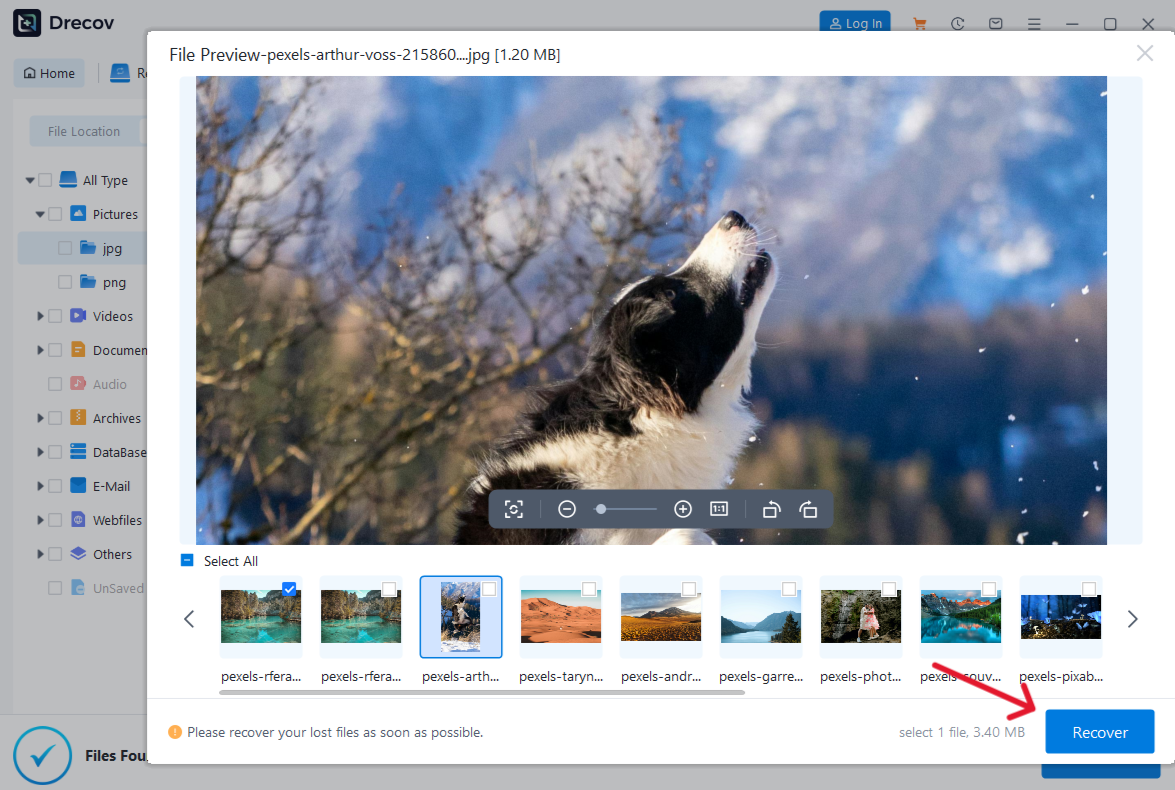
Step 4: Filter and preview candidates
Filter by photo or video type, path, or name where available. Preview representative files from different dates. A thumbnail does not prove a full-resolution image is intact. For videos, test exported copies through the middle and end. Keep the scan results separate from manually identified LOST.DIR fragments.
Step 5: Recover to another device and verify
Export selected files to another healthy device, never to the SD card. If output seems absent, check the Drecov folder or Recovery folder. Open recovered files, compare them with cloud and manual copies, and back up the useful results. Only after verification should you decide whether to format or replace the card.
⚠ Warning: Install it on a drive different from the one where your data was lost to prevent overwriting.
Common LOST.DIR Questions
Can I delete LOST.DIR if it is empty?
An empty folder is usually not worth worrying about. Android may recreate it. If you are troubleshooting missing files, preserve the card until the problem is understood rather than deleting directories as a cleanup experiment.
Are numbered items always deleted photos?
No. They can represent various reconnected file data or partial fragments. Identify copies by content and file signatures, then test them. A filename consisting of digits does not specify the original format.
Does renaming a numbered file repair it?
Renaming only changes how software chooses to open it. If the bytes form an intact image or video, the right extension can make it easier to view. If data is truncated or mixed, a new extension cannot restore missing content.
What if Windows cannot read the card?
Do not format or initialize it. Check whether the card is portable or adopted storage and whether a reliable reader detects plausible capacity. If it repeatedly disconnects, seek hardware-aware recovery rather than forcing scans.
Why did the folder appear after a power loss?
A file-system check can reconnect orphaned chains after interrupted writes, so that timing is plausible. It does not prove exactly which files were affected. Back up accessible content and verify whether important originals are missing.
Conclusion
LOST.DIR means Android has reserved a place for lost file-system chains on certain removable cards. Its files may help, but they are not automatically complete photos or a backup of everything missing. Copy the card’s accessible contents, identify fragments on a separate device, and stop using the source if files have vanished. For a stable Windows-readable card, Drecov can search beyond the visible folder and export candidates elsewhere. Verify those files before formatting or reusing the card.
⚠ Warning: Install it on a drive different from the one where your data was lost to prevent overwriting.





