







When files disappear, many users search for a program to recover data because they need a practical way to get documents, photos, videos, archives, or work files back. The right program recovery data workflow should protect the original device, scan the correct location, preview recoverable files, and save results to another drive.
This guide explains how to choose and use a recovery program safely. It is written for real data loss situations, including accidental deletion, emptied Recycle Bin, formatted USB drives, RAW partitions, missing folders, SD card errors, and external drive problems. PandaOffice Drecov is used as the main recovery workflow because it gives users a guided scan and restore process.
Quick Answer for Choosing a Program to Recover Data
First, stop using the drive where the files were lost. Do not install recovery software onto that same drive, and do not save recovered files there.
Second, choose a recovery program that can scan the original location, show file types, support preview when possible, and recover selected files to another healthy drive.
A program to recover data cannot guarantee results. If lost data has already been overwritten, recovery may fail. However, acting quickly and avoiding new writes can improve the chance.
Common Data Loss Scenarios and Best First Steps
Use the table to identify the safest starting point.
| Situation | Best first step | Risk level | Recovery chance |
|---|---|---|---|
| File deleted recently | Check Recycle Bin, then scan | Medium | High if not overwritten |
| USB drive formatted | Stop using it and scan | High | Medium to high |
| External drive asks to format | Cancel prompt and scan | High | Medium |
| SD card missing photos | Stop recording and scan | High | Medium to high |
| Folder disappeared after transfer | Search backup, then scan | Medium | Medium |
| Drive makes abnormal noise | Stop and seek help | Very high | Varies |
If the device shows physical failure signs, software recovery may not be enough. Unusual sounds, repeated disconnects, or wrong capacity readings can indicate hardware trouble.
What a Good Recovery Program Should Do
A good recovery tool should be careful, clear, and selective. It should help you recover what matters without making the original loss worse.
Scan the Original Location
The scan should target the drive, folder, partition, USB device, memory card, or external disk where the files were lost. Scanning the wrong place wastes time and may miss the data.
If the original path is unknown, start with the storage device most likely involved. For example, scan the SD card if the missing files came from a camera.
Support Quick Scan and Deep Scan
Quick Scan is useful for recent deletion. Deep Scan is useful for formatting, file system damage, lost partitions, or older missing data.
The best approach is to let both finish when the data is important. Stopping early can miss files that appear later in a deeper scan.
Preview and Filter Results
A program to recover data should let you filter by file type, path, size, and date. Preview helps confirm that a file is worth restoring.
This matters when thousands of files appear. You can focus on documents, photos, videos, emails, archives, or project files first.
Recover Files with PandaOffice Drecov
PandaOffice Drecov can help recover deleted, formatted, RAW, USB, SD card, hard drive, SSD, and external drive files. It is useful when built in recovery does not find the missing data.
⚠ Warning: Install it on a drive different from the one where your data was lost to prevent overwriting.
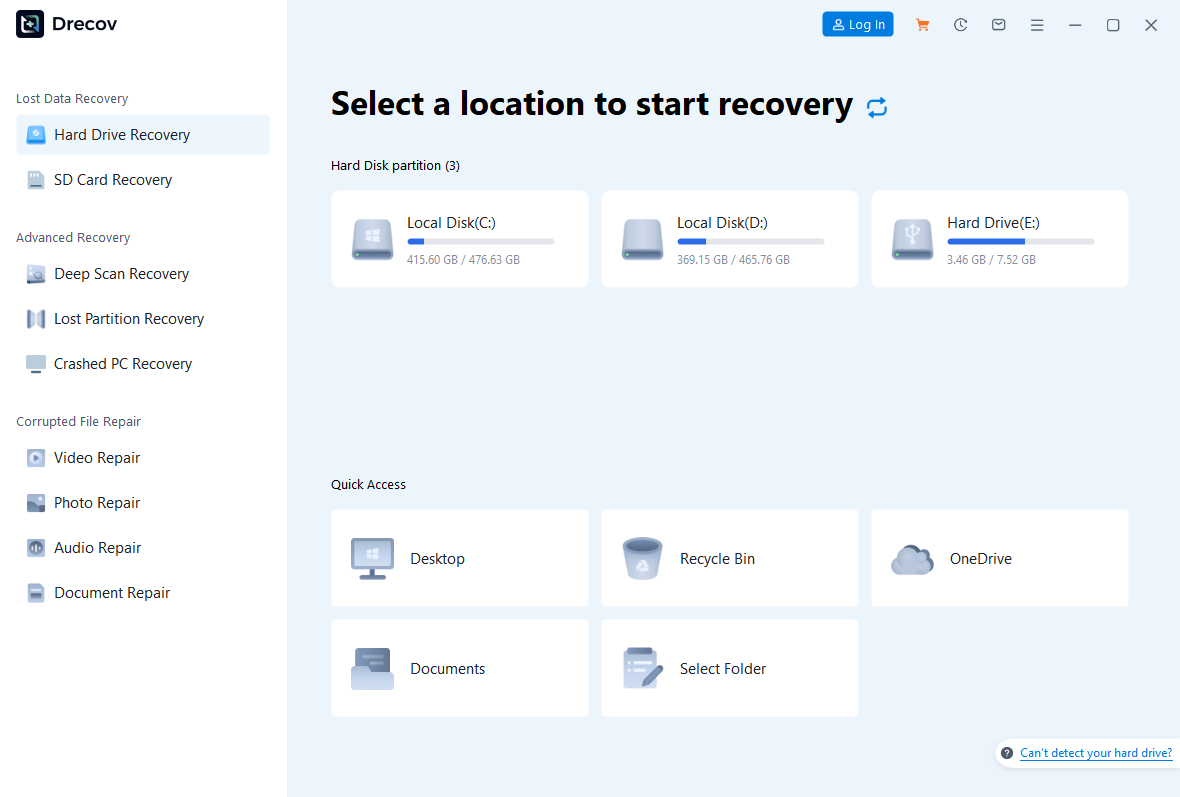
- Step 1. Open PandaOffice Drecov and choose the location or path where the files were lost. Select the original drive, folder, USB device, SD card, or partition.
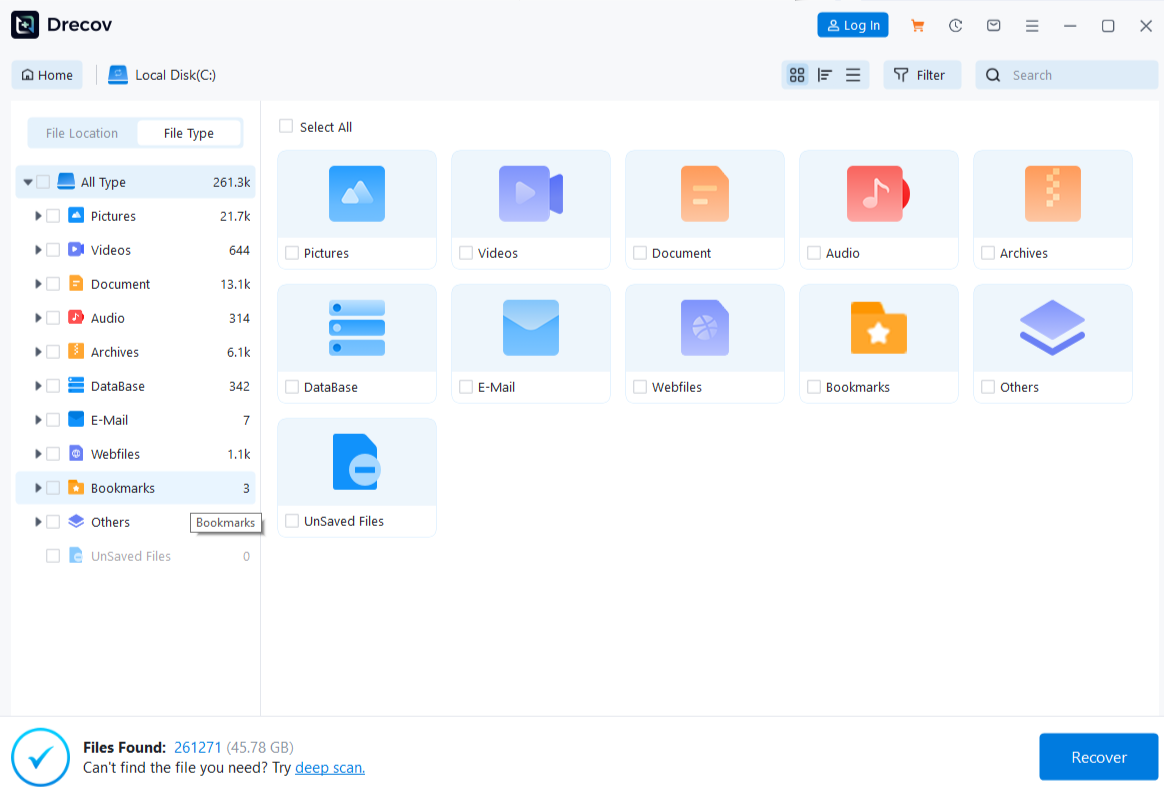
- Step 2. Start scanning that location. Let Quick Scan finish, then continue with Deep Scan when the loss involves formatting, corruption, RAW errors, or older missing files.
- Step 3. Filter, search, and preview the files you want to restore. Check file type, size, date, and original path.
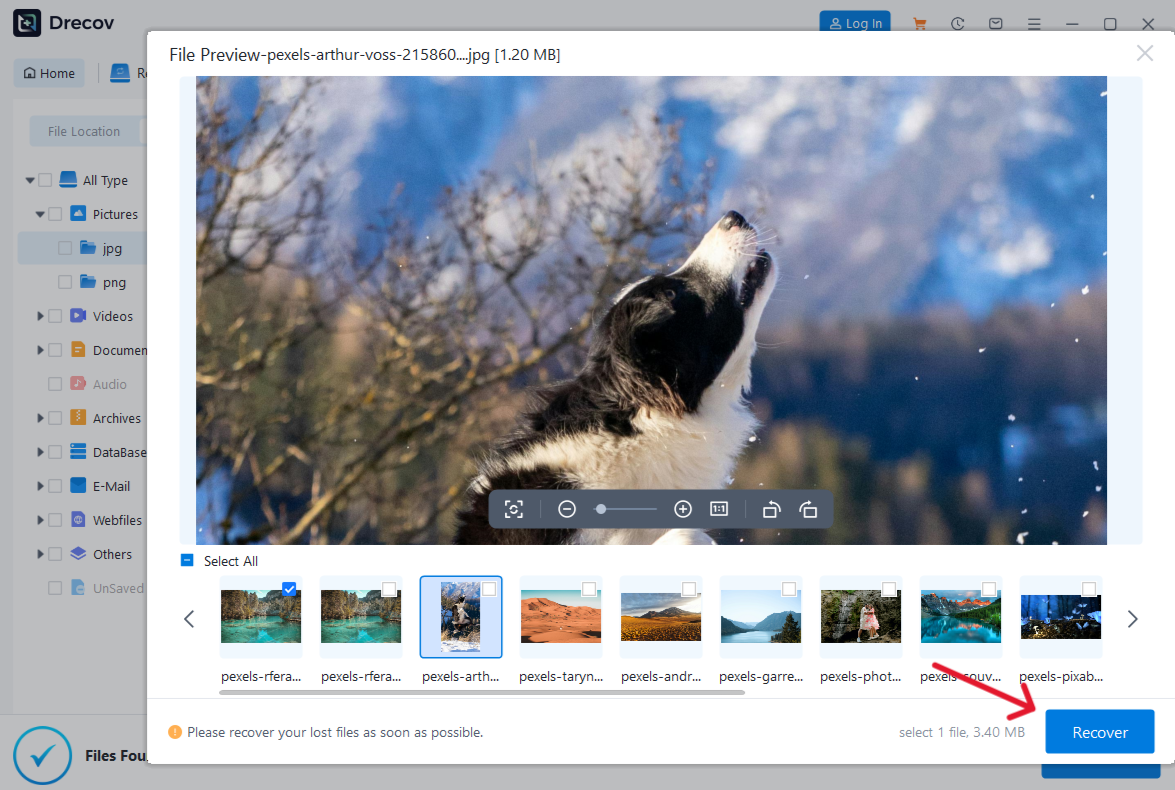
- Step 4. Click Recover and save files to a different drive.
Do not save recovered files back to the original drive. Doing so can overwrite data that has not yet been recovered.
After recovery, if the files are not restored to the original lost folder, open the selected recovery location. Look for a folder named Drecov or Recovery to find the recovered files. For related guidance, read recover deleted files and file recovery tool.
How to Use a Recovery Program Without Overwriting Data
The biggest mistake is saving new data to the problem device. A recovery program can only work with what remains on storage.
Install on a Safe Drive
If the lost files are on the system drive, use caution. Installing any new program writes data. If possible, use another computer or a different drive for recovery.
If the lost files are on USB, SD card, or external storage, install the program on the computer drive and scan the removable device.
Prepare a Recovery Destination
Before scanning, connect a healthy drive with enough free space. This destination will hold recovered files.
Do not use the same card, USB drive, or partition that lost the data. Recovery output should always go somewhere else.
Recover the Most Important Files First
Start with critical documents, photos, work files, or videos. After those are safe, recover lower priority files.
This approach saves time and reduces confusion when scan results are large.
When Built In Recovery Is Enough
Not every file loss needs deep recovery software.
Check Recycle Bin first if the file was deleted from a local Windows drive. Check cloud deleted files if the file lived in OneDrive, Google Drive, Dropbox, or similar storage. Check File History or backup drives if they were enabled.
Microsoft describes backup as creating copies of data, restore as retrieving data from backup, and recovery as a broader set of actions used after loss or system trouble. Knowing the difference helps you choose the right tool.
If backup has the file, restore from backup. If no backup exists, use a program to recover data from the original storage.
Tips for Better Data Recovery Results
Use these reminders before and during recovery.
- Stop using the affected device.
- Do not format a drive that asks to format.
- Do not run CHKDSK before recovering important files.
- Do not install recovery software onto the problem drive.
- Save recovered files to another healthy drive.
- Let Deep Scan finish when files are important.
- Tip: Preview files before restoring large batches.
- Tip: Recover critical files first.
- Tip: Keep the Drecov or Recovery folder until verification is complete.
- Tip: Open recovered files before deleting scan results.
For official backup concepts, see Microsoft Support on backup and recovery in Windows.
How to Compare Recovery Results Before Restoring Everything
After a scan, do not recover every file blindly if the result list is huge. Start with a review plan. This makes the recovery faster and easier to verify.
Check original folders first when they are available. Then check file type groups such as documents, photos, videos, archives, and emails. If original names are missing, use file size and modified date to narrow the list.
Preview is especially helpful for photos, documents, and some videos. A preview does not guarantee perfect recovery in every case, but it can help you avoid restoring the wrong file.
If several copies of the same file appear, recover the version with the most complete size and the most relevant date first. Keep other versions until the best copy opens correctly.
When to Stop Software Recovery and Get Help
A program to recover data is best for logical loss, such as deletion, quick format, RAW file system errors, or missing folders. It is not always the right answer for physical damage.
Stop software attempts if the drive clicks, becomes very hot, disconnects repeatedly, or shows the wrong capacity. Continued scanning can stress a failing device.
For business critical data, consider professional help before repeated scans. If you still use software, scan once carefully and save results to a safe destination.
This cautious approach protects users from turning a recoverable case into a harder one. Good recovery is not only about finding a tool. It is about knowing when to pause.
FAQ About Program to Recover Data
What is the best program to recover data
The best choice is one that scans the original location, supports deep scanning, previews files, and saves results to another drive.
Can a program to recover data restore formatted files
It may recover files after a quick format if the data has not been overwritten. Stop using the device and scan it.
Can program recovery data work after Recycle Bin is emptied
Yes, in many cases. Emptying Recycle Bin removes easy access, but file data may remain until overwritten.
Where should I save recovered files
Save them to another healthy drive. Never recover files back to the device that lost them.
Can recovery software repair physically damaged drives
Software may not help with physical damage. If the drive clicks, disconnects, or shows wrong capacity, consider professional help.
Conclusion
A program to recover data is most useful when you act before overwriting lost files. Protect the original device, scan the correct location, preview results, and recover to another drive.
PandaOffice Drecov gives users a clear recovery workflow for deleted, formatted, RAW, USB, SD card, hard drive, and external drive cases. Use it before formatting, resetting, repairing, or saving new files to the affected storage.






