







Keeping your browser up to date is one of the simplest yet most effective ways to maintain security, improve performance, and prevent data loss. If you’re wondering how to update Firefox, this comprehensive guide will walk you through everything—from basic updates to advanced troubleshooting and even data recovery methods if something goes wrong.
In addition, this article integrates real-world data protection strategies using PandaOffice Drecov, ensuring that your bookmarks, downloads, and browsing data remain safe during updates.
Why You Must Learn How to Update Firefox
Before diving into the specifics of how to update Firefox, it’s important to understand why these updates matter. In the digital landscape of 2026, browser vulnerabilities are patched almost weekly.
- Security patches fix critical vulnerabilities that hackers exploit to steal saved passwords.
- Performance improvements optimize the JavaScript engine, making modern web apps run smoother.
- Bug fixes resolve frequent crashes or issues where pages won’t load.
- New features provide better tab management and AI-integrated browsing tools.
Failing to update your browser may lead to compatibility issues, data corruption, or even total data loss—especially during unexpected system crashes. For official technical details on the latest release notes, you can always refer to the Mozilla Firefox Release Page.
How to Firefox Update (Beginner Method – Automatic Updates)
This is the easiest method for users who prefer a hands-off approach. Firefox is designed to handle its own maintenance, but sometimes settings can get toggled off by third-party optimization software.
Step-by-Step Guide
Step 1: Open Firefox
Launch the browser from your desktop, Taskbar, or Start menu. Ensure you have an active internet connection so the browser can ping the update servers.
Step 2: Click the Menu Button
Locate the ☰ (hamburger icon) in the top-right corner of the browser window.
Step 3: Go to Settings
Click on Settings. In the left-hand sidebar, ensure you are on the General tab. Scroll down until you find the section labeled Firefox Updates.
Step 4: Enable Automatic Updates
Select the option: “Automatically install updates (recommended)”. This ensures that whenever you are wondering how to firefox update, the browser has already done the work for you in the background.
Step 5: Restart Firefox
If an update has already downloaded, you will see a button labeled “Restart to update Firefox”.
⚠️ Warning: Always save your open tabs, active downloads, and form data before clicking restart. While Firefox usually restores tabs, unsaved text in web forms may be lost.
How Do You Update Firefox Browser Manually
Sometimes, background processes fail, or a metered connection prevents automatic downloads. In these cases, how do you update firefox browser without waiting for the automation?
Step-by-Step Guide
Step 1: Open the Menu
Click the ☰ icon in the top-right corner.
At the bottom of the menu list, click on Help. From the sub-menu, select About Firefox.
Step 3: Check for Updates
A small window will pop up. Firefox will immediately begin checking for the latest version. If you are already up to date, it will say “Firefox is up to date.”
Step 4: Download and Install
If a new version is found, Firefox will download it automatically. Once the download reaches 100%, a button will appear.
Step 5: Restart Browser
Click the restart button to apply the changes.
💡 Key Tip:
You can use a global hotkey to reach this window faster. Press Alt + H to open the Help menu, then press A to open the About window directly.
How Can I Update Firefox via the Official Website
If your current installation is buggy, crashing, or simply won’t trigger the internal update tool, you might ask: “how can i update firefox if the ‘About’ window isn’t working?” The answer is a manual “over-install.”
Step-by-Step Guide
Step 1: Visit the Official Download Page
Navigate to https://www.mozilla.org/firefox/new/. Avoid third-party “software update” sites which often bundle malware with the installer.
Step 2: Download the Latest Version
Click the large “Download Firefox” button. The site will automatically detect your OS (Windows 10/11, macOS, or Linux).
Step 3: Run the Installer
Go to your Downloads folder and double-click the .exe (Windows) or .dmg (Mac) file.
Step 4: Follow Installation Prompts
The installer will recognize an existing version of Firefox. Choose “Standard Install”. The installer will replace the old system files with the new ones.
Step 5: Launch Updated Firefox
Once the process is complete, click Finish. Your bookmarks, history, and passwords should remain intact because they are stored in a separate “Profile” folder.
⚠️ Important:
Do NOT uninstall Firefox through the Control Panel before doing this. If you check the box “Remove my user data” during uninstallation, you will lose everything. Over-installing is much safer.
How to Update the Firefox via Command Line (Power User Method)
For IT professionals or users who enjoy the precision of a terminal, knowing how to update the firefox through the command line is quite useful for batch scripting or remote management.
Windows Command Line Method
Step 1: Open Command Prompt
Press Win + R, type cmd, and press Enter.
Type the following path (adjust if you installed Firefox on a different drive):
cd "C:\Program Files\Mozilla Firefox"
Step 3: Run the Updater
Execute the updater directly by typing:
updater.exe
⚠️ Note: This method is more technical and usually requires administrative privileges. If the browser is currently locked by another process, the command line update might return an error.
Common Problems When Updating Firefox
Even when you follow the steps for how to update the firefox, glitches can happen. Common issues include:
- The “Update Failed” Message: Usually caused by a lack of disk space or an overactive antivirus.
- Firefox Won’t Open: Sometimes the
parent.lockfile stays active, preventing the new version from launching. - Missing Data: In rare cases, a major update (like moving from version 120 to 135) might fail to migrate the profile database correctly.
- Incompatible Add-ons: Legacy extensions might break, causing the browser to hang on a white screen.
This is why mastering data recovery is the second half of being a browser expert.
How to Recover Lost Data After Firefox Update
In the event that a browser update goes wrong, you might find that your recently downloaded research papers, installation files, or carefully curated bookmarks have vanished. In 2026, many users rely on PandaOffice Drecov to bridge the gap between a failed update and total data loss.
PandaOffice Drecov is a professional data recovery tool specifically optimized to scan for browser-specific file types—such as .sqlite databases for bookmarks and fragmented temporary files from interrupted downloads.
Method 1: Recover Firefox Data Using PandaOffice Drecov
If an update has wiped your “Downloads” folder or corrupted your profile library, follow these precise steps to retrieve your digital assets.
Step 1: Define the Scanning Parameters
Launch PandaOffice Drecov on your computer. On the main dashboard, you will see various drive icons. Select the Local Disk (C:)—or the specific drive where your browser downloads are typically saved—and click the “Scan” button.

Step 2: Execute a Deep Search for Browser Fragments
The software will initiate a Quick Scan, immediately followed by a Deep Scan. This advanced phase looks for “Signature” files, such as places.sqlite (which stores your bookmarks and history) and favicons.sqlite.
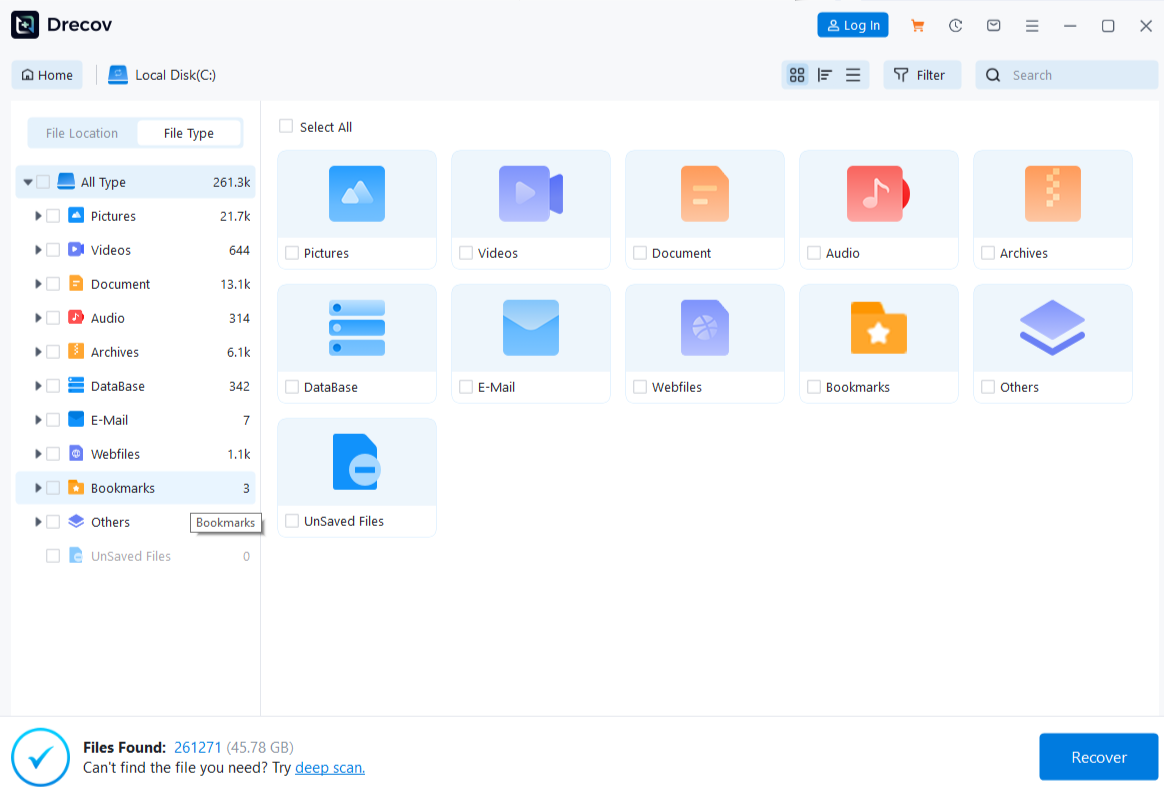
Warning: To maximize recovery success, avoid downloading any new files or clearing your browser cache while the scan is in progress, as this can overwrite the deleted data sectors.
Step 3: Filter by File Extension or Path
Once the scan is complete, use the Search bar in the top-right corner. To find lost bookmarks, search for .sqlite. To find lost downloads, filter by the specific file type you lost, such as .pdf, .zip, or .docx. PandaOffice Drecov allows you to navigate the original folder structure, making it easy to find files located in: C:\Users\YourUsername\Downloads\
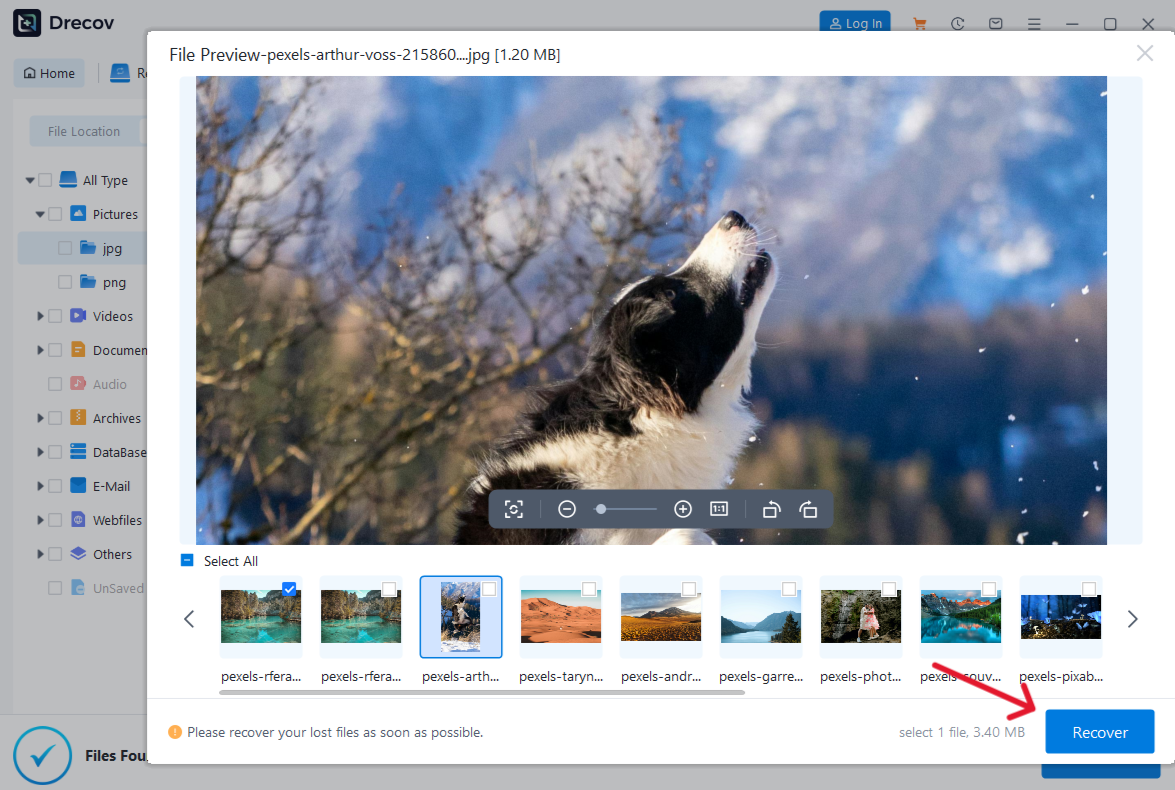
Step 4: Preview and Validate Content
Before committing to the recovery, click the “Preview” icon on the detected files. For bookmarks, Drecov can often show the internal metadata to confirm it is the correct version. For downloaded documents, you can view the first few pages to ensure the file isn’t corrupted.
Step 5: Secure the Recovery Process
Select the items you wish to restore and click the “Recover” button.
Key Operation Point: You must save these recovered browser files to an external drive or a secondary partition. Never save them back to the original Firefox profile folder during the recovery process, as this could cause permanent data corruption.
Internal Resources for Firefox Data Management
After successfully recovering your browser data, utilize these guides to ensure your bookmarks and downloads are never lost again:
- Where is the Firefox Bookmarks Location? Find Your Data Instantly
- Where are Firefox Bookmarks Stored on Your PC?
- 5 Minutes to Delete Bookmarks from Firefox Recovery
- Firefox Bookmarks Recovery: 5 Proven Methods to Get Back Lost Data
Method 2: Restore Firefox Profile Manually
If you suspect Firefox simply created a new empty profile during the update, you can manually switch back to your old one.
Step 1: Open Run Dialog
Press Win + R on your keyboard.
Step 2: Enter the Profile Path
Type %APPDATA%\Mozilla\Firefox\Profiles\ and press Enter.
Step 3: Locate Backup Profile
You will see folders with names like xxxxxxxx.default-release. If there are two folders, one might contain your old data.
Step 4: Copy Data Files
Open the older folder and copy places.sqlite (Bookmarks) and logins.json (Passwords).
Step 5: Replace Current Profile Files
Paste them into the new, active profile folder.
⚠️ Warning: Always make a backup copy of the folder before you start moving files around manually.
Method 3: Restore Bookmarks from Internal Backups
Firefox is actually quite smart—it keeps a rolling history of your bookmarks in a folder called bookmarkbackups.
Step 1: Open the Library
Inside Firefox, press Ctrl + Shift + B.
Step 2: Click Import and Backup
At the top of the window, click the Import and Backup button.
Step 3: Select Restore
Hover over Restore. You will see a list of dates. These are JSON snapshots Firefox took automatically.
Step 4: Pick a Backup Date
Select a date from before you performed the update. The browser will instantly replace the current (empty) bookmarks with the old ones.
Preventing Data Loss Before You Update Firefox
While knowing how do you update firefox browser is vital, prevention is better than cure. Follow these four “Safety Pillars” before every major update:
- Manual Export: Press Ctrl + Shift + B, click Import and Backup, and choose Export Bookmarks to HTML. Save this to a cloud drive.
- Firefox Sync: Create a Firefox Account. This syncs your bookmarks, tabs, and passwords to Mozilla’s encrypted servers. If your local update fails, you just log back in to get your data.
- Profile Backup: Occasionally copy the entire
%APPDATA%\Mozilla\Firefox\folder to an external hard drive. - Check Your Disk Health: Update failures often happen because of “Bad Sectors” on a hard drive. If you suspect your drive is failing, use PandaOffice Drecov to clone the drive or recover files before the update causes a total crash.
Best Practices for Safe Firefox Updates
To ensure you never have to worry about how can i update firefox failing, follow these 2026 industry best practices:
- Official Sources Only: Never click on “Your browser is out of date” pop-ups on random websites. These are almost always “malvertisements.”
- System Drivers: Ensure your Windows or macOS is updated. Sometimes Firefox updates require specific system DLL files that are only present in recent OS patches.
- Close Background Apps: Heavy apps like video editors or games can interfere with the browser’s ability to overwrite its own files during an update.
- Antivirus Exclusions: If your update always gets stuck at 90%, check your antivirus logs. It might be blocking the
updater.exefrom modifying the Program Files folder.
Understanding Firefox Update Channels
Mozilla offers several versions of the browser. Choosing the right one affects how often you need to learn how to update the firefox.
- Release (Stable): This is what 99% of people should use. It is tested and secure.
- Beta: Updates happen more frequently. You get features 4–6 weeks early, but it is slightly less stable.
- Developer Edition: Tailored for web devs. Includes advanced CSS and Debugging tools.
- Nightly: Updated every single day. This is the “bleeding edge” and has the highest risk of data loss.
⚠️ Warning: If you are a Nightly user, the chance of a corrupted update is significantly higher. Always keep PandaOffice Drecov installed and ready.
Advanced Tip: Verify Your Firefox Version
Not sure if you succeeded in your quest of how do you update firefox browser? Here is how to verify the version number accurately:
- Open the About Firefox window (Alt + H + A).
- Look for the version number (e.g., 136.0.1).
- Check if it says “64-bit” or “32-bit”. In 2026, you should almost exclusively be using the 64-bit version for better security (ASLR support).
- If you see the word “ESR”, you are on the “Extended Support Release,” which updates less frequently and is common in corporate environments.
FAQs About How to Update Firefox
Is the Firefox update free?
Yes. Mozilla is a non-profit organization. If a website asks you to pay for a Firefox update, it is a scam.
How often should I update?
Major updates arrive every 4 weeks, with minor security patches arriving in between. If you enable automatic updates, you won’t need to manually check.
Will I lose my open tabs?
Usually, no. Firefox is excellent at session restoration. However, if the update requires a full system reboot, it is safer to bookmark your “All Tabs” first.
What if I’m on a Mac?
The process is identical. Click Firefox in the top menu bar, then About Firefox to trigger the update.
Can I downgrade if I don’t like the update?
Technically yes, but it is highly discouraged. Older versions have known security holes. If you must downgrade, back up your profile with PandaOffice Drecov first, as older versions often cannot read the database format of newer versions.
Conclusion
Mastering how to update Firefox is essential for maintaining a secure and efficient browsing experience. Whether you choose the beginner-friendly automatic updates, the manual “About” check, or the advanced “over-install” from the official website, keeping your browser current is your first line of defense against cyber threats.
However, technology isn’t perfect. Unexpected crashes and database corruptions can occur even during routine maintenance. That is why tools like PandaOffice Drecov play a crucial role in a modern digital setup. By combining regular update habits with a reliable recovery solution, you can browse the web in 2026 with total confidence and peace of mind.






