







Managing your digital workspace efficiently often requires moving your browsing data between devices or profiles. Knowing how to transfer bookmarks in chrome ensures that you never lose access to your essential websites, research links, and frequently visited pages. Whether you are setting up a brand-new computer, switching to a different Google account, or simply organizing your workspace, mastering this migration process saves valuable time.
However, system crashes, accidental deletions, or synchronization glitches can sometimes cause these critical files to vanish during the transition. When standard browser features fail or files disappear from your local drive, professional tools become necessary. In such data loss scenarios, PandaOffice Drecov data recovery software provides a reliable solution to scan your storage and retrieve lost browser configuration files instantly.
Understanding the Basics of How to Transfer Bookmarks in Chrome
The process of managing your browser data relies on a single database file stored locally on your hard drive. When you look into how to move bookmarks in chrome, you are essentially copying or syncing this specific data layer. Chrome stores this information in a file named Bookmarks, which lacks a file extension and resides deep within the hidden application data folders of your operating system.
Common Challenges in Chrome Bookmarks Copy Procedures
Users frequently encounter unexpected hurdles when attempting a manual chrome bookmarks copy operation.
- Sync Conflicts: Google Sync might overwrite local changes, causing newly imported links to disappear.
- Hidden Directories: The AppData folder in Windows is hidden by default, making manual file extraction difficult for average users.
- Corrupted Files: Sudden power outages or browser crashes can corrupt the Bookmarks HTML structure, rendering it unreadable by Chrome.
How PandaOffice Drecov Saves Your Browsing Data
If your local browser files are deleted or corrupted before you can complete the migration, specialized software is required. PandaOffice Drecov data recovery software is engineered to scan deep into storage sectors to rebuild lost application files. This tool is highly effective when a browser update wipes your user profile, or when you accidentally format the drive containing your local user data. For comprehensive insights on protecting your digital workspace, you can explore the guide on how to remove OneDrive from File Explorer step by step guide.
⚠ Warning: Install it on a drive different from the one where your data was lost to prevent overwriting.
Solutions to How to Transfer Bookmarks in Chrome Issues
There are two primary methods to migrate your data securely. The first approach utilizes the built-in native features of the browser, while the second approach leverages advanced recovery tools if the data has been lost or deleted.
Method 1: The Native HTML Export and Import Function
The most direct way to execute a chrome bookmarks copy is through the native Bookmark Manager. This method does not require an active internet connection or a Google account.
- Step 1: Open Google Chrome on your source computer.
- Step 2: Press the hotkey combination Control Shift O on Windows, or Command Option B on Mac, to open the Bookmark Manager interface.
- Step 3: Click the three vertical dots located in the top-right corner of the manager bar, just below the main browser address bar.
- Step 4: Select Export Bookmarks from the dropdown menu.
- Step 5: Choose a destination folder, such as an external USB drive, name the file, and click Save.
- Step 6: Move to the target computer, open Chrome, navigate back to the Bookmark Manager, click the same three dots, and select Import Bookmarks.
Method 2: Recovery via PandaOffice Drecov Data Recovery Software
Furthermore, if you accidentally deleted your user profile or formatted your storage drive before exporting, the native method will not work. In this scenario, you must recover the original local files to complete the transfer. For users dealing with external storage mishaps during this process, referring to the recover deleted files from USB flash drive a complete guide can provide additional recovery workflows.
⚠ Warning: Install it on a drive different from the one where your data was lost to prevent overwriting.
- Step 1: Launch the application and select the specific drive where your operating system resides, which is typically the C drive.
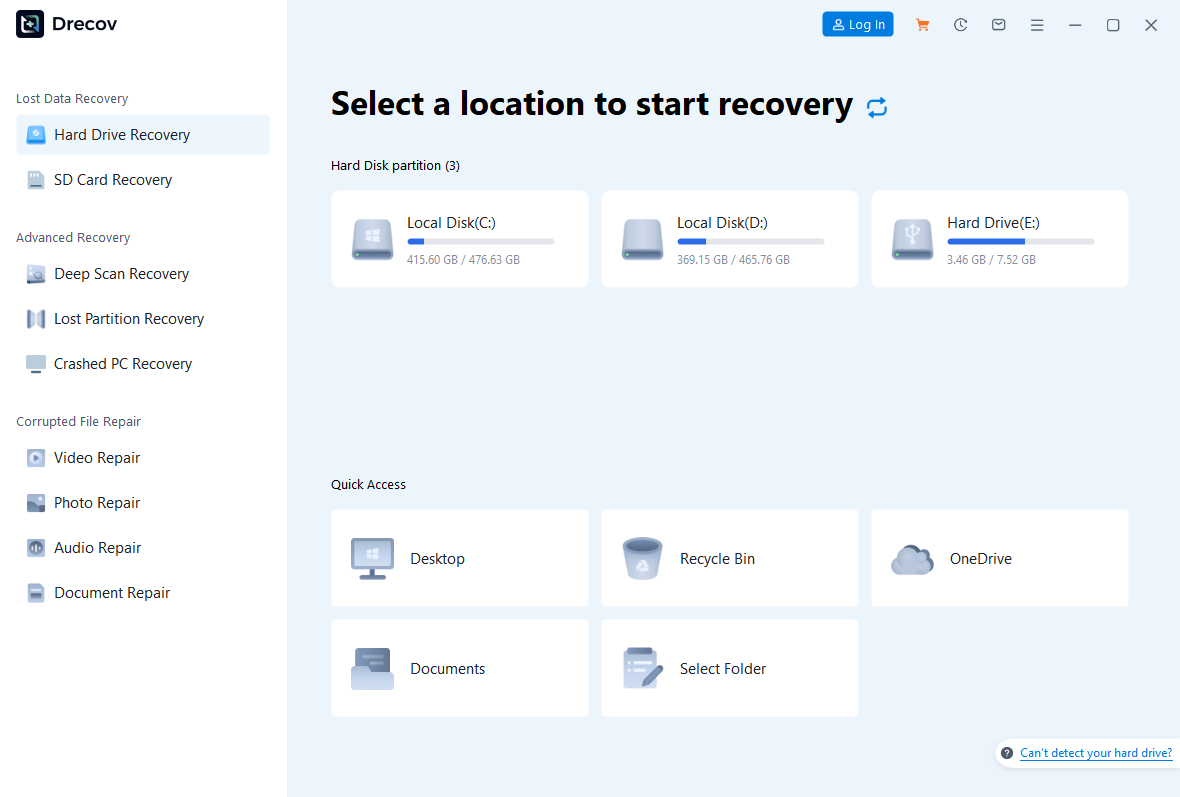
- Step 2: Click the Scan button to initiate a deep sector analysis of deleted application data.
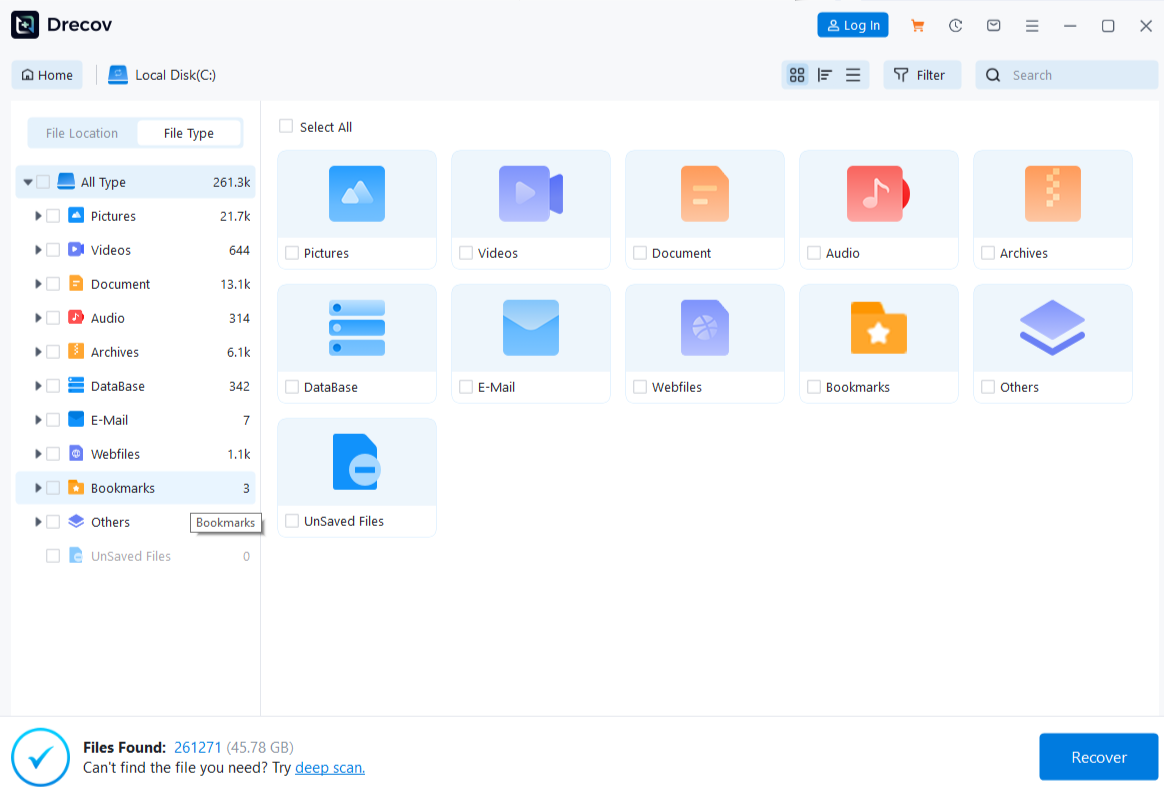
- Step 3: Use the file filter sidebar to search for the specific file name Bookmarks without any extension.
- Step 4: Select the correct file from the scan results, preview its creation date, and click Recover to save it to an external drive.
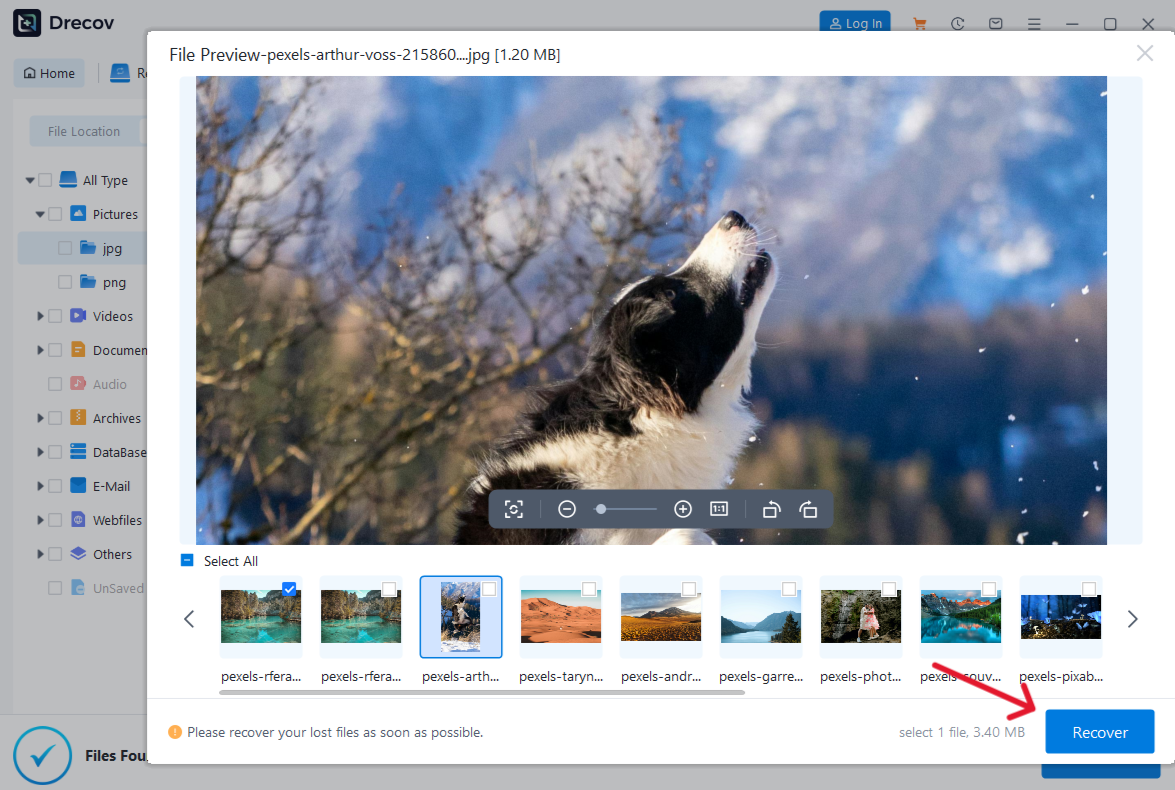
- Step 5: Paste this recovered file directly into the local storage path of your new Chrome installation to restore your data. If you ever find yourself needing to restore your browser environment completely, check out the detailed steps on how to get your Google Chrome bookmarks back.
Alternative or Complementary Methods
Beyond HTML exports and recovery software, users can utilize alternative strategies to execute a chrome bookmarks copy seamlessly.
| Method | Pros | Cons | Best Used For |
|---|---|---|---|
| Google Account Sync | Automated updates, cloud-backed, works across mobile and desktop devices | Requires a Google account, potential privacy concerns, sync lag | Daily use across multiple personal devices |
| Manual File Copy | Preserves exact folder structures, no internet required, fast | Requires navigating hidden system directories, risk of file corruption | Advanced users doing local profile backups |
| Third-Party Extensions | Extra organizational features, automated scheduled backups | Requires trusting external developers, can slow down browser speed | Users wanting automated daily backup logs |
Execution of the Manual Local File Transfer
To move your data manually without exporting an HTML file, you can copy the database file directly from the local AppData directory.
First, close Google Chrome completely to prevent file locking. Next, press Windows Key R to open the Run dialog box. Type %localappdata%\Google\Chrome\User Data\Default and press Enter. Locate the file named Bookmarks, copy it, and paste it into the exact same folder path on your target computer.
Tips & Best Practices
Optimizing your data migration workflow prevents data loss and maintains file integrity. Consequently, following structured habits ensures you never lose your curated web directories.
Maintaining Data Integrity During Transfer
Always verify that your Google Chrome browser is updated to the latest version on both the source and destination machines. Mixing significantly older browser versions with newer data profiles can cause formatting conflicts. In addition, always keep a secondary backup of your exported HTML file on a cloud drive or external storage media.
Avoiding Common Migration Pitfalls
- Do Not Rename Files: Keep the recovered or copied file named precisely Bookmarks with a capital B and no file extension.
- Disable Sync Temporarily: Turn off Google Sync on the new machine before pasting manual files, otherwise the cloud data might instantly overwrite your local transfer.
- Avoid Overwriting Profiles: If the target browser already has bookmarks, back them up first, because pasting a new file will completely replace the existing database.
For official documentation on how Google manages your profile data, you can review the Google Chrome Enterprise Help Center, which details advanced profile path structures for deployment.
How to transfer bookmarks in chrome FAQs
How to transfer bookmarks in Chrome to another computer quickly?
The fastest way is to sign into your Google Account on both computers and enable the Sync feature in the settings panel. Alternatively, you can export an HTML file from the Bookmark Manager and move it via a USB drive.
Where does a manual chrome bookmarks copy save files on Windows?
Chrome saves this data in the hidden AppData folder. The exact path is C:\Users\Username\AppData\Local\Google\Chrome\User Data\Default.
What should I do if I cannot find my data when learning how to move bookmarks in chrome?
If the files are missing from your directory, stop using the computer immediately to prevent data overwriting. Run a scan with PandaOffice Drecov data recovery software to locate and rebuild the deleted files.
Can I transfer my data from Chrome to another browser like Edge or Firefox?
Yes, most modern web browsers feature an Import wizard that can directly pull data from your Chrome installation or read an exported Chrome HTML file.
Conclusion
Understanding how to transfer bookmarks in chrome ensures a smooth transition when upgrading your hardware or organizing your digital profiles. Whether you utilize the straightforward HTML export method or rely on cloud synchronization, keeping your browsing data organized saves time and effort.
In cases where unexpected system errors or accidental deletions disrupt your progress, PandaOffice Drecov data recovery software serves as an essential safety net to retrieve your lost files. Adopting a proactive approach to data management, such as performing regular manual exports, protects your valuable web resources against any future digital mishaps.






