







Losing an entire folder in Microsoft Outlook can trigger immediate panic, especially when it contains critical client correspondence, invoices, or project milestones. Whether you accidentally clicked the wrong option or suffered a sudden system crash, the sudden disappearance of your data disrupts your workflow. Fortunately, learning how to restore deleted outlook folder structures and contents is entirely possible.
When standard recovery methods fail, specialized tools become essential. PandaOffice Drecov data recovery software provides a dependable remedy for deep system scans, ensuring that even permanently purged items are successfully retrieved. This guide will walk you through the precise steps required for deleted outlook folder recovery using both native Microsoft features and advanced software solutions.
Understanding the Basics of Outlook Restore Deleted Folder
The architecture of Microsoft Outlook is designed with safety nets to prevent accidental data loss. When you remove a folder, it is usually relocated rather than instantly destroyed. Recognizing how your mail client handles these items is key to choosing the right recovery strategy.
Common Challenges in Outlook Data Loss
- Accidental Permanent Deletion: Pressing Shift and Delete bypasses the temporary storage area completely.
- Emptying the Trash: Automatically or manually clearing out your temporary storage removes immediate access to your files.
- PST or OST Corruption: Large data files can degrade over time, leading to missing structural components.
- Server Synchronization Issues: Interruptions during IMAP or Exchange sync routines can cause folders to vanish from the local display.
For comprehensive digital storage upkeep, users frequently face challenges across various platforms. If you encounter similar issues with web browsers or cloud integration, you can explore guides on restoring Google Chrome bookmarks or managing storage settings by removing OneDrive from File Explorer.
Introducing PandaOffice Drecov
When native manual attempts yield no results, specialized engineering is required. PandaOffice Drecov data recovery software is built to scan deep within your storage drive to locate fragments of deleted PST and OST files.
This utility bypasses application-level restrictions to address the raw storage sector directly. It is highly effective in scenarios involving formatted drives, collapsed operating systems, and corrupted hard drive partitions where Outlook data was previously stored.
⚠ Warning: Install it on a drive different from the one where your data was lost to prevent overwriting.
Solutions to Outlook Restore Deleted Folder Issues
The following methods outline the exact protocols for executing a successful deleted outlook folder recovery, ranging from immediate application fixes to advanced drive reconstruction.
Method 1: The Native Recoverable Items Tool
For standard Exchange accounts, Microsoft provides an integrated server-side buffer that retains items even after the Deleted Items trash can has been emptied.
- Open Microsoft Outlook and navigate to your email folder list.
- Select the folder labeled Deleted Items.
- Click on the Home tab located on the top ribbon menu.
- Select the option titled Recover Deleted Items From Server.
- Choose the specific folder or messages you wish to salvage.
- Select Restore Selected Items and click OK to return them to their original location.
Method 2: Recovery Using PandaOffice Drecov
If the folder was purged permanently or lost due to drive corruption, native tools will show an empty list. In this scenario, PandaOffice Drecov data recovery software must be used to scan the local storage system for the underlying database files.
⚠ Warning: Install it on a drive different from the one where your data was lost to prevent overwriting.
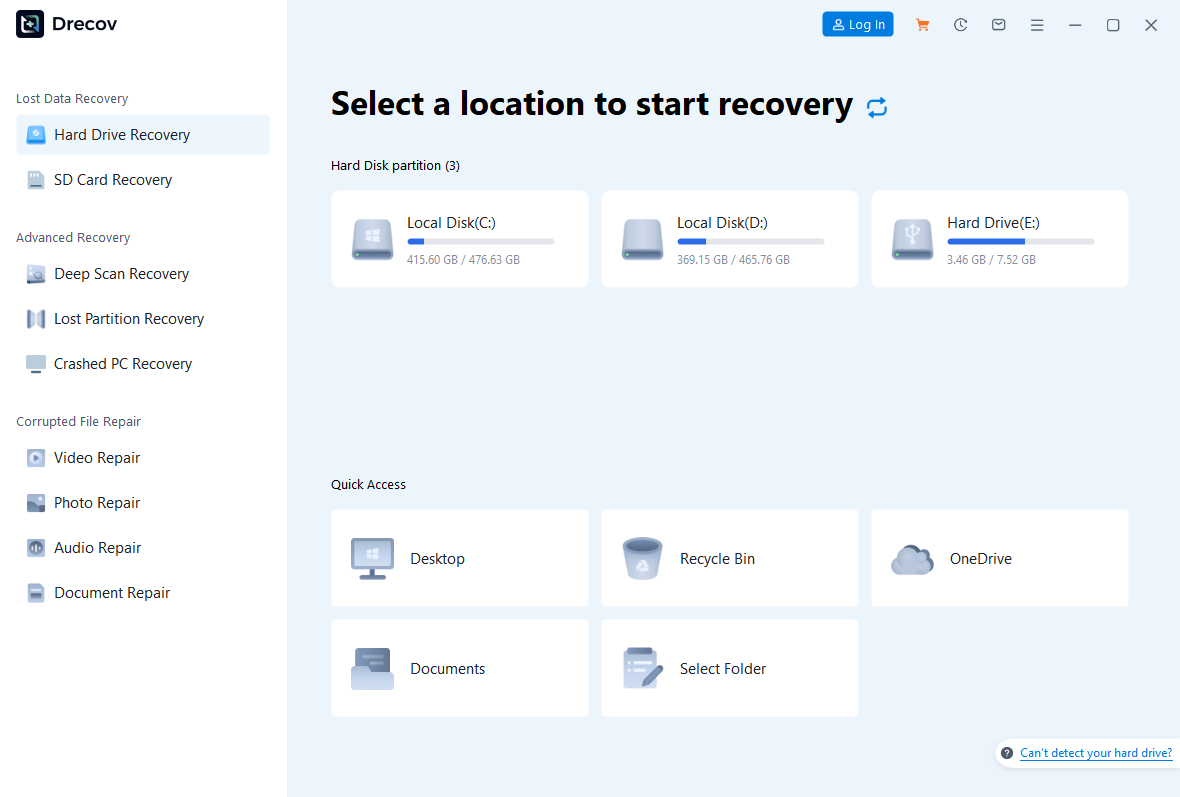
Step 1: Select the Target Location
Identify the drive where your operating system and Outlook database reside. For standard installations, this is typically the C drive. Select this drive and click the Scan button to initiate a comprehensive sector-by-sector analysis.
Step 2: Filter and Locate PST or OST Files
As the scan progresses, use the file type filter sidebar. Search specifically for .pst or .ost extensions, which are the main data repositories for Outlook configurations. You can also type the name of the missing folder in the search bar to locate specific database segments.
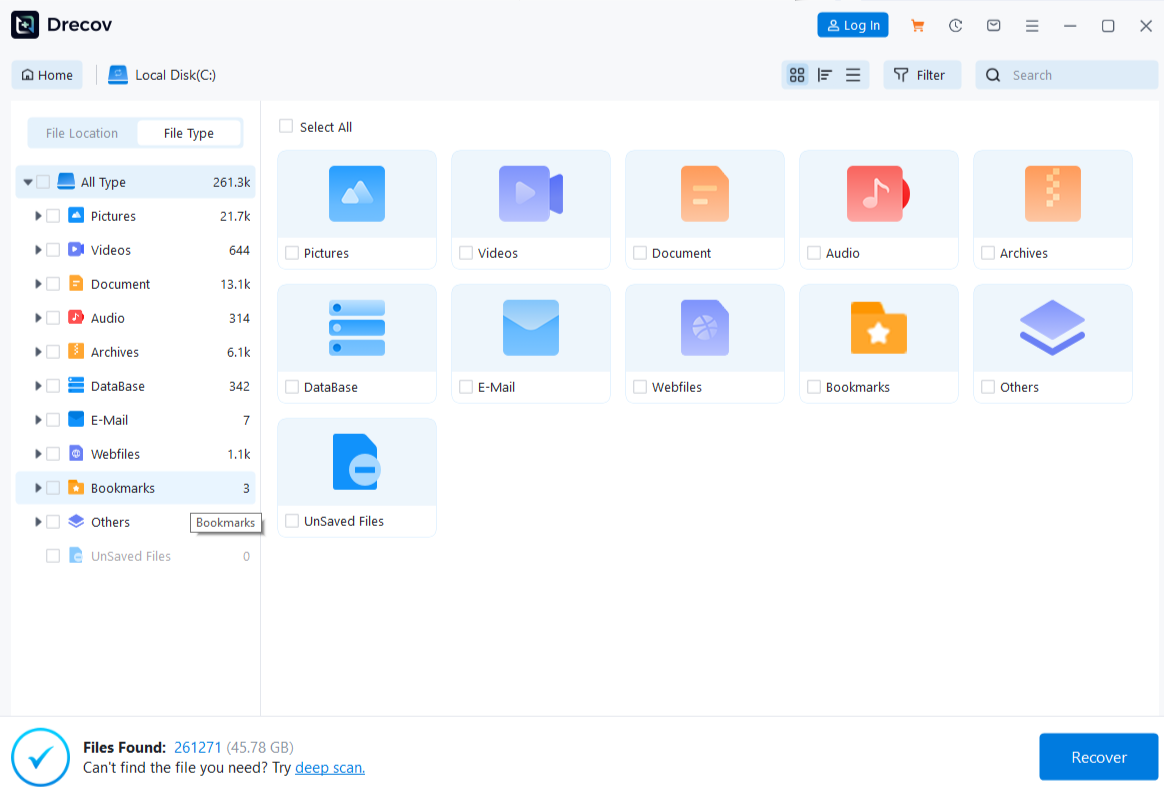
Step 3: Preview and Execute Recovery
Verify the health of the discovered data files through the built-in preview pane. Select the checkboxes next to the desired Outlook databases. Click the Recover button, choose an external storage device for the output, and wait for the reconstruction process to finish.
Critical Path Note: The path above is the standard default directory where Microsoft Outlook saves local data stores for offline use. Pointing your recovery search directly to this directory accelerates the scanning phase significantly.
If you ever experience data loss on external hardware devices during this process, refer to the technical breakdown regarding how to recover deleted files from a USB flash drive for step-by-step external media rescue.
Alternative or Complementary Methods
When seeking how to restore deleted outlook folder items, alternative manual strategies can be deployed depending on your account configuration.
| Recovery Method | Success Rate | Time Required | Technical Difficulty |
| Deleted Items Folder Drag | High for recent deletions | 1 Minute | Very Low |
| Server Rollback Exchange | Medium | 15 Minutes | Medium |
| Hex Editor Reconstruction | Low | 2 Hours | Very High |
| PandaOffice Drecov | Exceptionally High | 10 Minutes | Low |
Manual Option: Restoring via Outlook AutoArchive
If you have configured the AutoArchive feature in your email client, your missing folder might be safely stored inside an external archive file.
- Navigate to the File menu in the upper-left corner of the Outlook interface.
- Select Account Settings, then click on Account Settings again from the dropdown list.
- Switch to the Data Files tab to view the locations of your secondary storage archives.
- Open File Explorer and navigate to that specific path to check for an
archive.pstfile. - Import this file back into your main profile to access your preserved directory structure.
Tips & Best Practices
Maximizing your chances for a successful outlook restore deleted folder process requires adherence to strict data preservation protocols.
- Stop All Write Operations: Minimize web browsing, file downloading, or software installations on the affected machine immediately after noticing data loss.
- Maintain Database Sizes: Keep your primary PST files under twenty gigabytes to reduce the likelihood of structural corruption.
- Deploy Regular Backups: Use automated external backups to capture local data files weekly.
- Avoid Registry Cleaning Utilities: Refrain from running unverified registry cleaners, as they often delete critical application path pointers.
For further technical insights into data structure preservation, you can consult the official Microsoft Outlook Support Documentation for detailed enterprise network guidelines.
Frequently Asked Questions
Where do deleted Outlook folders go?
They move directly to the Deleted Items folder. If they are removed from there, they transition to the hidden Recoverable Items structure on the email server for a limited time.
Can I recover a folder if I cleared the Trash folder?
Yes. You can use the Recover Deleted Items From Server function or run PandaOffice Drecov data recovery software to find the local file fragments on your hard drive.
What is the difference between PST and OST files?
A PST file holds local data for POP3 accounts, while an OST file is an offline cache synchronized with Exchange or IMAP servers.
Does Windows File History back up Outlook mail?
Windows File History backs up local files, including PST data stores, provided that the directory containing your local app data is actively included in your backup selection.
Why is my restored folder empty?
This indicates that the index structure was salvaged, but the actual data sectors containing the individual messages were overwritten by new system activity.
Conclusion
Mastering how to restore deleted outlook folder components keeps your communication lines open and protects your business assets. Acting quickly and avoiding further disk activity are vital steps to prevent data overwriting.
While manual built-in features provide quick fixes for basic mistakes, specialized tools are necessary for severe corruption or permanent deletion. Utilizing PandaOffice Drecov data recovery software ensures you have a professional-grade solution ready to handle unexpected data loss scenarios smoothly.






