







Accidentally deleting emails, contacts, calendar entries, or attachments in Microsoft Outlook can cause serious disruption—especially when those items contain business-critical information. Fortunately, Outlook includes multiple built-in tools to recover deleted items, restore messages from hidden folders, and perform advanced deleted items recovery Outlook procedures.
Many users assume that once something is removed, it is permanently gone. However, Outlook actually stores deleted content in several recovery layers. Whether you are trying to restore deleted items Outlook, retrieve emails from the Deleted Items folder, or recover content after emptying the trash, recovery is often possible if action is taken quickly.
This comprehensive guide explains:
- How to recover deleted items Outlook
- How to restore deleted items from Outlook
- How to retrieve deleted items from Outlook after permanent deletion
- What to do if built-in recovery fails
- When professional recovery tools become necessary
Understanding how Outlook manages deleted content dramatically increases recovery success rates.
⚠️Warning: The longer you wait after deletion, the higher the chance that items may be permanently purged due to retention policies or overwritten storage sectors.
Let’s begin by understanding how Outlook handles deleted content internally.
When you accidentally delete Outlook items, such as email messages, calendar appointments, contacts, or tasks, you can often recover them if they are in your Deleted Items or Junk Email folders. In some cases, you can even recover items after the Deleted Items folder is emptied. The first place to look for a deleted item, such as an email message, calendar appointment, contact, or task is the Deleted Items folder. If it’s not there, you might still be able to recover it, depending on which type of Outlook you’re using. Select a tab option below for the version of Outlook you’re using. What version of Outlook do I have?
Understanding How Deleted Items Work in Outlook
Before attempting to recover deleted item data, it’s important to understand Outlook’s deletion process. Outlook does not immediately erase content when you press Delete. Instead, it moves items through several stages.
Stage 1: Deleted Items Folder
When an email or file is deleted, it is moved to the Deleted Items folder. At this stage, recovery is simple and immediate.
Stage 2: Recoverable Items (Hidden Folder)
If the Deleted Items folder is emptied, Outlook moves items to a hidden system folder known as Recoverable Items (for Exchange and Microsoft 365 accounts). This allows temporary recover deleted items outlook functionality.
Stage 3: Permanent Deletion
After the retention period expires or a purge occurs, items are permanently removed from the mailbox database.
Different account types behave differently:
- Exchange / Microsoft 365: Server-based recovery available.
- IMAP accounts: Deletion syncs with the mail server.
- POP accounts: Emails stored locally in PST files.
Understanding these stages helps determine the correct approach for restore deleted items outlook scenarios.
⚠️Warning: Retention policies vary by organization. Some mailboxes retain deleted content for 14 days, while others allow up to 30 days or more.
Now, let’s explore the simplest recovery method.
Method 1: Recover Deleted Items from the Deleted Items Folder
The easiest way to perform recover deleted items operations is by checking the Deleted Items folder. In many cases, the item is still there.
Steps to Restore Deleted Items from Outlook (Desktop Version)
- Open Microsoft Outlook.
- Navigate to the Deleted Items folder.
- Locate the item you want to recover.
- Right-click it.
- Choose Move > Inbox or another destination folder.
This method works for emails, contacts, tasks, and calendar entries.
For users searching how to recover deleted items from Outlook, this is typically the first and most successful solution.
Bulk Recovery Option
To recover deleted items Outlook in bulk:
- Hold Ctrl and select multiple items.
- Right-click and move them together.
Outlook instantly restores items to the selected folder without affecting other mailbox content.
⚠️Warning: If the Deleted Items folder has already been emptied, this method will not work. Continue to the next recovery method.
Method 2: Restore Deleted Items Outlook Using Recoverable Items
If the Deleted Items folder is empty, Outlook may still store the content in a hidden system area called Recoverable Items.
How to Retrieve Deleted Items from Outlook (Exchange / Microsoft 365)
- Open Outlook.
- Click the Deleted Items folder.
- Select Recover items recently removed from this folder.
- A new window will display recoverable items.
- Select the item.
- Click Restore Selected Items.
This built-in tool supports advanced deleted items recovery Outlook scenarios when users have already emptied the trash.
Recovered items will return to their original folder or the Deleted Items folder.
Outlook Web Version Steps
- Log in to Outlook Web.
- Go to Deleted Items.
- Click Recover deleted items.
- Choose the items.
- Select Restore.
This method answers many queries related to restore deleted items from Outlook after trash cleanup.
⚠️Warning: Once the retention window expires, this option will no longer display the deleted content.
Next, we examine what happens after permanent deletion.
Method 3: Recover Permanently Deleted Items in Outlook
If deleted items no longer appear in either Deleted Items or Recoverable Items, recovery becomes more complex but not necessarily impossible.
Administrator-Level Recovery
For Microsoft 365 business users, administrators may be able to restore mailboxes from server backups.
Steps typically include:
- Contacting IT support
- Requesting mailbox restore
- Checking compliance retention policies
Organizations often maintain longer retention periods for legal and compliance purposes.
Recover from PST Backup Files
For POP accounts, Outlook stores data in PST files locally.
To restore from backup:
- Open Outlook.
- Click File > Open & Export.
- Select Open Outlook Data File.
- Browse to a previous PST backup.
- Import missing items.
This approach is effective for users attempting to retrieve deleted items from Outlook after system crashes or accidental overwrites.
⚠️Warning: Always back up your current PST file before replacing it with an older version.
When both server recovery and backups fail, professional recovery tools become necessary.
Advanced Deleted Items Recovery Outlook with Pandaoffice Drecov
When Outlook’s built-in tools cannot recover deleted item data, advanced recovery software offers a deeper solution.
Pandaoffice Drecov is a professional Windows-based recovery tool designed to retrieve permanently deleted Outlook files, including damaged or lost PST files.
Why Use Pandaoffice Drecov?
Selecting the right recovery software is essential when unexpected data loss occurs. Pandaoffice Drecov provides a powerful, secure, and efficient solution designed to handle a wide range of storage failure scenarios across different devices.
Advanced Recovery for SD Cards and Hard Drives
Pandaoffice Drecov supports recovering photos from an SD card as well as performing professional hard drive recovery. Whether files were accidentally deleted, a storage device was formatted, or data was lost due to corruption, its deep scan technology thoroughly analyzes storage sectors to locate recoverable content. The software is compatible with internal drives, memory cards, and various file systems, ensuring flexible recovery options in different environments.
Reliable Support for Recovering External Hard Drives
The software also specializes in recovering external hard drives that become inaccessible due to accidental formatting, partition loss, or file system damage. It automatically detects connected devices and performs comprehensive scans without altering original data, helping improve recovery success rates.
Efficient Recovery of Deleted Photos
One of its strongest capabilities is recovering deleted photos, even after permanent deletion from the Recycle Bin. The built-in preview feature allows users to verify files before restoration, ensuring accurate and controlled recovery.
With strong scanning performance, broad device compatibility, and an intuitive interface, Pandaoffice Drecov offers a dependable and professional solution for modern data recovery needs.
Steps to Perform Recovery
Download Drecov- Install Pandaoffice Drecov on a different drive.
- Launch the software.
- Select the storage location containing Outlook data.
- Run a deep scan.
- Preview recoverable files.
- Restore selected content safely.
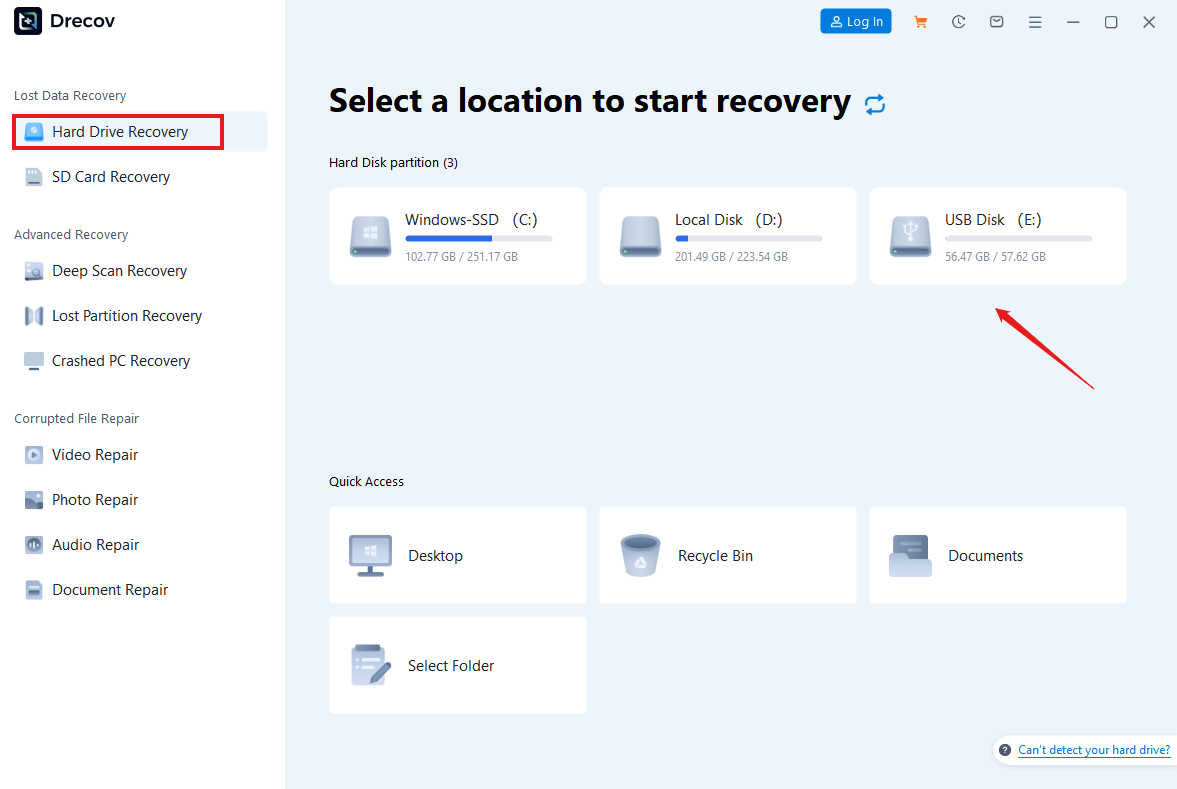


This method is particularly useful for severe deleted items recovery Outlook cases involving formatting or partition loss.
⚠️Warning: Do not install recovery software on the same drive where data was lost.
Method 4: Recover Deleted Items After Emptying Trash
Even after emptying the Deleted Items folder, Outlook may still allow recover deleted items Outlook through hidden system folders or backups. This is especially relevant for Exchange and Microsoft 365 accounts, which maintain server-side retention.
Steps to Recover Permanently Deleted Items in Outlook Web
- Log in to Outlook Web.
- Navigate to the Deleted Items folder.
- Click Recover deleted items at the top menu.
- Select the emails or items to restore.
- Click Restore.
Items will be returned to their original folder, Inbox, or Deleted Items folder depending on mailbox configuration. This method addresses scenarios where users need to restore deleted items from Outlook even after manual trash cleanup.
Bulk Restoration Tips
Users can select multiple items simultaneously to perform batch recovery. This is particularly useful for large-scale deleted items recovery Outlook operations where multiple emails, contacts, or attachments need restoration.
⚠️Warning: Retention policies may limit the time window for recovery. Items beyond this period may require professional tools to retrieve.
Method 5: Recover Deleted Contacts, Calendar Items, and Tasks
Outlook stores more than just emails. Deleted contacts, calendar entries, and tasks can also be restored.
Recovering Contacts and Calendar Items
- Open the Deleted Items folder.
- Locate the missing contact or calendar event.
- Right-click and select Move > Contacts or Calendar.
- Confirm restoration.
For Exchange or Microsoft 365 users, hidden Recoverable Items folders also support contact and calendar recovery. This ensures that vital organizational information, like client contacts or meeting schedules, is not lost permanently.
Recovering Tasks and Notes
Tasks and notes follow a similar process. Navigate to the Deleted Items folder, select the task or note, and restore it to the appropriate folder. For items not found, check Recover Deleted Items from the top menu.
⚠️Warning: Deleted items older than the retention period may not appear and will require advanced recovery solutions such as Pandaoffice Drecov.
Method 6: Recover Deleted Items from Outlook Mobile App
Outlook mobile apps synchronize with the server, so deletion on one device affects all others. However, deleted items can still be restored.
Steps for Mobile Recovery
- Open the Outlook app.
- Tap the Deleted Items folder.
- Select the item to recover.
- Tap Move and choose the destination folder.
If items do not appear, users should check Recover deleted items Outlook through the web version. Mobile recovery is most effective when performed immediately after deletion.
⚠️Warning: IMAP accounts may permanently delete emails if server sync removes items across devices.
Method 7: Handle Sync Issues and IMAP Recovery
Sometimes Outlook fails to display deleted items due to synchronization problems.
Sync Recovery Steps
- Ensure all devices are connected to the Internet.
- Update the Outlook app to the latest version.
- For IMAP accounts, log in via web access to check if deleted items exist in the server trash or recoverable folder.
- Attempt restore deleted items from Outlook online before using desktop recovery.
This method is critical for users managing multiple devices and ensures consistent deleted items recovery Outlook across platforms.
⚠️Warning: Frequent sync conflicts may result in item duplication or temporary invisibility.
Advanced Recovery with Pandaoffice Drecov
When built-in recovery fails or items are permanently deleted, professional software provides the most reliable solution. Pandaoffice Drecov can recover emails, contacts, calendar items, tasks, and attachments from damaged PST/OST files or storage devices.
Key Features of Pandaoffice Drecov
- Recovers deleted PST and OST files
- Supports formatted and corrupted drives
- Recovers permanently deleted emails, contacts, and calendar entries
- Preview function before restoration
- Deep scan ensures maximum recovery success
Recovery Steps
- Install Pandaoffice Drecov on a separate drive.
- Launch the software.
- Select the drive containing Outlook data.
- Perform a deep scan.
- Preview recoverable items.
- Restore selected items to a secure location.
⚠️Warning: Avoid installing on the drive where data loss occurred to prevent overwriting recoverable files.
How to Prevent Future Outlook Data Loss
Prevention reduces the risk of permanent data loss.
Enable Regular Backups
Use Windows File History, external drives, or cloud backup to periodically back up PST files.
Use Retention Policies
For Microsoft 365 users, enable extended retention periods to allow more time for recover deleted items Outlook operations.
Avoid Permanent Deletion
Avoid Shift + Delete unless necessary, as items bypass the Deleted Items folder and require advanced recovery tools.
Monitor PST File Size
Oversized PST files increase corruption risk. Archive old emails regularly.
Install Recovery Tools in Advance
Having Pandaoffice Drecov installed ensures rapid response if unexpected deletion occurs.
Frequently Asked Questions
How do I recover deleted items from Outlook after 30 days?
Recovery depends on retention policies or server backups. Use built-in tools or Pandaoffice Drecov for permanent recovery.
Can deleted contacts or calendar entries be restored?
Yes, using Deleted Items or Recoverable Items folders, or advanced recovery software.
Why can’t I see my deleted items?
Retention expiry, sync issues, or PST corruption may cause items to disappear.
Is permanent deletion truly permanent?
Items may be recoverable using advanced tools like Pandaoffice Drecov if storage sectors have not been overwritten.
Final Thoughts on Deleted Items Recovery in Outlook
Losing emails, contacts, or calendar events in Outlook does not always mean permanent loss. Whether performing deleted items recovery Outlook using built-in folders, server backups, or professional software, multiple reliable methods exist. Quick action is essential for success, and when standard recovery fails, Pandaoffice Drecov provides a professional solution for restoring permanently deleted items safely and efficiently.
By understanding deletion mechanisms, leveraging recovery options, and implementing preventive measures, users can minimize the impact of accidental data loss and ensure continuity in daily communication and workflow.






