







In today’s digital era, protecting your data is essential. Backing up your computer to OneDrive ensures that important files, documents, and media are safe from accidental deletion, system crashes, or hardware failures. Using OneDrive as backup provides the advantage of cloud accessibility, enabling you to access files from any device at any time.
This comprehensive guide explains how to back up to OneDrive, covering the steps for both personal and business users. It also explores advanced backup strategies, OneDrive backup solution options, and recovery methods. Additionally, professional tools like Pandaoffice Drecov can complement OneDrive backups by actively retrieving lost or permanently deleted files that the cloud did not capture.
⚠️Warning: Relying solely on cloud backups can be risky if synchronization fails. It’s recommended to combine local and cloud backups to maximize data protection.
By the end of this guide, users will understand how to back up OneDrive, restore files, and implement a reliable OneDrive recovery plan for all types of data.
Every computer has standard folders such as Desktop, Documents, Music, Pictures, and Videos which you probably use but might not be included in your OneDrive. By backing up these folders to your OneDrive, they’re protected and available across all your devices.—from Microsoft Store
Understanding OneDrive Backups
Before performing a OneDrive backup, it’s important to understand how the platform works. Windows integrates OneDrive as a cloud storage service, allowing users to back up files automatically or manually. OneDrive synchronizes these files between the cloud and local devices, so users can access them from computers, mobile phones, and tablets.
Key Features of OneDrive Backup
- Automatic synchronization of selected folders.
- Version history to recover older versions of files.
- Remote accessibility for all backed-up files.
- Integration with Microsoft Office for seamless saving and editing.
Using OneDrive as backup is particularly beneficial for users who need real-time synchronization and access across multiple devices. However, users must actively sync their files to the cloud to prevent data loss.
⚠️Warning: Files deleted locally may also be removed from the cloud after the retention period. Regular monitoring is recommended to prevent permanent loss.
Why Use Pandaoffice Drecov with OneDrive
While OneDrive provides reliable cloud storage, accidental deletion, ransomware attacks, or system failures may still result in data loss. Pandaoffice Drecov actively complements OneDrive backups by recovering files that the cloud interface cannot restore.
Key Benefits of Using Pandaoffice Drecov
Selecting the right recovery software is essential when unexpected data loss occurs. Pandaoffice Drecov provides a powerful, secure, and efficient solution designed to handle a wide range of storage failure scenarios across different devices.
Advanced Recovery for SD Cards and Hard Drives
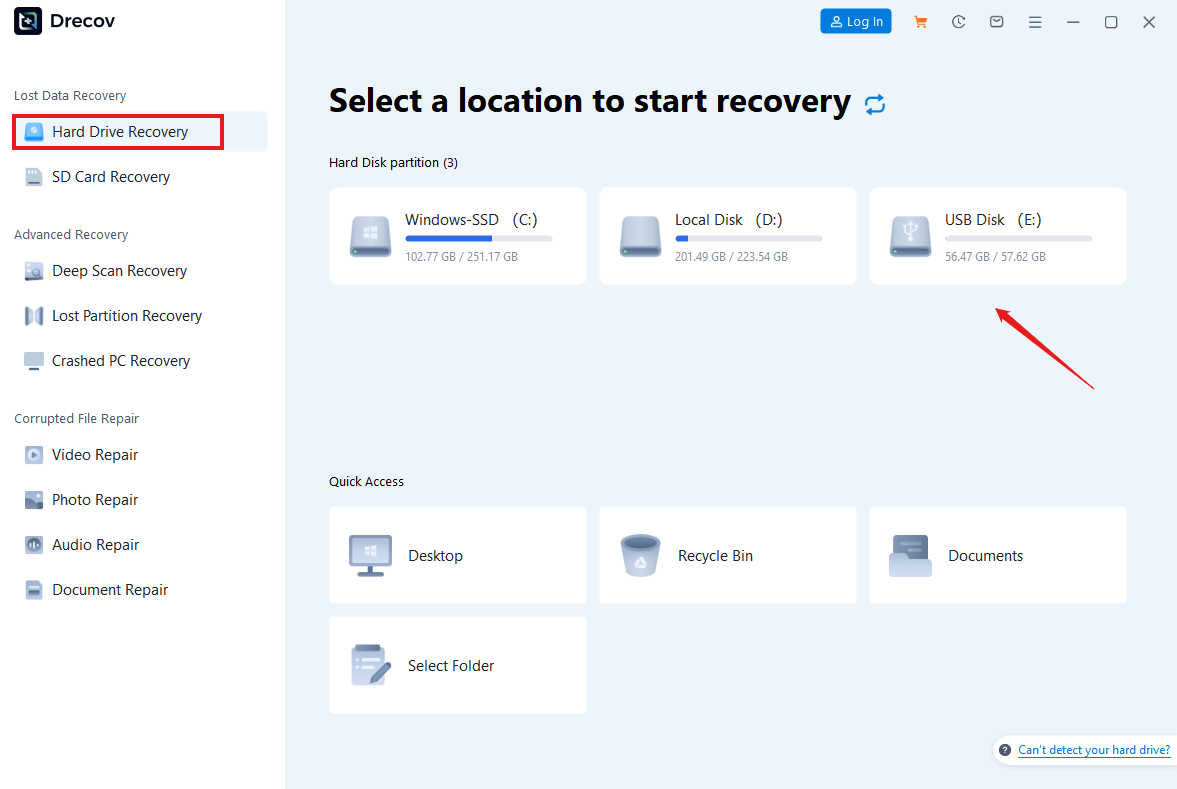
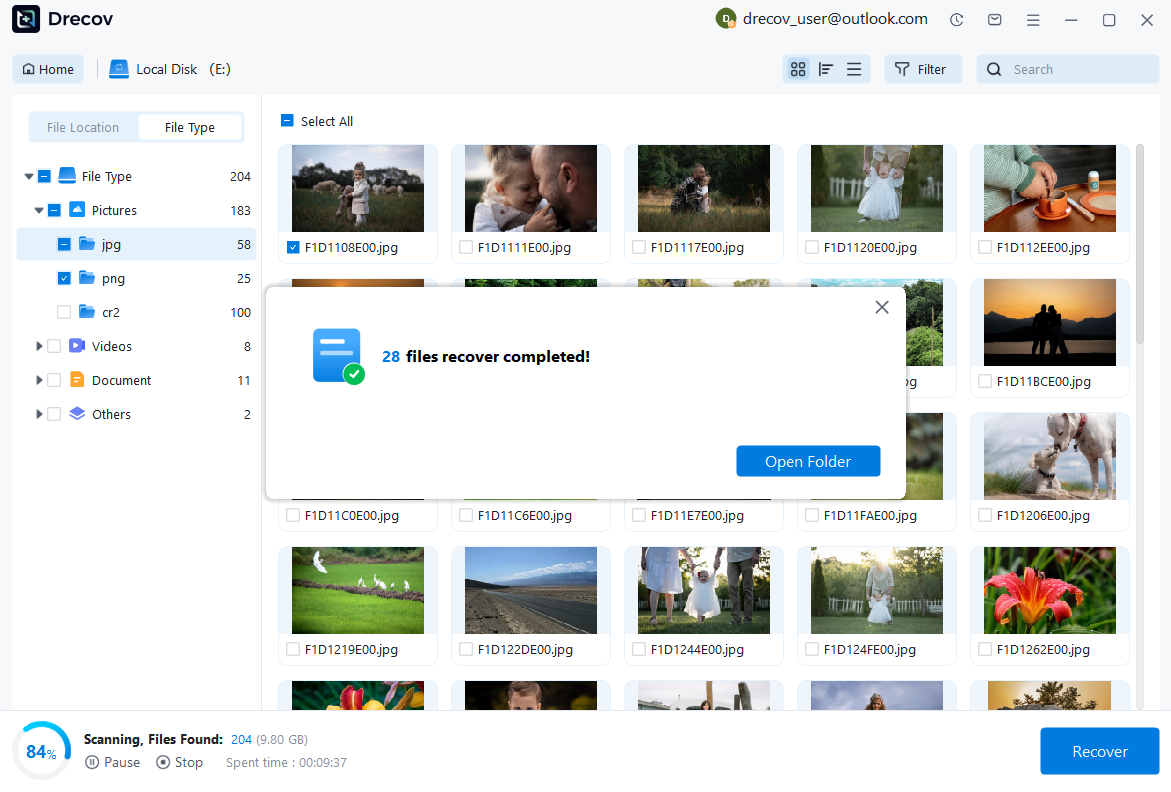
Pandaoffice Drecov supports recovering photos from an SD card as well as performing professional hard drive recovery. Whether a user accidentally deletes files, formats a storage device, or loses data due to corruption, Pandaoffice Drecov’s deep scan technology thoroughly analyzes storage sectors to locate and recover the content.The software is compatible with internal drives, memory cards, and various file systems, ensuring flexible recovery options in different environments.
Reliable Support for Recovering External Hard Drives
The software also specializes in recovering external hard drives that become inaccessible due to accidental formatting, partition loss, or file system damage. It automatically detects connected devices and performs comprehensive scans without altering original data, helping improve recovery success rates.
Efficient Recovery of Deleted Photos
One of its strongest capabilities is recovering deleted photos, even after permanent deletion from the Recycle Bin. The built-in preview feature allows users to verify files before restoration, ensuring accurate and controlled recovery.
With strong scanning performance, broad device compatibility, and an intuitive interface, Pandaoffice Drecov offers a dependable and professional solution for modern data recovery needs.
This combination of cloud backup and professional recovery ensures that even in worst-case scenarios, critical data can be retrieved efficiently.
⚠️Warning: Avoid installing recovery software on the same drive where data was lost to prevent overwriting recoverable files.

Step 1: Set Up OneDrive on Your Computer
To begin back up to OneDrive, the first step is ensuring that OneDrive is properly set up on your computer.
Instructions
- Open the OneDrive application on Windows.
- Sign in with your Microsoft account.
- Choose folders you want to sync from your computer to the cloud.
- Adjust settings to enable automatic syncing for Documents, Desktop, and Pictures.
By configuring these settings, files in selected folders will automatically be uploaded to OneDrive, creating continuous OneDrive backups without manual intervention.
⚠️Warning: Ensure your internet connection is stable during the initial synchronization to prevent incomplete backups.
Step 2: Manually Back Up Specific Files to OneDrive
In addition to automatic folder sync, you can perform targeted back up OneDrive operations for critical files.
Instructions
- Open File Explorer and locate the files or folders you want to back up.
- Drag and drop them into the OneDrive folder.
- Wait for the synchronization status icon to indicate upload completion.
This method is particularly useful for large files, new projects, or important documents that require immediate cloud backup. Using this approach guarantees that essential files are included in your OneDrive backup solution.
⚠️Warning: Large files may take longer to upload depending on your internet speed; ensure enough storage is available in your OneDrive account.
Step 3: Verify OneDrive Backup Completion
After performing back up on OneDrive, verification is essential to ensure data is fully secured.
Steps to Verify
- Open OneDrive on your web browser.
- Navigate to the uploaded folders and files.
- Check that all expected files appear correctly.
- Open a few files to confirm accessibility and integrity.
Proper verification ensures that files are safely stored in the cloud and ready for OneDrive restore if needed.
⚠️Warning: Do not assume synchronization is complete solely based on status icons; always verify through the cloud interface.
Step 4: Schedule Regular OneDrive Backups
To maintain a continuous OneDrive backup solution, schedule regular backups.
How to Automate Backups
- Enable automatic syncing for default folders like Desktop, Documents, and Pictures.
- Set reminders to check the status of OneDrive backups weekly.
- Consider combining OneDrive with local backups or external drives for redundancy.
Scheduling regular backups ensures that all new or modified files are automatically included in OneDrive backups, reducing the risk of accidental data loss.
⚠️Warning: Failure to monitor backup schedules may result in missing critical updates or newly created files.
Step 5: Restore Files from OneDrive
If files are accidentally deleted or corrupted, OneDrive allows restore deleted items Outlook-style functionality for cloud-stored content.
Steps to Perform OneDrive Restore
- Log in to OneDrive web interface.
- Navigate to the Recycle Bin or the specific folder containing the deleted file.
- Select the files you want to restore.
- Click Restore.
Files are returned to their original locations in both the cloud and any synced devices, making OneDrive recovery quick and efficient.
⚠️Warning: Items in the OneDrive Recycle Bin are only retained for a limited period (usually 30 days for personal accounts). Act promptly to recover important files.
Step 6: Advanced OneDrive Backup Strategies
For users who need comprehensive protection, basic folder sync may not be enough. Advanced OneDrive backup solution strategies include backing up entire directories, system files, or project folders to ensure redundancy.
Tips for Effective Backup
- Categorize files into priority folders and sync them first.
- Use selective sync to save bandwidth and storage space.
- Consider using OneDrive’s version history feature to track changes over time.
Combining these strategies with scheduled sync ensures that new documents, media files, and work-in-progress projects are consistently backed up. Learning how to backup with OneDrive in this structured way reduces the risk of accidental deletion or overwriting.
⚠️Warning: Overloading OneDrive with unnecessary files can lead to storage limits being exceeded; monitor account quotas regularly.
Step 7: Back Up Entire System Files to OneDrive
While OneDrive primarily stores documents, it can also serve as part of a full system backup strategy. By selectively backing up configuration files, key software data, and project directories, OneDrive provides an extra layer of protection.
How to Backup to OneDrive System Files
- Identify essential system folders and settings.
- Move or copy these folders into the OneDrive directory.
- Verify that files are fully uploaded and synchronized.
This approach is especially useful for business environments or users handling critical projects. While not a complete system image, backing up configuration and project files ensures that essential elements can be restored after hardware failure or malware attack.
⚠️Warning: Do not attempt to sync operating system folders like Windows or Program Files, as this can cause conflicts or corrupted backups.
Step 8: Using Version History for OneDrive Recovery
OneDrive automatically maintains versions of files, enabling users to revert to previous states. This is a key part of OneDrive recovery and ensures files can be restored even after accidental edits or partial corruption.
How to Access Version History
- Right-click the file in OneDrive web or desktop app.
- Select Version history.
- Choose the version you want to restore.
- Click Restore.
Version history allows multiple recovery points, making it an essential component of any back up on OneDrive strategy.
⚠️Warning: Version history may be limited based on account type and storage plan. Always confirm retention periods for critical files.
Step 9: Combining OneDrive Backups with Pandaoffice Drecov
Even with robust OneDrive backups, some files may be lost due to accidental deletion before sync, corruption, or ransomware attacks. Pandaoffice Drecov provides a professional recovery solution that complements OneDrive backups.
Benefits of Using Pandaoffice Drecov
- Recover files that were deleted before syncing to OneDrive.
- Restore corrupted or inaccessible OneDrive folders on local devices.
- Support for multiple file types including documents, images, videos, and archives.
- Preview recoverable items before restoration for accuracy.
Using this combination ensures full coverage: OneDrive handles ongoing cloud backup, while Pandaoffice Drecov can retrieve lost or permanently deleted files that the cloud did not capture.
⚠️Warning: Always perform recovery operations on a separate drive to avoid overwriting lost data.
Step 10: Troubleshooting OneDrive Backup Issues
Synchronization problems can hinder back up to OneDrive efforts. Common issues include:
- Files not uploading due to unstable internet connections.
- Conflicts when multiple devices edit the same file.
- Storage quotas exceeded.
Solutions
- Check your internet connection and retry uploads.
- Use selective sync to avoid conflicts.
- Upgrade your storage plan if quotas are consistently reached.
Regular monitoring and troubleshooting are essential to ensure that your OneDrive backups are complete and reliable.
⚠️Warning: Ignoring sync errors can result in partial or missing backups, leaving important files vulnerable.
Step 11: Preventive Measures for OneDrive Data Safety
Prevention is always better than recovery. Combining back up on OneDrive with local strategies reduces risks.
Best Practices
- Schedule automated sync for critical folders.
- Periodically verify that files are accessible in the cloud.
- Maintain local backups on external drives or network storage.
- Enable two-factor authentication for added account security.
- Use professional recovery tools like Pandaoffice Drecov as a backup safety net.
These practices ensure that files remain safe from accidental deletion, ransomware, or hardware failure while providing multiple recovery options.
⚠️Warning: Relying solely on a single backup source increases the risk of permanent data loss.
Step 12: Frequently Asked Questions
Q1: How to backup OneDrive for the first time?
A: Install OneDrive on your computer, select the folders you want to sync, and confirm synchronization to the cloud.
Q2: Can I back up large files to OneDrive?
A: Yes, but ensure your storage quota supports it and check upload speed to avoid incomplete backups.
Q3: How to restore deleted files from OneDrive?
A: Use the Recycle Bin or Version History in OneDrive, or use Pandaoffice Drecov for permanently deleted files.
Q4: Is it safe to rely only on OneDrive backup?
A: For critical data, combine OneDrive with local backups or professional recovery tools to ensure maximum safety.
Final Thoughts on Backing Up Computers to OneDrive
Using OneDrive as backup provides convenient, cloud-based protection for essential files, while features like version history and web restore ensure flexibility. By following structured backup strategies, scheduling regular synchronization, and combining cloud backups with Pandaoffice Drecov, users can achieve comprehensive data protection.
From personal documents to business-critical projects, implementing both OneDrive and professional recovery software ensures that files can be restored even after accidental deletion, corruption, or hardware failure. Understanding how to back up OneDrive, verifying backups, and taking preventive measures minimizes the risk of data loss and provides peace of mind.






