







Artificial intelligence has transformed how people communicate, work, study, and create content online. One of the most powerful features of modern AI platforms is image uploading, which allows users to share screenshots, photos, graphics, documents, and visual content directly with ChatGPT for analysis and assistance. However, many users experience a frustrating issue: they cannot upload images to ChatGPT. Whether the upload button is missing, the image fails to load, or the system displays an error message, these problems can interrupt productivity and create confusion. If you are wondering, “why can’t i upload images to chatgpt” or experiencing a related issue where you can’t upload files to chatgpt, this complete troubleshooting guide will help you understand the causes, solutions, technical limitations, browser issues, mobile app problems, and best practices for successful image uploads in 2026.
Why Can’t I Upload Images to ChatGPT?
Image upload problems usually occur because of one or more technical factors. Common causes include:
- Unsupported file formats
- Browser compatibility issues
- Slow internet connection
- File size limitations
- Expired sessions
- App glitches
- Server overload
- Disabled permissions
- VPN conflicts
- Account restrictions
Fortunately, most image upload problems can be fixed quickly using simple troubleshooting methods. When you realize you can’t upload files to chatgpt, you should first look at the file properties and your immediate network environment before executing deep system changes.
Common Reasons Image Uploads Fail
Understanding the root cause makes troubleshooting easier. Below, we break down why the platform might reject your files or why you can’t upload image to chatgpt during critical tasks.
1. Unsupported Image Formats
ChatGPT supports common image formats, but unsupported files may fail to upload.
- Common Supported Formats: JPG, JPEG, PNG, WEBP.
- Problematic Formats: TIFF, BMP, RAW camera files, HEIC in some browsers.
If your file format is incompatible, the interface will often throw an instant error or ignore the upload command completely.
2. File Size Is Too Large
Large image files can exceed upload limits. Signs of file size problems include upload freezes, error messages, endless loading icons, and failed uploads. To fix it, compress the image, reduce its resolution, save the image in JPG format, or crop unnecessary sections. Smaller images upload faster and more reliably.
3. Weak Internet Connection
Image uploads require stable internet connectivity. Common symptoms of network failures include slow uploads, upload interruptions, failed image processing, and sudden session disconnections.
4. Browser Compatibility Issues
Some browsers perform better with AI platforms than others. Google Chrome, Mozilla Firefox, Microsoft Edge, and Safari are highly recommended. Common browser problems involve outdated versions, disabled JavaScript, a corrupted cache, or extension conflicts.
5. Browser Extensions Blocking Uploads
Certain extensions interfere with image uploads. Ad blockers, privacy tools, security plugins, and script blockers are the most common culprits. Temporarily disabling these extensions and retrying the upload is an effective solution.
6. Corrupted Cache and Cookies
Old browser data can conflict with updated website functions, resulting in a missing upload button, broken image previews, or infinite loading loops.
7. ChatGPT Server Problems
Sometimes the issue originates from the platform itself. Server overload symptoms include slow performance, upload timeouts, missing features, and temporary outages. High traffic periods occasionally affect upload systems, and waiting a few minutes usually resolves the problem.
How to Fix ChatGPT Image Upload Problems
If image uploads fail, try these troubleshooting steps systematically to isolate the problem.
Refresh the ChatGPT Page
Refreshing the browser resolves many temporary glitches. You can press F5, click the reload icon, or close and reopen the browser tab. Simple refreshes often restore upload functionality instantly.
Log Out and Log Back In
Expired authentication sessions sometimes block uploads. Log out of ChatGPT, close the browser window entirely, reopen the site, and log back in. This refreshes authentication tokens on the server side.
Try Incognito Mode
Private browsing disables most extensions and ignores stored cache. Incognito mode removes conflicts caused by browser extensions, cached scripts, and stored cookies. If uploads work in incognito mode, your normal browser settings or extensions are the issue.
Update Your Browser
Outdated browsers may not fully support modern image upload features or advanced API endpoints. Keeping browsers updated minimizes technical issues, provides better security, and results in faster AI compatibility.
Disable VPN Services
VPNs occasionally interfere with uploads by introducing latency or triggering IP verification failures. If you find you can’t upload files to chatgpt, temporarily disable your VPN service and retry the action.
Technical Glitches and Digital Crises: When Data Goes Missing
Sometimes, troubleshooting an application like ChatGPT reveals a much larger problem. For instance, while trying to fix an upload error, you might decide to clear your browser data, reinstall your browser, or format a problematic USB drive that contains the images you want to upload. In doing so, a simple software glitch can turn into a serious data loss crisis.
Imagine this scenario: you are trying to find out why can’t i upload files to chatgpt, and you assume the image file itself is corrupted. You copy the file to a temporary folder, attempt a quick format on your external drive, or accidentally shift-delete the entire project folder containing your visual assets. Suddenly, the ChatGPT upload problem is the least of your worries—your critical data is completely gone.
When accidental deletion, partition damage, or storage device corruption happens during troubleshooting, you need professional file recovery software to retrieve your assets safely. This is where specialized data recovery tools become indispensable.
Advanced Recovery for Troubleshooting Crises: PandaOffice Drecov Data Recovery Software
If you have lost important images, documents, or data files while attempting to fix your browser or storage drive, you can rely on PandaOffice Drecov data recovery software to get your files back. This advanced tool is designed to scan storage media deeply and rebuild lost file paths, making it a reliable choice for recovering files that you want to upload to ChatGPT.
⚠ Warning: Install it on a drive different from the one where your data was lost to prevent overwriting.
Step-by-Step Data Recovery with PandaOffice Drecov
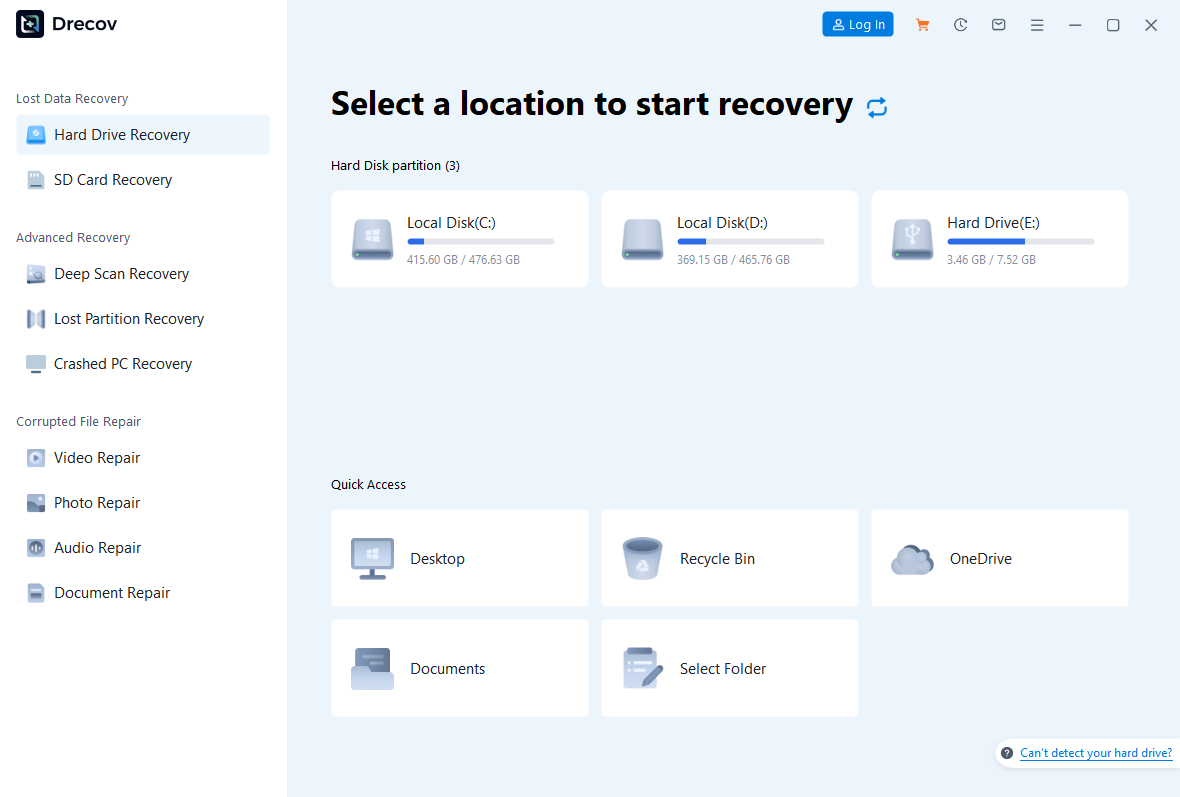
- Step 1: Select the Target Location Launch the program on your computer. On the main dashboard, you will see a list of available local drives, external disks, and common locations like the Desktop or Recycle Bin. Click on the specific drive or folder where your lost images were originally stored before they disappeared.
- Step 2: Initiate the Scanning Process Click the Scan button. The software will automatically execute a Quick Scan to find recently deleted files, followed immediately by a Deep Scan that searches the raw sectors of your storage media for fragmented image signatures.
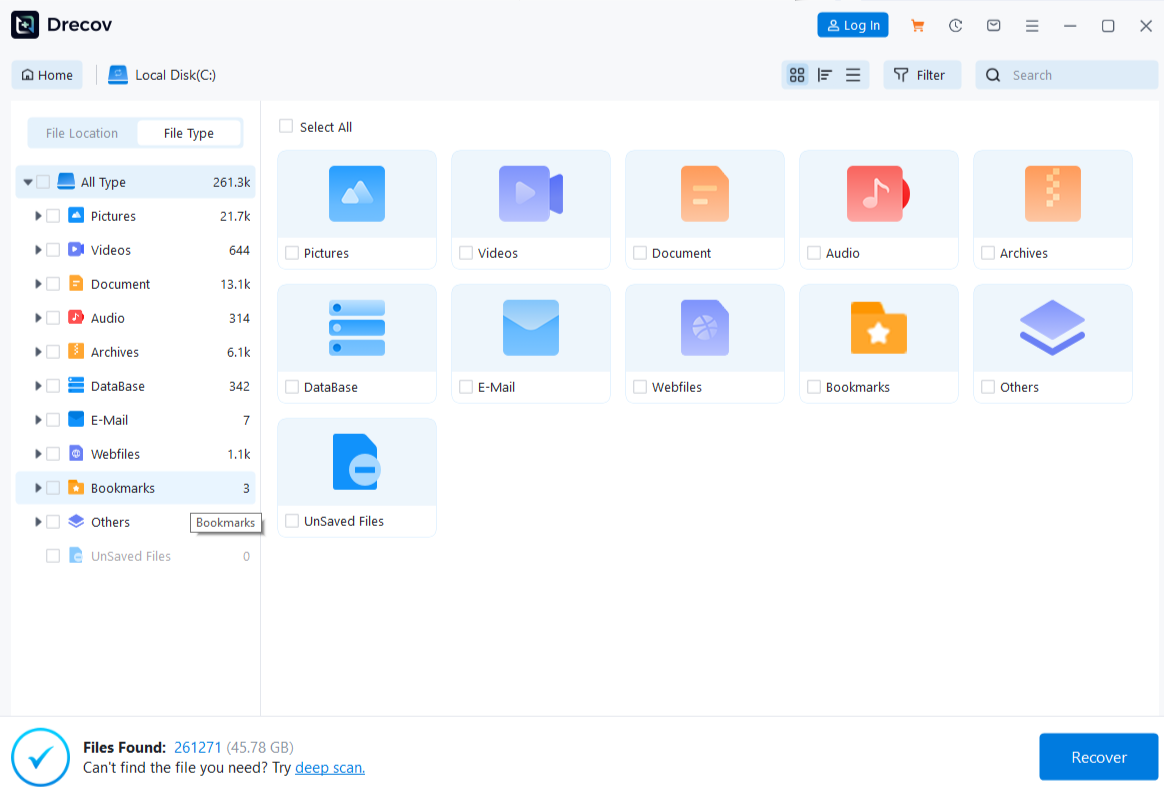
- Step 3: Preview and Filter the Discovered Files Once the scanning process concludes, use the left-hand folder tree or the built-in file filter to sort the results by file type. Double-click on any recovered image file to open a built-in preview window. This allows you to verify that the file is fully intact and not corrupted before you proceed to restore it.
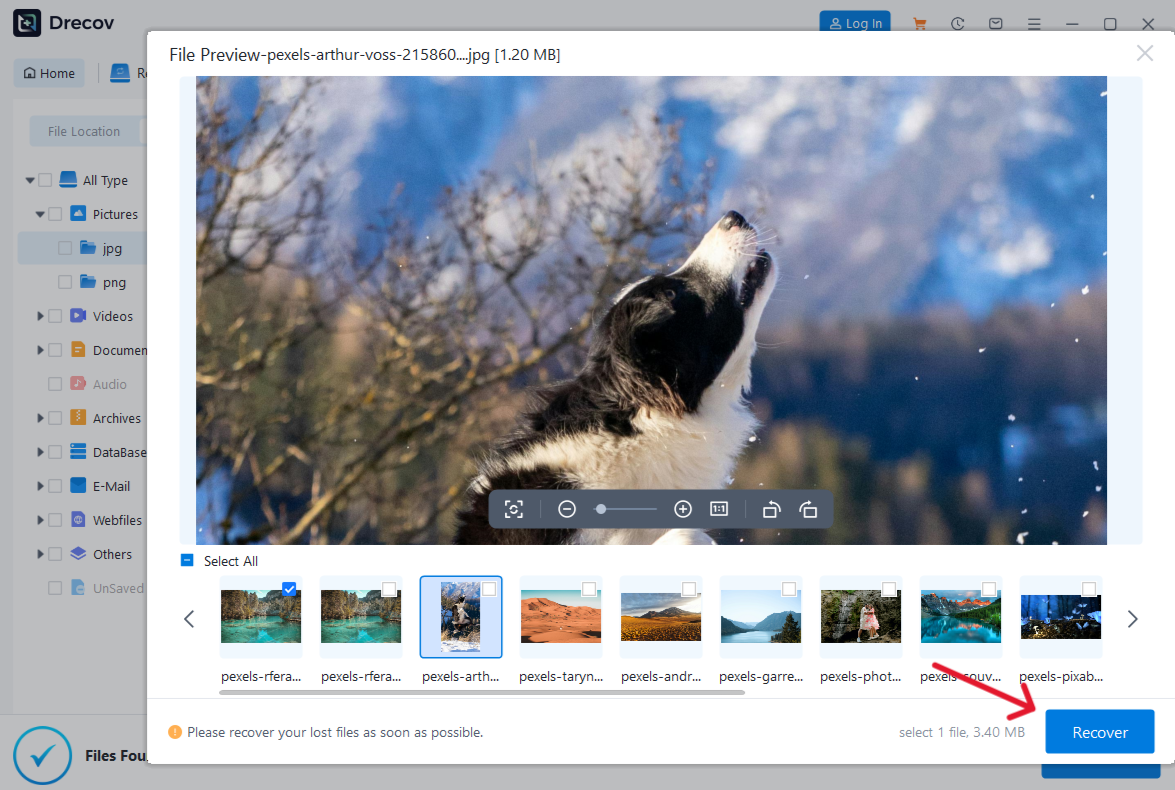
- Step 4: Recover and Secure Your Data Check the boxes next to the images or folders you wish to restore, then click the Recover button located in the bottom right corner of the user interface. A dialog box will prompt you to choose a destination directory for the restored files.
Warning Prompt: Select a destination drive that is completely different from the source drive. For example, if you recovered files from drive C:, save them onto an external USB flash drive or drive D: to prevent data overwriting.
After successfully completing the data recovery steps, you can use these comprehensive guides to resolve other common technical issues or data loss situations:
- If you lost important web data while modifying your browser settings, learn how to recover deleted Chrome bookmarks via this complete guide.
- If your files disappeared from an external storage device during a file transfer, discover how to recover deleted files from a USB flash drive with this complete guide.
- If systemic Windows glitches are preventing your applications from working properly, read our walkthrough on how to restore a computer to an earlier date on Windows.
Detailed Solutions for Specific ChatGPT Error Scenarios
Now that your data is safe and recovered, let us return to the technical configurations required to solve specific upload failures within the ChatGPT web interface.
Resolving the “Can’t Upload Image to ChatGPT” Error
When the interface explicitly displays an upload error, the issue is often tied to file properties or local network restrictions.
- Step 1: Check File Format Compatibility Right-click your image file on Windows and select Properties (or press Command + I on macOS) to verify the file extension. If the file is in an unsupported format like HEIC or TIFF, open the file in a default image viewer like Paint or Preview and select File > Save As to save it as a standard PNG or JPEG.
- Step 2: Compress and Resize the Image File If the file size exceeds 20MB, the platform may reject it. Open an online compression tool or use local image editing software to lower the dimensions of the photo. Reducing a 4K screenshot to 1080p will significantly reduce file size while maintaining the clarity required for AI analysis.
- Step 3: Reset Local DNS Settings A congested DNS cache can prevent your browser from establishing a stable connection to the file upload servers. On Windows, open Command Prompt as an administrator and type
ipconfig /flushdns, then press Enter. On macOS, open Terminal and executesudo killall -HUP mDNSResponder.
Troubleshooting When You “Can’t Upload Images to ChatGPT” in Batches
If you are trying to upload multiple files simultaneously and the system constantly fails, the issue is likely tied to browser session throttling or active extensions.
- Step 1: Isolate and Disable Third-Party Extensions Open your browser extension management console by navigating to
chrome://extensions/in Google Chrome or the equivalent path in your preferred browser. Toggle off all active ad blockers, privacy guards, and script managers. These tools often misidentify ChatGPT’s secure file-uploading scripts as tracking scripts and block them automatically. - Step 2: Clear Site-Specific Storage and Cookies Instead of clearing your entire browser history, click the padlock icon on the left side of the address bar while visiting the AI platform. Select Site settings and click Clear data. This action clears corrupted cookies specific to the platform without logging you out of every other website you use.
- Step 3: Execute Uploads in Chronological Order Avoid dragging and dropping ten images into the chat box at the same time. Upload files one by one, allowing the processing indicator to complete its cycle for each image before adding the next one to the queue.
Mobile App Image Upload Problems
Mobile users often experience unique upload issues due to operating system constraints and localized permission settings.
Common Mobile Problems
- App crashes during file selection
- Camera permission restrictions
- Local device storage limitations
- Outdated app installations
How to Fix Mobile Upload Issues
- Step 1: Grant Explicit Storage Permissions On Android, navigate to Settings > Apps > ChatGPT > Permissions and ensure that Photos and Videos or Storage access is set to “Allow”. On iOS, open Settings > ChatGPT and toggle the Photos option to “Full Access”.
- Step 2: Purge Application Cache On Android devices, go to the application settings menu, tap on storage, and select Clear Cache. For iOS devices, close the app completely, toggle Airplane mode on and off to reset the cellular radio connection, and launch the application again.
- Step 3: Apply App Store Updates Launch the Google Play Store or Apple App Store, search for the official application, and check for pending updates. Developers regularly push updates to address API changes that affect file uploads.
Why the Upload Button Is Missing
Some users discover that the paperclip or image icon is completely gone from the user interface.
Possible Causes
- Account Type Changes: Free tier limitations during peak server hours can occasionally result in features being suspended temporarily.
- Broken Page Scripts: A minor network disruption while loading the web page can cause JavaScript files responsible for rendering the UI to fail.
- A/B Testing and Rollouts: The platform frequently tests new interface designs, which can cause icons to move or change appearance unexpectedly.
How to Fix a Missing Upload Button
- Step 1: Perform a Hard Reload Bypass the local cache by pressing Ctrl + F5 on Windows or holding down Shift while clicking the Refresh button on macOS. This forces the browser to pull a fresh copy of the interface elements from the server.
- Step 2: Verify Service Status Visit an official system status page to see if the platform is experiencing widespread infrastructure downtime. If file processing services are offline globally, the upload button may be intentionally hidden by engineers until a patch is deployed.
Security Software and Network Blocks
Corporate, educational, and restrictive residential networks can actively block outbound file transmissions to artificial intelligence platforms.
Firewalls and Antivirus Software
Advanced endpoint protection suites often monitor browser data packets. If your security software flags a large image file upload as a potential data exfiltration risk, it will drop the connection. To test this, temporarily disable your local firewall or web shielding feature, perform the upload, and re-enable your security settings immediately afterward.
Corporate Network Restrictions
Many corporate and university networks deploy deep packet inspection (DPI) to prevent intellectual property from being uploaded to public AI models. If you are connected to an institutional network, try switching to a personal Wi-Fi network or using mobile data to see if the upload succeeds.
Supported Image Types and Best Practices
To ensure a smooth user experience, format and manage your files according to these best practices before initiating an upload.
| Image Format | Optimal Use Case | Advantages | Potential Drawbacks |
| PNG | Screenshots, charts, text documents | Lossless quality, clear text rendering | Larger file sizes |
| JPG / JPEG | Photographs, complex scenery | High compression, very small file sizes | Lossy compression can blur small text |
| WEBP | Web graphics, optimized diagrams | Excellent compression ratio, rapid upload speed | Older local viewers may require plugins |
Core Guidelines for Reliable Uploads
- Maintain Low Resolutions: A resolution of 1920×1080 is typically more than enough for an AI model to read text or analyze visual patterns. Avoid uploading raw 50-megapixel smartphone photographs.
- Keep Tab Counts Minimal: Running dozens of open browser tabs consumes system RAM. If your browser runs out of assignable memory, background operations like file encoding will fail.
- Verify Session Longevity: If you leave the AI interface open in a background tab for several hours, your security token may expire. Always reload the page before uploading a file after a long period of inactivity.
Can’t upload files to chatgpt FAQs
Why does my image keep failing to upload?
This issue is usually caused by an unsupported file extension, a file size that exceeds server limits, or a brief interruption in your local network connection during the file-transfer phase.
Can browser extensions block uploads?
Yes, ad blockers, script blockers, and strict privacy extensions can prevent file-uploading scripts from running correctly. Disabling these extensions or using Incognito mode fixes the problem.
Does ChatGPT support HEIC images?
Support for HEIC files varies depending on your operating system and browser version. Converting HEIC images to standard PNG or JPG files before uploading is the most reliable workaround.
What should I do if I lose my source files while clearing browser data?
If you accidentally delete your images or format a drive while troubleshooting, avoid writing new data to that drive. Use a dedicated program like PandaOffice Drecov data recovery software immediately to scan the storage device and recover your files safely.
Advanced Troubleshooting Tips
If standard solutions do not work, you can try these advanced system fixes:
- Reset Your Web Browser: Navigate to your browser’s advanced settings menu and select “Restore settings to their original defaults.” This removes deep-seated configuration errors without deleting your saved passwords.
- Reinstall Your Browser: Completely uninstalling your browser and downloading the latest stable build removes corrupted application files that may be blocking web features.
- Test on an Alternative Device: Attempt to upload the exact same file using a different computer or tablet on a different network. This instantly helps you determine whether the issue lies with your device or your account.
- Power Cycle Your Network Hardware: Unplug your modem and Wi-Fi router from their power sources, wait 30 seconds, and plug them back in. This clears local routing tables and resolves lingering connection issues.
Conclusion
When you can’t upload files or images to ChatGPT, the underlying cause is usually a simple browser conflict, an unsupported file type, a large file size, or a temporary server restriction. By using logical troubleshooting methods—such as refreshing your session, clearing cookies, disabling conflicting extensions, or resizing your files—you can resolve most upload errors quickly.
Additionally, always remember to safeguard your original assets during complex system troubleshooting. If an unexpected format change or a mistaken deletion causes you to lose critical files, running a specialized solution like PandaOffice Drecov data recovery software can help you restore your valuable data and maintain a productive, AI-powered workflow.






