







Accidental file deletion happens to everyone, whether it is a crucial work document or a lifetime of irreplaceable family photos. When files vanish from your hard drive, finding a reliable solution becomes an urgent priority. Many users immediately search for recuva data recovery software to salvage their lost information. While Recuva has long been a staple in the industry, modern data loss scenarios often require more robust, updated algorithms to ensure a complete rescue.
Consequently, choosing the right utility is essential for a successful retrieval process. This comprehensive guide will explore how to maximize your chances of retrieving lost files. In addition, we will introduce PandaOffice Drecov data recovery software as a highly effective, modern alternative designed to handle complex storage issues that traditional tools might miss. Let us dive into the technical details of how to get your data back safely.
Understanding the Basics of Recuva Data Recovery Software
Data recovery utilities operate by scanning your storage media for files that the operating system has marked as deleted. When you delete a file, the system does not immediately erase the actual data bytes. Instead, it alters the file system index to mark that storage space as available for new information. Therefore, as long as you do not write new data to that drive, utilities like recuva data recovery software can reconstruct the missing pointers and restore your files.
However, users frequently encounter frustrating challenges during this process. Drive fragmentation, file system corruption, and solid-state drive TRIM commands can permanently wipe or scramble data before a scan even begins. Furthermore, legacy tools sometimes struggle with deeply buried directory structures or modern partition formats.
To overcome these limitations, PandaOffice Drecov data recovery software offers an advanced scanning engine. This tool specializes in deep-sector analysis, allowing it to piece together fragmented files that standard applications overlook. Whether you are dealing with a crashed system or an unreadable external drive, Drecov provides a streamlined, dependable approach to file reclamation.
⚠ Warning: Install it on a drive different from the one where your data was lost to prevent overwriting.
If you are dealing with specific data loss scenarios, you can explore targeted solutions to recuva data recovery software issues:
- For browser-specific restoration, learn how to get your Google Chrome bookmarks back using specialized path targeting.
- For a comprehensive walkthrough on external media, see this guide to recover deleted files from USB flash drive.
- For system optimization and managing cloud storage paths, check out this tutorial on how to remove OneDrive from File Explorer.
Step-by-Step Restoration Using PandaOffice Drecov
When traditional tools fail to locate your files, PandaOffice Drecov data recovery software provides a structured, highly accurate recovery methodology. This software supports over one thousand file formats, including NTFS, FAT32, exFAT, and APFS systems. Follow these exact steps to perform a safe data retrieval.
⚠ Warning: Install it on a drive different from the one where your data was lost to prevent overwriting.
Step 1: Select the Target Location
The main interface displays all connected storage devices. Choose the specific drive partition or external storage media where the deletion occurred. For instance, if you lost data on a secondary storage drive, select drive letter D or E from the available menu.

Step 2: Execute the Deep Scan
Click the Scan button to initiate the primary analysis. The software automatically applies a quick scan followed by an intensive deep-sector analysis. Meanwhile, you can view real-time statistics showing the progress percentage and the number of identified files.
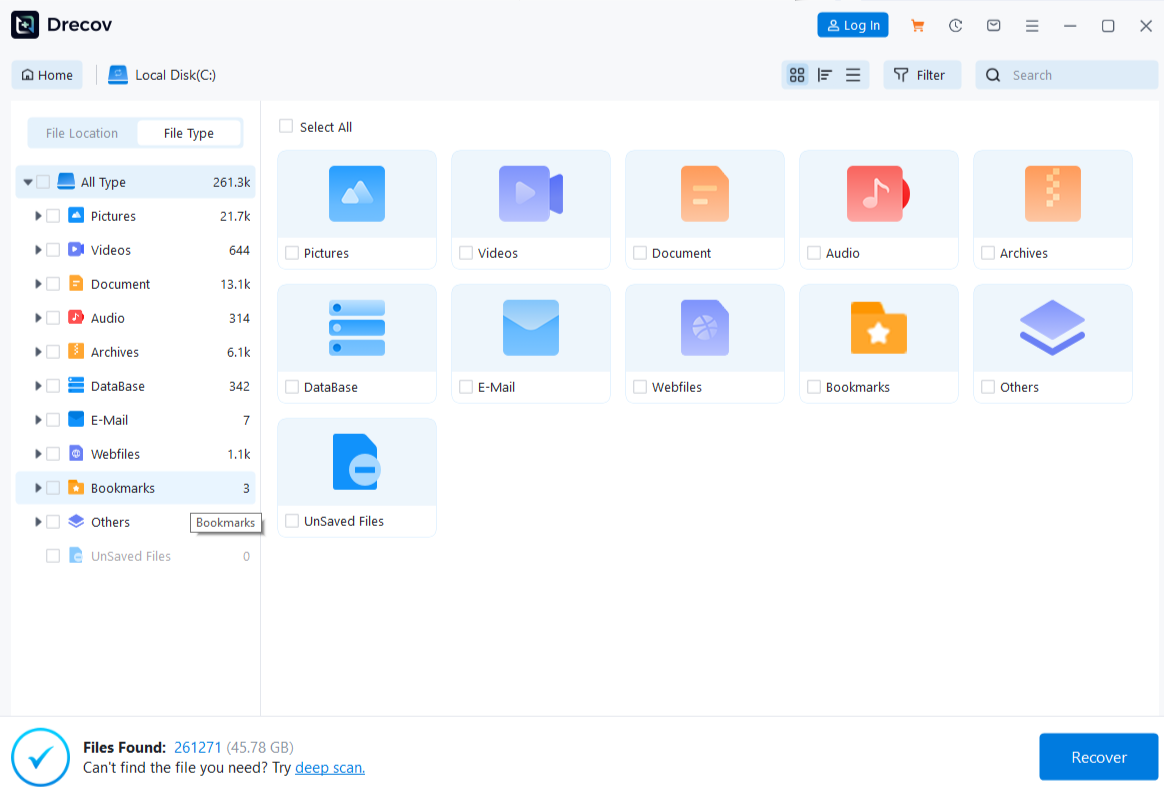
Step 3: Preview and Filter Identified Files
Use the built-in filtering tool to sort results by file type, size, or modification date. Double-click on any image, document, or video file to open the preview window. This validation step ensures the file integrity is intact before you initiate the final extraction.
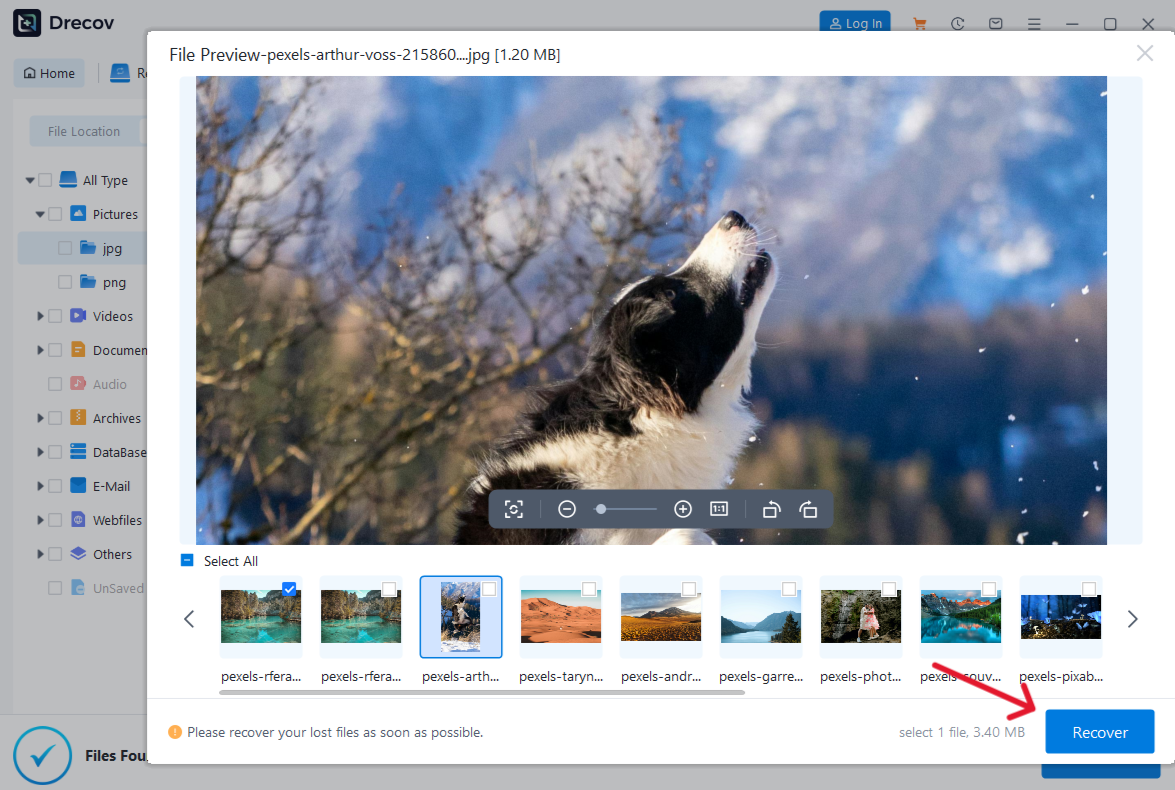
Step 4: Save Recovered Files Safely
Select the checkboxes next to the files you wish to restore. Click the Recover button at the bottom right of the user interface. Choose a secure destination path on a completely different physical drive, such as an external backup disk, to finalize the extraction process.
For more technical insights on storage optimization and file structure maintenance, you can review the comprehensive documentation provided on the Microsoft Support Portal. Implement a robust automated backup strategy today to protect your valuable data moving forward.
Alternative and Complementary Methods
While PandaOffice Drecov data recovery software offers exceptional success rates, exploring alternative tools and manual techniques can broaden your options. Different situations call for different tools, and understanding your choices ensures you deploy the best solution for your specific issue.
Recuva File Recovery
The standard version of Recuva remains a popular choice for straightforward undelete tasks on older storage media. It features an intuitive wizard interface that helps beginners filter files by type.
- Pros: The basic version is entirely free for personal use, features a small installation footprint, and works quickly on traditional magnetic hard drives.
- Cons: It lacks frequent updates, struggles significantly with solid-state drives, and often fails to recover original file names or directory structures during complex deep scans.
Windows File Recovery
Microsoft provides a native command-line utility available via the Microsoft Store for Windows 10 and 11 users. This tool uses specific syntax commands to parse file systems directly.
- Pros: It is a completely free, lightweight tool backed by Microsoft development, and it requires no third-party installation.
- Cons: The lack of a graphical user interface makes it difficult for non-technical users, and typing incorrect parameters can accidentally worsen data corruption.
Professional Data Recovery Services
For physical hardware failures, such as clicking hard drives or water-damaged flash storage, software solutions cannot repair the physical components. In these critical cases, sending the media to a cleanroom laboratory is necessary.
- Pros: Technicians can manually swap damaged mechanical parts and read data directly from storage platters or flash memory chips.
- Cons: This option is incredibly expensive, often costing thousands of dollars, and requires shipping your drive away for multiple weeks.
Tips and Best Practices for Data Salvage
Maximizing the success of your recuva recovery efforts requires strict adherence to technical best practices. Missteps during the initial hours after data loss can permanently destroy any chance of a successful restoration.
Stop Using the Drive Immediately
The single most critical rule of data restoration is to freeze all activity on the affected storage media. Avoid browsing the web, downloading applications, or saving new documents to that specific drive. Background system processes and temporary internet files can silently overwrite the vacant clusters containing your missing data.
Beware of Solid-State Drive TRIM Settings
Solid-state drives utilize a command called TRIM to automatically wipe deleted file blocks in the background to maintain optimal write speeds. Consequently, time is of the essence when executing a recuva file recovery scan on an SSD. If you suspect data loss on a primary SSD, shut down the computer immediately and run your recovery tool via a bootable USB drive to prevent TRIM from executing.
Validate System Paths and Shortcuts
Sometimes, files are not actually deleted but are simply hidden by malware or accidental system configuration changes. Before running intensive scans, use the Windows command prompt to reveal hidden files. Press the Windows key plus R to open the Run dialog box. Type cmd and press Enter. Input the command attrib -h -r -s /s /d X:\*.* replacing X with your actual drive letter to restore visibility to hidden directory structures.
Frequently Asked Questions
Is recuva data recovery software completely safe to use?
Yes, running a standard recuva recovery operation is completely safe, provided you install the application on a separate drive. The software operates in a read-only mode during the scanning process, which means it will not alter or damage the existing data on your storage media.
Why do some recovered files refuse to open or appear corrupted?
File corruption occurs when the original storage clusters have been partially overwritten by new system activity before the recuva file recovery process began. If another application writes data over those specific sectors, the file structure becomes fragmented, resulting in an unreadable file after extraction.
Can I retrieve data from a formatted hard drive?
Yes, you can often restore files from a formatted drive using PandaOffice Drecov data recovery software. A standard quick format merely deletes the file allocation table without erasing the actual data sectors. However, a full format zeroes out the entire drive, which makes software-based recovery impossible.
How long does a deep scan typically take to finish?
The duration of a scan depends entirely on the storage capacity of the drive and its connection speed. A standard 1 TB mechanical hard drive connected via USB 3.0 may take several hours to complete a deep sector scan, whereas a fast NVMe solid-state drive will complete the process much quicker.
Can this software restore files from a physically broken USB drive?
No, software utilities cannot detect or communicate with storage devices that suffer from physical hardware damage. If your computer does not recognize the drive in the Disk Management console due to a broken connector or dead controller chip, you must consult a professional lab service.
Conclusion
Experiencing sudden data loss can be incredibly stressful, but utilizing advanced tools like recuva data recovery software provides a reliable path toward reclaiming your digital life. Understanding the underlying mechanics of file systems allows you to take immediate, correct actions that safeguard your missing information.
While classic utilities offer basic assistance, modern challenges require sophisticated solutions. Deploying PandaOffice Drecov data recovery software ensures you have access to the deep-scanning algorithms necessary to handle complex file corruption and formatted drives.






