







Notepad is one of the simplest and most widely used text editors in Windows. Whether you’re jotting down ideas, writing code snippets, creating quick notes, or saving important information, Notepad often serves as a convenient tool because of its speed and simplicity.
However, many users eventually face a frustrating situation: they accidentally close Notepad without saving, experience a sudden system crash, or discover that a previously saved text file has disappeared. When this happens, one of the first questions people ask is: can you retrieve Notepad notes after they’ve been lost?
The good news is that recovery is often possible. Depending on the cause of the loss, Windows may retain temporary files, session information, backups, or recoverable copies that can help restore your text.
This guide explains how Notepad stores information, why files become lost, and the most effective ways to recover unsaved or deleted Notepad documents on modern Windows systems.
Understanding Notepad Data Loss and Recovery Possibilities
Why Unsaved Notepad Files Sometimes Disappear
Unlike advanced word processors, traditional versions of Notepad were designed as lightweight text editors. In older Windows releases, closing an unsaved document usually meant permanent loss because the application stored information only in memory.
Fortunately, newer versions of Windows 11 include significant improvements to Notepad. Microsoft has introduced session restoration capabilities that can preserve open tabs and unsaved content under certain circumstances.
Despite these improvements, data loss can still occur when:
- The computer shuts down unexpectedly.
- The system crashes before recovery information is written.
- Temporary files are deleted.
- Storage devices experience corruption.
- Users accidentally discard changes.
The likelihood of recovery depends largely on what happened before the file disappeared.
For example, if a document was never saved and the system immediately lost power, recovery options may be more limited than if the file existed on disk previously.
Understanding the cause of the loss is the first step toward successful recovery.
Can You Retrieve Notepad Notes After Closing Without Saving?
Many users wonder whether they can recover text after clicking “Don’t Save” or accidentally closing a document.
The answer depends on several factors:
- Windows version
- Notepad version
- Session recovery settings
- System activity after closure
Modern Notepad versions may reopen previously active tabs after a restart. If session recovery is available and functioning correctly, users can sometimes recover content that was never manually saved.
However, if the application was intentionally closed and the unsaved changes were discarded, recovery becomes more difficult.
Potential recovery sources include:
- Session restoration data
- Temporary files
- Backup utilities
- Cloud synchronization services
- Data recovery software
This is why users searching for recover unsaved notepad solutions should avoid assuming the text is permanently gone.
How Modern Notepad Handles Temporary Files
Recent versions of Notepad behave differently than earlier releases.
Historically, Notepad had virtually no recovery capabilities. Once a document was closed without saving, the content disappeared.
Modern Windows releases have introduced additional protections such as:
- Tab persistence
- Session restoration
- Improved crash recovery
- Better integration with cloud services
When recovery information exists, Windows may store temporary session data that helps reopen documents after unexpected interruptions.
However, these mechanisms vary between Windows versions and Notepad updates.
Users should not rely exclusively on temporary storage because it was never intended to replace proper saving practices.
Instead, recovery features should be viewed as an additional safety net.
Where Does Notepad Save Temp Files on Windows?
One of the most common recovery questions is: where does Notepad save temp files?
The answer depends on the Windows version and how the file was created.
Possible locations include:
C:\Users\Username\AppData\Local\Temp
and
C:\Users\Username\AppData\Roaming
Temporary information may also exist within application-specific folders used by Windows.
Because Microsoft periodically updates Notepad, there is no single guaranteed Notepad temp files location that applies to every system.
Some temporary files may use:
- .tmp extensions
- Random filenames
- Session-specific identifiers
Locating these files often plays an important role when attempting to retrieve Notepad unsaved content.
Common Reasons Notepad Files Become Lost or Unsaved
Accidentally Closing Notepad Without Saving
The most common cause of data loss is simply closing the application before saving.
For example:
- Create a new document.
- Type several pages of notes.
- Click the Close button.
- Choose the wrong option when prompted.
Within seconds, hours of work may appear to be gone.
Many users assume they can easily recover unsaved content afterward, only to discover that traditional Notepad was not designed with automatic recovery in mind.
This scenario accounts for a large percentage of recovery requests.
The best approach is to immediately stop using the application and investigate available recovery methods before additional system activity overwrites temporary data.
System Crashes and Unexpected Shutdowns
Power failures remain another major source of Notepad data loss.
Examples include:
- Electrical outages
- Laptop battery depletion
- Blue screen crashes
- Forced restarts
- Hardware failures
When the operating system shuts down unexpectedly, active applications may not have enough time to save recovery information.
In some cases, however, Windows manages to preserve portions of the active session.
The chances of success depend on:
- Timing of the crash
- Application state
- Available system resources
- Notepad version
Users should restart the computer carefully and check whether Notepad offers session restoration options before taking additional actions.
Windows Updates Interrupting Active Sessions
Windows updates occasionally restart systems automatically.
Although Microsoft attempts to minimize disruption, unsaved work can still be affected.
Potential issues include:
- Forced reboots
- Update failures
- Incomplete application shutdowns
- Session corruption
Modern versions of Windows generally provide better recovery support than older releases, but no solution is completely foolproof.
Keeping files saved regularly remains the safest strategy.
Deleting a Saved TXT File by Mistake
Not all Notepad recovery situations involve unsaved content.
Many users successfully save a text file, only to accidentally delete it later.
Common scenarios include:
- Emptying the Recycle Bin
- Deleting the wrong folder
- Formatting a storage device
- Synchronization conflicts
- Human error
In these cases, recovery methods differ from those used for unsaved documents because the file once existed physically on the storage device.
As long as the deleted data has not been overwritten, recovery remains possible.
Temporary File Cleanup Removing Draft Content
Windows periodically removes temporary files to free storage space.
Third-party cleanup tools may also delete:
- Cache files
- Temporary documents
- Session data
- Recovery information
If cleanup occurs before recovery efforts begin, restoring lost content becomes more difficult.
For this reason, users should avoid running optimization software immediately after discovering data loss.
⚠️Warning: Do not install unnecessary applications or save large files to the affected drive until recovery attempts are complete.
How to Recover Unsaved Notepad Files and Lost TXT Documents
Method 1: Reopen Recent Notepad Sessions in Windows 11
Test Environment
- Windows 11 24H2
- Microsoft Store Notepad Version
- Local User Account
Recent versions of Notepad include session restoration capabilities.
If the application or system closes unexpectedly, Notepad may automatically reopen previously active tabs during the next launch.
Steps:
- Open Notepad.
- Allow the application to load completely.
- Check whether previously opened tabs reappear.
- Review recovered content.
- Save important files immediately.
This method is particularly useful for users attempting to recover unsaved notepad Windows 11 sessions after unexpected interruptions.
Success rates are highest when:
- The system crashed unexpectedly.
- Session restoration was enabled.
- Temporary data remains intact.
Users often overlook this simple method and move directly to more advanced recovery techniques.
Always check session restoration before modifying files or installing recovery software.
Method 2: Check the Notepad Temp Files Location
Test Environment
- Windows 11 Pro
- NTFS SSD
- Administrator Access
Temporary files may contain fragments of lost documents.
To investigate:
- Press Windows + R.
- Enter:
%temp%
- Press Enter.
- Sort files by modification date.
- Search for recently created temporary files.
Possible indicators include:
- .tmp files
- Text-based files
- Unusual filenames
- Recently modified entries
Open suspicious files using Notepad and review their contents.
You may discover portions of the missing document or information that helps reconstruct it.
Because the exact Notepad temp files location varies, examining multiple temporary directories can increase recovery chances.
Method 3: Recover Unsaved Notepad Files from Temporary Files Folder
Test Environment
- Windows 10
- Windows 11
- File Explorer
When users need to recover notepad file unsaved content, temporary folders are often worth checking.
Common locations include:
C:\Users\Username\AppData\Local\Temp
and
C:\Windows\Temp
Search techniques:
- Open File Explorer.
- Navigate to temporary folders.
- Sort by date.
- Search for text-related files.
- Open candidate files for inspection.
Although recovery is not guaranteed, temporary folders occasionally contain recoverable drafts, particularly after unexpected shutdowns.
This method remains one of the simplest approaches for recovering unsaved Notepad files before using more advanced solutions.
Method 4: Restore Notepad Files Using Windows File History
Test Environment
- Windows 11 Pro
- File History Enabled
- External Backup Drive Connected
If your Notepad document was previously saved and later deleted, Windows File History may provide one of the easiest recovery options.
File History automatically creates versions of files stored in protected locations such as Documents, Desktop, Pictures, and other selected folders. If your TXT file was backed up before it disappeared, you may be able to restore an earlier version within minutes.
Steps to restore a file:
- Open the folder that originally contained the TXT document.
- Right-click inside the folder.
- Select Properties.
- Open the Previous Versions tab.
- Browse available backups.
- Select a version created before the file was lost.
- Click Restore.
Alternatively:
- Open Control Panel.
- Navigate to File History.
- Choose Restore Personal Files.
- Browse available backups.
- Recover the desired document.
This method is particularly useful when you need to restore Notepad file content that was deleted accidentally or overwritten by mistake.
Because File History stores multiple versions, users can sometimes recover older revisions as well as the most recent version.
⚠️Warning: File History only works if it was configured before the file loss occurred.
Method 5: Recover Deleted or Lost Notepad Files with PandaOffice Drecov
Test Environment
- Windows 10/11
- SSD or HDD Storage Device
- Administrator Rights
When a text document has been permanently deleted or is no longer available through backups, a dedicated recovery solution may help locate recoverable data.
PandaOffice Drecov can scan storage devices for deleted files that still exist within unallocated space.
Typical recovery steps include:
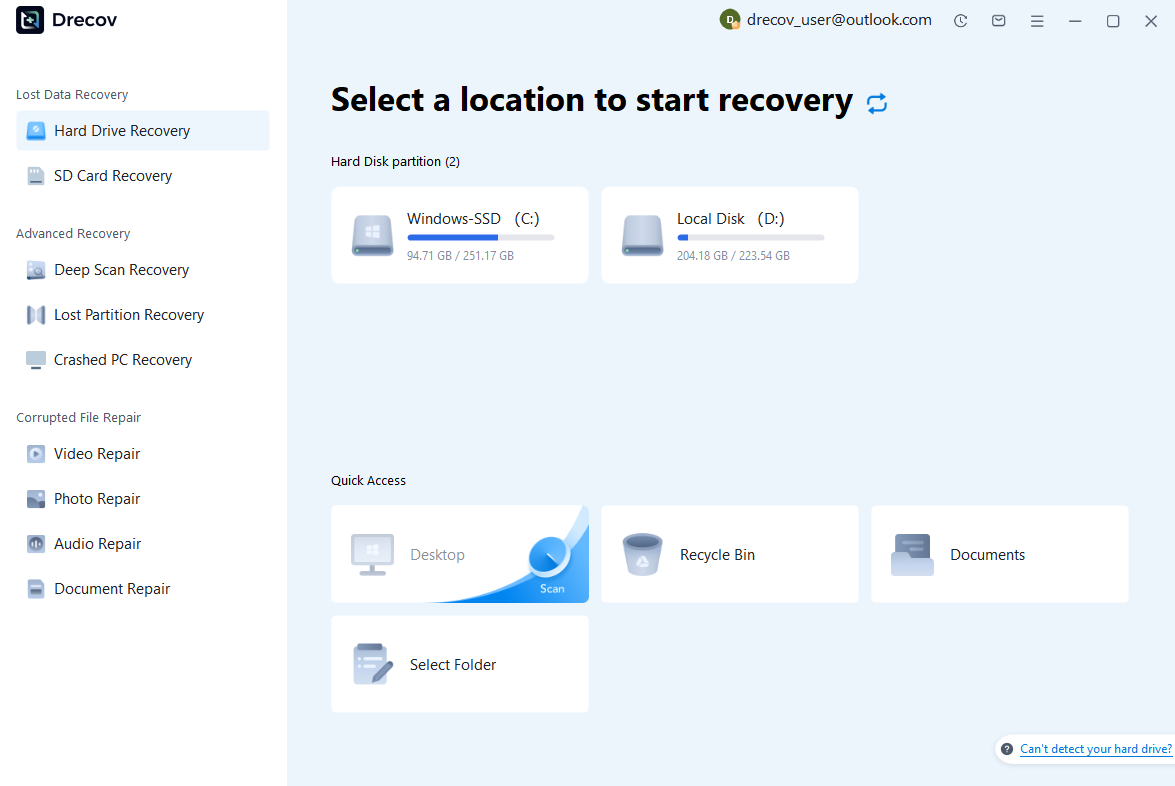
Step 1: Scan the Storage Device (SD Card / Hard Drive / USB)
Connect your device (SD card, HDD/SSD, or USB drive) to your computer and launch PandaOffice Drecov. Select the target device and start the scan. The software will perform a quick scan and deep scan to detect lost or deleted data.
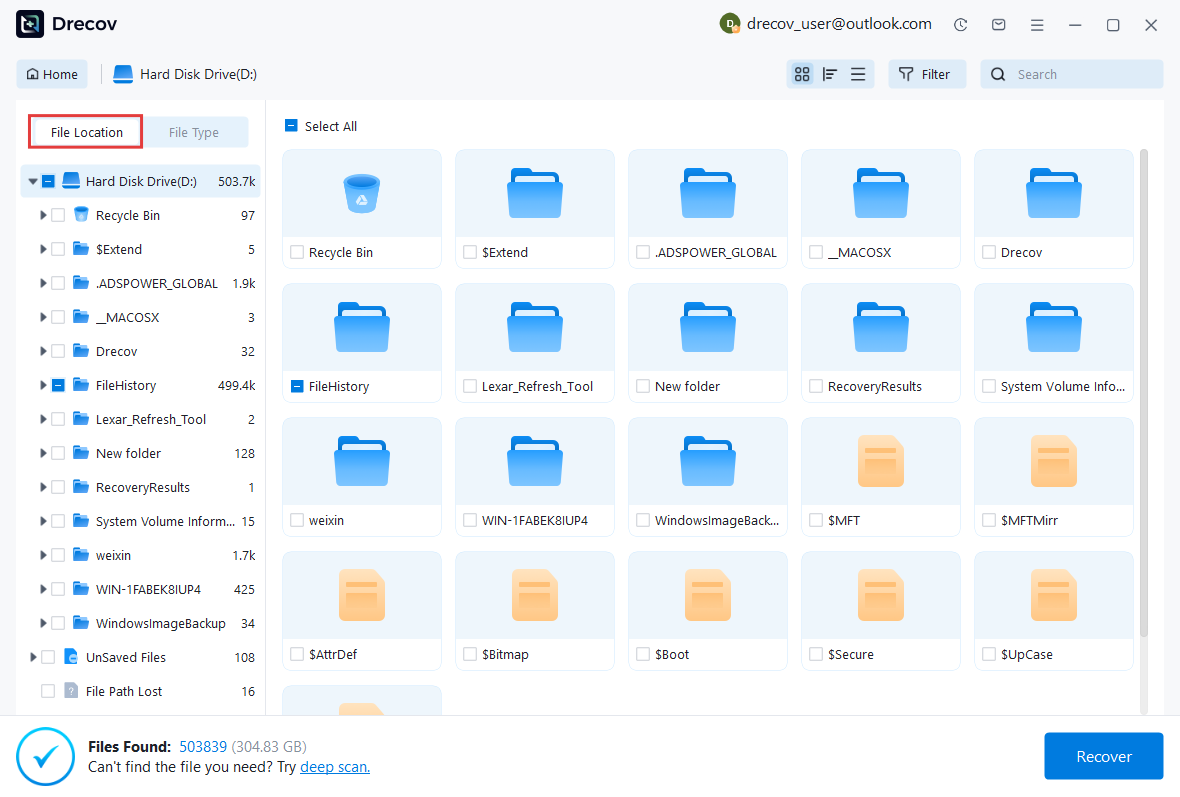
Step 2: Locate and Preview Lost Files
After scanning, browse the detected files and use the preview feature to check recoverable data. You can preview documents (Word, Excel, PDF), photos, and videos to ensure file integrity before recovery.
Step 3: Recover and Save to a New Location
Select the files you want to restore and click recover. Save all recovered data to a different drive or location (not the original device) to avoid overwriting lost data.

Why Choose PandaOffice Drecov Recovery Software?
PandaOffice Drecov offers a fast, secure, and user-friendly solution for recovering lost files across multiple scenarios. Whether you need email recovery, ZIP File Recovery, format data recovery, or help to recover deleted drafts Outlook, the software provides reliable recovery performance for both personal and business users.
PandaOffice Drecov supports recovery from formatted hard drives, SSDs, USB drives, SD cards, and external storage devices. Its advanced scanning engine can locate deleted archives, damaged ZIP files, lost Outlook drafts, and accidentally removed documents with high accuracy. For users searching for how to find deleted messages in Teams, PandaOffice Drecov can also help recover exported chat files, attachments, and related local cache data when available.
Key advantages include:
- Deep scan technology for complex data loss situations
- Support for emails, archives, videos, photos, and office documents
- Recovery from accidental deletion, formatting, corruption, and system crashes
- Easy preview before restoring files
- Compatible with Windows and multiple storage devices
Unlike complicated enterprise recovery tools, PandaOffice Drecov keeps the recovery process simple. Users can scan, preview, and restore files in just a few steps without technical expertise.
Whether you are dealing with lost Outlook drafts, corrupted ZIP archives, formatted drives, or missing communication data, PandaOffice Drecov provides an efficient and practical recovery experience designed to minimize downtime and protect important files.
Disk imaging ensures that even partially corrupted drives can be preserved. This is often the safest approach before attempting any aggressive repair operations for fix bad sectors on hard drive situations.
The sooner recovery is attempted, the better the chance of success. Continued use of the affected drive may overwrite deleted content and reduce recovery opportunities.
⚠️Warning: Never save recovered files back to the same drive being scanned.
Method 6: Restore Unsaved Notepad Content from OneDrive Version History
Test Environment
- Windows 11
- Microsoft Account
- OneDrive Synchronization Enabled
Many users now store documents in folders synchronized with OneDrive.
If your TXT file was saved at least once before it disappeared, OneDrive may contain earlier versions.
To restore a previous version:
- Open OneDrive in a web browser.
- Locate the TXT document.
- Right-click the file.
- Select Version History.
- Review available versions.
- Restore the preferred version.
Benefits include:
- Multiple file revisions
- Cloud-based backups
- Protection against accidental edits
- Recovery from synchronization mistakes
Version history is especially valuable when users need to restore Notepad unsaved changes that were accidentally overwritten after a previous save.
Although this method does not recover content that never existed on disk, it can often restore significant portions of lost work.
Method 7: Search for Auto-Saved Copies and Backup Files
Test Environment
- Windows 11
- Local Storage
- Cloud Storage Enabled
Some backup applications create automatic copies of user files without requiring direct interaction.
Potential locations include:
- Backup folders
- Cloud synchronization directories
- External drives
- Recovery partitions
- Corporate backup systems
Search techniques:
- Open File Explorer.
- Search using:
*.txt
- Sort results by date modified.
- Review recently created files.
- Check backup directories.
You can also search for keywords from the missing document if you remember portions of the content.
In many cases, users discover duplicate copies created by synchronization software or backup utilities.
These copies can provide an easy way to recover unsaved Notepad file content that appears lost.
Preventing Future Notepad Data Loss
Enable Automatic Session Recovery in Modern Notepad
Recent Notepad versions include features designed to improve recovery after crashes or unexpected shutdowns.
To benefit from these enhancements:
- Keep Windows updated.
- Install the latest Notepad version.
- Avoid disabling recovery-related settings.
- Allow the application to restore previous sessions.
Although session recovery should not replace regular saving, it can provide valuable protection during unexpected events.
Users who frequently work with unsaved drafts may find this feature particularly useful.
Save Files to OneDrive for Version Protection
Cloud synchronization offers advantages beyond simple storage.
Benefits include:
- Automatic backup
- Version history
- Device synchronization
- Remote access
Saving important notes to a OneDrive-synced folder creates additional recovery opportunities that do not exist when files remain solely on a local drive.
Version history can often restore content even after accidental edits or deletions.
Create Scheduled Backups of Important TXT Files
Backups remain one of the most effective ways to protect data.
Recommended options include:
- File History
- External drives
- NAS storage
- Cloud backup services
Regular backups reduce dependence on recovery software and provide a straightforward restoration path when files disappear.
For critical notes and long-term projects, automated backups are strongly recommended.
Use File History to Protect Notes and Documents
File History is built into Windows and requires minimal configuration.
Advantages include:
- Automatic operation
- Multiple versions
- Easy restoration
- Low maintenance
Many users discover File History only after losing important data.
Configuring it beforehand can save significant time and frustration.
Best Practices for Long Notepad Projects
Although Notepad is convenient, lengthy projects deserve additional protection.
Recommended practices include:
- Save frequently.
- Use meaningful filenames.
- Create backup copies.
- Enable synchronization services.
- Avoid relying solely on temporary files.
These habits significantly reduce the likelihood of permanent data loss.
⚠️Warning: Temporary files should never be treated as a reliable long-term storage method.
Frequently Asked Questions About Recovering Notepad Files
How Do I Recover an Unsaved Notepad File?
Start by reopening Notepad and checking whether session restoration is available.
If no recovery tab appears, inspect temporary folders, backup locations, and cloud synchronization services.
Additional recovery options may include File History and data recovery software.
Can You Retrieve Notepad Notes After a Computer Crash?
Yes, in many situations.
Modern versions of Notepad may restore open tabs after an unexpected shutdown. Temporary files and backup utilities can also improve recovery chances.
The outcome depends on whether recovery information survived the crash.
Where Does Notepad Save Temp Files?
There is no single universal location.
Common temporary directories include:
%temp%
and
C:\Users\Username\AppData\Local\Temp
The exact location varies depending on Windows and Notepad versions.
How Do I Restore Unsaved Notepad Content in Windows 11?
Open Notepad and verify whether session restoration is available.
If recovery tabs do not appear, search temporary folders, cloud backups, and recovery tools for potential copies.
Recent Windows 11 releases offer improved recovery capabilities compared to older versions.
Can Deleted TXT Files Be Recovered?
Often, yes.
If the deleted file has not been overwritten, recovery software may locate recoverable data.
Success rates depend on:
- Time elapsed since deletion
- Storage activity
- Drive condition
- File system status
Prompt action generally improves results.
Does Notepad Have an AutoSave Feature?
Traditional Notepad did not include AutoSave.
However, modern versions provide improved session recovery and tab restoration features.
These capabilities help preserve unsaved work in some circumstances but should not replace regular saving habits.
Why Can’t I Find My Notepad Temporary Files?
Temporary files may:
- Use random names
- Be deleted automatically
- Be stored in different folders
- Be removed during cleanup operations
Searching by modification date can sometimes help identify relevant files.
Can File History Restore an Older Version of a TXT File?
Yes.
If File History was enabled before the file changed or disappeared, Windows may provide access to previous versions that can be restored with only a few clicks.
Final Thoughts on Notepad File Recovery
Best Recovery Methods for Unsaved Notepad Files
The best recovery strategy depends on how the content was lost.
For unsaved work, session restoration and temporary files are often the first places to check.
For deleted documents, File History, cloud backups, and recovery software generally provide better results.
Using multiple recovery methods increases the likelihood of success.
Choosing the Right Recovery Option Based on the Situation
Consider the specific scenario:
| Situation | Recommended Recovery Method |
|---|---|
| Unsaved document after crash | Session restoration |
| Recently deleted TXT file | Recycle Bin or File History |
| Permanently deleted file | PandaOffice Drecov |
| Overwritten document | Version History |
| Missing cloud file | OneDrive recovery |
| Unknown cause | Temporary file search |
Selecting the appropriate method helps avoid unnecessary complications.
How to Avoid Losing Important Notes in the Future
Data loss prevention is easier than recovery.
Simple habits such as saving regularly, enabling backups, using cloud synchronization, and maintaining recovery tools can dramatically reduce the impact of unexpected problems.
By understanding how Notepad stores information and where recovery opportunities exist, users can respond quickly when files disappear and significantly improve their chances of restoring valuable notes and documents.






