







Accidentally saving over a Word file can be frustrating, especially when the original content was critical. Fortunately, replaced Word document recovery offers several methods to retrieve your lost data. Knowing how to recover overwritten Word documents ensures that you can restore previous versions, whether you are using Windows or Mac. This guide covers practical, step-by-step solutions, explains common causes of overwriting, and introduces software-based recovery tools to help users of all levels restore their files efficiently.
⚠️ Warning: Avoid editing or saving over the file further, as this reduces the chance of successfully recovering overwritten Word files.
Common Causes of Overwritten Word Documents
Understanding why Word documents get overwritten is crucial for applying the correct recovery approach.
Accidental Saves
The most common scenario occurs when users save changes without realizing they have replaced important content. Pressing Ctrl+S (Windows) or Cmd+S (Mac) over an older file version can overwrite the previous document.
System Crashes or Errors
Unexpected system shutdowns or Word crashes during editing may result in partial overwrites. In some cases, Word’s autosave function may also replace the original version with a newer, incomplete file.
File Mismanagement
Renaming files incorrectly or saving multiple versions in the same folder often leads to overwriting. Users may also unintentionally drag a file into an existing folder and replace the existing file.
Software Conflicts
Third-party add-ins, cloud sync tools, or antivirus programs sometimes interfere with Word’s saving process. This can cause the program to overwrite previous versions or fail to save the correct file.
Recognizing these scenarios helps you respond quickly and maximize the success of recover the overwritten Word document techniques.
Built-in Microsoft Word Recovery Methods
Microsoft Word offers several built-in recovery features to restore overwritten files without additional software.
Using Version History (Windows & Mac)
Microsoft 365 and recent Word versions support version history for documents saved to OneDrive or SharePoint:
- Open the Word document.
- Click File → Info → Version History.
- Browse previous versions listed by date and time.
- Select the version you need and click Restore.
✅ Pros: Fast, safe, and does not require extra software.
❌ Cons: Only available if your file is stored in OneDrive, SharePoint, or if the backup feature was enabled.
Recovering from AutoRecover Files
Word periodically saves temporary copies of documents in case of unexpected closures:
- Windows:
C:\Users\[YourUsername]\AppData\Roaming\Microsoft\Word\ - Mac:
~/Library/Containers/com.microsoft.Word/Data/Library/Preferences/AutoRecovery
Open files with .asd or .wbk extensions and save them to a permanent location.
⚠️ Warning: AutoRecover may not retain the latest changes if the document was recently overwritten.
Restoring Backup Copies
Word can create backup copies automatically if the feature is enabled:
- Go to File → Options → Advanced → Always create backup copy.
- Check your document folder for files with the
.wbkextension. - Open the backup and save it as a new file.
✅ Pros: Restores the previous version without third-party tools.
❌ Cons: Must be enabled before the overwrite occurs; may not include the latest edits.
Using System-Level Recovery Options
Windows and macOS provide native tools for restoring previous file versions.
Windows File History or Restore Points
- Right-click the overwritten Word file.
- Select Properties → Previous Versions.
- Choose the version you want to recover and click Restore.
Mac Time Machine
- Open the folder containing the overwritten document.
- Launch Time Machine from the menu bar.
- Browse previous snapshots and select the version to restore.
These system-level methods are especially helpful when overwritten Word document recovery Mac or Windows is needed and Word’s built-in options are unavailable.
Software-Based Recovery Solutions
If built-in or system-level methods fail, reliable recovery software can help. Tools like pandaoffice Drecov are designed to scan storage devices for lost or overwritten files, providing a higher chance of success.
Step-by-Step Guide Using Drecov
Download Drecov- Install and Launch: Download Drecov from the official pandaoffice website and install it. Open the program.
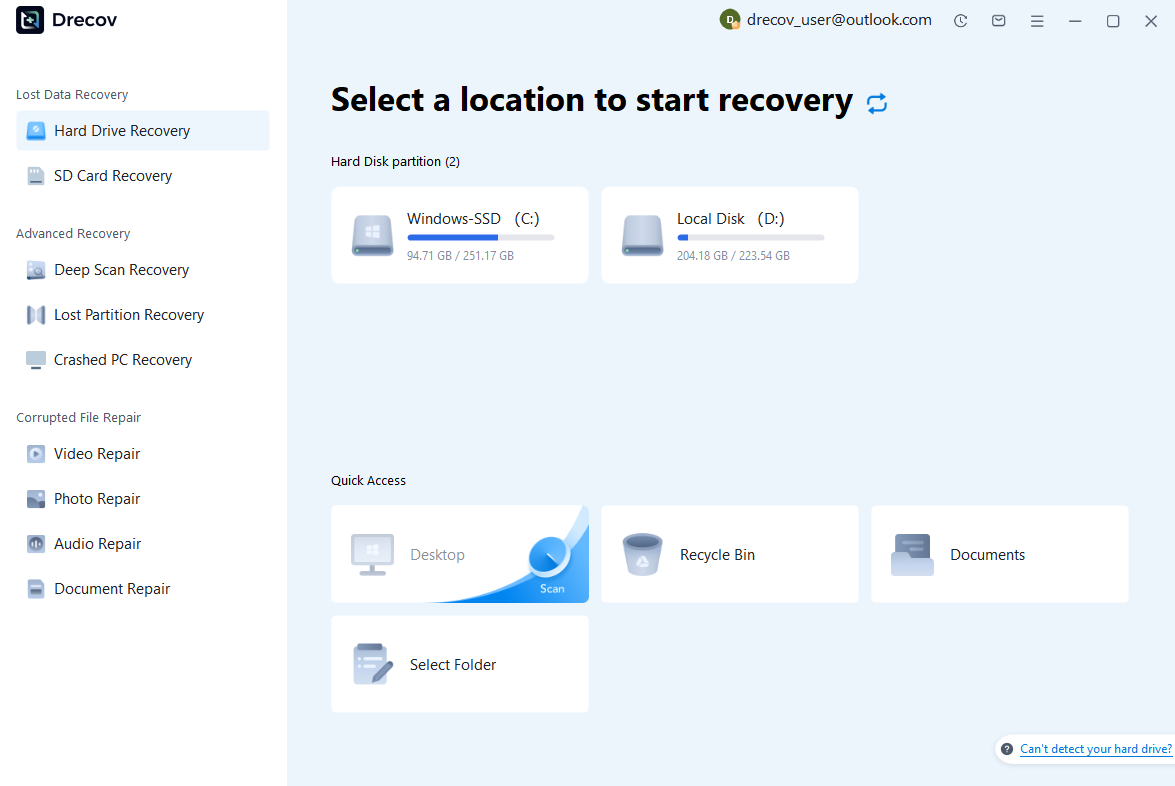
2. Scan Your Drive: Select the folder or drive where the overwritten Word document was located. Click Scan to search for lost files.

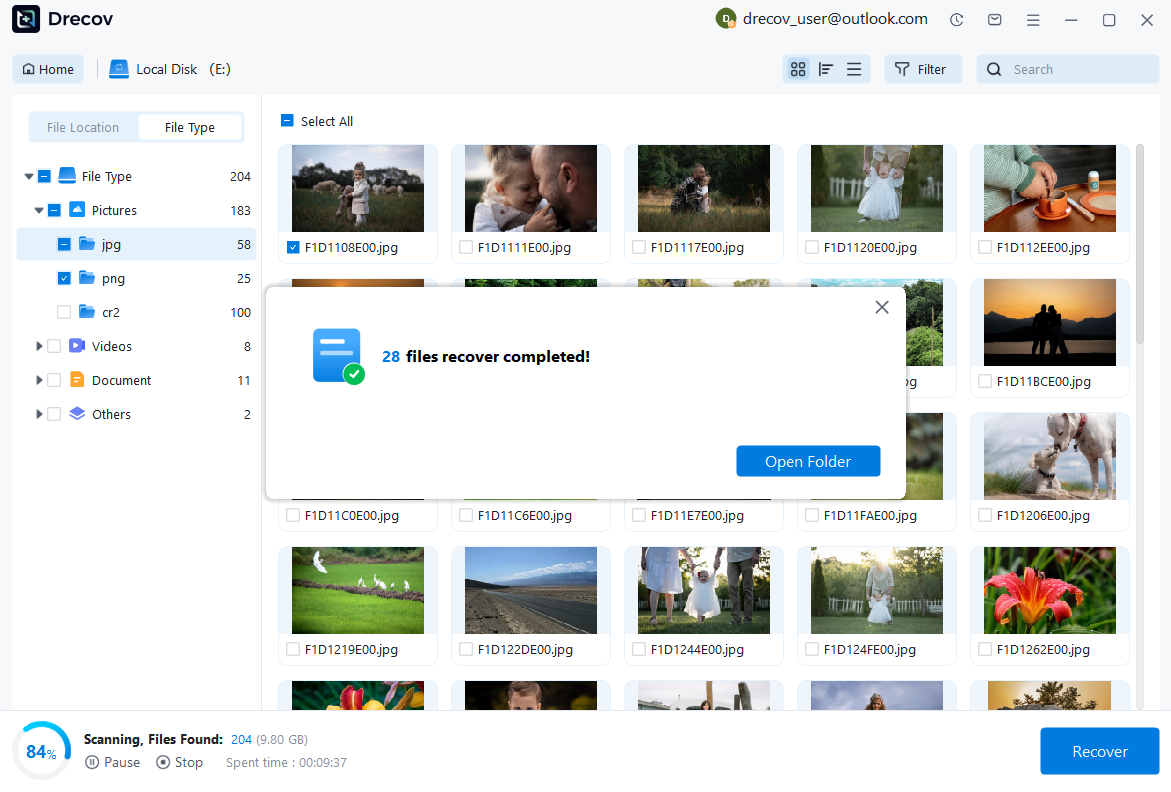
3. Preview and Recover: Preview recovered files, select the document you want, and click Recover to save it safely to another location.
✅ Pros: Works even when Word’s recovery panel is empty or system backups are missing.
❌ Cons: Requires installation; free version may have limitations.
Tips to Prevent Overwriting in the Future
Prevention is always better than recovery. Implement these practices to avoid overwriting Word documents:
- Enable AutoSave: Turn on AutoSave in Microsoft 365 for real-time saving to OneDrive.
- Regular Backups: Use cloud storage or external drives for multiple copies.
- Frequent Manual Saves: Press Ctrl+S (Windows) or Cmd+S (Mac) often.
- Use Version Control: Save incremental versions like
Project_v1.docx,Project_v2.docx, etc. - Avoid Overwriting During File Management: Double-check file names and locations before saving.
Comparison of Recovery Methods
| Method | Pros | Cons |
|---|---|---|
| Word Version History | Quick, no extra software | Requires OneDrive/SharePoint |
| AutoRecover | Built-in, accessible | May not have latest changes |
| Backup Copies | Restores previous version | Must be enabled before overwrite |
| System Restore/File History | No additional software | Only works if backups exist |
| Software (Drecov) | High success rate, user-friendly | Installation required, some limitations in free version |
Software like Drecov is particularly effective when built-in methods fail or when the document was overwritten multiple times.
FAQs
Q1: How can I perform overwritten Word document recovery on Mac?
A1: Use Time Machine to browse snapshots or check Word’s AutoRecover folder. Software like Drecov can also assist in overwritten Word document recovery Mac.
Q2: How to recover overwritten Word documents if AutoRecover was off?
A2: If Word’s AutoRecover or backup copies are unavailable, use reliable recovery software like Drecov to scan the drive and retrieve an overwritten Word document.
Q3: Can I recover a replaced Word document without backups?
A3: Yes, software solutions like Drecov enable you to recover overwritten Word files even if previous versions are missing.
Q4: What is the safest way to recover the overwritten Word document?
A4: Start with Word’s version history or AutoRecover. If these fail, use professional tools such as Drecov to ensure the highest success rate.
Q5: How long does Word keep versions for recovery?
A5: Word maintains previous versions depending on AutoSave and OneDrive settings. For Mac, you can check overwritten Word document recovery Mac options like Time Machine for historical snapshots.
Conclusion
Losing critical content due to overwriting can be stressful, but replaced Word document recovery is achievable through built-in tools, system-level backups, and reliable recovery software. From Word’s version history to AutoRecover and backup copies, you can often restore files without extra tools. However, when these methods fail, software like pandaoffice Drecov provides a simple, three-step process to recover the overwritten Word document, offering the highest chance of retrieving lost content safely. By combining preventive practices with practical recovery solutions, you can safeguard your Word documents and minimize the impact of accidental overwrites in the future.






