







When MBR2GPT cannot find an OS partition, do not create, delete, or resize partitions first. Protect important files, save BitLocker recovery keys, and map every connected disk. Then validate the intended disk and read MBR2GPT logs to learn whether Windows, its boot configuration, or the partition layout is unrecognized. BCD edits and system-partition changes can make a working PC unbootable, so use them only after evidence identifies the mismatch. This guide explains “mbr2gpt cannot find os partition” with practical checks that protect your files before you change the affected drive or system.
Understand What MBR2GPT Is Trying to Match
The tool must associate a supported Windows installation, its disk layout, and boot configuration on the selected MBR disk. Microsoft’s MBR2GPT documentation lists validation requirements and log locations. This error is different from lacking room for a new EFI system partition.
| Evidence | What it can reveal | Safe next action |
|---|---|---|
| Wrong disk number | Another disk was validated | Identify model and Windows folder |
| Windows folder absent | Target is not the OS disk | Stop validation on it |
| Boot files on another disk | Split boot dependency | Document BCD and physical layout |
| Unusual partitions | Validation requirement not met | Back up before layout planning |
| Damaged or missing BCD entry | Windows cannot be associated reliably | Use supported boot repair carefully |
Build a Read-Only Disk and Boot Map
Use Disk Management, System Information, and read-only DiskPart listing to record disk numbers, models, capacities, partition order, active flags, and the Windows volume. Do not use clean, create, delete, or format. The partition terminology guide clarifies the difference between disks, partitions, and volumes.
Read the Validation Logs Before Changing BCD
Locate setupact.log and setuperr.log for the attempted run. Search near the latest timestamp for the selected disk, Windows discovery, partition validation, and BCD messages. Preserve copies outside the conversion disk. A final generic line without preceding context is not enough to justify a repair.
Decision: Windows and Boot Files Are on Different Disks
Do not disconnect or erase the boot provider. Plan a supported migration of boot files and prove independent startup before conversion. This is a boot-architecture task, not a reason to copy random BCD files.
Decision: The Selected Disk Has No Windows Directory
Stop. Identify the actual OS disk by physical model and offline folder structure, then rerun validation against that number.
Protect Files Before Boot Metadata Work
BCD rebuilding, active-partition changes, resizing, and conversion all alter system state. Create and verify a backup first. If partition damage has already made files inaccessible, use the lost partition guide before conversion attempts on this disk.
A Compact Drecov Path for Existing Data Loss
PandaOffice Drecov is Windows file-recovery software, not an MBR2GPT or BCD repair tool. Use it only when the storage source is stable and recognized with plausible capacity.
⚠ Warning: Install it on a drive different from the one where your data was lost to prevent overwriting.
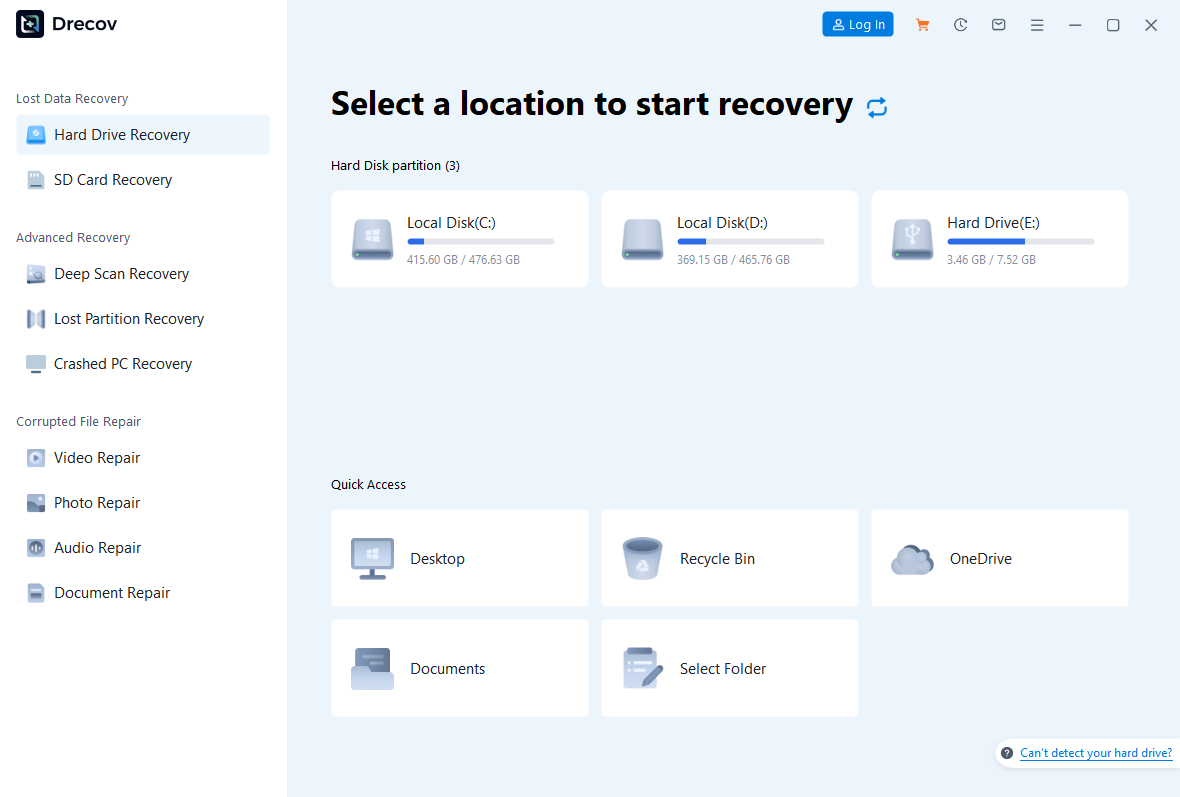
Step 1: Select the Original Windows Disk
Open Drecov from healthy Windows storage and choose the disk that held the inaccessible files. Confirm model and capacity. Do not install or recover onto that source.
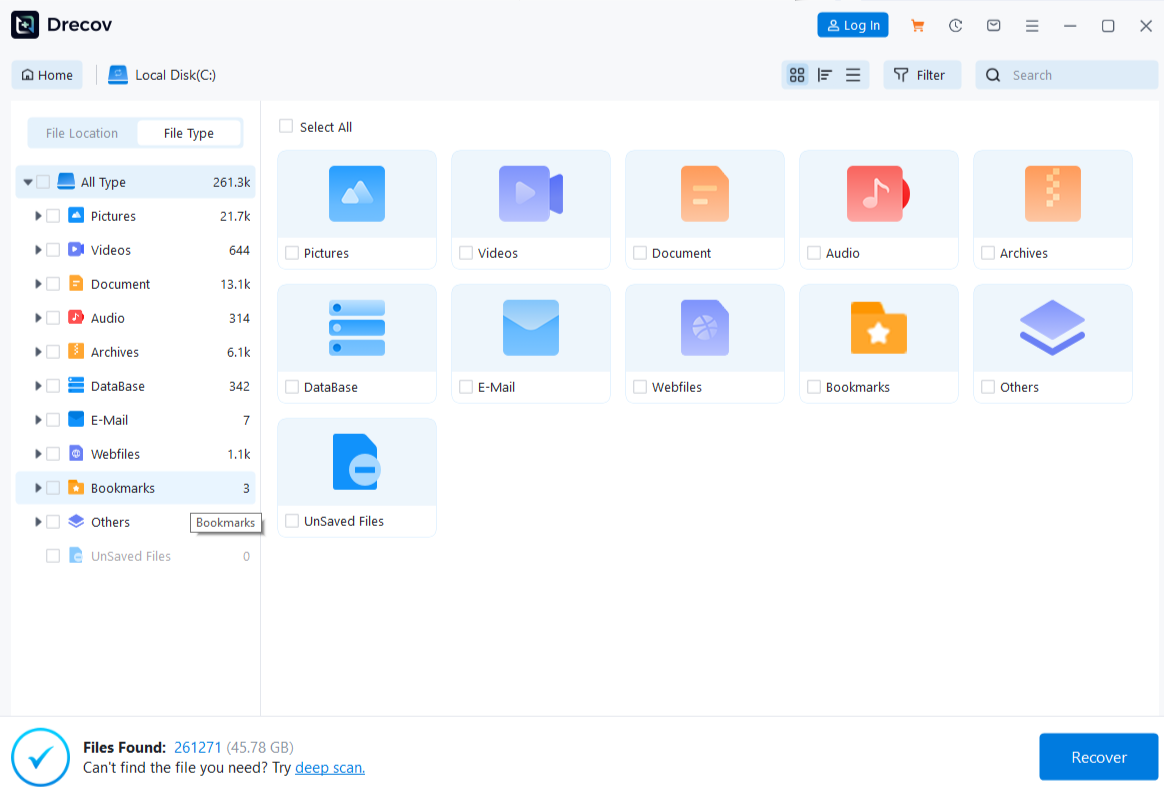
Step 2: Scan Before Conversion Writes
Run Quick Scan, then Deep Scan if needed while the disk remains stable. Filter and preview files, recovering verified results to another healthy device. Check the Drecov folder or Recovery folder at the destination when output seems missing.
Retest Validation Without Converting Immediately
After a justified non-destructive correction, run validation again and save the new logs. Confirm the intended disk, Windows partition, and BCD association. Only then schedule conversion with recovery media and a tested rollback plan. The bootable USB safety guide helps prepare media without erasing the wrong drive.
MBR2GPT OS Partition Questions
Can I create an OS partition manually?
No generic creation step fixes discovery. The tool must recognize the real Windows installation and boot relationship.
Should I edit BCD first?
Only when logs and a disk map prove BCD is the problem. Back up and prepare recovery media.
Will conversion recover lost files?
No. It changes partition and boot architecture; recover needed files before conversion.
Why does Disk 0 matter?
Disk numbering can change with connected devices. Identify the physical model rather than assuming Disk 0 is Windows.
Can Drecov fix MBR2GPT?
No. It can recover files from a stable logical source but does not repair conversion validation.
Choose the Next Step From What You Can Confirm
Begin with the least destructive explanation, then move toward repair only when the observed symptom supports it. A label or error message by itself cannot establish data safety, compatibility, or the correct repair.
| What to check | Why it matters |
|---|---|
| Disk number | Validation must target the physical disk that actually contains Windows. |
| Windows partition | The operating-system volume needs a recognizable Windows installation. |
| System partition | Boot files can reside on another disk and confuse conversion assumptions. |
| BCD device | Boot entries must point to the intended Windows volume. |
| Partition count | An unusual layout can fail validation before conversion. |
| Log stage | setupact and setuperr identify discovery or layout failures. |
| Encryption state | BitLocker status and recovery keys must be recorded. |
| Backup proof | A restorable copy must exist before boot or partition metadata changes. |
Useful Windows and Backup Options
Start With the Least Destructive Option
Read setupact.log and setuperr.log to identify the validation stage instead of repeating conversion.
Use the Result to Narrow the Cause
Confirm the Windows partition, active or system partition, BCD entries, and supported disk layout.
Protect Existing Files Before Repair
Back up or recover important files before changing partitions or rebuilding boot metadata.
Verify the Outcome Before Moving On
Use Startup Repair or supported BCD tools only when the logs and disk map point to a boot-configuration fault.
A Safer Choice for Two Common Starting Points
You still have normal access to the files
Make a separate verified copy and open representative files from that copy before changing the current setup. Confirm the Windows partition, active or system partition, BCD entries, and supported disk layout. This creates a rollback point and prevents a routine configuration change from becoming a recovery case.
Pause repairs and check Recycle Bin, cloud trash, version history, File History, Previous Versions, or an existing backup when those sources apply. Back up or recover important files before changing partitions or rebuilding boot metadata. Keep every recovered result away from the affected source.
Do Not Confuse a Temporary Workaround With a Fix
An error disappearing once does not prove the underlying cause is gone. Repeat only the original harmless action, check the same account and device state, and review any new Windows or application message. If the failure moves to another file, port, or stage, return to diagnosis rather than applying a stronger repair. This distinction prevents a short-lived improvement from hiding continued data risk.
Correct the Disk Layout Issue Before Retrying
When troubleshooting “mbr2gpt cannot find os partition”, start with the least invasive method and verify recovered files before attempting repairs. Protect data, map the disks, read the logs, and correct only the proven mismatch. MBR2GPT should pass validation on the correct Windows disk before any conversion or firmware change.





