







The best image file format depends on what you will do with the image. JPEG suits compact photographs, PNG suits lossless graphics and transparency, TIFF suits high-quality interchange and archiving workflows, WebP suits modern web delivery, and RAW preserves camera capture data for editing. Compatibility, metadata, bit depth, repeated edits, and backup policy matter more than declaring one universal winner.
Choose the Format From the Next Use, Not the Camera Alone
Windows supports common image codecs through the Windows Imaging Component, including JPEG, PNG, GIF, BMP, TIFF, and others listed in Microsoft’s native WIC codec reference. Support in Windows does not guarantee that every camera, browser, printer, editor, or archive system handles every feature. Decide where the image must open and whether it will be edited again.
| What you observe | What it suggests | Safest next move |
|---|---|---|
| Everyday photo sharing | JPEG | Small files and broad compatibility, with lossy compression |
| Logos and screenshots | PNG | Lossless pixels and transparency |
| Professional interchange or scan master | TIFF | High quality and metadata, but large files |
| Modern website delivery | WebP | Efficient web compression with current-browser support |
| Camera editing master | RAW or DNG | Maximum capture flexibility, dependent on software |
| Animation with simple compatibility | GIF or animated WebP | Limited color in GIF; verify destination support |
Account for the Costs That a Format Table Hides
For best image file format, use the matching observation, make one reversible change, and then retest the original symptom.
If You See: Everyday photo sharing
JPEG becomes the leading explanation, but the observation does not justify a destructive change by itself. Small files and broad compatibility, with lossy compression.
When the Result Is: Logos and screenshots
This result shifts attention toward png. Use the narrow response: lossless pixels and transparency.
What Professional interchange or scan master Changes
The practical implication is tiff. The next action should therefore be limited to this branch: high quality and metadata, but large files.
Do Not Misread: Modern website delivery
It can indicate webp, yet it does not prove every other component is healthy. Start with efficient web compression with current-browser support.
The Safe Branch for Camera editing master
Here, raw or dng deserves priority over broad system repair. Maximum capture flexibility, dependent on software.
Escalation Point: Animation with simple compatibility
Treat this as a sign of gif or animated webp. Beg
Understand What Compression Changes
Lossy compression discards information to reduce size; repeated JPEG saves can add artifacts. Lossless compression preserves decoded pixel values but does not make an image indestructible. Bit depth affects tonal editing headroom, while chroma subsampling can soften color detail. Keep a master separate from delivery copies. The file-corruption article explains why a supported format can still contain damaged data.
Match Format Traits to Real Workflows
Photography and Social Sharing
JPEG remains practical when small files and universal viewing matter. Export once from a higher-quality master, choose a sensible quality setting, and retain the original RAW or edited master elsewhere.
Logos, Interface Graphics, and Transparency
PNG preserves hard edges, text, and alpha transparency without JPEG artifacts. It is often larger for photographs, so do not choose it solely because it is lossless.
Scanning, Print, and Long-Term Masters
TIFF can preserve high bit depth, multiple compression choices, and extensive metadata in professional workflows. Confirm that the receiving application supports the exact TIFF variant.
Web Performance
WebP can reduce delivery size for photographs and graphics, but retain an archival master and provide fallbacks when the audience includes older or specialized software. Do not make the only original a web derivative.
Camera RAW and DNG
RAW preserves sensor-level data for editing but is not a finished universal delivery format. Keep the manufacturer files, sidecars, and catalog backups together, and export JPEG or TIFF copies for access.
Recover Images When the Best Copy Goes Missing
Format choice does not prevent deletion, formatting, or storage failure. If original images are lost from stable supported storage, Drecov can recover common image data and preview supported results before they are saved elsewhere. Within an image-format decision, pandaOffice Drecov works in read-only recovery mode on Windows and supports PCs, hard drives, SSDs, external drives, USB drives, SD cards, and memory cards. For an image-format decision, it can run Quick Scan or Deep Scan, filter results, preview supported files, and save selected data to a healthy destination. In an image-format decision, it does not repair electronics or guarantee that overwritten content can be restored.
⚠ Warning: Install it on a drive different from the one where your data was lost to prevent overwriting.
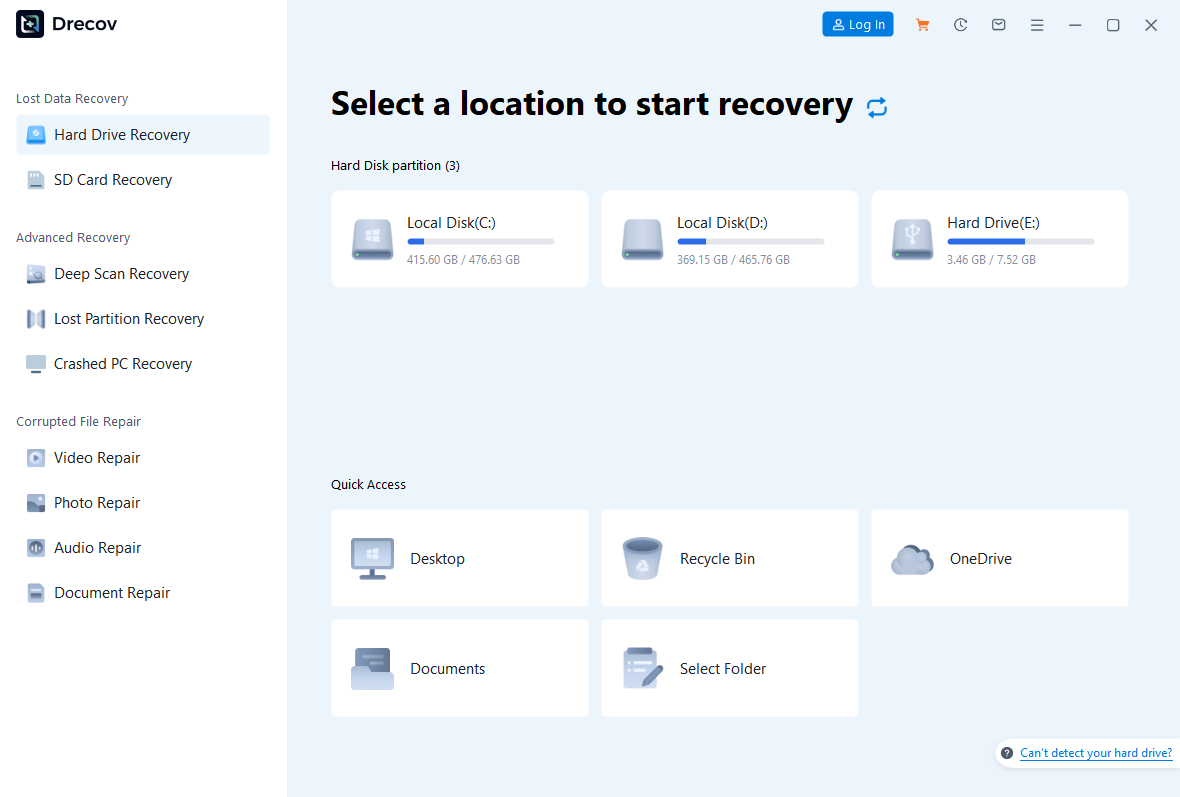
Step 1: Select the original drive, camera card, or folder where the images were stored
Open PandaOffice Drecov and select the original drive, camera card, or folder where the images were stored, not the empty destination prepared for recovered files. For an image-format decision, if the device disconnects, clicks, reports implausible capacity, or freezes the computer, stop here. Within an image-format decision, software scanning is appropriate only while the source remains stable and Windows can identify it consistently.
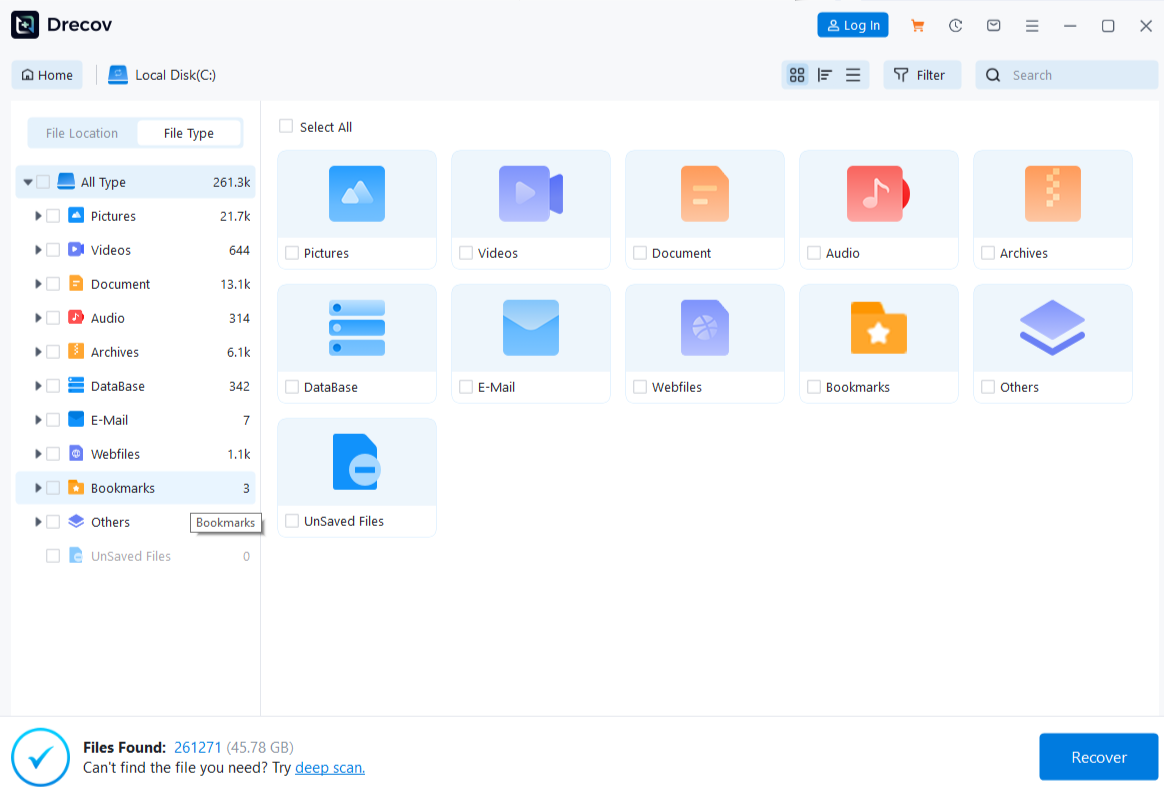
Step 2: Use Quick Scan Before Deep Scan
For an image-format decision, start with Quick Scan for recently missing files or a simple logical loss. For an image-format decision, move to Deep Scan when the quick result does not show the expected folders, when a file system is damaged, or when partition information is missing. In an image-format decision, deep Scan reads more of the source, so do not use it to push unstable hardware through another long pass.
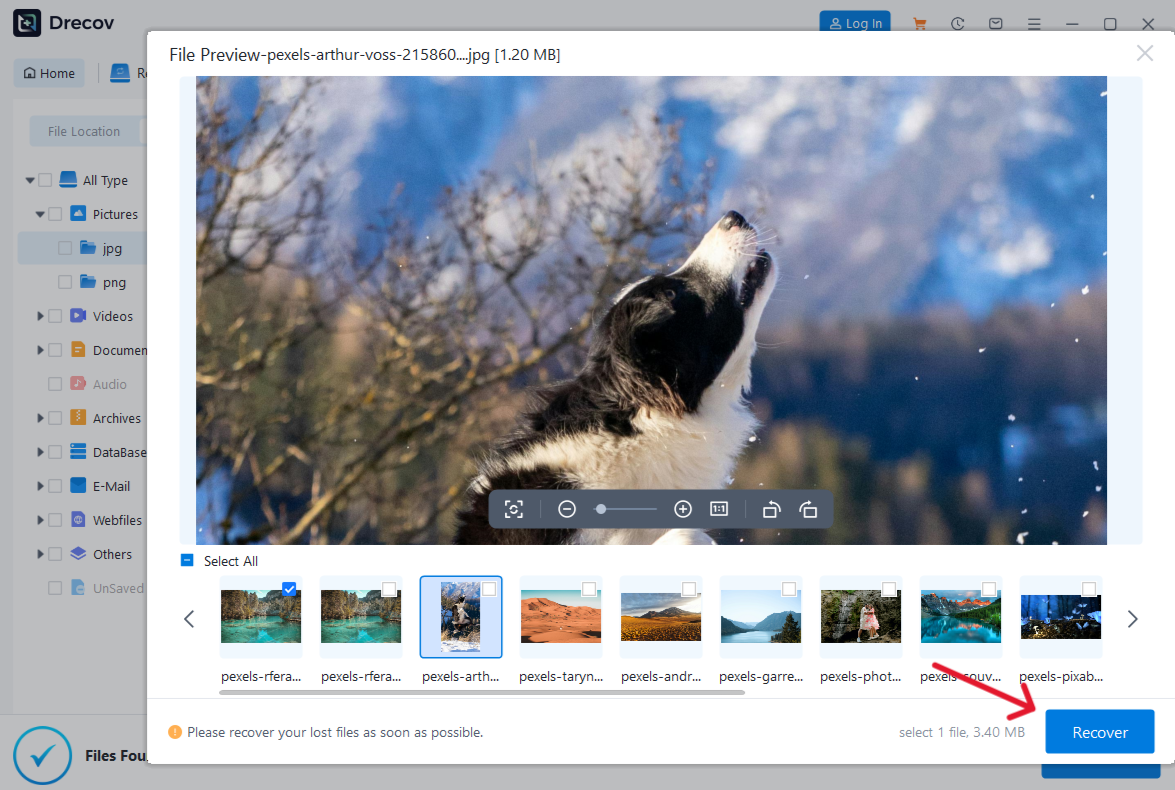
Step 3: Filter, Preview, and Recover Away From the Source
Within an image-format decision, filter by file type, path, name, or date when those details are known. In an image-format decision, preview representative documents, photos, videos, or archives before selecting a large set. Recover to another healthy device with enough free space. In an image-format decision, if files are absent from the expected path, inspect the Drecov folder or Recovery folder and verify content rather than trusting names alone.
Build a Format and Backup Policy Together
Keep at least one editable or archival master, one access copy in a broadly supported format, and another backup on separate storage. Verify metadata, dimensions, transparency, color profile, and visual quality after export. The reconstructed-image explanation helps when recovery cannot preserve original filenames, while the file verification article covers checksums for archival copies.
- Using JPEG for repeated editing and resaving of the only master
- Assuming PNG is always smaller or always better
- Keeping only proprietary RAW files without compatible access copies
- Converting formats by renaming the extension
- Storing the master and backup on the same physical device
Format choice affects the whole workflow, not only the exported file. A photographer may keep proprietary RAW captures and catalog sidecars, create TIFF masters for retouching, and deliver JPEG copies. A web team may retain PNG or layered source artwork while serving WebP derivatives. A scanner archive may prefer well-documented TIFF settings, but only after confirming that the receiving repository accepts the chosen compression, color profile, bit depth, and metadata fields.
Test with representative images before committing thousands of files. Compare photographic gradients, sharp text, transparency edges, wide-gamut colors, metadata, animation, and decode support on the oldest required device. Measure storage and delivery size, but do not convert the only master merely to save space. Conversion cannot restore detail already discarded by a lossy source, and renaming an extension performs no conversion at all. A practical “best” format is therefore the one that preserves the needed information, opens throughout the intended lifecycle, and leaves a verified master outside the delivery pipeline.
Image Format Questions
Is PNG better quality than JPEG?
PNG is lossless and better for sharp graphics, but a high-quality JPEG is often more efficient for photographs. The best choice depends on content and use.
What format should I archive photos in?
Keep original RAW files when available, plus well-documented TIFF or high-quality access copies according to your workflow and storage budget.
Is WebP safe for originals?
Use WebP for delivery when supported, but retain an archival master in the original or a format suited to long-term editing.
Does converting JPEG to PNG restore lost quality?
No. PNG prevents further lossy compression in that copy, but it cannot recreate detail already discarded by JPEG encoding.
Can Drecov convert image formats?
Drecov is data recovery software, not an image converter. It is relevant when image files are deleted or inaccessible on supported stable storage.
Document the Export Recipe
For repeatable results, record the format, quality or compression setting, dimensions, color profile, bit depth, metadata policy, and application used for export. Save that recipe with the project. Future copies can then be regenerated from the verified master instead of repeatedly converting an already compressed delivery file. This also makes unexpected color, transparency, or file-size changes easier to trace.
Conclusion
The best image file format is the one that preserves the information required by the next editing, delivery, compatibility, or archival task. Keep a verified master and separate access copies instead of relying on conversion alone. If that master is deleted or becomes inaccessible on stable storage, Drecov can scan for the image files, preview supported results, and recover selected copies to another healthy device.






