







It happens to everyone. You click the wrong button, your screen blinks, and suddenly your precious memories vanish. You immediately ask yourself: where are my recently deleted photos? Losing important images causes instant panic. However, your files are rarely gone forever right away. Operating systems use protective layers to prevent permanent data loss.
This comprehensive guide will show you exactly where are my recently deleted photos on various platforms. We will cover everything from simple system folders to advanced recovery scripts. Follow these steps to reclaim your missing data immediately.
Understanding Why Deleted Photos Don’t Instantly Vanish
When you delete an image, your device does not instantly destroy the file. Instead, the operating system marks the storage space as “free.” The system prepares to overwrite that space with new data.
The Technical Logic Behind Image Storage
Your device uses a file allocation table. Think of it as a book index. Deleting a photo simply removes its entry from the index. The actual image data remains on your hard drive or flash storage. It stays there until new files need that exact space.
However, users often confuse this issue with other system quirks. For instance, you might wonder how to check recently deleted apps when looking for missing media management tools. If a photo-viewing application disappears, your images might still be safe on your drive. You just need to reinstall the viewing utility to regain access.
Why Time is Critical for Successful Recovery
You must act quickly. If you continue using your device, you create new data. Web browsing, app updates, and system logs write new information to your drive. Consequently, these actions can overwrite your hidden photos. Once overwriting occurs, standard recovery becomes impossible.
Let us explore the exact locations where your system stores these hidden files. We will start with the easiest, built-in system methods.
Locating Missing Images Using Built-In Operating System Tools
The quickest way to answer where are my recently deleted photos is to check your system’s built-in recycling features. Both Windows and macOS provide dedicated safety nets for accidental deletion.
Restoring Files from the Windows Recycle Bin
Windows routes all standard file deletions through a centralized system folder. Unless you used a permanent deletion shortcut, your photos are waiting here.
- Step 1: Go to your desktop. Locate the Recycle Bin icon.
- Step 2: Double-click the icon to open the folder.
- Step 3: Use the search bar in the top-right corner. Type .jpg, .png, or the specific file name.
- Step 4: Right-click your missing image. Select Restore. The system will send the file back to its original folder.
If you struggle with basic desktop recovery, you can explore deeper system fixes. Check out this guide on how to restore deleted files from Recycle Bin 5 fast fixes for alternative system paths.
Recovering Media via macOS Trash and Apple Photos
Apple devices use a two-tier system for media storage. Photos deleted from Finder go to the Trash. Photos deleted inside the Apple Photos app go to a specific internal album.
Checking Finder Trash:
- Step 1: Click the Trash icon on your dock.
- Step 2: Browse the files or use the search field.
- Step 3: Right-click the photo. Select Put Back.
Checking Apple Photos App:
- Step 1: Open the Photos application.
- Step 2: Look at the left-hand sidebar. Click on Recently Deleted.
- Step 3: Select your photos. Click Recover in the top-right corner.
Note: Apple keeps items in the Recently Deleted folder for exactly 30 days. After this window closes, the system purges the files automatically.
Deep Scanning Storage with PandaOffice Drecov Data Recovery Software
What happens if you emptied your Recycle Bin? What if the 30-day grace period expired? Built-in tools will no longer show you where are my recently deleted photos. You must use professional extraction tools to scan your drive’s raw sectors.
When system paths fail, PandaOffice Drecov data recovery software offers a highly reliable solution. This professional utility bypasses the operating system’s index layer. It scans the deep storage clusters directly to locate orphaned file signatures.
Furthermore, this tool handles complex recovery scenarios. For example, if a bad OS patch breaks your storage directories, specialized tools are required. You can read about handling severe system issues in this analysis of how to fix Windows 11 update crashing and recover lost data.
⚠ Warning: Install it on a drive different from the one where your data was lost to prevent overwriting.
Here is how to use the software to locate your missing images:
- Step 1: Launch the application. Select the specific drive or partition where you originally stored your photos.

- Step 2: Click the Scan button. The software will perform a Quick Scan followed by a Deep Scan to locate missing file signatures.

- Step 3: Filter the results by selecting Images from the file type menu. Preview the discovered thumbnails.
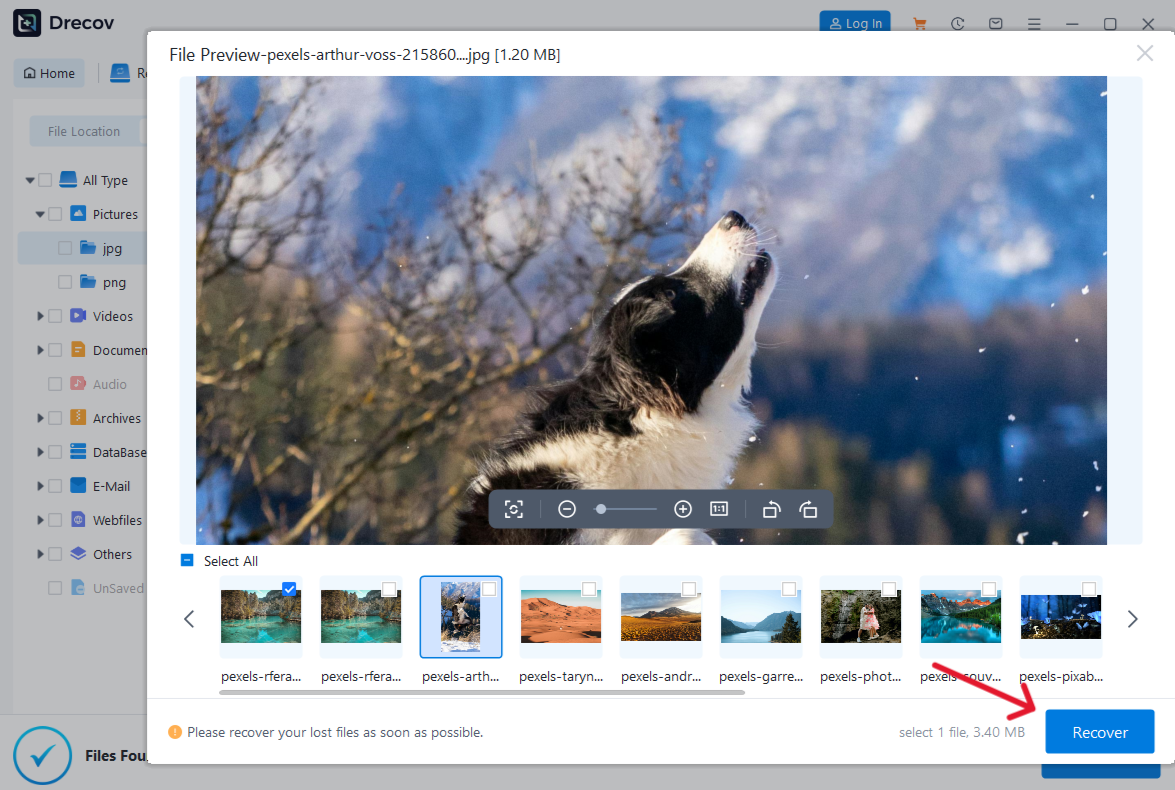
- Step 4: Check the boxes next to your images. Click Recover to save them to a secure location.
[Warning] Never install recovery software or save recovered files onto the exact same drive you are scanning. Doing so can cause immediate data overwriting, destroying your missing photos permanently.
Extracting Hidden Files Using Advanced Command-Line Methods
If you prefer not to use third-party software, you can use built-in administrative tools. These methods require precise command inputs to interact with hidden system directories.
Running Windows File Recovery via CMD
Microsoft provides an official command-line utility called Windows File Recovery. It runs via the Command Prompt to extract deleted media from NTFS, FAT, and exFAT file systems.
- Step 1: Press the Windows Key. Type cmd. Right-click Command Prompt and select Run as administrator.
- Step 2: Install the tool if prompted, or type the core recovery command structure:winfr source-drive: destination-drive: /regular /n *.jpg
- Step 3: For example, to scan your C: drive and save images to an external E: drive, type:winfr C: E: /regular /n *.jpg
- Step 4: Press Enter. Press Y to confirm the scan. The system will create a recovery folder on your destination drive.
Checking Local Application Caches and Temporary Paths
Sometimes, web applications or browsers store temporary copies of your missing images. If you uploaded a photo through a web browser, its trace might reside in your browser profile directory. To see how applications store data deeply, check out this guide on where are firefox bookmarks stored on your pc to understand local storage configurations.
Protecting Your Visual Data: Proactive Prevention Tips
The best way to handle data loss is to stop it before it happens. Implementing a clear backup strategy saves time and eliminates stress.
Three Essential Backup Strategies to Prevent Data Loss
- Automate Cloud Syncing: Enable OneDrive, Google Photos, or iCloud. Set them to sync your camera rolls and picture folders instantly.
- Use the 3-2-1 Backup Rule: Keep three copies of your data. Store them on two different media types (like an external drive and a PC). Keep one copy offsite (in the cloud).
- Verify Before Emptying: Treat your computer’s trash bin as a temporary holding zone. Review its contents before clicking “Empty.”
Answers to Frequently Asked Questions
Where are my recently deleted photos stored on an Android device?
Android devices store deleted images inside the Google Photos or Samsung Gallery trash folder. Open your gallery app, tap the menu icon (three lines), and select Trash or Bin. Items usually stay here for 30 to 60 days before permanent deletion.
Can I find my photos if I permanently deleted them using Shift + Delete?
Yes. The Shift + Delete shortcut bypasses the Recycle Bin. However, the data remains on your hard drive clusters. You can use advanced tools like PandaOffice Drecov data recovery software or Windows File Recovery to extract them before they are overwritten.
Does clear caching delete my saved camera roll photos?
No. Clearing your app cache only removes temporary files, system logs, and script histories. It improves application performance. It does not delete your physical camera roll pictures or saved local files.
Conclusion
Finding out where are my recently deleted photos does not have to be a stressful ordeal. Most modern operating systems offer excellent safety nets like the Recycle Bin or Trash folder. Furthermore, if you accidentally lose track of your media tools, knowing how to check recently deleted apps helps ensure your software environment is intact.
When basic system methods fall short, professional tools provide an excellent second line of defense. Specialized solutions, such as PandaOffice Drecov data recovery software, can salvage files even after severe system errors or accidental purges. Act quickly, avoid writing new data to your device, and use these step-by-step methods to protect your valuable digital memories.






