







Losing access to your digital ecosystem can feel like an absolute nightmare. Because your Gmail, YouTube, Google Drive, and Android device backups tie directly to a single login, a sudden deletion can disrupt your entire work and personal life. Fortunately, completing a successful recovery of deleted google account profiles is highly achievable if you act promptly. Whether you accidentally deleted the profile yourself or a malicious third party compromised your security, time is of the essence.
Furthermore, account deletion often leads to secondary data loss across your local storage drives, particularly if you synced offline files or local caches. To address this comprehensive data crisis, using specialized tools like PandaOffice Drecov data recovery software ensures that you do not lose critical offline documents, downloaded email databases, or media caches permanently. In this guide, we will walk you through the essential technical steps to restore your online identity and secure your local files smoothly.
Understanding the Basics of Recovery of Deleted Google Account Processes
When you choose to delete a profile, Google does not immediately purge your information from its servers. Instead, it places the data into a temporary “soft-deleted” state. This grace period gives you a brief window to initiate a google account delete recovery before the system permanently overwrites the server blocks.
Common Account Recovery Challenges
- The Time Factor: Google keeps account data for only a short, unspecified window (typically a few weeks). If you wait too long, the profile transitions into a hard-deleted state, making it entirely unrecoverable.
- Identity Verification Barriers: If you failed to configure or update your recovery phone numbers, backup emails, or 2-Step Verification (2FA) protocols, proving ownership becomes incredibly difficult.
- Localized Data Loss: Deleting an account often triggers automatic background sync deletions on your local Windows PC or Mac. Consequently, offline cache files, localized Google Drive directories, and browser data disappear from your hard drive.
Introducing PandaOffice Drecov Data Recovery Software
When cloud accounts vanish, your local system frequently purges the corresponding offline sync folders. This is where PandaOffice Drecov data recovery software provides a vital safety net. This professional-grade utility scans deep sector-by-sector configurations to extract lost data. It can reconstruct deleted local app data folders (AppData\Local\Google), browser bookmark databases, and offline document caches that disappeared during the account de-synchronization process.
Scenarios for Utilizing PandaOffice Drecov:
- Restoring local offline Outlook or Thunderbird
.emlor.pstdatabases after losing access to Google IMAP/POP3 servers. - Recovering deleted local folders when a hard drive cleanup accidentally targets critical system files. To understand how local file pathways work, you can explore how to find the Recycle Bin in Windows 10.
- Extracting local browser profile states to rebuild web preferences. For instance, if you use multiple web browsers, check out this guide on finding your Firefox bookmarks location to locate local data structures.
- Reclaiming synced images or temporary assets that were automatically deleted from your hard drive via the Google Drive desktop app. Read our quick tutorial on how to get recently deleted photos back to rescue these local assets.
⚠ Warning: Install it on a drive different from the one where your data was lost to prevent overwriting.
How to Complete a Google Account Delete Recovery Online
Method 1: The Standard Google Account Sign-In Recovery
If you deleted the profile within the last few days, your first line of defense is the official browser-based recovery channel.
- Step 1: Open an incognito browser window and navigate directly to the official Google Account Recovery Page.
- Step 2: Enter the exact email address or associated phone number of the deleted profile, then click Next.
- Step 3: If the system prompts you with a message stating the account was recently deleted, click on the Attempt to restore this account link.
- Step 4: Provide the last password you remember using with this profile.
- Step 5: Complete the identity verification verification step by entering the verification code sent to your pre-configured recovery email or SMS phone number. Once verified, set a brand-new, strong security password.
Method 2: Local Cache and Sync Extraction via PandaOffice Drecov
Meanwhile, if your cloud-side profile recovery window has expired, you can still extract the local document caches, offline syncs, and files that resided on your computer’s hard drive before the account deletion wiped them.
⚠ Warning: Install it on a drive different from the one where your data was lost to prevent overwriting.
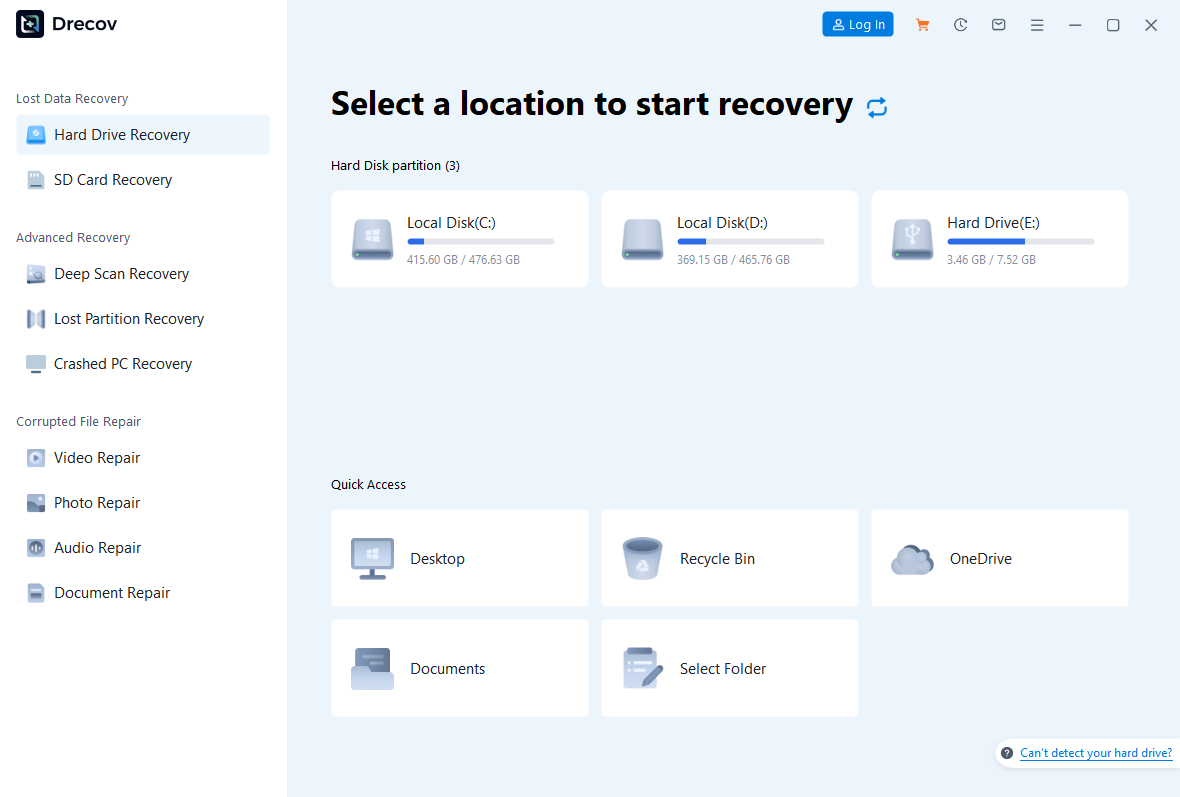
- Step 1: Launch the software application. On the main dashboard screen, select the specific local disk partition where your browser profiles or Google Drive for Desktop application cached your offline data.
- Step 2: Click the Scan button to execute a dual Quick and Deep Sector Analysis of the file system.
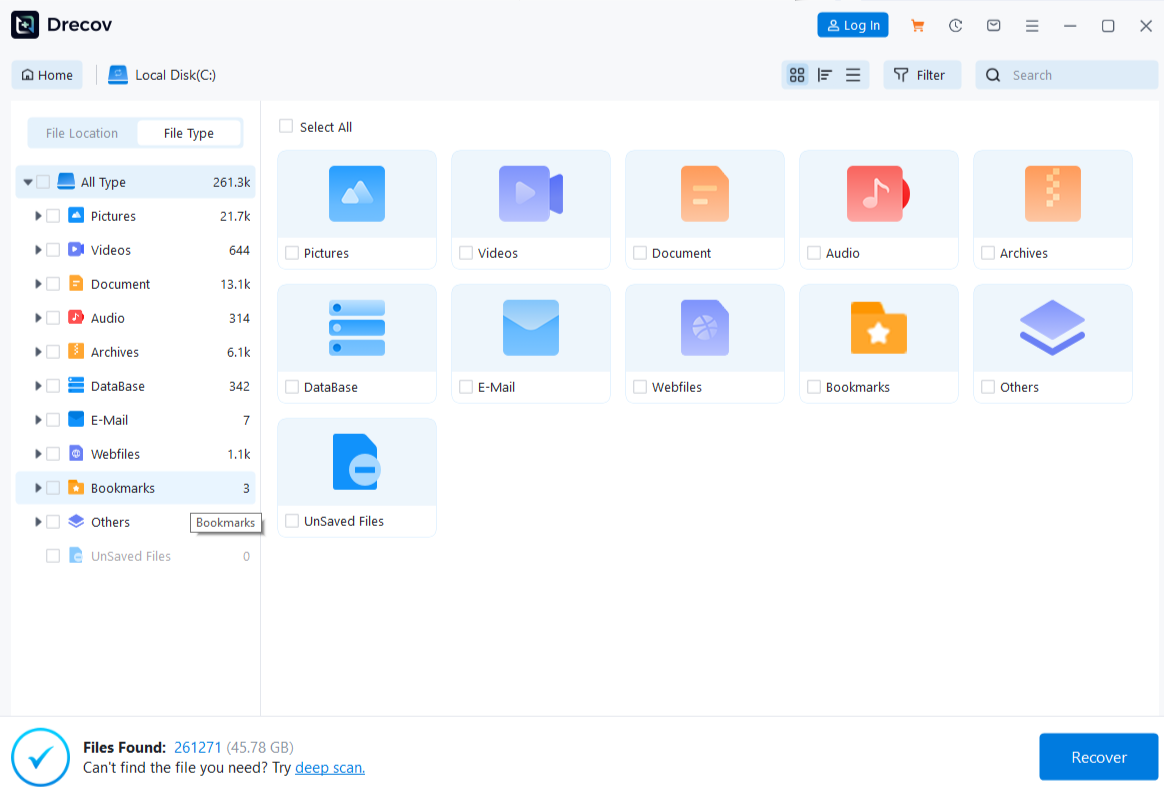
- Step 3: Navigate the file-type preview panel on the left side of the interface once the scan finishes. Filter the results by entering terms like
Google,Chrome, or.dbinto the top search bar.
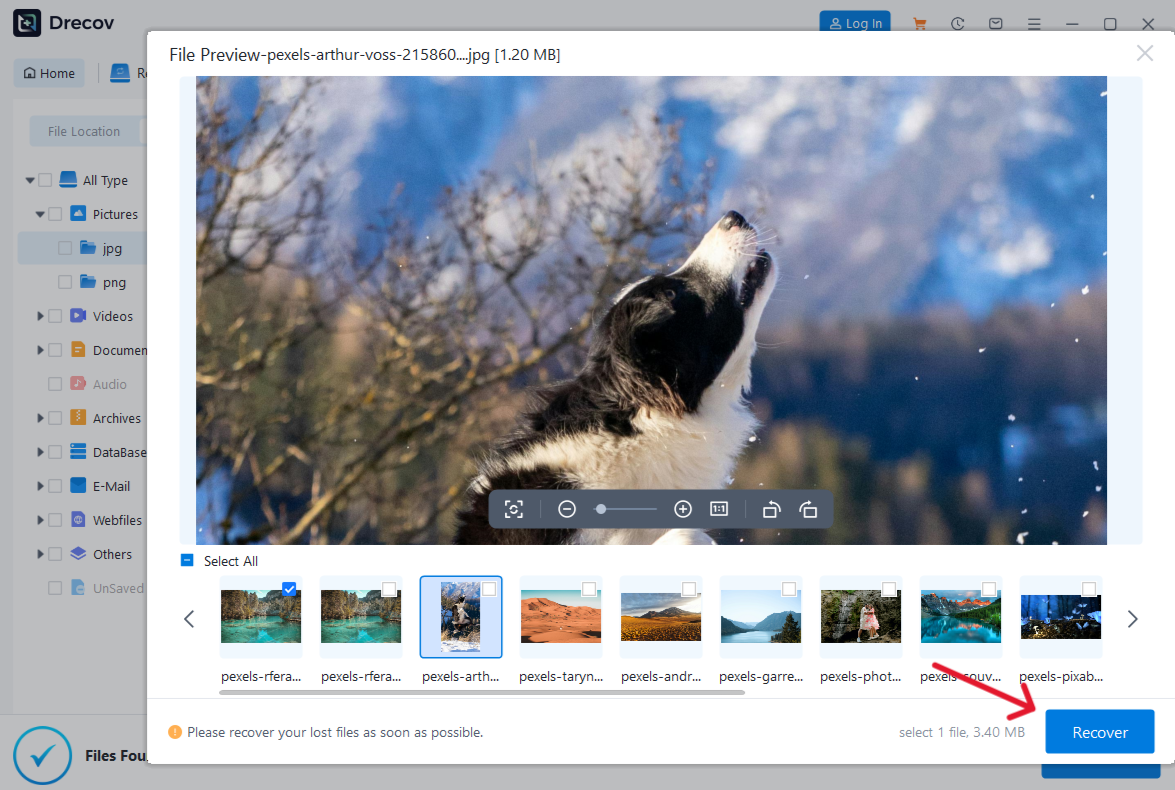
- Step 4: Mark the check boxes next to the recovered folders, click Recover, and choose an external storage device or secondary hard drive to safely extract your files.
Method 3: Windows Registry and AppData Verification
Furthermore, if your local profile configuration files are locked or hidden due to systemic security shifts after account deletion, you may need to clear out corrupted system registry paths or old security identifiers to make local data readable again.
- Step 1: Press the Windows Key + R hotkey combination on your keyboard to open the native Windows Run dialog box.
- Step 2: Type
regeditinto the text box field and press Enter to open the Windows Registry Editor. (Note: Admin privileges are required). - Step 3: Navigate down through the following specific system registry pathway:
HKEY_CURRENT_USER\Software\Google - Step 4: Locate any redundant registry sub-keys tied to your old deleted account email identifier, right-click them, and choose Export to save a configuration backup file to your desktop.
- Step 5: Delete the old orphaned keys from the registry layout, restart your machine, and run a targeted file recovery scan with PandaOffice Drecov data recovery software to extract any unlinked
.dbdata caches without encountering system file sharing conflicts.
Alternative or Complementary Methods
If the primary paths do not restore your records fully, look over these alternative methods to bridge your data gaps.
| Recovery Method | Success Rate | Pros | Cons |
| Google Admin Console | High (For custom domains) | Can restore Workspace accounts up to 20 days after deletion. | Does not work for standard @gmail.com personal accounts. |
| Browser Cache Extraction | Medium | Extracts local copies of web history, saved documents, and drafts. | Highly dependent on local files not being overwritten by new data. |
| Google Community Help Appeal | Low to Medium | Direct escalation to product experts for unique glitches. | No automated response guarantee; takes several business days. |
Tips & Best Practices for Optimizing Recovery Success
To maximize your chances of a smooth recovery of deleted google account profiles and ensure absolute data safety, apply these fundamental data-integrity rules:
- Stop Using the Drive Immediately: The moment you notice a data loss event, cease all write activity on your computer. Downloading new apps, streaming videos, or saving files can overwrite the exact storage sectors holding your deleted local data.
- Utilize Known Network Profiles: When performing an online google account delete recovery, always utilize a computer, tablet, or phone that you have previously used to log into that specific profile. Furthermore, connect from a familiar Wi-Fi network, such as your home or office connection, because Google checks your IP address to verify your identity.
- Configure Your Fail-Safes Early: Always keep a separate physical backup of your vital cloud data. Use Google Takeout bi-annually to download an archive of your information, and maintain a secondary storage option like an external SSD.
Frequently Asked Questions
1. How long do I have to complete a recovery of deleted google account profile?
Google does not publish a fixed, permanent timeline, but the consensus among technical experts is a window of roughly 2 to 3 weeks. After this period, the data blocks on Google’s servers are scrubbed, making a cloud-side google account delete recovery impossible.
2. Can PandaOffice Drecov data recovery software restore emails from Google’s servers?
No software program can access or download data directly from Google’s remote servers. However, PandaOffice Drecov data recovery software can scan your local drive to find offline email databases, locally cached document attachments, and browser histories that synced to your computer before the cloud profile was deleted.
3. What should I do if I forget my old password during a google account delete recovery?
If you do not remember your password, select the Try another way link on the account recovery form. Google will verify your identity using alternative security checks, such as an authenticated push prompt on an active mobile device or a security code sent to your recovery phone number.
4. Why are my local files missing after deleting my Google profile?
When you disconnect or delete an account, cloud storage utilities like Google Drive for Desktop often clear their local offline cache folders automatically. Consequently, your files disappear from view. Fortunately, you can recover these hidden or deleted files easily using a deep data scan.
5. Is it safe to use third-party registry cleaners to restore my data paths?
We strongly discourage using automated registry utilities. Manual removal of specific keys via regedit is much safer, provided you back up your files first. To recover actual document files safely without corrupting your operating system, running a dedicated tool like PandaOffice Drecov data recovery software is the best option.
Conclusion
In conclusion, losing access to your primary email and cloud storage is a stressful situation, but it is a hurdle you can clear with the right approach. By acting quickly within Google’s soft-deletion window, you can complete an online recovery of deleted google account profiles using standard verification pathways. Meanwhile, if server-side data is gone for good or your offline files disappeared during the log-out process, utilizing PandaOffice Drecov data recovery software provides a highly effective way to scan your hard drive and pull back your vital data caches. Do not wait for a digital mishap to take control of your data security; establish multi-layered backups today to keep your files permanently protected.






