







Losing precious memories due to an accidental click can feel devastating. Fortunately, learning how to get back deleted photos is simpler than it seems because the underlying data often remains intact on your storage medium. When you delete an image, your operating system merely marks that specific storage sector as free space available for rewriting. As long as you do not save new files onto that drive, you can easily retrieve your missing pictures. Professional utilities like PandaOffice Drecov data recovery software are specifically engineered to scan these hidden sectors and restore your files safely. This comprehensive guide outlines the exact processes required to recover your valuable media files across various storage systems.
Understanding the Basics of How to Get Back Deleted Photos
When analyzing how can i get back deleted photos, understanding the storage landscape is vital. Operating systems manage data via a file allocation table. Dropping an image into the trash changes the file pointer but leaves the raw binary clusters untouched.
However, users routinely face several core challenges during this crisis:
- Data Overwriting: Saving new documents or streaming media can permanently overwrite the unindexed blocks where your old images reside.
- Solid-State Drive TRIM Commands: Many modern internal SSDs utilize TRIM commands that automatically wipe unindexed sectors during background maintenance.
- File Fragmentation: Large or high-resolution images might be split across non-contiguous storage sectors, making manual reassembly nearly impossible.
Consequently, using a dedicated recovery platform remains the most dependable solution. PandaOffice Drecov data recovery software addresses these exact challenges through an advanced dual-scan architecture. Developed by Panda Office Limited, this tool supports over 2000 file types and works smoothly across 2000 distinct device categories. Whether you need to execute a deleted photo recovery from an emptied Recycle Bin, a corrupted SD card, an external hard disk, or an unreadable USB flash drive, this software scans deep into your storage sectors without modifying your original media.
Solutions to How to Get Back Deleted Photos Issues
When deciding how can you retrieve deleted photos, the specific recovery strategy depends entirely on where your images were stored and how much time has passed since they disappeared.
Method 1: Check Your System Trash Folders
Before scanning your hardware with automated software, explore the built-in system safeguards. Operating systems store recently deleted files in temporary repositories to prevent accidental data loss.
- Windows PCs: Open your desktop Recycle Bin, select your deleted images, right-click them, and choose Restore.
- macOS Computers: Open your Trash bin, select your missing graphic items, right-click, and select Put Back.
Method 2: Use PandaOffice Drecov Data Recovery Software
If you already emptied your local system trash or used the permanent delete hotkey combination Shift+Delete, professional software becomes necessary. This specialized utility provides a secure, read-only recovery process that ensures maximum data integrity.
Follow these step-by-step instructions to restore deleted photos safely:
⚠ Warning: Install it on a drive different from the one where your data was lost to prevent overwriting.
Step 1: Select Your Target Storage Location
The main control dashboard displays all available storage volumes. Select the local drive partition, external USB drive, or digital camera memory card where your pictures were originally stored.

Step 2: Initiate the Device Scan
Click the Scan button. The software automatically initiates a Quick Scan for recently removed items, immediately followed by an Advanced Deep Scan that pieces together fragmented file segments from raw storage blocks.
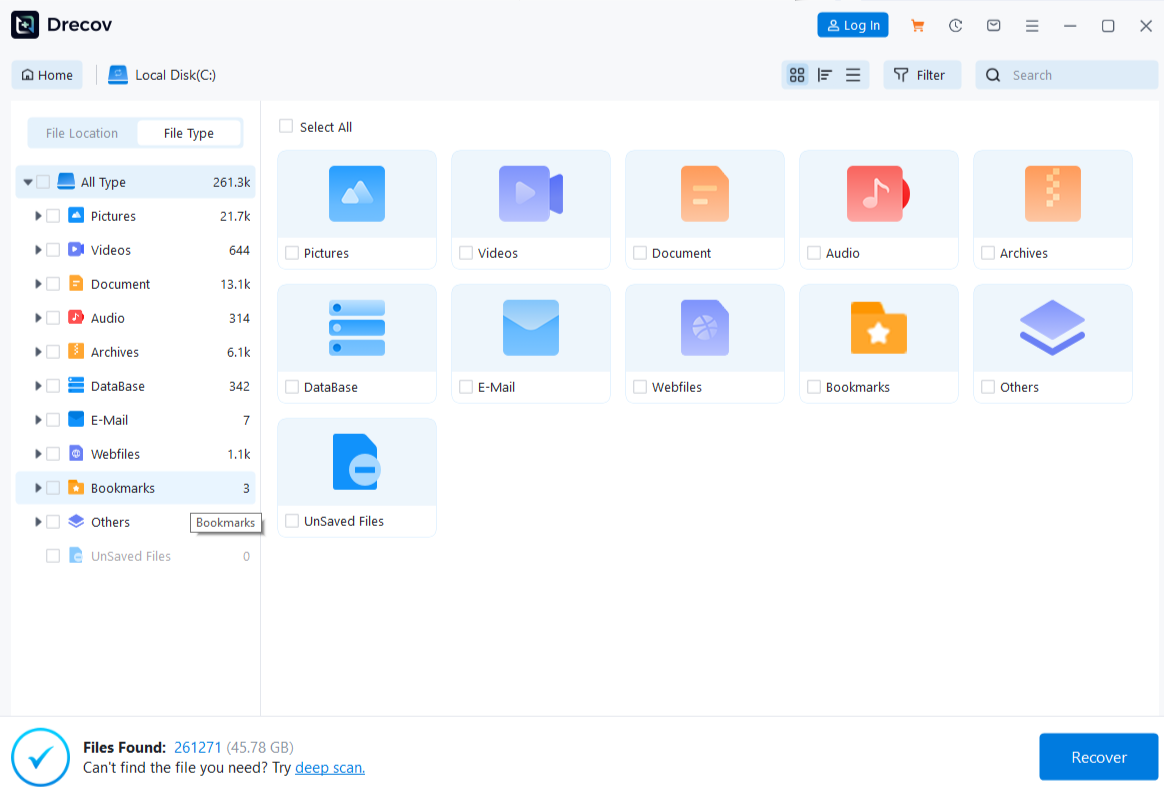
Step 3: Filter and Preview Your Found Images
Meanwhile, use the built-in file filter options to sort results by file extension, such as .jpg, .png, or .raw. Double-click any image thumbnail to open the free file preview panel to verify visual integrity prior to recovery.
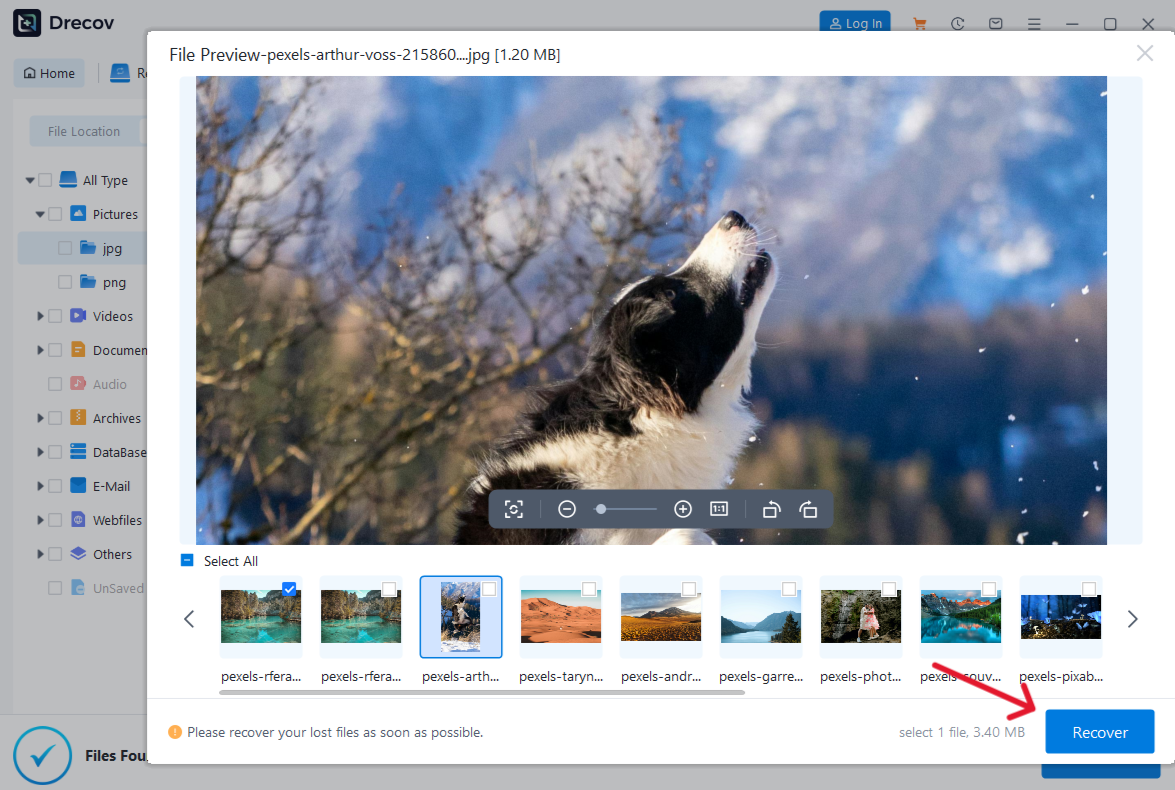
Step 4: Execute Secure File Restoration
Check the boxes next to the pictures you wish to reclaim. Click the Recover button. Choose a destination directory located on a completely different physical drive to prevent data corruption.
For more information on comparing various entry-level tools, you can read about Recuva free version limitations to see why an advanced professional scanner yields superior results. If your files vanished during a system cleanup, review this guide on how to restore Recycle Bin after empty. Additionally, if you lose media assets due to download compilation bugs, consult the tutorial for fixing the can’t download files from ChatGPT error.
Other Reliable Ways to Restore Photos Deleted from Your Devices
While dedicated software tools offer the highest success rates for deleted photo recovery, you can explore alternative recovery avenues depending on your technical expertise and past backup habits. If you consistently maintain external backups or cloud synchronization, you can easily restore photos deleted during unexpected system crashes or accidental formatting. Consequently, checking these built-in system pathways should always be your first step before pursuing manual recovery scripts.
Cloud Storage and Automated System Backups
If you configure automated system protection utilities, you can easily restore photos deleted from local folders. Windows users can check File History or system restore points by navigating to the original folder path, right-clicking, and selecting Restore previous versions. Furthermore, cloud ecosystems like OneDrive, Google Photos, and iCloud feature their own independent web-based trash repositories that retain deleted items for 30 to 60 days.
Manual Data Recovery Utilities
Advanced users often look for alternative tools to answer how to get deleted photos on pc without commercial software. Command-line options like Windows File Recovery are available via the Microsoft Store. However, these tools require precise syntax input and lack visual preview capabilities.
The following comparison table highlights how different solutions handle how to back deleted photos:
| Recovery Criteria | PandaOffice Drecov | Windows File Recovery | Standard Cloud Trash |
| User Interface | Intuitive visual dashboard | Text-based command line | Basic web grid |
| File Preview Feature | Unlimited visual preview | None | Small thumbnails |
| Deep Scan Algorithm | Sector-by-sector cluster analysis | Basic signature matching | No device scanning |
| Success Rate | Up to 98.8% in supported scenarios | Variable based on user input | High, but time-limited |
| Device Compatibility | HDDs, SSDs, SD Cards, USB Drives | Local Windows volumes only | Cloud-synced folders only |
Tips & Best Practices
Maximizing your chances of a successful deleted photo recovery requires strict adherence to safe data practices immediately following an incident.
- Halt All Drive Activity: Stop using the affected storage device immediately to prevent new data from overwriting your lost files.
- Avoid Local Installations: Never install data recovery programs directly onto the drive partition that contains your missing files.
- Utilize Write-Protected Readers: When recovering data from an SD card, slide the physical write-protection switch to the lock position before inserting it into your computer card reader.
- Verify Storage Health: Regularly monitor your storage media health via built-in system tools like CHKDSK or specialized S.M.A.R.T. monitoring software to catch potential drive failures early.
Frequently Asked Questions
How do I restore deleted photos if my SD card shows a RAW file system error?
A RAW file system means your operating system can no longer read the drive’s file allocation table structure. In this scenario, do not format the card. Instead, connect the device to your computer and use PandaOffice Drecov data recovery software. Its deep scan algorithm bypasses the corrupted logical structure to locate and reconstruct raw image data directly from the physical memory clusters.
Can I retrieve pictures that were permanently deleted years ago?
Success depends entirely on whether those specific storage blocks have been overwritten by new data. If the storage device has remained unused in a drawer, a deep scan can often recover the files. However, if the drive has been used continuously for daily activities, the older data has likely been overwritten.
Is it possible to preview corrupted image files before starting the recovery process?
Yes. The built-in preview engine in PandaOffice Drecov version 2.1 reads the raw cluster data during the scanning phase. This allows you to verify file integrity and view the actual image thumbnail before committing to a full restoration.
Why should I never save recovered images back to their original folder path?
Saving files back to the same drive partition during an active recovery run can overwrite other deleted files that are still waiting to be scanned and restored. Always send your recovered files to a separate external drive or secondary internal storage partition.
Does standard data recovery software work on smartphones?
Most modern smartphones encrypt internal storage and do not allow direct mass storage sector access over USB connections. To recover mobile pictures, you should scan the removable micro-SD card using a computer reader or check your automated cloud backup accounts.
Conclusion
Understanding how to get back deleted photos helps turn an stressful data loss situation into a manageable fix. Acting quickly and avoiding new file writes to your drive are the most critical steps to ensuring a successful recovery. Utilizing a robust tool like PandaOffice Drecov data recovery software provides the advanced scanning capabilities needed to retrieve your files safely and securely. Combining these powerful tools with consistent backup habits ensures your digital memories remain well-protected against future accidents.






