







Emptying the Recycle Bin is often done without much thought. Many users clear it to free up space, assuming the files inside are no longer important. Unfortunately, mistakes happen. Important documents, project folders, photos, or videos may still be inside when the Bin is emptied. The immediate concern becomes whether emptied recycle bin recovery is possible.
The answer is not always simple. When the Recycle Bin is emptied, Windows removes file references from its internal index. However, the actual data is not instantly destroyed. Instead, the system marks that storage space as available for reuse. Until new information overwrites those sectors, it may still be possible to retrieve files deleted from recycle bin.
Recovery success depends on several factors:
- Time passed since deletion
- Whether the drive is HDD or SSD
- Disk activity after emptying
- Whether backup features were enabled
⚠️Warning: Avoid installing new programs or saving large files to the affected drive before attempting recovery.
In this comprehensive guide, you will learn practical ways to recover files from recycle bin after empty, including built-in Windows methods and professional recovery solutions.
I recently encountered a problem where I accidentally emptied my Recycle Bin on my Windows 11 PC, and lost several important files that I hadn’t intended to delete. I understand that once the Recycle Bin is emptied, the files aren’t easily recoverable, but I’m hoping there might still be a way to get them back. Has anyone else experienced this issue and successfully recover deleted files after emptying the recycle bin?—from Microsoft Store
Understanding What Happens After Emptying the Recycle Bin
To approach emptied recycle bin recovery correctly, you must understand how Windows handles deletion at the system level.
When a file is deleted normally, Windows moves it to a hidden folder called $Recycle.Bin. This allows easy restoration. But when you empty the Recycle Bin, Windows removes the directory pointers that reference those files. The operating system no longer displays them because the index entries are gone.
However, the underlying data blocks remain intact temporarily. Windows simply marks the disk space as reusable. If no new data overwrites that space, the deleted files may still be recoverable.
Key Technical Factors That Affect Recovery
- HDD vs SSD: Traditional hard drives keep deleted data longer. SSDs with TRIM enabled may clear data faster.
- Disk Usage: Heavy file downloads or installations reduce recovery chances.
- System Cleanup Tools: Disk cleanup utilities may accelerate permanent deletion.
Understanding this mechanism clarifies why quick action is essential when attempting to retrieve files deleted from recycle bin.
Method 1: Restore Files Using File History
If File History was enabled before deletion, it provides one of the safest solutions for emptied recycle bin recovery.
How File History Helps
File History automatically saves copies of files stored in common user directories such as Documents, Desktop, Pictures, and Videos. Even if you empty the Recycle Bin, earlier versions of those files may still exist in backup storage.
Steps to Recover Files from Recycle Bin After Empty
- Open Control Panel.
- Navigate to System and Security.
- Select File History.
- Click Restore personal files.
- Browse the timeline for the correct version.
- Click Restore.
This method restores backed-up copies rather than undeleting disk sectors. That makes it safer and less risky than deep recovery operations.
⚠️Warning: File History must have been activated before the file was deleted. If it was never enabled, this method will not work.
File History remains one of the most reliable built-in tools to retrieve files deleted from recycle bin when backups are available.
Method 2: Restore Previous Folder Versions
Another built-in feature that supports emptied recycle bin recovery is the Previous Versions function. This feature works if System Protection was enabled prior to deletion.
Windows periodically creates restore points. These restore points may include older versions of folders that contained your deleted files.
Steps to Restore Previous Versions
- Navigate to the folder where the deleted file originally existed.
- Right-click the folder and select Properties.
- Open the Previous Versions tab.
- Select a version dated before deletion.
- Click Open to preview or Restore to recover.
Instead of directly restoring, you can copy the file to another location to prevent overwriting current data.
This method does not directly perform recover files from recycle bin after empty, but it retrieves earlier stored versions of the folder containing those files.
If no previous versions appear, System Protection was likely disabled at the time of deletion.
Method 3: Restore from Windows Backup
Windows Backup offers another opportunity for emptied recycle bin recovery, provided backups were created earlier.
How Windows Backup Works
If you configured Backup and Restore (Windows 7), the system periodically created backup images or file archives. These backups can be used to retrieve files deleted from recycle bin even after permanent deletion.
Steps to Restore Files
- Open Control Panel.
- Select Backup and Restore (Windows 7).
- Click Restore my files.
- Search for the deleted file.
- Choose a safe restore location.
Backup restoration is often overlooked, yet it can be extremely effective because it relies on stored copies rather than disk sector reconstruction.
If you previously created backups, this method may allow you to recover files from recycle bin after empty without using third-party recovery software.
Method 4: Check the Hidden $Recycle.Bin Folder
Even after you empty the Recycle Bin, traces of deleted data may still exist within the system’s hidden directories. Every drive in Windows contains a protected folder named $Recycle.Bin, which stores deleted items before permanent removal. In certain scenarios, files may remain there due to system glitches or incomplete cleanup operations.
To inspect this folder, open File Explorer and enable “Show hidden files” in Folder Options. Then navigate to the root directory of the affected drive (for example, C:). Locate the $Recycle.Bin folder and open it. Inside, you will see subfolders identified by security IDs. These folders correspond to user accounts.
If you discover recoverable files inside, copy them immediately to a separate storage location. This manual inspection sometimes supports emptied recycle bin recovery, especially when display errors create the impression that data is gone.
⚠️Warning: Do not delete or modify unknown system files within the $Recycle.Bin directory, as this could cause additional system issues.
Although this method does not guarantee success, it is worth checking before moving to deeper recovery solutions.
Method 5: Attempt Recovery via Command Prompt
Windows does not provide a built-in undelete utility, but certain command-line tools can repair file system inconsistencies that may affect deleted file visibility. These methods are not true undelete techniques, but they can sometimes help users retrieve files deleted from recycle bin when corruption is involved.
Using CHKDSK to Repair Disk Errors
Open Command Prompt as Administrator and run:
chkdsk X: /f
Replace X with the drive letter. This command scans for logical file system errors and attempts to fix them. If directory structures were damaged, CHKDSK may restore fragments of lost data.
Using ATTRIB to Restore File Visibility
You may also run:
attrib -h -r -s /s /d X:\*.*
This removes hidden and system attributes that might prevent files from appearing.
These commands can occasionally assist with recover files from recycle bin after empty, particularly when files were hidden rather than fully erased. However, they cannot reconstruct overwritten sectors or permanently destroyed data.
If these built-in approaches fail, deeper scanning methods are required.
Professional Emptied Recycle Bin Recovery Using Pandaoffice Drecov
When no backup exists and built-in features do not work, professional recovery software becomes essential. After emptying the Recycle Bin, Windows removes indexing information, but the underlying data may still remain on the disk. A specialized tool can scan raw sectors and rebuild lost files.
Pandaoffice Drecov is designed for advanced emptied recycle bin recovery scenarios. Unlike standard system tools, it performs both quick scans and deep scans to locate deleted file signatures. This enables users to retrieve files deleted from recycle bin even when the directory entries are gone.
Why choose Pandaoffice Drecov?
- Selecting the right recovery software is essential when unexpected data loss occurs. Pandaoffice Drecov provides a powerful, secure, and efficient solution designed to handle a wide range of storage failure scenarios across different devices.
- Advanced Recovery for SD Cards and Hard Drives
- Pandaoffice Drecov supports recovering photos from an SD card as well as performing professional hard drive recovery. Whether files were accidentally deleted, a storage device was formatted, or data was lost due to corruption, its deep scan technology thoroughly analyzes storage sectors to locate recoverable content. The software is compatible with internal drives, memory cards, and various file systems, ensuring flexible recovery options in different environments.
- Reliable Support for Recovering External Hard Drives
- The software also specializes in recovering external hard drives that become inaccessible due to accidental formatting, partition loss, or file system damage. It automatically detects connected devices and performs comprehensive scans without altering original data, helping improve recovery success rates.
- Efficient Recovery of Deleted Photos
- One of its strongest capabilities is recovering deleted photos, even after permanent deletion from the Recycle Bin. The built-in preview feature allows users to verify files before restoration, ensuring accurate and controlled recovery.
- With strong scanning performance, broad device compatibility, and an intuitive interface, Pandaoffice Drecov offers a dependable and professional solution for modern data recovery needs.
How Pandaoffice Drecov Works
Download Drecov- Install the software on a different drive than the one where files were lost.
- Select the affected disk.
- Run a deep scan to analyze raw sectors.
- Preview found files before recovery.
- Save recovered files to external storage.
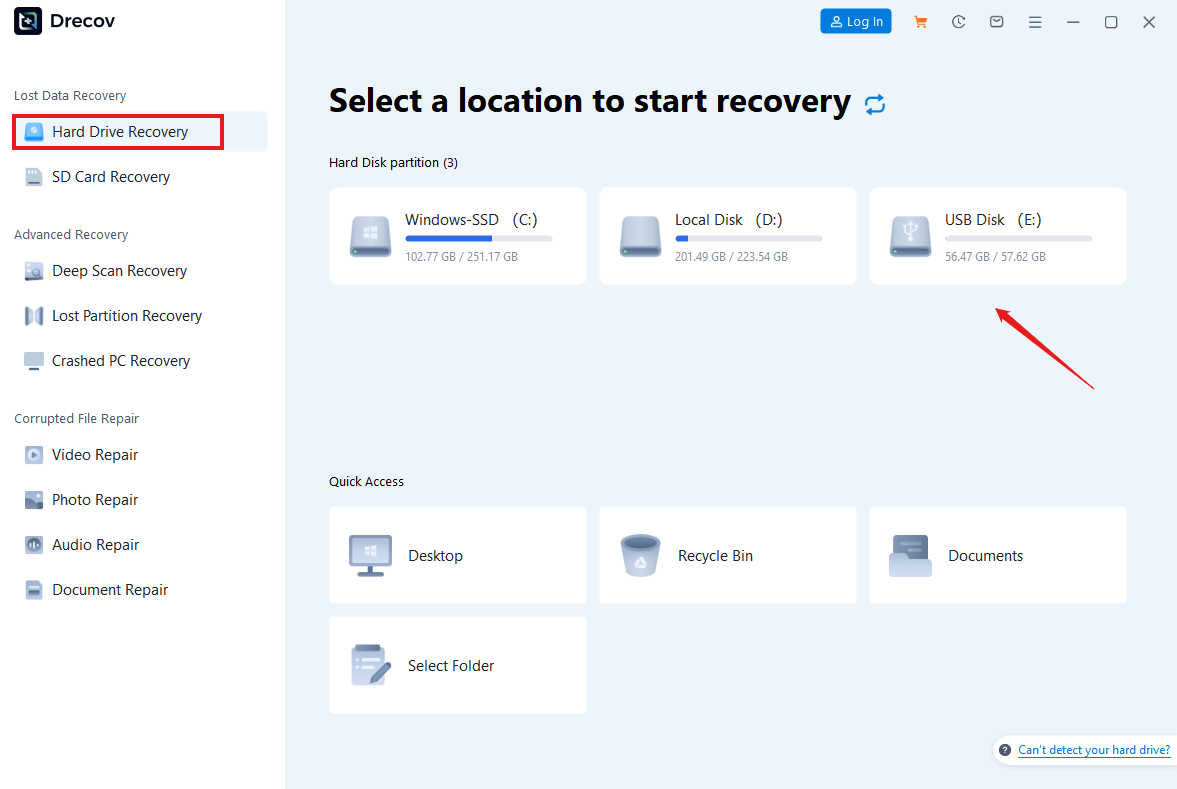


⚠️Warning: Always restore recovered files to another drive to avoid overwriting remaining recoverable data.
Because it reconstructs data at the sector level, Pandaoffice Drecov significantly increases the chances of success compared to manual methods. It is particularly useful when attempting to recover files from recycle bin after empty without prior backups.
Factors That Influence Recovery Success
Not every deletion scenario offers the same recovery probability. Several technical factors affect whether emptied recycle bin recovery will succeed.
Storage Type
Traditional HDDs retain deleted data longer because they do not immediately wipe sectors. SSDs, however, use TRIM technology, which may clear deleted blocks more quickly. This reduces the chance to retrieve files deleted from recycle bin on SSDs.
Time Since Deletion
The longer the system operates after deletion, the greater the likelihood of overwritten sectors. Installing applications or downloading files can permanently destroy recoverable data.
File Size
Large files occupy more sectors, increasing the risk that partial overwriting will occur.
System Maintenance Utilities
Disk cleanup tools or optimization programs may accelerate permanent deletion.
Understanding these factors helps set realistic expectations when attempting to recover files from recycle bin after empty. Quick action combined with proper tools dramatically improves recovery probability.
Preventing Future Recycle Bin Data Loss
While recovery is sometimes possible, prevention remains the safest strategy. Developing good data protection habits can eliminate the need for emergency emptied recycle bin recovery.
Enable File History
Activating File History ensures regular backups of personal folders. Even if you empty the Recycle Bin accidentally, previous copies remain accessible.
Configure System Backups
Full-system backups provide additional security. They allow you to restore entire directories if major deletion events occur.
Increase Recycle Bin Capacity
Right-click the Recycle Bin icon and adjust its storage allocation. Increasing capacity reduces the risk of automatic deletion when space limits are reached.
Avoid Permanent Deletion Shortcuts
Using Shift + Delete bypasses the Recycle Bin entirely. Avoid this shortcut unless absolutely necessary.
Act Quickly After Deletion
If you realize that important files were deleted, immediately stop heavy disk activity and begin recovery procedures.
By combining backup strategies with responsible deletion practices, you greatly reduce the likelihood of needing to retrieve files deleted from recycle bin under pressure.
Final Conclusion: Can You Restore Recycle Bin after Empty?
Yes, in many cases, it is possible to restore files after emptying the Recycle Bin. If backups such as File History or Windows Backup were enabled, recovery can be straightforward. Previous Versions may also provide partial restoration.
However, if no backups exist and the Recycle Bin has been cleared, built-in Windows tools offer limited capability. In such situations, professional scanning solutions like Pandaoffice Drecov provide the highest chance of success.
The most important rules are:
- Act quickly
- Avoid further disk usage
- Use appropriate recovery methods
- Restore files to a separate location
Although emptied recycle bin recovery is not guaranteed in every case, understanding how deletion works and applying the correct strategy significantly improves your chances to recover files from recycle bin after empty successfully.





