







Artificial intelligence tools have transformed productivity, communication, coding, and project management across industries. Among these tools, ChatGPT has become one of the most popular AI-powered platforms for businesses, developers, students, and content creators. However, many users occasionally encounter frustrating technical bottlenecks, such as the error creating or updating project chatgpt message.
This error can suddenly interrupt workflows, prevent project creation, block critical updates, or completely stop users from saving important information. In this comprehensive, deep-dive guide, you will learn everything about the error creating or updating project chatgpt problem. We will cover common causes, step-by-step troubleshooting methods, technical data preservation, and best practices for smooth AI project management in 2026.
What Does “Error Creating or Updating Project ChatGPT” Mean?
The message error creating or updating project chatgpt usually appears when the OpenAI platform fails to process, validate, or commit a project-related action to its cloud database. This specific error message directly targets the workspace or “Projects” feature, which allows users to group conversations, instructions, and uploaded files.
This error can happen during several crucial operations:
- Creating a brand-new project container
- Updating existing project data or changing configuration settings
- Saving real-time conversation changes within the project environment
- Uploading files or external knowledge base documents
- Synchronizing ongoing conversations across multiple devices
- Managing enterprise workspace settings
- Collaborating with team members on a shared canvas
The issue may result from temporary server problems, deep-seated browser conflicts, local network interruptions, workspace permission restrictions, or unexpected software bugs in the web application’s JavaScript bundle.
Common Causes of the Error
Understanding the root cause helps users solve the problem more effectively without wasting time on irrelevant fixes. Let us analyze the primary technical reasons why you see the error creating or updating project chatgpt warning.
1. Internet Connectivity Issues
A weak, high-latency, or highly unstable internet connection is one of the most common causes of project-related errors. When the browser sends a payload containing your project data to OpenAI’s endpoints, any packet loss can abort the request.
- Symptoms: Slow loading pages, failed save attempts, incomplete file uploads, or frequent session interruptions.
- Solutions: Restart your router, switch to a stable local network, use wired internet if possible, or disable unstable VPN connections.
2. Server Overload and System Integrity
High traffic on AI platforms can temporarily affect database writing functions. When millions of users access AI systems simultaneously, backend microservices can experience degradation. This often leads to specific error codes or generic communication failures.
- Signs of Server Problems: Delayed responses, frequent timeouts, project synchronization failures, or unexpected error messages flashing on the screen.
- The Fix: Wait a few minutes and try again later, or monitor the official status platform.
3. Browser Compatibility Problems
Older web browsers or aggressive browser extensions can interfere with ChatGPT project functionality. Modern AI web applications rely heavily on advanced WebSockets and local storage APIs.
- Problematic Factors: Outdated browser versions, conflicting third-party extensions, corrupted cache files, or disabled third-party cookies.
- Recommended Browsers: Google Chrome, Mozilla Firefox, Microsoft Edge, and Safari. Keeping your web browser updated significantly improves application performance.
4. Corrupted Cache and Cookies
Stored browser data sometimes conflicts with newer website deployments. When OpenAI rolls out updates to the ChatGPT interface, mismatched local cache files can corrupt user session requests.
- Symptoms: Persistent login loops, broken project layout boxes, save failures, and infinite loading wheels.
- Quick Fix: Clear the application data for the specific domain or clear the entire browser cache.
5. Session Expiration
Long inactive sessions may automatically expire. The authentication tokens stored in your browser cookies have a limited lifespan for security purposes. If your token expires while you modify a workspace, the server will reject your project updates.
- Solution: Log out of your account, refresh the webpage, and log back in to renew your security tokens.
6. Permission Restrictions
Workspace permissions may prevent project creation or editing. This is particularly common in ChatGPT Team or Enterprise workspaces where custom roles are defined.
- Common Scenarios: Read-only access assigned by an admin, team collaboration restrictions, expired enterprise subscriptions, or seat allocation limits.
- Fix: Contact your workspace administrator to verify your account permissions.
How to Fix “Error Creating or Updating Project ChatGPT”
Below are the most effective troubleshooting methods, ranging from basic browser adjustments to advanced infrastructure fixes.
Refresh the ChatGPT Page
Temporary network glitches often disappear after refreshing the browser. This action forces the browser to pull down the latest state of your workspace.
- Quick Methods: Press F5 on Windows, press Cmd + R on Mac, or click the reload button next to the address bar. This is one of the fastest fixes to try first.
Restart Your Browser
Sometimes web browsers consume excessive memory or develop temporary rendering conflicts that block outgoing API connections.
- Step 1: Close all open browser tabs containing ChatGPT or other AI tools.
- Step 2: Exit the browser application completely (use Ctrl + Q on Windows or Cmd + Q on Mac to ensure it completely shuts down).
- Step 3: Reopen your browser, navigate back to the workspace, and retry the project action.
Try Incognito or Private Mode
Private browsing disables many background extensions and isolates cached settings.
- Why It Helps: This method isolates conflicts caused by aggressive ad blockers, custom script blockers, or tracking protection extensions. If ChatGPT works correctly in incognito mode, a browser extension is likely causing the error creating or updating project chatgpt message.
Disable Browser Extensions
Some extensions interfere with modern AI web applications by modifying network headers or blocking essential JavaScript files.
- Step 1: Open your browser’s extension manager (e.g., paste
chrome://extensions/in Google Chrome). - Step 2: Temporarily toggle off ad blockers, privacy tools, security plugins, and local VPN extensions.
- Step 3: Reload the ChatGPT interface and attempt to update your project again.
Check ChatGPT Server Status
Sometimes the issue is entirely server-side. When major outages occur, users may experience failed project saves, missing conversation histories, or upload interruptions. You can check the official status by visiting the OpenAI Status Page. Waiting for official maintenance completion is often the best solution during global outages.
Update Your Browser
Modern AI applications require updated web technologies to handle streaming data and persistent network connections.
- Benefits of Browser Updates: Improved JavaScript execution performance, better security patches, enhanced compatibility with cloud apps, and reduced web page crashes. Keeping your browsers current minimizes technical errors.
Reduce Project Size
Large projects containing extensive knowledge files or extremely long conversation histories may occasionally trigger memory limits or API timeout errors on the server.
- Tips: Split large projects into smaller sections, remove unnecessary text files, archive old conversations, and simplify project structural definitions. Smaller projects generally process much faster and more reliably.
Advanced Troubleshooting: API and Server Errors
For power users and professionals working inside specialized developer workspaces or API integrations, encountering a project update failure often involves deeper protocol issues. Let us analyze the common HTTP errors associated with this problem.
chatgpt network error
A chatgpt network error typically points to a disruption in the continuous data stream between your machine and the remote cloud servers. This can manifest as an incomplete HTTP POST request when updating a project’s parameters.
To systematically resolve a chatgpt network error, follow these steps:
- Step 1: Check if your local machine can ping external servers. Open your terminal or command prompt and type
ping 8.8.8.8to verify basic internet connectivity. - Step 2: Switch your DNS configuration. Change your network adapter settings to use Google’s public DNS servers ($8.8.8.8$ and $8.8.4.4$) or Cloudflare’s DNS ($1.1.1.1$). This bypasses regional routing failures.
- Step 3: Flush your local DNS cache. On Windows, open Command Prompt as administrator and run the command
ipconfig /flushdns. On macOS, use the commandsudo dscacheutil -flushcache; sudo killall -HUP mDNSResponder. - Step 4: Inspect your local firewall or corporate proxy settings. Ensure that outbound traffic to
*.openai.comis completely whitelisted on ports $80$ and $443$.
chatgpt internal server error
When the platform returns a chatgpt internal server error, it indicates an unhandled exception on OpenAI’s backend cloud architecture. This means your local configurations are likely fine, but the server failed to process the request.
If you encounter a chatgpt internal server error, use the following troubleshooting checklist:
- Step 1: Isolate the payload. Try creating a project with a single-word title and no custom instructions to see if specific characters or formatting caused the backend database validation to crash.
- Step 2: Inspect your browser’s developer tools. Press F12 or right-click and select Inspect, then navigate to the Network tab. Look for failed red requests returning an HTTP $500$, $502$, or $503$ status code.
- Step 3: Check your account subscription status. Ensure your payment method has not failed, as temporary account suspensions can sometimes trigger generic internal server errors on advanced workspace features.
- Step 4: Clear your browser storage data. In the developer tools, go to the Application tab, select Storage, and click Clear site data to completely reset your active session footprint.
API-Related Project Errors
Developers using custom applications to manage ChatGPT workspaces or fine-tuning projects may encounter additional technical challenges.
| HTTP Error Code | Error Type | Primary Cause | Immediate Remediation |
| 401 | Unauthorized | Invalid or expired API credentials. | Regenerate your secret API key. |
| 429 | Too Many Requests | Rate limits or tokens per minute exceeded. | Implement exponential backoff algorithms. |
| 500 | Internal Server Error | Server-side processing or database failure. | Wait and implement an automated retry mechanism. |
| 504 | Gateway Timeout | The upstream server took too long to respond. | Optimize your payload size and minimize input tokens. |
Technical Emergency: Recovering Lost Project Data
When the error creating or updating project chatgpt happens during a critical update, it can cause local browser crashes or failed sync cycles. This sometimes results in the sudden disappearance of extensive project notes, text assets, configurations, or uploaded local data. If this happens, your local operating system or browser cache might still hold remnants of your work, or you might need a dedicated tool to recover files that were accidentally deleted during the troubleshooting process.
PandaOffice Drecov data recovery software
If you lose vital documents, text files, or data backups on your computer due to browser crashes, system updates, or formatting attempts while trying to resolve ChatGPT errors, you can use specialized software to get your information back. PandaOffice Drecov data recovery software is a powerful data recovery product designed to scan hard drives, solid-state drives, memory cards, and local directories to salvage lost files.
⚠ Warning: Install it on a drive different from the one where your data was lost to prevent overwriting.
To recover your local project assets, documents, or data backups using this utility, carefully follow these steps:
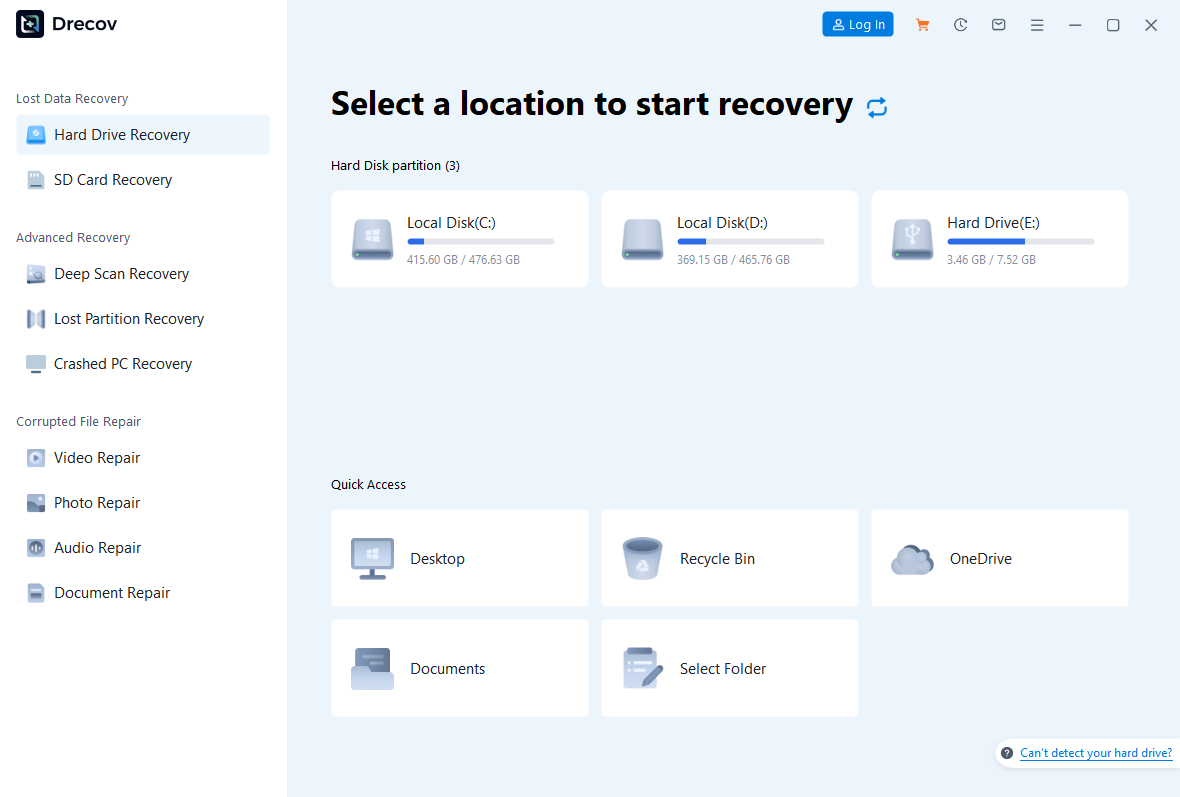
- Step 1: Select the target storage location. Launch the application. On the main home screen interface, select the specific drive, folder, or partition where your project drafts, exported text logs, or local knowledge documents were stored. Click the Scan button to begin the data retrieval process.
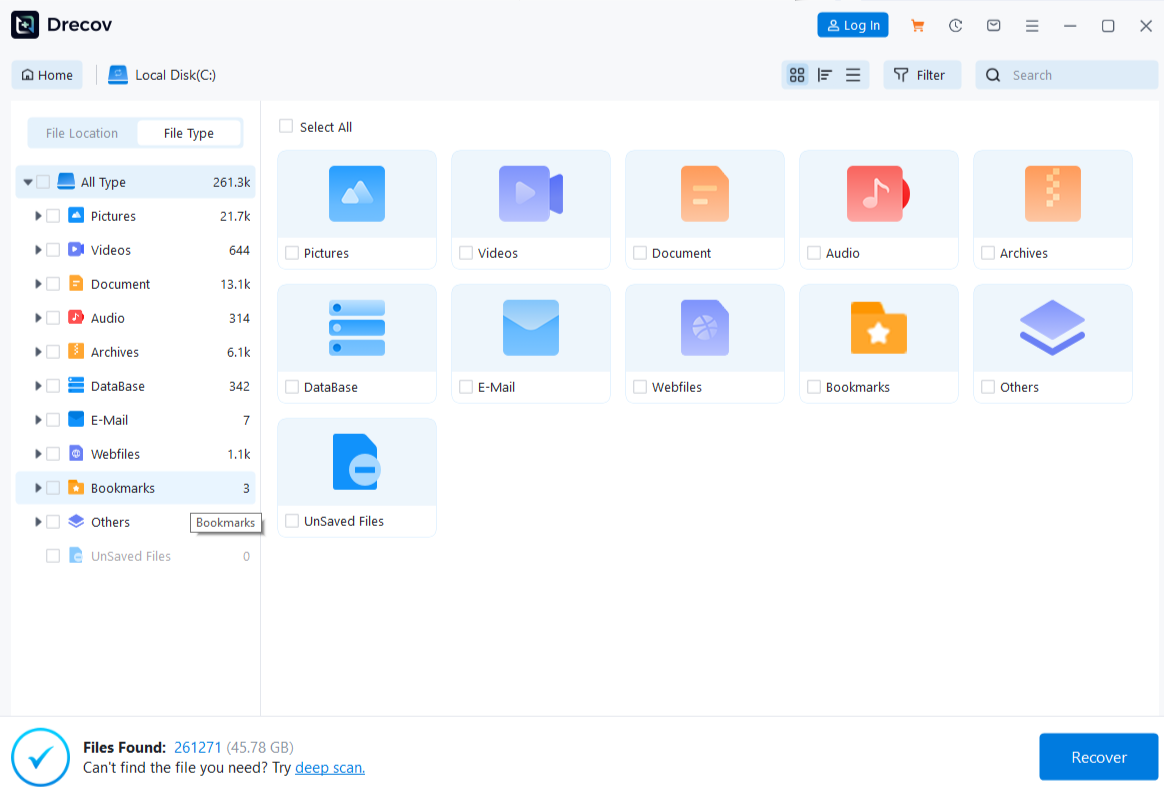
- Step 2: Utilize the deep scan feature. The software will automatically execute a quick scan followed by a thorough deep scan. This process checks the storage blocks for recognized file headers (such as
.txt,.docx,.pdf,.json, or.csv). You can use the built-in file filter options to sort the results by file type or creation date.
- Step 3: Preview the found files. Once the scan completes, browse through the directory tree view. Click on the discovered text documents or files to open the preview window. This allows you to verify if the contents of your lost project data are intact before performing the actual recovery.
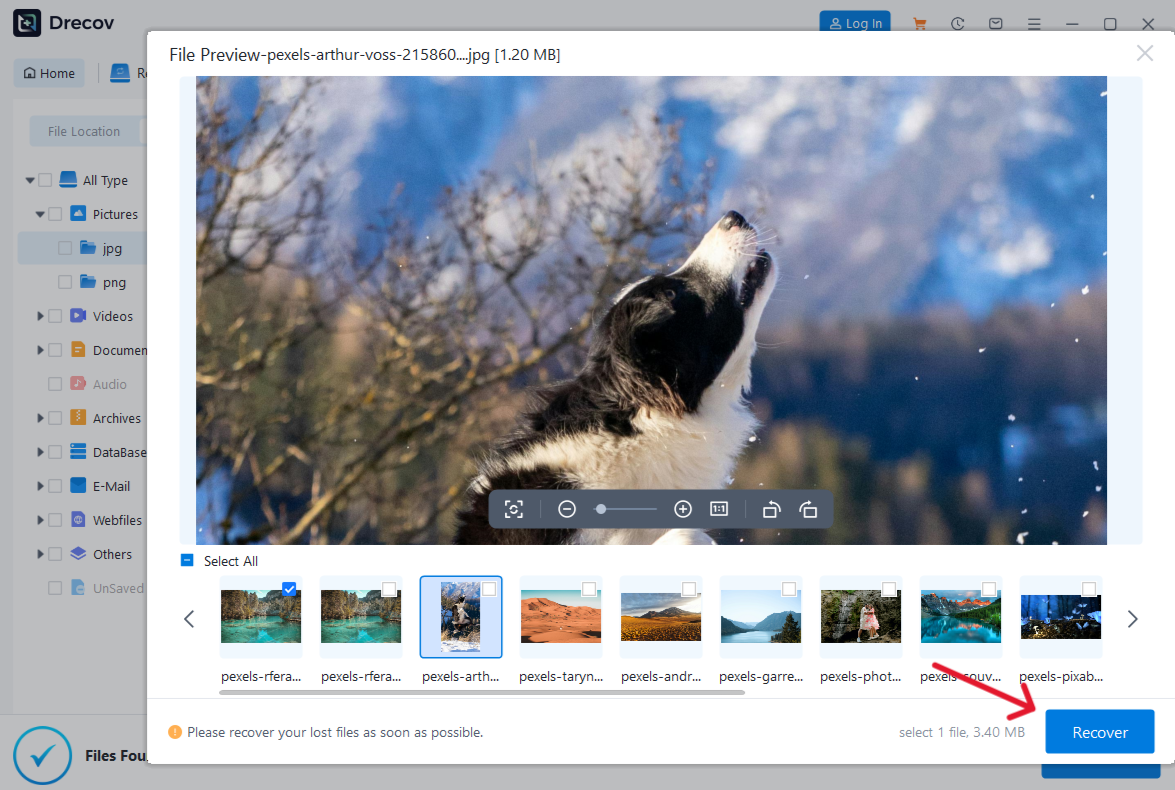
- Step 4: Save your recovered files securely. Mark the checkboxes next to the files you wish to restore. Click the Recover button. Choose a secure destination path—such as an external flash drive or a secure cloud backup folder—to save the recovered files.
Post-Recovery Local System Adjustments
Once you have secured your local data using recovery tools, you can optimize your operating system and web browser setups to prevent local storage conflicts or file syncing issues from causing future ChatGPT project errors.
Managing Local File Repositories
If you frequently export your AI projects or keep text backups on your computer, knowing how to navigate your system’s core storage locations is essential. For instance, if you accidentally delete an exported backup file, check your system’s temporary storage bins first. If you are unsure where to find it, read this guide on where is recycle bin in windows 10 3 quick ways to find it to locate your deleted assets.
Restoring Web Browser Environments
Because ChatGPT runs entirely within your browser, keeping your browser environment stable is key to preventing workspace errors. If a complete cache clear or browser reinstall accidentally wipes out your saved research shortcuts, bookmarks, or web links, you don’t have to start over from scratch. You can learn how to get your google chrome bookmarks back using local backup files to quickly restore your web workspace.
Disabling Conflicting Background Syncs
Aggressive background cloud storage syncing can sometimes lock your local files or disrupt your browser’s temporary storage folders. This can interfere with web applications like ChatGPT when you try to upload large files to a project. If you find that automatic cloud backups are constantly interrupting your browser sessions or creating file-locking conflicts, you can find out how to disable onedrive stop the sync in 3 easy steps to keep your local machine running smoothly.
Conclusion
Encountering the error creating or updating project chatgpt message can be a frustrating hurdle, but it is almost always caused by manageable technical factors. Unstable internet connections, browser extension conflicts, expired login sessions, server traffic peaks, and workspace permission mismatches are the usual culprits.
By following the systematic troubleshooting steps outlined in this guide—such as performing page refreshes, clearing out corrupted cache files, disabling conflicting extensions, and keeping your web browsers updated—you can resolve most instances of this error within a few minutes. If a technical glitch or system crash ever results in data loss on your computer, tools like PandaOffice Drecov data recovery software can help you scan and restore your local files.






