







To change GPT to MBR safely, first confirm that MBR is truly required, copy or recover important files, and verify the target disk number. Windows built-in graphical and DiskPart methods normally require deleting every partition, so they erase accessible data. Do not run clean, delete volumes, or format the disk until a verified copy exists. A system disk also needs firmware and boot planning because legacy BIOS normally boots from MBR, while modern UEFI installations generally use GPT.
Quick Answer
For an empty secondary disk, delete its volumes in Disk Management and convert it to MBR. For a disk with needed files, back up or recover them to another device first. For a Windows system disk, do not convert merely to solve an installation message. Check whether changing the installer boot mode is the safer answer. Microsoft explains that firmware mode and partition style must match in its Windows Setup partition guidance.
What the Symptom Usually Means
GPT and MBR describe partition table layouts, not ordinary file formats. A disk can store NTFS or exFAT volumes under either layout. Read this partition fundamentals guide if the distinction is unfamiliar. Conversion changes metadata that tells firmware and Windows where partitions begin and how they boot.
Common reasons for the change include legacy hardware, an older operating system, or an installer started in legacy mode. None proves the disk itself is wrong. Check System Information for BIOS Mode, and check the disk Properties Volumes tab for Partition style. Record both before choosing a method.
| Clue | Likely area | Safest first action |
|---|---|---|
| Empty data disk | No partitions or needed files | Convert in Disk Management after verifying the disk |
| Disk contains files | Destructive built-in conversion would erase volumes | Back up or recover to another device first |
| Windows installer rejects disk | Installer mode and disk style differ | Reboot installer in the intended firmware mode |
| System disk | Boot files depend on current layout | Create a full backup and recovery media before changes |
Safeguard the Disk Before GPT-to-MBR Conversion
Confirm Why MBR Is Required
Do not convert a working GPT disk merely because Windows Setup reports a mismatch. First check whether the installer started in legacy mode. Rebooting the installer in the correct firmware mode may solve the problem without touching the partition table.
Build a Conversion Safety Record
- Capture the disk number, capacity, partition style, volume labels, and current firmware mode.
- Copy every needed file to another physical device and open a representative sample.
- Save the BitLocker recovery key and prepare recovery media for a system disk.
- Disconnect unrelated disks when practical so the wrong target is harder to select.
Commands That Cross the Safety Boundary
DiskPart clean removes partition information. Deleting volumes in Disk Management also makes their files inaccessible. Conversion, new-volume creation, and formatting then write new metadata. These actions are not data recovery. Use them only after the backup passes verification.
Fixes From Lowest to Highest Risk
1. Reconsider the Conversion
Modern Windows systems normally pair UEFI with GPT. MBR has legacy compatibility benefits but also lower capacity and partition-count limits. If the problem began only because Windows Setup was booted in the wrong mode, restart the installer in UEFI or legacy mode as required instead of altering a disk that already contains data.
2. Convert an Empty Data Disk in Disk Management
Open Disk Management and confirm the disk number, capacity, and current partitions. If and only if nothing on it is needed, delete each volume. Right-click the disk label and choose Convert to MBR Disk. This is destructive because deleting the volumes removes accessible data. Create new volumes and format them only after conversion succeeds.
3. Convert an Empty Disk With DiskPart
Use an elevated terminal only after backups are verified. DiskPart requires selecting the correct disk, running clean, and then converting to MBR. The clean command removes partition information immediately. Never copy a disk number from an example. Use list disk, compare capacities, disconnect unrelated drives when practical, and stop if identification is uncertain.
4. Handle a System Disk as a Migration
A system-disk conversion affects bootability. Prepare Windows installation or recovery media, confirm the BitLocker recovery key if encryption is enabled, and make a restorable image. The related bootable USB preparation guide explains file-safety planning. After conversion, firmware must use a compatible legacy boot mode and Windows boot files may need repair.
5. Recover After an Accidental Clean or Delete
If the wrong disk was cleaned or its volumes were deleted, stop immediately. Do not create a replacement partition. Review lost partition recovery and extract important files to another disk before attempting partition reconstruction.
Recover Files After an Interrupted or Wrong-Disk Conversion
If clean, volume deletion, or an incomplete conversion has already made files disappear, stop using the affected disk. Do not create a replacement partition to make Windows recognize it. New metadata can overwrite information needed to locate the former file structure.
When PandaOffice Drecov Fits This Scenario
PandaOffice Drecov is Windows data recovery software that can scan a stable PC disk, hard drive, SSD, or external drive in read-only recovery mode. It can locate supported file categories with Quick Scan or Deep Scan, show previews, and recover selected files elsewhere. It does not convert GPT to MBR or rebuild boot firmware.
⚠ Warning: Install it on a drive different from the one where your data was lost to prevent overwriting.
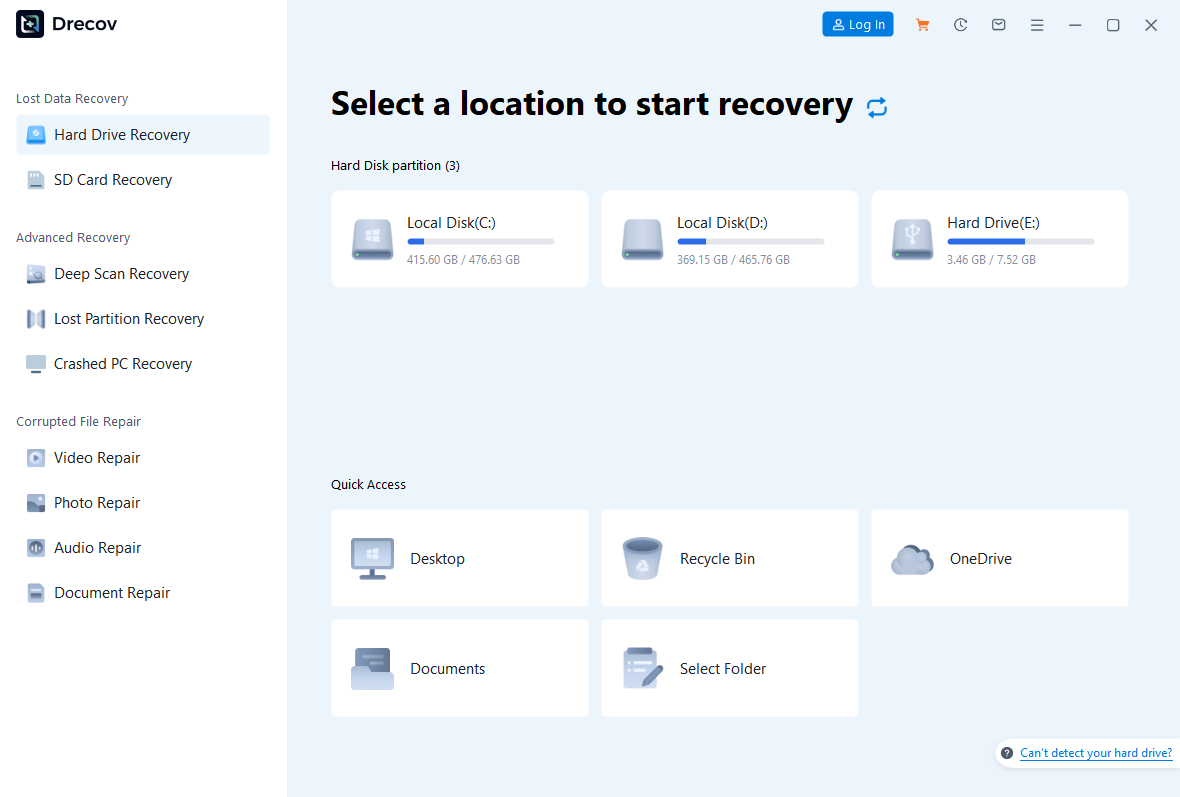
Step 1: Select the Disk That Held the Files
Open Drecov and select the original disk or lost partition location. Match its capacity with the record made before conversion. Do not select the backup disk or install the software on the affected partition.
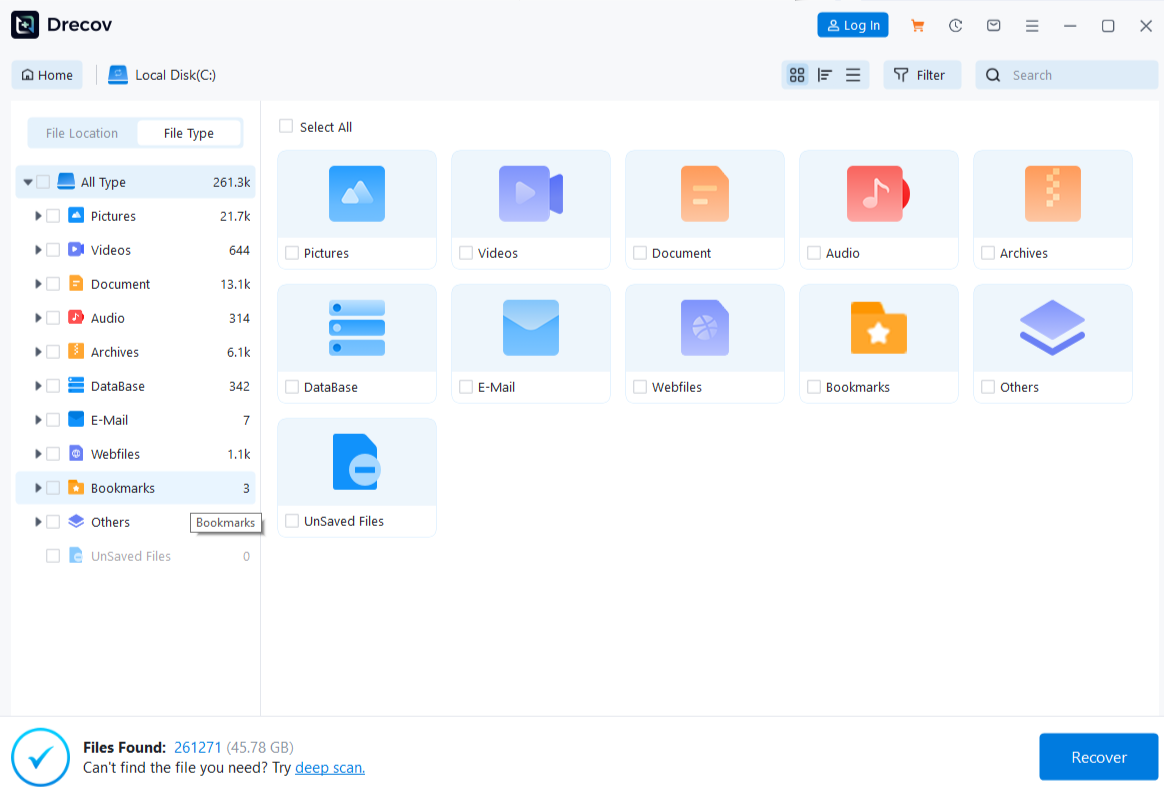
Step 2: Scan for the Former File Structure
Run Quick Scan first. Continue with Deep Scan if the deleted volume or original folders do not appear. If the disk disconnects, reports severe read errors, or becomes unstable, stop scanning and move to imaging or professional recovery.
Step 3: Preview and Export Before Rebuilding
Filter by file type, size, date, or path, then preview high-value files. Recover them to another healthy device. Check the Drecov folder or Recovery folder if results are not in the expected destination. Verify the exported set before converting, repartitioning, or formatting the source.
When to Stop DIY Work
Stop if you cannot identify the correct disk, the device disconnects, or SMART and read behavior suggest physical failure. Also stop if the only copy is on an encrypted disk and the recovery key is unavailable. Conversion cannot bypass encryption, and guessing may complicate access.
Do not treat a partition-style conversion as a cure for unstable hardware. If the disk drops offline or produces serious read errors while you are protecting files, stop conversion planning. Image the source when conditions allow, or ask a specialist to preserve it before any partition metadata changes.
Validate the Converted Disk and Its Boot Path
Check the Partition Result
Reopen Disk Management and confirm that the intended disk now reports MBR. Check the new volume sizes and file systems. Restore data only after the layout is correct and stable.
Test a System-Disk Conversion
Confirm that firmware uses the required legacy boot mode and that Windows starts without another disk attached. Test several cold starts rather than one restart. Recheck BitLocker and Windows Recovery Environment after the migration.
Keep a Rollback Window
Retain the verified backup and recovery media until applications, personal files, and normal updates work. A successful convert command proves only that metadata changed. It does not prove that every file or boot dependency survived.
Change gpt to mbr FAQs
Can Windows change GPT to MBR without deleting partitions?
The built-in Disk Management and DiskPart workflows generally require an empty disk. Treat any third-party in-place conversion as a metadata-changing operation that still needs a complete backup.
Does converting GPT to MBR format the disk?
Conversion and formatting are separate, but the normal built-in workflow deletes volumes first. That deletion makes files inaccessible even before a new file system is formatted.
Should Windows 11 use GPT or MBR?
Windows 11 systems normally use UEFI and GPT. MBR is mainly relevant to legacy compatibility. Confirm hardware and deployment requirements before changing a working layout.
Can Drecov convert the partition style?
No verified Drecov capability claims partition conversion. Drecov is for recovering accessible lost files to another healthy location before risky partition work.
Conclusion
Change GPT to MBR only for a confirmed compatibility need. Verify firmware mode, identify the exact disk, preserve files elsewhere, and regard clean, deletion, and formatting as destructive. If data has already become inaccessible, use PandaOffice Drecov for recovery before rebuilding the disk.






