







Have you ever encountered a stubborn file that refuses to budge when you press the delete key? Consequently, many users find themselves frustrated by system errors stating that a file is in use or access is denied. If you are wondering how can i delete a file without risking your system integrity, you are in the right place. While standard deletion usually takes just a couple of clicks, locked or corrupted files require advanced methods.
Furthermore, aggressively forced deletions can sometimes lead to accidental data loss. In such scenarios, having a reliable recovery plan is crucial. We highly recommend using PandaOffice Drecov data recovery software to safeguard your digital assets. This robust utility acts as a safety net, ensuring that even if you mistakenly purge an essential document while figuring out how can i delete a file, your data remains completely recoverable.
Understanding the Basics of How Can I Delete a File
To effectively manage your storage, you must understand how delete file processes operate under the hood on a standard PC. When you perform a normal deletion, Windows does not immediately erase the actual data bytes from your storage drive. Instead, it simply removes the file pointer and marks that specific sector as free space available for rewriting.
However, several common challenges can block this process. The most frequent obstacle is the “File in Use” error, which happens when a background application or system process holds an active lock on the item. Additionally, corrupted file systems, restricted administrator permissions, or malware infections can prevent you from figuring out how to delete a file on a pc using standard methods.
If you encounter data loss or accidental deletion during this process, PandaOffice Drecov data recovery software provides an exceptional solution. This software specializes in deeply scanning drives to retrieve lost sectors before they are overwritten by new system data. It is highly effective when you need to recover items after attempting to force delete file paths that contained critical information.
⚠ Warning: Install it on a drive different from the one where your data was lost to prevent overwriting.
Proven Solutions: How to Force Delete a File and Fix System Errors
When a stubborn file refuses to leave your storage drive, a structured approach is essential to reclaim your space without disrupting your operating system. Below are the definitive, step-by-step methods to resolve this issue efficiently. We feature both native Windows system terminal techniques and a comprehensive recovery strategy using PandaOffice Drecov data recovery software to safeguard your critical data throughout the process.
Method 1: Using the Command Prompt to Delete a File
When the graphical user interface fails, the Windows command-line environment offers a direct way to bypass interface locks. This is the primary method for users seeking a reliable command prompt to delete a file without installing third-party applications.
- Step 1: Press the Windows Key, type
cmdinto the search bar, right-click the Command Prompt icon, and select Run as administrator. - Step 2: Type the forced deletion command
del /f /q /afollowed by a space. - Step 3: Input the exact file path. For example, if your file is named
archive.zipon your desktop, typedel /f /q /a C:\Users\YourUsername\Desktop\archive.zipand press Enter.
The /f parameter forces the deletion of read-only files, /q activates quiet mode to suppress confirmation prompts, and /a selects files based on attributes. Please use this tool with extreme caution because files deleted via the command line bypass the Recycle Bin entirely.
Method 2: Data Recovery Method Using PandaOffice Drecov
If you executed an aggressive command and accidentally removed the wrong directory, you must act immediately before the system overwrites your data. PandaOffice Drecov data recovery software is uniquely engineered to reverse emergencies resulting from a hasty force delete file action.
⚠ Warning: Install it on a drive different from the one where your data was lost to prevent overwriting.
- Step 1: Target the Drive Location. Launch the recovery interface on your PC and navigate to the main dashboard. From the available drive list, select the specific partition, local disk, or desktop directory where the deleted file originally resided.

- Step 2: Initiate the Deep Storage Scan. Click the Scan button to launch an algorithmic search of your drive storage blocks. The software will perform a comprehensive scan to locate and reconstruct the file signatures bypassed by the Windows command line.

- Step 3: Preview and Filter the Recoverable Files. Browse the real-time generated results using the built-in file filter options. You can sort by file type, extension, or original creation date, and use the preview function to confirm that the data is intact.
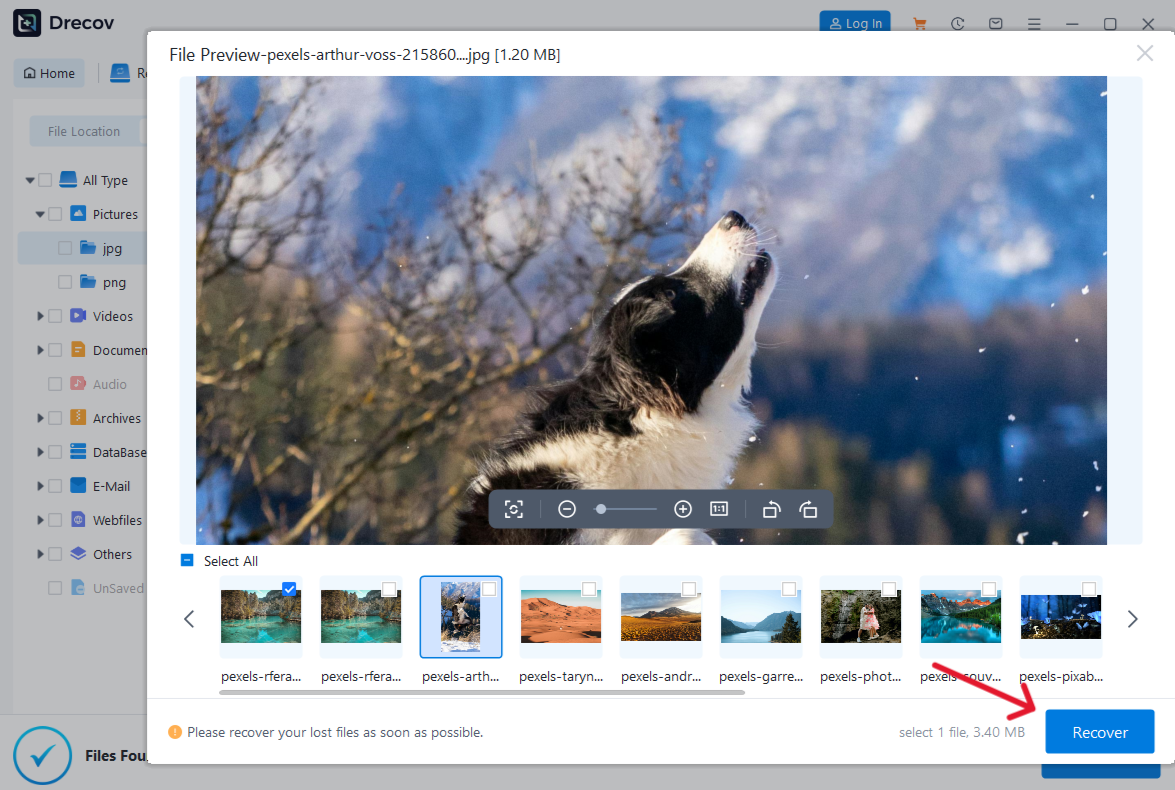
- Step 4: Execute Secure Data Recovery. Select the checkboxes next to your missing items and click the Recover button. Choose a secure storage destination, such as an external hard drive or a separate partition, to save your restored files safely.
For more specialized technical troubleshooting on Windows systems, you can explore the PandaOffice Steam No Licenses Error Fix Guide to optimize your OS performance.
Advanced Workarounds: Alternative Ways to Force Remove a File
If you are still searching for how to get rid of a file that defies standard terminal commands, alternative system techniques can help break persistent process locks. Windows offers several built-in administrative tools designed to release the background handles holding your data hostage. Consequently, exploring these alternative avenues ensures you can successfully clean your storage drive without resorting to risky third-party unlockers.
| Method Type | System Tool Used | Ideal Scenario | Risk Level |
| Process Termination | Task Manager | File is locked by an active application | Low |
| Safe Mode Deletion | Windows Recovery | Persistent system or malware locks | Medium |
| Drive Architecture Fix | CHKDSK Utility | File is unreadable due to drive corruption | Medium |
How to Force Delete a File Windows 11 via Safe Mode
Safe Mode boots Windows with a minimal set of drivers and services. Consequently, this environment prevents third-party apps from locking your documents, making it an excellent way to learn how to force delete a file windows 11 style.
- Step 1: Hold down the Shift key while clicking Restart in the Windows Power menu.
- Step 2: Navigate through Troubleshoot, select Advanced Options, click Startup Settings, and then click Restart.
- Step 3: Press the 4 key to enable Safe Mode, locate the stubborn item upon reboot, and delete it normally.
If your system issues stem from external media or configuration glitches rather than simple file locks, check out the PandaOffice PS3 ISO USB Installation Guide for detailed insights into external file structures.
Tips & Best Practices for Safe File Management
Mastering how to force remove files requires strict adherence to safety protocols to prevent catastrophic data loss.
- Always Verify the Target Path: Double-check your directory strings before executing any command line actions.
- Maintain Regular Backups: Use automated cloud storage or external drives before attempting to how to delete a file forcefully from system folders.
- Address Browser and App Glitches Promptly: Sometimes web applications lock temporary folders. For instance, if you experience download interruptions, referencing the PandaOffice ChatGPT Download Error Guide can resolve background process lockups.
- Keep Recovery Software Ready: Having PandaOffice Drecov data recovery software pre-installed prevents overwriting storage sectors during an emergency download.
Frequently Asked Questions
Why does Windows say a file is open in another program?
This happens because the operating system assigns a file lock to active processes. To resolve this and learn how to force remove a file, close all visible applications or use Task Manager to terminate background tasks.
Is a forcefully deleted file permanently gone?
Files deleted via standard forced methods are hidden from the OS but remain on the storage sectors. You can successfully retrieve them using PandaOffice Drecov data recovery software as long as new data has not overwritten those sectors.
How can I delete a file on pc if it says access denied?
This message indicates a lack of administrative permissions. To fix this, right-click the item, open Properties, navigate to the Security tab, and grant your user account Full Control privileges.
Can the command prompt to delete a file destroy my operating system?
Yes, if you input an incorrect folder path like the System32 directory. Therefore, always verify your file paths before hitting the Enter key.
Does Windows 11 handle file deletion differently than Windows 10?
The core file system architecture remains identical. However, the Windows 11 context menu hides traditional delete options under a trash can icon, confusing users looking for how to delete a file on a pc quickly.
Conclusion
Understanding how can i delete a file using both basic interface options and advanced command lines gives you complete control over your operating system. Whether you utilize a standard shortcut or a advanced terminal command, managing your storage cleanly is vital for peak PC performance.
In addition, remember that accidents happen frequently during forced cleanups. To maintain peace of mind, make PandaOffice Drecov data recovery software your go-to safety solution for managing files securely and mitigating data loss risks. For further technical details on managing file systems safely, you can consult official resources like the Microsoft Support documentation.






