







Losing access to your Gmail account or accidentally deleting critical messages can bring your daily routine to a sudden halt. Whether you are dealing with a forgotten password, a compromised account, or an emptied trash folder, finding a reliable method for google email recovery is essential.
Furthermore, many users confuse recovering a Gmail account with recovering the actual local data fragments left behind by email clients. While Google provides native tools for account restoration, localized data loss requires a specialized approach. In this comprehensive guide, we will explore standard recovery paths and introduce PandaOffice Drecov data recovery software as a premier solution for retrieving lost email databases, cached files, and local communication archives.
Understanding the Basics of Google Email Recovery
When we discuss google email recovery, we generally look at two distinct scenarios: account recovery and data recovery. Account recovery focuses on regaining access to your profile using a google recovery email. Conversely, data recovery deals with retrieving permanently deleted emails or damaged offline mail folders (like .ost or .pst files if you sync Gmail with Outlook, or local MBOX caches from Thunderbird).
Common Challenges in Email Retrieval
- Expired Trash Bin: Gmail automatically purges deleted items after 30 days.
- Missing Backup Options: Users frequently neglect to configure a google email recovery email beforehand, locking them out of standard automated wizards.
- Localized File Corruption: System crashes can wipe out local browser caches and offline mail repositories containing vital email data.
Introducing PandaOffice Drecov Data Recovery Software
When native cloud options fail, PandaOffice Drecov data recovery software provides an advanced alternative. This utility specializes in scanning storage drives for deleted data fragments, including browser history caches, localized email databases, and temporary application files.
For instance, if you accidentally wiped out your system drive or cleared your local storage, PandaOffice Drecov data recovery software can salvage those lost files. It is highly effective in scenarios involving formatted drives, partition losses, or unexpected malware attacks that target your local communication archives.
⚠ Warning: Install it on a drive different from the one where your data was lost to prevent overwriting.
Solutions to Google Email Recovery Issues
Method 1: Using Native Google Account and Trash Recovery
If you simply deleted an email or lost your password, Google’s built-in interfaces are your first line of defense.
- Check the Trash Folder: Open Gmail, click More in the left sidebar, and select Trash. If the email was deleted less than 30 days ago, select it and click Move to Inbox.
- Account Recovery Wizard: Navigate to the Google Account Recovery page. Enter your email address and follow the prompts.
- Utilize Verification Methods: Google will ask for the last password you remember or send a verification code to your pre-configured google recovery email.
Method 2: Localized File Restoration via PandaOffice Drecov
When emails are permanently purged past the 30-day limit, or if local browser data is wiped, you must look at local drive remnants. PandaOffice Drecov data recovery software can scan your storage for temporary email databases and local application data caches.
Before scanning, you might want to learn how to manage other system areas. For example, check out our guide on how to find the Recycle Bin in Windows 10 to ensure files aren’t just sitting in your system trash. Similarly, if you sync web apps, managing your browser state is crucial; read about finding the Firefox bookmarks location to see how browser data is structured.
⚠ Warning: Install it on a drive different from the one where your data was lost to prevent overwriting.
Step-by-Step Guide for PandaOffice Drecov:
- Step 1: Select the Target Location. Launch the program and select the specific drive partition or navigate to the exact local app data path.
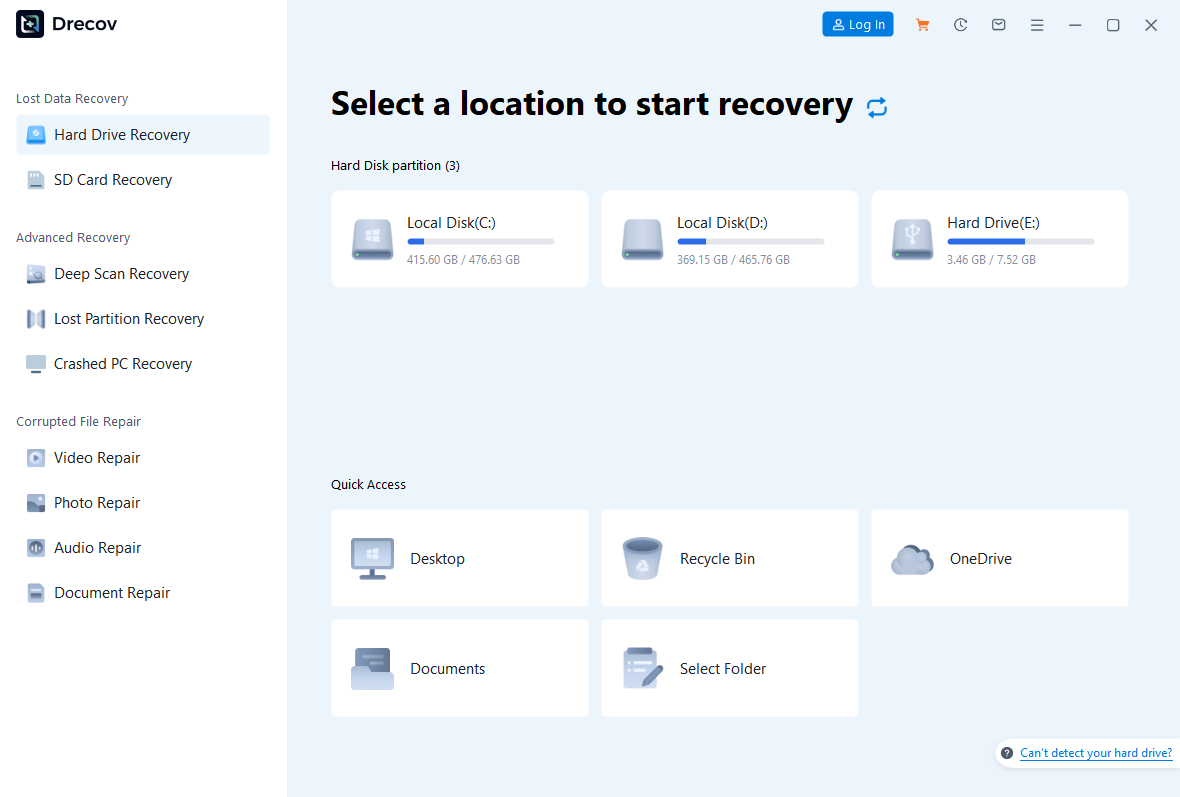
- Step 2: Run a Deep Scan. Click the Scan button. The software utilizes advanced file carving algorithms to locate lost file headers.
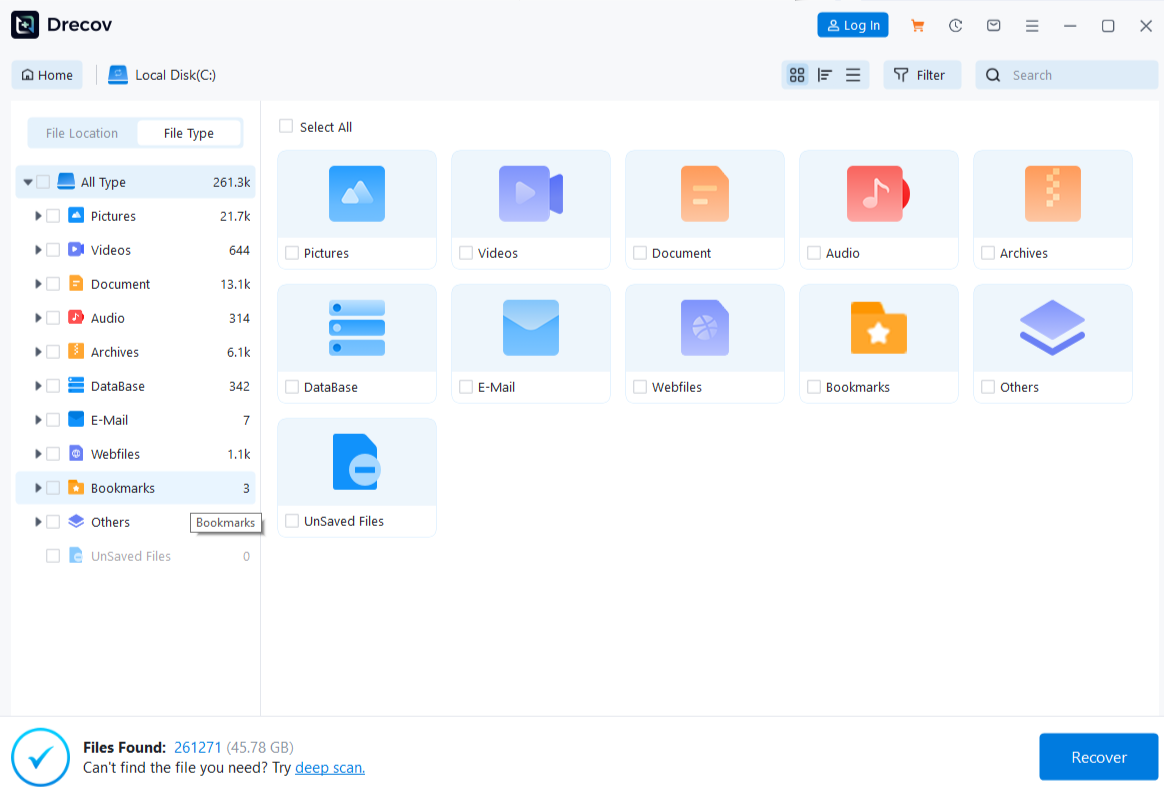
- Step 3: Preview and Filter. Use the file-type filter to isolate local database extensions or cached files.
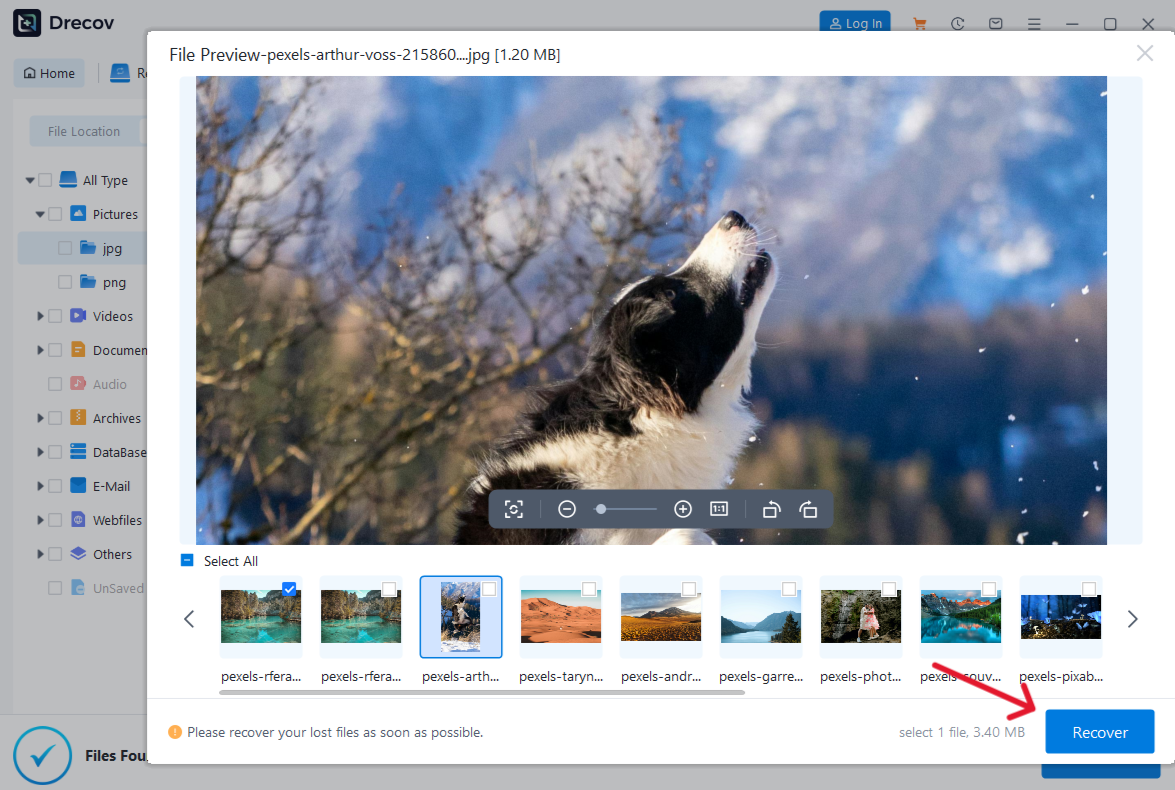
- Step 4: Recover. Select the required items and save them to an external storage drive.
Method 3: Extracting Chrome Cache Data via Registry Paths
Advanced users can inspect registry configurations and local data paths to pull offline Google Workspace data.
- Press
Win + R, typeregedit, and hit Enter to open the Registry Editor. - Navigate to the following path to verify user data directory overrides:
HKEY_LOCAL_MACHINE\SOFTWARE\Policies\Google\Chrome - Locate the
UserDataDirstring to confirm where your offline browser cache is stored. - If the local cache files are corrupt, use PandaOffice Drecov data recovery software to scan that specific directory path and restore previous versions of your database files.
Alternative or Complementary Methods
If you are looking for alternative options alongside a google email recovery email setup or specialized file recovery tools, consider these methods:
| Method | Pros | Cons |
| Google Workspace Admin Console | Can restore deleted emails up to 25 days past the default 30-day limit for enterprise users. | Requires administrator privileges; does not work for standard @gmail.com personal accounts. |
| Manual Shadow Copy Restore | Uses built-in Windows System Protection to roll back folder states. | Relies entirely on system restore points being manually turned on prior to data loss. |
| Google Takeout Archives | Provides a complete MBOX download of your historical cloud mailbox data. | Completely useless if you are currently locked out of your account or forgot your password. |
Tips & Best Practices for Data Integrity
Maintaining data integrity is far easier than executing emergency recovery procedures. Consequently, implementing a few preventive habits will save you time and stress down the road.
- Establish a Secondary Protocol: Always tie a secondary google email recovery email to your primary account. Make sure this backup address is monitored frequently.
- Enable Multi-Factor Authentication (MFA): Use app-based authenticators or hardware keys to protect your profile from unauthorized password resets.
- Regular Offline Backups: Use Google Takeout quarterly to download your mail archives. Keep these archives safe on external media. If you happen to lose regular media files during transfers, you can always refer to this guide on how to get recently deleted photos back.
- Avoid Overwriting Disks: If you realize files are missing, stop downloading new applications immediately. This prevents the operating system from writing new data over the sectors holding your deleted emails.
For additional technical insights on keeping your accounts secure, check out the Google Account Safety Guidelines to protect your workspace from future data disruptions.
Frequently Asked Questions
How can I trigger a google email recovery for an account deleted long ago?
You can visit the official Google Account Recovery portal. However, if the account was closed more than a few weeks ago, the data on Google’s cloud servers is usually permanently scrubbed and unrecoverable.
What is the purpose of a google recovery email?
A google recovery email acts as a secure external backup communication channel. Google sends verification codes, security alerts, and account reset instructions to this address whenever you get locked out of your primary mailbox.
Can PandaOffice Drecov retrieve emails directly from the Google cloud?
No, data recovery software cannot access cloud servers directly due to encryption protocols. However, it recovers local copies, browser data caches, offline attachments, and client database logs stored on your computer’s hard drive.
Why is a secondary google email recovery email showing up as masked?
Google masks your backup emails during the verification phase to prevent malicious actors from seeing your private backup addresses.
Conclusion
Successfully executing a google email recovery process relies heavily on acting quickly and choosing the correct approach. For cloud-side issues, your first step should always involve utilizing a pre-configured google recovery email alongside native account wizards. Conversely, if your data loss stems from a formatted drive, deleted cache directories, or localized file corruption, physical recovery tools become mandatory. By relying on PandaOffice Drecov data recovery software, you gain a powerful asset capable of scanning deep drive sectors to rebuild lost information.






