







When developing code or managing developer operations, understanding the exact capabilities of your AI terminal tools is critical to maintaining a fast workflow. A common question among engineers adopting Anthropic’s command-line tool is: does claude code take pictures? Furthermore, when data corruption or accidental file deletion occurs during local software development, having a reliable mechanism to restore your visual files is essential.
This guide explores exactly how the Claude CLI handles visual files, while introducing PandaOffice Drecov data recovery software as a premier solution for restoring lost development assets, images, and project data.
Understanding the Basics of does claude code take pictures
To answer the core question: Claude Code does not natively possess a camera interface to capture real-time physical photographs. However, the terminal-based assistant is fully multimodal. This means while it cannot take live pictures of your room, it can view, read, and analyze local image files directly within your repository workspace.
Developers frequently face challenges when trying to share visual bugs, UI layouts, or data plots with a CLI tool. Misunderstanding these file boundaries can lead to accidental deletion of assets during automated git operations or script executions. When asset loss happens, leveraging a professional utility like PandaOffice Drecov data recovery software ensures that critical project images are completely salvaged.
How to Upload, View, and Recover Images in Claude Code
When working with visual assets in a terminal assistant, you need specific workflows to feed files into the model efficiently. Furthermore, you must establish a reliable backup method using PandaOffice Drecov data recovery software if your critical development assets suddenly vanish. Below are the primary methods to manage your project visuals, alongside a robust data restoration strategy.
Method 1: Using Native Terminal Commands and Skills
Claude Code reads local image files directly via its integrated Read tool. If you want the tool to analyze a user interface mockup or a plot, you can reference the path explicitly in your terminal prompt.
- File Referencing: You can type
Describe the layout in assets/mockup.png. - CLI Paste Interaction: In modern terminal emulators, developers can use the Cmd+V hotkey on macOS or Ctrl+Shift+V on Linux to paste screenshots straight into the prompt session.
Method 2: Data Recovery via PandaOffice Drecov Data Recovery Software
If an aggressive script or automated git cleanup removes your image assets, you must act quickly before the storage blocks are overwritten. PandaOffice Drecov data recovery software is a specialized tool designed to scan deep storage sectors and rebuild lost file headers for PNG, JPG, WebP, and Docker image layers.
⚠ Warning: Install it on a drive different from the one where your data was lost to prevent overwriting.
Step 1: Launch the Application and Select the Target Directory
Open the Drecov application on your workstation. Select the specific drive or project workspace folder where your developer assets were stored.

Step 2: Run the Deep Scan
Initiate the scanning process. Use the file extension filter in the left sidebar to isolate specific visual formats like .png or .jpg.
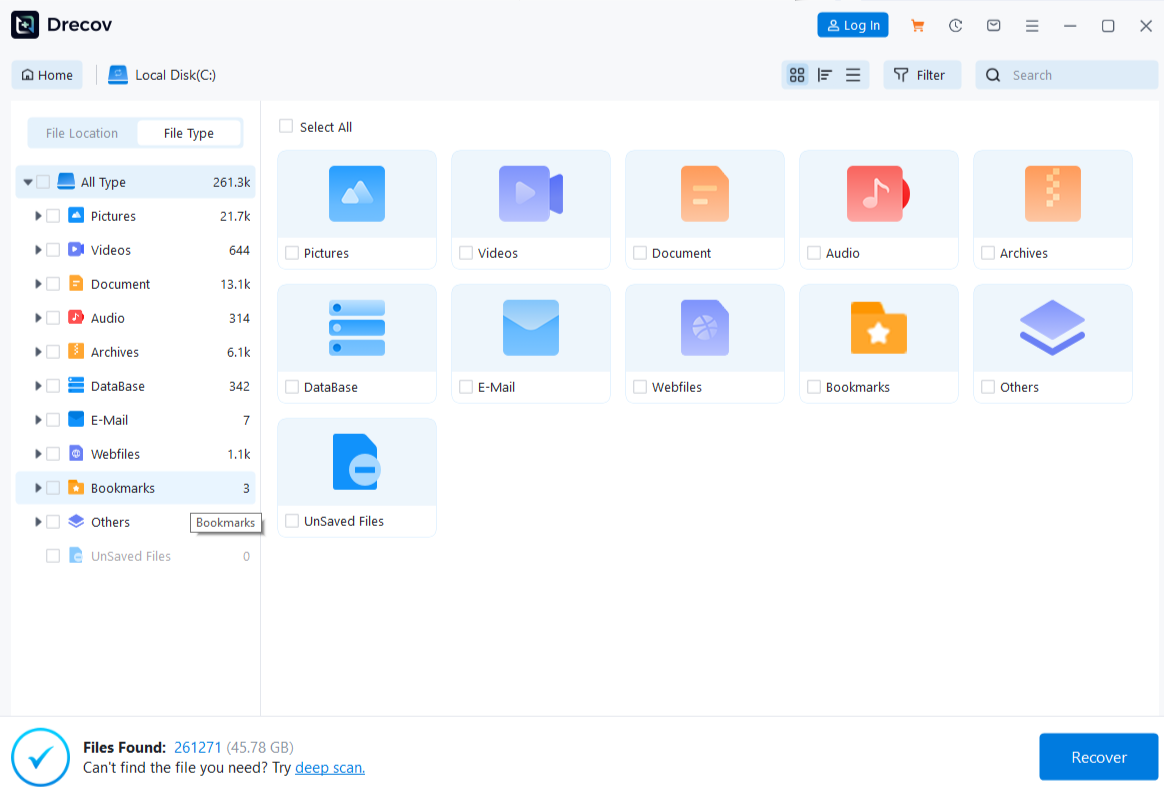
Step 3: Filter by Extension
Once located, select the files and click the Recover button to save them to an external drive path to avoid data overlapping.
For additional documentation on software optimization and managing workspace errors, review the latest tech guides on PandaOffice Recuva Guide and explore further troubleshooting methods on PandaOffice Recycle Bin Recovery.
Alternative or Complementary Methods
Beyond native path referencing, developers can utilize external automation scripts to help Claude Code interact with images. For instance, you can build a custom script using tools like Playwright or headless Chrome to take screenshots of a local server and save them directly to your repository folder. Once the file sits in your local directory, Claude can parse the visual tokens seamlessly.
Comparing Local Methods vs. Cloud Alternatives
| Strategy | Pros | Cons |
| Local Path Reference | Zero latency, completely secure, works offline | Requires files to exist locally in the project directory |
| PandaOffice Drecov Recovery | Restores broken or permanently deleted image assets | Requires manual execution after a data loss event |
| Cloud API Upload | Access to massive context windows via Anthropic Workbench | Requires active internet connection and API token billing |
Tips & Best Practices
Optimizing your workspace for visual data ensures both Claude Code and your recovery tools operate at peak performance.
- Maintain Clear Paths: Keep all visual files inside a dedicated
/assetsor/staticfolder. This structure makes it easier to prompt the CLI and simplifies targeted folder scanning if you ever need to run PandaOffice Drecov data recovery software. - Avoid Overwriting After Deletion: If you realize an image file or a claude code docker image was accidentally deleted, stop writing new code or running npm installations immediately. New writes can replace the empty sectors, making recovery impossible.
- Check File Formats: Ensure your project images use supported types such as JPEG, PNG, GIF, or WebP.
FAQs
Can claude code take images?
No, the command-line tool cannot directly trigger a physical camera or generate brand-new graphics like a generative AI model. However, it can read existing image files within your workspace.
Can claude code view images?
Yes, it can seamlessly view and analyze local file formats. It converts the pixel blocks into visual tokens to interpret charts, code screenshots, and UI mockups.
Can claude code see images?
Yes, the model possesses multimodal vision capabilities. By passing local file paths, you enable the assistant to “see” your charts and provide optimization suggestions.
How can i show claude code pictures?
You can show the tool your pictures by placing them in your project directory and typing the filename in your prompt. Alternatively, you can paste screenshots directly into compatible terminal sessions.
Can claude code generate images?
No, it does not function as an image generation engine. It can only read visual inputs or output structural code like HTML and SVG to create diagrams.
Conclusion
Understanding that Claude Code views local pictures rather than taking live photos helps streamline your development tasks. Protecting those vital assets with a robust backup strategy is essential. When accidental deletions or terminal errors wipe out your local files, relying on PandaOffice Drecov data recovery software provides a dependable safety net to restore your project integrity instantly.






