







Short answer: couldn’t update the system reserved partition usually points to a specific Windows state rather than one universal fault. For the Windows Update partition case, start by recording the exact message, checking whether the affected disk or file is stable, and protecting important data before any repair that writes to the source. For the Windows Update partition case, if the problem concerns startup, a partition, a document, or a game save, the safest next step depends on what Windows still detects. Couldn’T Update The System Reserved Partition does not mean you should immediately format, delete a partition, rebuild boot files, or reinstall Windows.
What the message or symptom actually tells you for the SRP update error
The wording around couldn’t update the system reserved partition matters. When addressing a Windows Update partition issue, note when the error appears, what changed immediately beforehand, and whether the same failure occurs with a known-good file, account, cable, or boot entry. Keep in mind that a repeatable software-only symptom differs significantly from a drive that disappears, reports incorrect capacity, clicks, or disconnects. These physical or connection signs suggest instability, and repeated update attempts can turn a recoverable logical problem into a far more complex one.
Separate a configuration problem from storage trouble for the SRP update error
Check detection before changing anything. In Windows Update partition scenarios, firmware, Disk Management, File Explorer, Event Viewer, and the application may each expose a different system layer. Be sure to record the disk model, capacity, partition style, drive letter, file size, and exact error message. If the source remains stable throughout, copy accessible work to another healthy location. However, if reads stall or the device drops out, stop repeated scans and consider a controlled image or professional recovery instead.
A decision table for the next safe move for the SRP update error
The table below keeps the response proportional to the evidence.
| Observation | Likely branch | Safer next move |
|---|---|---|
| Stable and detected | Logical fault likely | Copy or recover files, then repair |
| Detected but wrong size | Possible metadata or hardware issue | Stop writes and assess stability |
| Missing or deleted files | Recovery branch | Use Drecov to another healthy drive |
| Repeated disconnects or clicks | Physical instability | Stop scanning; image or seek help |
Built-in checks that do not erase the source for the SRP update error
Use the least invasive check that answers the current question. For the Windows Update partition case, open logs, compare a backup, test a duplicate, start an application in its supported safe mode, or inspect a configuration report. Avoid stacking commands. For the Windows Update partition case, cHKDSK, DiskPart clean, formatting, partition deletion, reset, and reinstall all modify storage or system state; they belong after needed files are copied or recovered.
When files are missing, protect them before repair for the SRP update error
Stop writing to the source location. If you are dealing with a Windows Update partition issue, avoid installing recovery software onto the affected partition or restoring recovered files there. Instead, prepare a separate healthy drive with sufficient free space. Depending on the drive’s condition, software recovery is reasonable if the source remains stable; however, if it shows physical damage or repeatedly disconnects, stop direct scanning and rely on disk imaging or a professional specialist
How Drecov fits this situation for the SRP update error
PandaOffice Drecov is Windows data recovery software for PCs, HDDs, SSDs, external drives, USB drives, SD cards, and memory cards. In Windows Update partition scenarios, it can locate photos, videos, documents, emails, audio files, and archives using read-only recovery, Quick Scan, Deep Scan, filtering, and preview features. The software also supports lost partition recovery as long as the underlying storage remains readable. Throughout this article, Drecov serves as a tool to recover local files before executing risky repairs—it does not fix drivers, rebuild Windows configurations, remove malware, or repair hardware, nor can it recover overwritten data.
⚠ Warning: Install it on a drive different from the one where your data was lost to prevent overwriting.
Step 1: Open Drecov and select the original location for the SRP update error
Open Drecov and choose the original disk, partition, folder, or lost-partition source where the couldn’t update the system reserved partition files were stored. For the Windows Update partition case, do not begin by installing to that source. For the Windows Update partition case, keep the destination drive separate and healthy. For the Windows Update partition case, if Drecov cannot keep the device connected, stop and move to imaging or professional help.

Step 2: Run Quick Scan first for the SRP update error
Start Quick Scan and let it complete without browsing, saving, or repairing the source. For the Windows Update partition case, quick Scan is the efficient first pass for recently deleted or logically missing entries. For the Windows Update partition case, if the result list is incomplete but the device is stable, continue to the deeper pass rather than changing the file system.

Step 3: Use Deep Scan only on stable media for the SRP update error
Choose Deep Scan only when the storage is consistently detected and reads do not produce alarming delays, clicking, or repeated disconnects. For the Windows Update partition case, a deep scan can place sustained read load on a failing device. Stop if stability worsens.
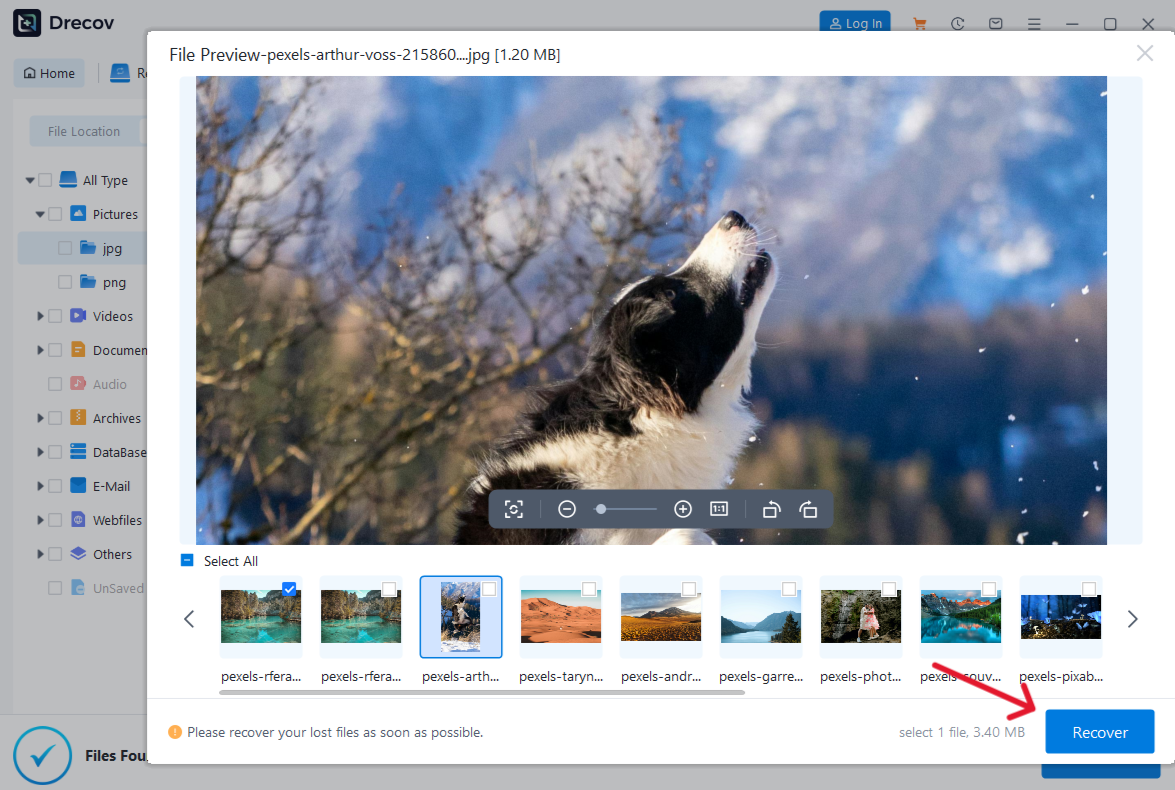
Step 4: Filter, locate, and preview for the SRP update error
Filter by file type, former path, filename fragment, date, or the application folder associated with couldn’t update the system reserved partition. For the Windows Update partition case, preview representative files before selecting a large set. For the Windows Update partition case, a successful preview shows that the displayed sample can be decoded; it does not prove every file is intact.
Step 5: Recover elsewhere and verify for the SRP update error
Recover to another healthy drive, never back to the source. For the Windows Update partition case, if the output is not where expected, check Drecov Folder or Recovery Folder. For the Windows Update partition case, open representative documents, images, archives, audio, or save files, compare names and sizes, and make a second backup. For the Windows Update partition case, only after verification should you repair, reset, repartition, format, initialize, or reinstall.
Mistakes that make this problem harder for the SRP update error
The most damaging shortcuts around couldn’t update the system reserved partition are deleting partitions to recreate them, accepting a format prompt, running repair commands before copying data, installing tools on the source, and treating one successful boot or open as proof that the disk is healthy. For the Windows Update partition case, keep the original evidence until the replacement workflow has been tested.
Frequently asked questions for the SRP update error
Can I fix couldn’t update the system reserved partition without losing files? for the SRP update error
For the Windows Update partition case, often, yes, if the storage is stable and you choose non-destructive checks first. For the Windows Update partition case, the risk rises when you format, repartition, reset, or repeatedly write to the source.
Should I scan a clicking drive? for the SRP update error
No. For the Windows Update partition case, stop direct scanning and seek imaging or specialist help.
When should I use Drecov? for the SRP update error
For the Windows Update partition case, use it when local files are missing or inaccessible on readable Windows storage and you have another destination for recovered data.
Does recovery repair the original problem? for the SRP update error
No. Recovery extracts files. For the Windows Update partition case, it does not repair Windows, a driver, a partition table, or physical media.
Evidence to collect before changing the system for the SRP update error
Write down the first time the symptom appeared, the last successful action, and whether another account or another computer sees the same source. For the Windows Update partition case, for a boot problem, photograph firmware storage information and note the Windows edition. For the Windows Update partition case, for a document or game-save problem, preserve the original filename, parent folder, extension, and file size. For the Windows Update partition case, these details prevent a repair attempt from quietly changing the question you are trying to answer.
For the Windows Update partition case, backups should be checked from a second device or a read-only view where possible. For the Windows Update partition case, cloud synchronization can show an older or newer version without proving that the local copy is intact. Compare timestamps and open a sample. For the Windows Update partition case, if the only copy is on the affected storage, treat every repair prompt as a decision with a possible write operation. For the Windows Update partition case, cancel prompts that ask to initialize, format, replace, or delete until a usable copy exists.
Choose one test at a time for the SRP update error
Changing several variables at once makes the result difficult to interpret. For the Windows Update partition case, disconnect unnecessary USB devices, use a known-good cable, or start the application without optional extensions only when that test matches the symptom. For the Windows Update partition case, after each test, record whether detection, access, or stability changed. For the Windows Update partition case, a change that makes the device less stable is a reason to return to data protection, not a reason to add another command.
When the source is readable, copy small representative files before attempting a large transfer. A copy that repeatedly stops at one area can indicate a media or file-system problem, so avoid retrying indefinitely. Instead, preserve what succeeds, note the failing path, and move to recovery or imaging. While recovery software can search logical remnants, it cannot make damaged heads, controllers, cables, or flash cells reliable.
After recovery, keep the original untouched for the SRP update error
Open recovered files from the destination, not from the source. For the Windows Update partition case, test different formats and folders, extract a sample archive, and load a game save only after making a duplicate. For the Windows Update partition case, if the files are valuable, create a second backup on a different device. For the Windows Update partition case, only then should you consider repairing Windows, rebuilding a partition, deleting a stale lock, recreating media, or reinstalling an application. For the Windows Update partition case, a successful recovery is the checkpoint that makes later troubleshooting safer.
Additionally, keep a written record of every setting, command result, and destination path. This practice makes rollback clearer, helps support staff understand the sequence, and prevents a failed experiment from being repeated. If the source becomes less stable at any point, stop immediately and preserve the last readable copy rather than extending the test.
Maintain this careful sequence for every retry: observe, record, protect, then test. This approach keeps the evidence readable and makes a later handoff much easier. Do not trade a few minutes of convenience for an irreversible write; preserve the original state until the recovered copy opens normally.
For related planning about the SRP update error, see Drecov data recovery, recently deleted file recovery, why recovery needs another drive, and how to verify recovered files. For the SRP update error, consult the official reference for platform-specific behavior.
Conclusion
Couldn’T Update The System Reserved Partition calls for evidence before repair. For the Windows Update partition case, protect the source, separate logical symptoms from physical instability, and use built-in checks only after important files are safe. For the Windows Update partition case, when local data is missing on a readable device, Drecov provides Quick Scan, Deep Scan, filtering, preview, and recovery to another healthy location. For the Windows Update partition case, verify the recovered copy first, then decide whether the original system or storage needs repair.






