







Operating system crashes and sudden data loss can be incredibly frustrating. When your ChromeOS device displays a “ChromeOS is missing or damaged” error, the official chromebook recovery utility is usually your first line of defense. However, what happens to your local downloads, offline files, and critical documents when your system fails?
While the standard chrome recovery utility restores the operating system, it completely wipes your local storage. To protect your files, you need a comprehensive strategy. In this guide, we will explore how to use the chromebook recovery tool effectively. Furthermore, we will introduce PandaOffice Drecov data recovery software—a powerful solution designed to retrieve lost files when standard system recovery falls short.
Understanding the Basics of Chromebook Recovery Utility
The chromebook recovery utility is a free Google extension that creates a recovery image on a USB drive or SD card. It is designed to reinstall ChromeOS when the operating system becomes unstable or corrupted.
Common Issues and Challenges
- OS Corruption: Triggered by interrupted updates or file system errors.
- Local Data Erasure: Running the chromeos recovery process formats the internal drive, deleting all un-synced data.
- Hardware Limitations: Chromebooks use embedded storage (eMMC or SSD), making physical data extraction difficult if the device fails to boot.
Introducing PandaOffice Drecov Data Recovery Software
When system corruption threatens your files, PandaOffice Drecov data recovery software serves as a vital safety net. It specializes in scanning deep within storage sectors to rebuild lost partitions and pull files back from the brink.
Whether you need to know where is Recycle Bin in Windows 10 for a connected drive, or you are trying to figure out where is the Firefox bookmarks location after a browser crash, Drecov handles complex directory structures with ease.
⚠ Warning: Install it on a drive different from the one where your data was lost to prevent overwriting.
Solutions to Chromebook Recovery and Data Loss Issues
Fixing a corrupted Chromebook requires a structured approach. Below are the step-by-step methods categorized by technical complexity.
Method 1: The Standard ChromeOS Recovery Process
This method reinstalls the operating system using the official chromebook recovery tool.
Warning: This process will completely erase all local data on your Chromebook.
- Step 1: On a working computer (Windows or Mac), open the Google Chrome browser.
- Step 2: Download and install the chromebook recovery utility extension from the Chrome Web Store.
- Step 3: Launch the extension and click Get Started.
- Step 4: Select your Chromebook model from the list or type the model number displayed on your error screen.
- Step 5: Insert a USB flash drive or SD card (minimum 8GB) into the working computer.
- Step 6: Select the USB drive from the dropdown menu and click Create now.
- Step 7: Once complete, eject the USB drive and insert it into the damaged Chromebook. The device will automatically detect the media and begin the chromeos recovery process.
Method 2: Advanced File Extraction via PandaOffice Drecov
If your Chromebook can still boot or if you have removed its SSD to read it via another computer, you must extract your files before running the destructive chromebook recovery utility. This is where PandaOffice Drecov data recovery software becomes essential.
- Step 1: Connect the storage drive or the external backup drive containing your Chromebook local cached sync files to a Windows PC and download and launch PandaOffice Drecov data recovery software.
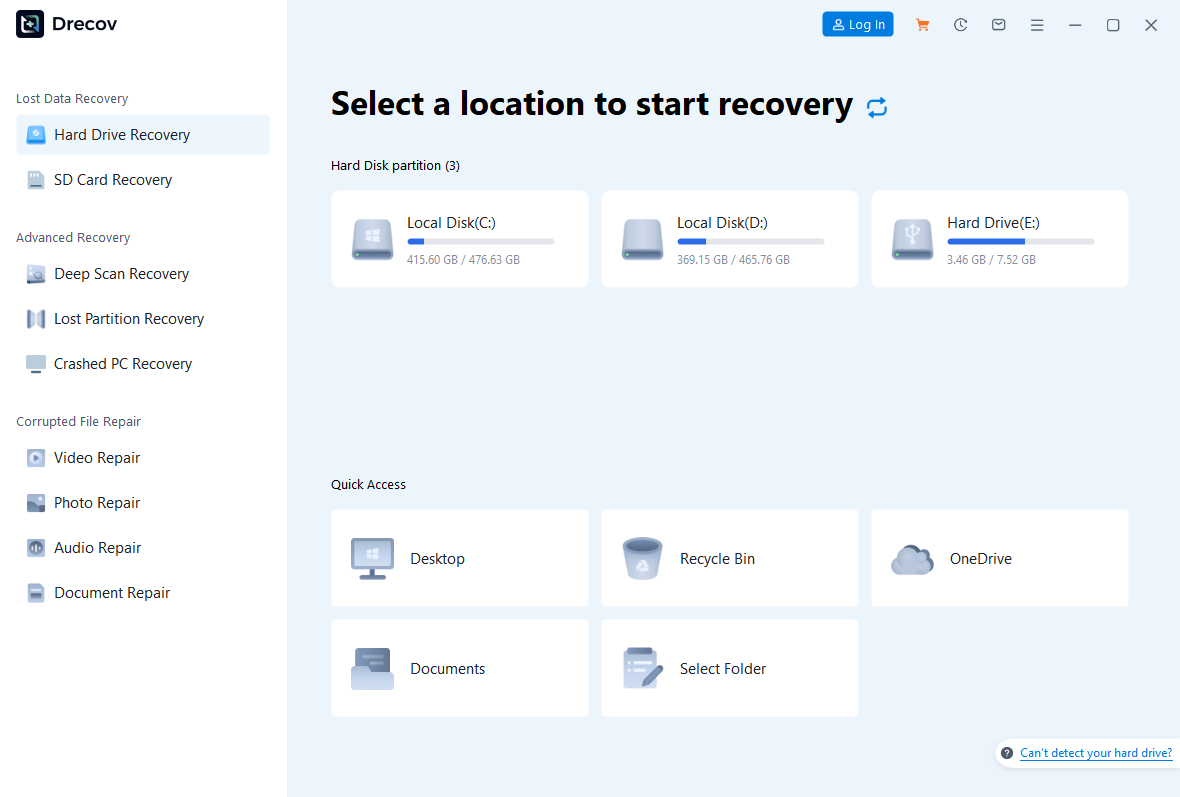
- Step 2: Select the target drive from the software dashboard and click Scan.
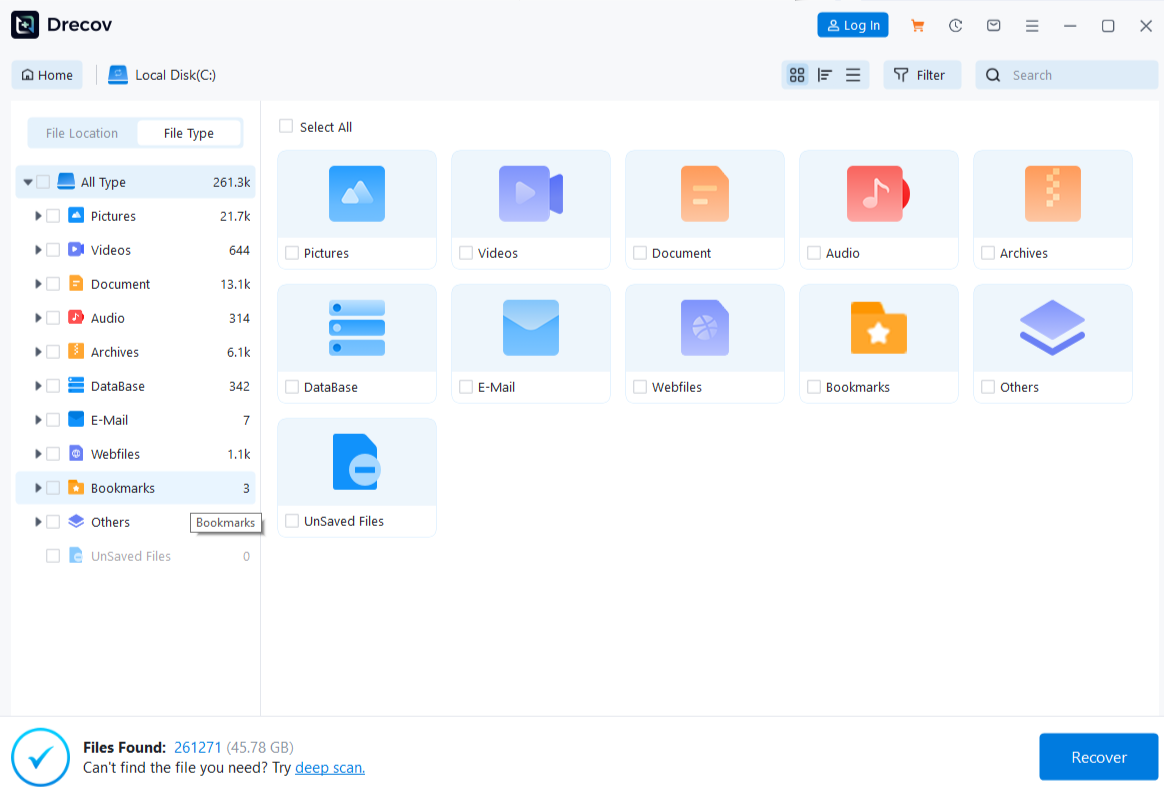
- Step 3: Preview the found items. Drecov organizes data by file type, making it easy to spot documents, videos, or local browser data.
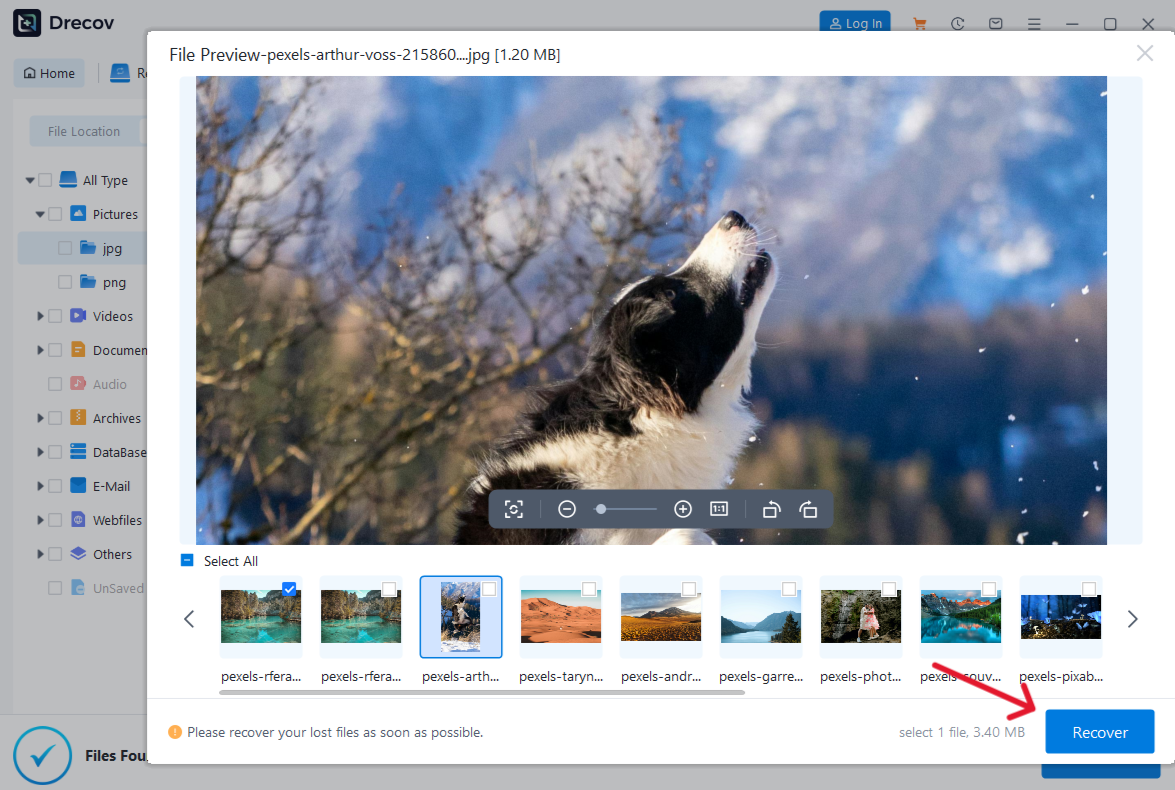
- Step 4: Select your critical files and click Recover to save them securely to a separate external drive.
Method 3: Hard Reset and NVRAM Flush
Sometimes, the “missing or damaged” error is a hardware communication glitch rather than a completely broken OS. You can force the motherboard to re-detect the storage sectors before deploying the chrome recovery utility.
- Step 1: Turn off your Chromebook completely.
- Step 2: Press and hold the Refresh key ($\circlearrowright$) and tap the Power button simultaneously.
- Step 3: Hold the Refresh key until the Chromebook boots up completely.
- Step 4: If the system boots into developer mode or a recovery loop, press
Ctrl + Dto trigger the verification screen, then pressEnterto enable standard OS verification.
Alternative or Complementary Methods
While the official chromebook recovery tool is highly effective, alternative deployment options exist depending on your environment.
| Method | Pros | Cons |
| Official Chromebook Recovery Utility | 100% free, official Google support, exact OS matching. | Completely wipes local storage; requires a secondary working computer. |
| Network Recovery (Cloud Restore) | No USB drive required; restores directly over Wi-Fi on supported newer models. | Highly dependent on fast internet; fails if Wi-Fi drivers are corrupted. |
| Manual Image Flashing (Rufus/Etcher) | Allows deployment of older ChromeOS versions or custom Chromium builds. | High risk of bricking; requires manual download of raw .bin recovery images. |
Tips & Best Practices for Data Integrity
- Activate Cloud Sync Immediately: ChromeOS is designed to be a cloud-first system. Ensure your Settings > Account sync is turned on for all folders.
- Handle Local Media Safely: If you accidentally delete external media files while using a Chromebook, read our guide on how to get recently deleted photos back right away to prevent data overwriting.
- Verify USB Drive Integrity: Always use a high-quality USB 3.0 drive for the chromebook recovery utility. Cheap, unbranded flash drives often fail during the verification phase of the image creation.
Frequently Asked Questions
How long does the chromebook recovery tool take to complete?
The creation process takes about 5 to 10 minutes depending on your internet speed. The actual installation on the Chromebook takes roughly 15 minutes.
Will running a chromeos recovery delete my Google Drive files?
No. Cloud-stored files remain perfectly safe. However, any files located in your local “Downloads” folder will be permanently erased.
Can I run PandaOffice Drecov data recovery software directly on a Chromebook?
No, ChromeOS does not natively support .exe installation files. Consequently, you must connect the storage media or the synced backup drive to a Windows or Mac computer running PandaOffice Drecov data recovery software to perform deep sector scanning.
What should I do if the chrome recovery utility gets stuck on “Writing”?
Disable your antivirus software temporarily on your Windows computer. Furthermore, ensure you are running the browser as an Administrator, as security permissions frequently block raw disk writing.
Conclusion
Resolving OS errors does not have to mean losing your valuable data forever. The official chromebook recovery utility is an excellent tool for fixing system-level corruption and restoring your machine to peak performance. However, because it wipes your local drive, pairing it with a robust recovery strategy is vital. By implementing proactive cloud syncing and keeping PandaOffice Drecov data recovery software ready for unexpected emergencies, you protect both your operating system and your personal files.






