







An autoplay any video on site extension cannot reliably override every browser and website rule. Chrome and Firefox enforce autoplay policies to protect users from unwanted sound, data use, and disruptive playback. Start with built in site permissions. Install an extension only when a legitimate workflow needs broader control, and review every requested permission before approval.
Quick Answer
Muted video often receives more permissive treatment than video with sound. Chrome may allow sound after user interaction or established media engagement. Embedded players can also depend on iframe permissions set by the site owner. An extension cannot repair a missing stream, expired session, unsupported format, account restriction, or server side block.
Understand the Main Limitation
Chrome documents its Chrome autoplay policy. Muted autoplay is generally allowed, while sound may require interaction, prior engagement, installation, or delegated iframe permission. These rules explain why the same page behaves differently across users and profiles. They also show why a promise to force every video to autoplay is unrealistic.
Use the Safest Available Method
Before adding an extension, click the site information control near the address bar and review sound, autoplay, and media settings. Test the page after a normal click. Update the browser and disable battery saving restrictions that pause background tabs. In Firefox, open Privacy and Security, find Autoplay permissions, and set a site specific exception when appropriate.
Check Permissions and File Locations
Extension permissions matter more than the feature name. An add on that can read and change data on every website may see page content and modify requests. Prefer a narrow site list, a known developer, clear documentation, recent maintenance, and a public privacy policy. Remove an extension that inserts advertisements, redirects searches, or downloads files unexpectedly.
Avoid Common Risks
A typical situation occurs when a training display must start a muted video after a kiosk page opens. Use the browser or enterprise policy designed for managed devices rather than a consumer extension. Test after restart, provide visible controls, and do not assume playback succeeded. A page should show a manual Play button when autoplay is rejected.
Typical Scenario
Autoplay and downloading are separate. Allowing playback does not grant permission to copy a stream. Avoid extensions that combine autoplay with unrestricted downloading or digital rights bypass claims. The guide to safer browser video handling explains safer handling when media is saved locally. If expected files disappear, use find browser media files to search before scanning a drive.
Troubleshoot the Result
Back up valuable local recordings before changing profiles, clearing browser data, or removing applications. Browser cleanup should not erase normal videos stored outside profile folders, but a user may have placed project files in Downloads or a temporary location. If deletion occurred, stop writing to that source and consult recover missing video files.
Choose the Right Action
| Situation | Recommended Action | Main Risk |
|---|---|---|
| Content remains available in the original service | Use the official save or management control | Confusing a cloud item with a local file |
| A local file exists but fails | Copy it to a healthy drive and test the copy | Overwriting or repeatedly converting the original |
| A local file was deleted | Stop writing to the source and begin recovery | New data overwriting recoverable sectors |
Protect Local Video Files Before Troubleshooting
Browser fixes, editing changes, cache cleanup, and storage moves can affect local files. Create a separate copy of any irreplaceable recording before you change settings. Keep the original file untouched and test edits on a duplicate. If a drive disconnects, reports read errors, or becomes unusually slow, stop using it. A failing device needs imaging or professional help rather than repeated repair attempts.
Check the Recycle Bin, cloud storage, application export folders, and recent project folders first. Search by file type and modification date when the original name is unknown. Do not install recovery software on the partition that held a deleted file. Installation can write new data over recoverable sectors. Save every restored file to another healthy device.
Recover Missing Media with PandaOffice Drecov
PandaOffice Drecov is a Windows data recovery tool for PCs, USB drives, SD cards, memory cards, hard drives, SSDs, and external drives. It supports photos, videos, documents, emails, audio files, and archives. Its read only recovery mode scans the selected source without using that source as the save destination. Quick Scan looks for recently deleted records, while Deep Scan searches more broadly. Preview before recovery helps users check selected results before saving them.
⚠ Warning: Install it on a drive different from the one where your data was lost to prevent overwriting.
Recover Missing Video Files with Drecov
- Step 1: Open PandaOffice Drecov and choose the original location where the video or project asset disappeared. Select the correct PC folder, USB drive, SD card, memory card, hard drive, SSD, or external drive.

- Step 2: Run Quick Scan first when the file disappeared recently through deletion, a failed transfer, an editing error, or an unexpected application close.
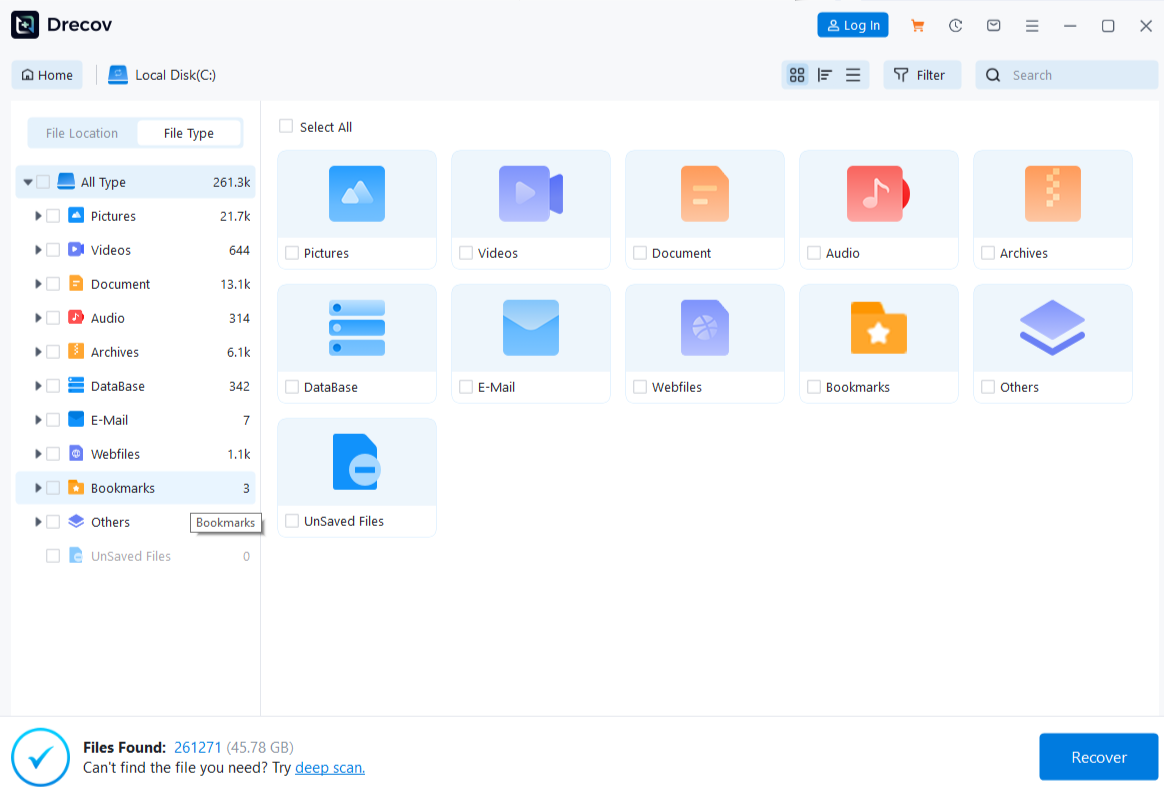
- Step 3: Continue with Deep Scan when Quick Scan misses the required file. Deep Scan is more suitable for older deletion, formatting, damaged folder records, or an unclear original path.
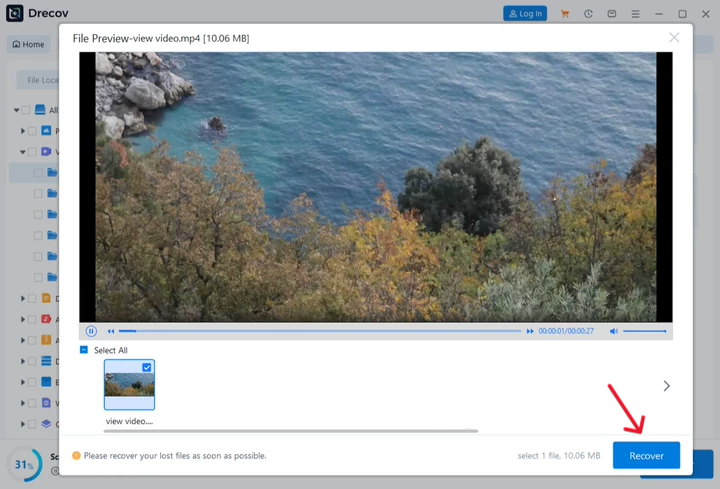
- Step 4: Preview before recovery. Compare the file name, date, size, thumbnail, duration, and playable content so you can select the correct result.
- Step 5: Recover selected files to another healthy drive or external storage device. Never save them to the source location because new writes may overwrite other recoverable data.
- Step 6: Open the destination and verify every restored file. Check the Drecov folder or Recovery folder if the results do not appear in the expected location.
Choose Quick Scan or Deep Scan for Video Recovery
Quick Scan is the best starting point for recent deletion, failed downloads, accidental moves, and interrupted editing. It can return useful results quickly when file system records remain available. Deep Scan searches the selected storage more thoroughly and may locate media after formatting or older loss. Start with Quick Scan, review its results, and continue with Deep Scan only when necessary.
Verify Recovered Files Before Reusing the Source
Open each recovered video from beginning to end. Check the duration, resolution, sound, seek behavior, and final frames. A file that displays a thumbnail may still contain damaged segments. Keep the source device unchanged until essential files pass verification. After verification, create a second backup. Only then should you repair, format, or reuse the original storage device.
Practical Guidance for Autoplay Any Video On Site Extension
For autoplay any video on site extension, start with the official application control and confirm the destination before changing tools.
Frequently Asked Questions
Can every missing video be recovered
No. Recovery depends on whether the content still exists in a service, a backup, device trash, or unoverwritten local sectors. Physical damage and overwritten data require different expectations. Stop using the affected storage as soon as loss is discovered.
Should I use a third party downloader or repair tool
Use official controls first. Review the developer, permissions, privacy policy, and download source before trusting another tool. Avoid services that request passwords, login codes, broad browser access, or payment before showing a verifiable result.
Where should recovered files be saved
Save them to another healthy drive with enough free space. Do not use the source device because new writes can overwrite other recoverable data. Verify the result before repairing or reusing the source.
Review Extension Permissions Before Installation
Keep a small record of each change, including the setting, original value, result, and file location. This makes troubleshooting reversible and prevents several changes from hiding the real cause. Restart only the affected application first. Reboot the computer when a driver, browser update, or file lock requires it.
Use Browser Autoplay Controls First
Use descriptive file names and a stable folder structure after the task succeeds. Separate originals, working files, and exports. A second copy on another device protects against accidental deletion and hardware failure. Cloud sync can add convenience, but it should not be the only copy of an irreplaceable recording.
Test Muted and Audible Video Separately
Treat unexpected executable files, browser prompts, and login requests as warning signs. A media task should not require an unknown service to control the entire browser or obtain an account password. Cancel suspicious downloads, scan the computer, and return to official application controls.
Remove Suspicious Autoplay Extensions
When a result differs across devices, compare the account, network, application version, permissions, and storage destination. Change one factor at a time. This method produces a clearer diagnosis than reinstalling several tools or clearing every setting at once.
Protect Local Browser Media
Confirm available disk space before saving, exporting, or recovering a large video. Low space can interrupt a transfer and leave an incomplete file that still shows a normal name. Keep enough room for the source, temporary processing data, and the final result. Delete temporary material only after the finished file passes verification.
With autoplay any video on site extension, keep an untouched original or backup before editing, moving, deleting, or repairing local media.
Conclusion
Start with the official application or browser method, preserve valuable originals, and verify every saved result. When a local file is truly missing, stop writing to its source. PandaOffice Drecov can scan supported Windows storage and recover selected results to another healthy location without promising that every file will return.






