







Losing an important Word file can be stressful, especially when it disappears unexpectedly. Many users ask, “how do I recover a deleted Word document?” or “how to recover deleted Word documents on Mac?” Fortunately, there are multiple ways to restore lost Word documents, ranging from built-in system recovery methods to specialized software solutions. In this guide, we will explain common causes of document loss, provide step-by-step recovery methods, and recommend the most effective approach for permanent recovery. By following these instructions, you can recover deleted Word document safely and efficiently, whether you are on Windows or Mac.
Common Causes of Deleted Word Documents
By understanding why Word deletes documents, you can prevent future data loss. Common causes include:
- Accidental deletion: Users may delete files unintentionally or clear folders without checking their contents.
- Unsaved work: Word crashes, power outages, or system errors can cause documents to disappear before saving.
- Corruption: Hard drive issues, viruses, or software errors can corrupt Word files, making them unreadable.
- Operating system updates: Occasionally, updates may conflict with Word’s autosave functions or file permissions.
- File system errors: Issues like formatting a disk or SD card can erase all saved documents without warning.
⚠️Warning: Saving new files or recreating documents in the same location can reduce the chance of recovery. Stop using the drive or folder where the document was stored until you attempt recovery.
By identifying the cause, you can choose the most suitable recovery method. For minor losses, built-in Word and system tools are often enough. For severe or permanent deletions, professional recovery software like Drecov may be necessary.
How to Recover Deleted Word Documents on Windows
Windows offers several ways to restore lost Word files without third-party software. Once you understand why Word documents get deleted, you can focus on restoring them using practical solutions. In many situations, the files are not permanently lost, and built-in system tools can help you recover them safely. Starting with these options helps minimize risk and avoids unnecessary software installation. The following methods are beginner-friendly and rely on features included with your system.
Using the Recycle Bin
When you delete a Word document, it often goes to the Recycle Bin.
- Open the Recycle Bin on your desktop.
- Search for your deleted document using the file name or date.
- Right-click the file and select Restore.
- The document will return to its original folder.
Pros: Quick, no software needed
Cons: Only works if the file was not permanently deleted or the bin was emptied
Restoring from File History
Windows File History automatically backs up files in Documents, Pictures, and Desktop folders.
- Navigate to the folder where the Word document was last saved.
- Right-click inside the folder and choose Restore previous versions.
- Select a version dated before the deletion and click Restore.
Pros: Recover older versions or accidentally overwritten files
Cons: Must have File History enabled before deletion
Using Microsoft Word AutoRecover
Word’s AutoRecover feature saves temporary files automatically.
- Open Microsoft Word.
- Go to File > Info > Manage Document > Recover Unsaved Documents.
- Browse the list for your file and save it to a new location.
⚠️Warning: AutoRecover files may not contain the latest edits, so always save a recovered copy immediately.
How to Recover Deleted Word Documents on Mac
Mac users have built-in options similar to Windows for restoring deleted Word documents.
Check the Trash
- Open the Trash from the dock.
- Locate the deleted Word file using search or manual browsing.
- Right-click and select Put Back to restore it to the original folder.
Use Time Machine Backup
Time Machine can restore files from hourly, daily, or weekly backups.
- Connect your Time Machine drive.
- Open the folder where the document was last located.
- Enter Time Machine from the menu bar.
- Browse the timeline to locate the file and click Restore.
Pros: Effective for long-term backups and recovery
Cons: It works only if you set up Time Machine before deleting the file.
Recovering Deleted Word Documents Using Drecov
While built-in tools are helpful for recent or minor losses, they are often limited by time, file type, and system settings. As data loss becomes more complex—such as permanent deletion, disk errors, or file corruption—these methods may no longer be effective. In such cases, moving beyond system-level recovery is necessary. Although system-based recovery methods work well in many situations, they cannot reliably recover files that are permanently deleted, severely corrupted, or removed from formatted storage. As data loss becomes more complex, the success rate of built-in tools decreases significantly. In these scenarios, continuing to rely on system features alone may lead to further data loss or missed recovery opportunities. When these built-in options no longer work, it becomes necessary to consider a more advanced approach. If system methods fail or the file is permanently deleted, recovery software provides a reliable solution. Drecov by PandaOffice is highly effective for restoring deleted Word documents on both Windows and Mac.
Three Simple Steps to Recover Deleted Files with Drecov:
Download Drecov- Download and Install Drecov
Visit the official PandaOffice site and install the software on your system. Avoid installing it on the drive containing lost files to prevent overwriting.
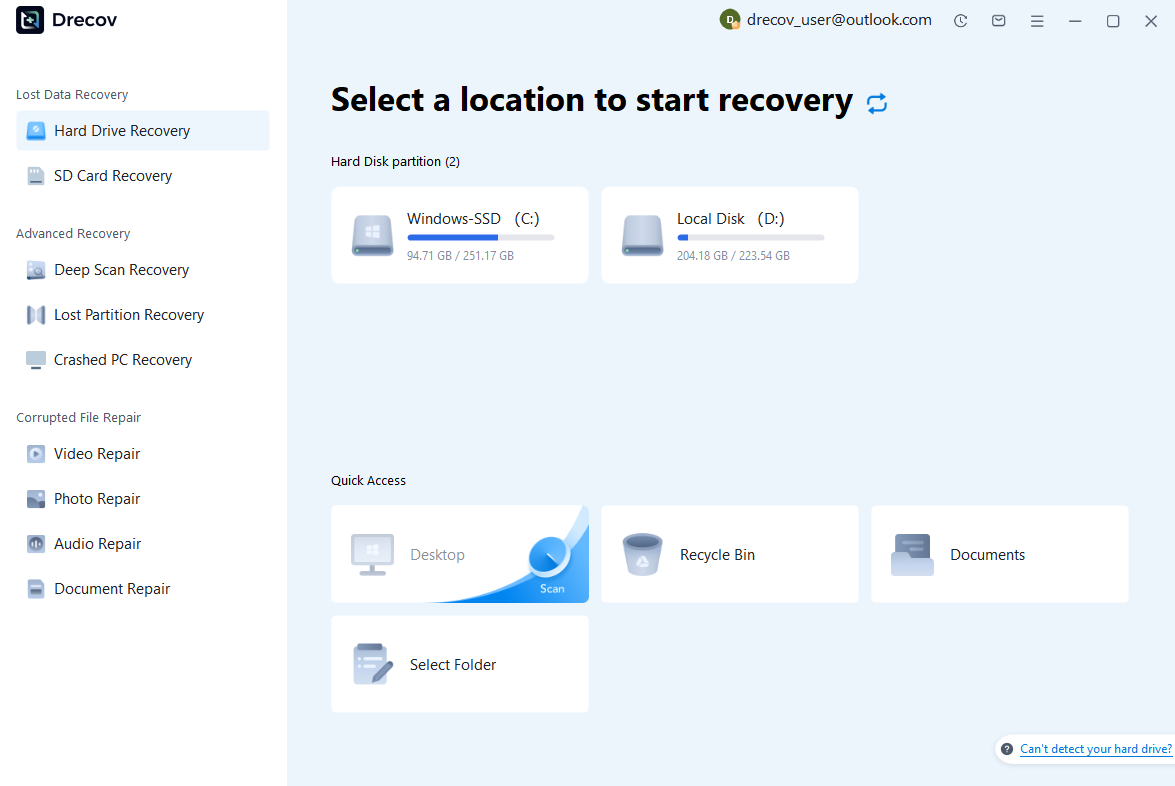
2. Scan the Drive
Open Drecov and choose the drive or folder containing your Word document. Click Scan. The software will perform a deep search to locate deleted and lost files.

3. Preview and Recover
After scanning, preview recoverable documents. Select your desired files and click Recover to save them to a secure location.

Pros:
- Recovers permanently deleted files
- Works on formatted drives and corrupted storage
- Compatible with Windows and Mac
Cons:
- Full scan may take some time depending on drive size
Comparing System Recovery vs. Drecov
| Method | Ease of Use | Recovery Rate | Limitations |
|---|---|---|---|
| Recycle Bin / Trash | Very Easy | High if recently deleted | Only recent deletions, bin must not be emptied |
| File History / Time Machine | Moderate | Medium to High | Must have backups enabled beforehand |
| AutoRecover (Word) | Easy | Medium | May not include latest edits |
| Drecov Software | Moderate | Very High | Requires installation and scan time |
After reviewing the pros and cons of each method, it becomes clear which solution offers the highest success rate. Considering the strengths and limitations of each method, it’s important to choose a solution that maximizes recovery success. Considering the differences in ease of use, recovery rate, and limitations, it’s evident which method stands out for serious data loss. This comparison shows that Drecov offers the most comprehensive solution for recovering deleted Word documents, especially when users permanently lose files, encounter corruption, or delete them from external drives.
Tips to Prevent Future Document Loss
- Enable AutoSave: Keep Word’s AutoSave active to ensure documents are saved in real-time.
- Regular Backups: Use Windows File History, Time Machine, or cloud services.
- Avoid Overwriting: Stop using the drive after deletion to maximize recovery chances.
- Organize Files: Keep Word documents in dedicated folders for easier restoration.
⚠️Warning: Relying solely on the Recycle Bin or AutoRecover can lead to data loss if a system crash occurs. Always combine multiple methods for safety.
Frequently Asked Questions (FAQs)
Q1: How do I recover a deleted Word document on Windows?
You can use the Recycle Bin, File History, or Word’s AutoRecover feature. For permanent deletions, software like Drecov ensures the highest recovery rate.
Q2: How to recover deleted Word documents on Mac?
Check the Trash first. If the file isn’t there, use Time Machine backup. For permanently deleted files, Drecov works effectively on Mac.
Q3: How to recover a deleted Word document not saved?
Open Microsoft Word, go to File > Info > Manage Document > Recover Unsaved Documents, and select your file.
Q4: How to recover deleted Word documents from a formatted drive or SD card?
Drecov is recommended. Install the software, scan the drive, and restore your lost Word documents in three steps.
Q5: How to recover deleted Word documents that are corrupted?
Use Drecov’s deep scan feature to recover corrupted Word files safely.
Conclusion
After exploring various recovery methods and preventive measures, you realize that preparing in advance is key to protecting your documents. Losing a Word file can happen to anyone, whether due to accidental deletion, system errors, or disk corruption. Fortunately, there are multiple ways to recover deleted Word document safely. System-level methods like the Recycle Bin, File History, Time Machine, and AutoRecover are convenient for recent or minor losses. For permanent deletion or serious corruption, Drecov by PandaOffice provides a reliable, three-step recovery solution compatible with Windows and Mac. By combining preventive measures with these recovery strategies, you can ensure your important documents are always safe and recoverable.






