







Windows Media Player server execution failed usually means the player could not start or communicate with a required Windows component. The cause may be a stuck player process, a damaged media library database, a service problem, corrupted system files, or a user-profile fault. If only one song or video fails, the file, path, codec, or storage device is more likely than the player itself. Preserve your media folders before rebuilding libraries, resetting features, or reinstalling Windows.
The fastest safe fix is not a long command list. It is a short test that identifies which layer is broken.
First Separate the Player, Library, and File
Run three comparisons before changing settings. Try to open Windows Media Player without selecting a file. Then open a known-good local MP3 or MP4 from an internal drive. Finally, try the original file from its current location. Record which attempt fails.
| Test result | Likely boundary | Next section |
|---|---|---|
| The player will not open at all | Stuck process, app registration, service, profile, or system component | Restart the player stack |
| The player opens but the library view fails | Media library database or watched-folder configuration | Rebuild the library carefully |
| Known-good files play, but one file does not | Missing path, permissions, corruption, or unsupported encoding | Inspect the file and storage |
| Files on an external drive all fail | Drive letter, connection, file system, or device health | Protect data before storage repair |
| Another Windows account works | User profile or per-user library state | Repair or migrate the profile |
This distinction prevents a common mistake: rebuilding a healthy library when the external drive is missing, or replacing codecs when the application cannot start at all.
Restart the Player Stack Without Deleting the Library
Open Task Manager and end any Windows Media Player process that remains after the window closes. Wait a few seconds, then start the player from the Start menu without double-clicking a media file. If it opens normally, the previous process was stuck. Restart Windows and test again before making permanent changes.
Test the Windows audio path
Play a system sound or use another built-in media app. If every application is silent, focus on the audio output, driver, and Windows Audio service rather than the player library. If another app plays the same local file correctly, the file contains usable data and the problem is more specific to Windows Media Player.
Apply Windows and app updates deliberately
Install pending Windows updates, restart, and test. On newer Windows systems, Microsoft promotes the Media Player app, while the older Windows Media Player can remain available as an optional feature. Do not remove both applications or download replacement components from an unofficial codec site. Microsoft documents current playback options through its Windows Media Player support page.
Protect a Missing or Unreadable Media Library First
Player repair cannot restore a deleted song or make a disconnected disk readable. In File Explorer, confirm that the media folder exists, file sizes look plausible, and the source drive has the expected letter. Copy one noncritical file to another healthy drive and test the copy. Do not move the entire library until you know the source can sustain reads.
If the drive is slow, disappears, clicks, or causes File Explorer to freeze, stop library scans and repairs. Repeated indexing forces more reads. Protect important media through imaging or professional recovery when the device is unstable. For stable drives, follow a recovery-first sequence before CHKDSK, formatting, or partition changes. The hard-drive recovery before repair guide explains that order.
Recover Lost Songs and Videos with Drecov
PandaOffice Drecov is visual Windows data recovery software for PCs, HDDs, SSDs, external drives, USB drives, SD cards, and memory cards. In read-only recovery mode, it searches for photos, videos, documents, emails, audio files, and archives. Quick Scan and Deep Scan support different search depths, while filters and preview help identify usable files before they are recovered to a healthy destination. Lost Partition Recovery is also available when the media lived on a partition that is no longer visible.
⚠ Warning: Install it on a drive different from the one where your data was lost to prevent overwriting.
Drecov is relevant when media files were deleted, lost after a move, or made inaccessible by a logical storage problem. It does not fix a Windows service, install a codec, repair physical damage, or guarantee recovery of overwritten data.
Step 1: Select the original media location
Connect a separate healthy destination with enough space. Open Drecov and select the partition, external drive, USB device, or memory card where the songs or videos were originally stored. Do not install software or save downloads to that source.

Step 2: Run Quick Scan before a deeper search
Start Quick Scan and let it complete. Avoid opening the affected library in Windows Media Player during the scan because indexing and thumbnail creation may add unnecessary source activity.

Step 3: Use Deep Scan when Quick Scan is incomplete
If the wanted files are absent and the device remains stable, run Deep Scan. Stop if the source disconnects, produces severe read errors, or stalls repeatedly. An unstable device should be imaged rather than scanned again.
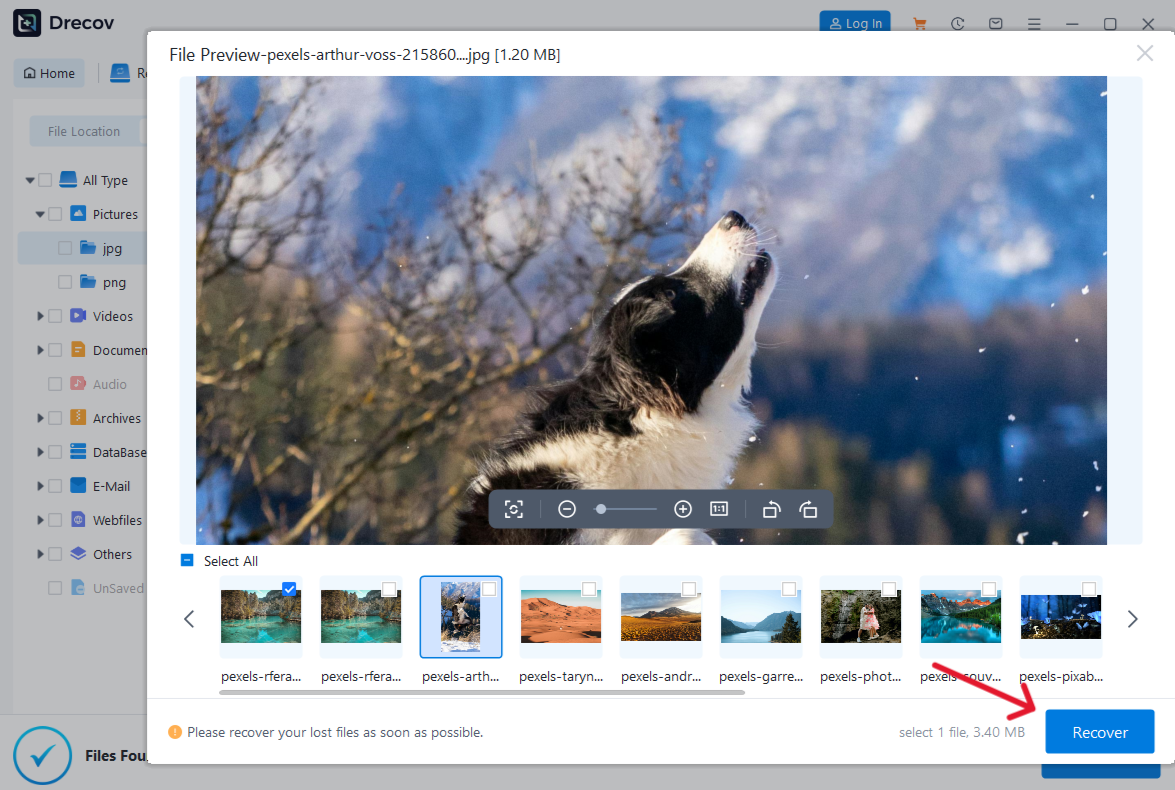
Step 4: Filter and preview representative files
Filter results by audio, video, location, name, or extension. Preview files where supported. Check more than one item from each important folder because one valid preview does not establish that the whole library survived.
Step 5: Recover to the healthy destination and verify
Recover the selected files to the separate destination. Never write them back to the source. Check the Drecov folder or Recovery folder if an item is not in the expected output path. Then play each important file through several points and confirm tags, duration, and sound. The separate-destination rule prevents recovered data from overwriting other recoverable content.
Repair the Library Only When the Media Files Are Safe
Confirm watched folders and drive letters
If an external drive received a new letter, the library may still point to the old path. Restore the original letter through Disk Management only when it does not conflict with another device, or remove the stale library location and add the current folder. Do not format a drive simply because Windows Media Player cannot see its library.
Back up playlists and library data
Export or copy playlists and note custom folder locations before rebuilding anything. The library database is an index, not the media itself, but playlists and ratings can represent valuable organization. Confirm the actual media files are backed up independently.
Rebuild a damaged library database
Close the player and its background processes. Locate the per-user Windows Media Player database folder, copy it to a backup location, then rename the original folder instead of deleting it. Start the player and allow Windows to create a fresh database. Add one media folder and test before importing the entire collection. If the new database works, the old index was likely damaged; your media files should remain in their original folders.
Folder names vary across Windows and player editions, so do not delete a path copied from an unrelated tutorial. Renaming a confirmed database folder keeps rollback possible.
Repair Windows Components in a Controlled Order
If the player still cannot start with a new library and another Windows account shows the same error, move outward to system components.
Test the optional feature
Open Windows Features and locate the legacy media feature available on your edition. Disable only Windows Media Player, restart, re-enable it, and restart again. This refreshes the optional component without erasing personal media folders. If your PC uses the newer Media Player app instead, use its repair option before reset, because reset may clear per-app settings.
Check system files
Run the supported Windows image and system-file repair tools from an elevated terminal after backups are current. These tools repair Windows components; they do not recover deleted media. Test Windows Media Player immediately afterward so you can attribute any change.
Compare a clean user profile
Create a temporary local account and open the player there. Success in the new account points to per-user registration, permissions, or library state. Migrate verified media and playlists carefully rather than deleting the original profile. Failure in both accounts points toward a system-wide component or driver.
When One File Still Will Not Play
A server execution message may appear during a file launch even though the player itself is healthy. Verify that the file still exists and is not a zero-byte placeholder. If it came from cloud storage, make it available offline through the provider’s supported control. If it is on removable media, test a copied version from a healthy local drive.
Compare the extension with the file’s actual format. Renaming an extension does not convert the media. Test the same file in another trusted player. If no player can read it and the file size is plausible, the file may be corrupted or encoded with an unsupported codec. Recover another copy from backup or from the original storage before attempting repair. For video-specific loss, the lost video recovery workflow helps distinguish recovery from file repair.
Avoid bulk codec packs from unknown sites. They can add filters and shell extensions that make diagnosis harder. Prefer the official application, Microsoft Store, or the codec vendor when a verified format requires an additional component.
windows media player server execution failed FAQs
Will rebuilding the media library delete my songs?
It should rebuild the index rather than delete source media, but mistakes in folder selection are possible. Back up playlists, verify media locations, and rename the database folder instead of permanently deleting it.
Why does one video fail while other files play?
The file may be missing, incomplete, damaged, cloud-only, or encoded in an unsupported format. Test it from a healthy local drive in another trusted player before changing Windows components.
Can Drecov fix Windows Media Player?
No. Drecov recovers missing or inaccessible media files from readable storage. Player, service, library, driver, and codec problems require the targeted Windows or application fixes described above.
Should I run CHKDSK on the media drive?
Not before protecting valuable files. CHKDSK repairs file-system structures and can change what recovery tools see. Recover or image the data first, confirm drive stability, and repair afterward.
Fix the Smallest Broken Layer
For Windows Media Player server execution failed, begin by testing the player alone, a known-good local file, and the original media path. That tells you whether to restart a process, rebuild the library, repair a Windows component, or investigate storage. Preserve the media before destructive changes. When files are genuinely lost and the source is stable, Drecov provides a complete scan, preview, and separate-destination recovery workflow. When the files are intact, keep the recovery tool out of the repair path and fix only the failed layer.





