







When a Windows 10 screen goes white, first note exactly when it happens. A white display before the maker’s logo suggests a monitor, cable, GPU, or panel problem. A white screen after sign-in often points to the display driver, Windows Explorer, a startup app, or a damaged user profile. If only one program turns white, troubleshoot that program before changing Windows. Protect important files before resetting, reinstalling, or making broad system changes.
Do not assume every white screen is the same fault. The last visible stage is the most useful clue you have.
Start with the Last Thing You Can See
| Where the screen turns white | More likely area | Best first check |
|---|---|---|
| Before any logo appears | Display, cable, panel, GPU, or power | Test the display path and another monitor |
| After the maker logo but before sign-in | Graphics driver, startup, update, or Windows loading | Try the security screen and recovery environment |
| Immediately after sign-in | Explorer, startup software, profile, or display driver | Open Task Manager and restart Explorer |
| Only in one application | App rendering, cache, extension, or acceleration | Close, update, reset, or reinstall that app |
| White image with lines, artifacts, heat, or flicker | GPU, panel, connection, or thermal hardware | Stop stress testing and compare another display |
Try to photograph the symptom and write down what happened just before it: a driver update, a new app, a forced shutdown, a drop, or a storage warning. That timeline helps you reverse one plausible change instead of applying a random list of fixes.
Run Three Checks That Do Not Touch Your Files
Reset the graphics driver
Press the Windows key, Ctrl, Shift, and B together. Windows may beep and briefly refresh the display. Microsoft includes this shortcut in its display troubleshooting. A successful refresh suggests that Windows is running and the graphics path was stuck, but it does not prove the driver or GPU is healthy.
Open the Windows security screen
Press Ctrl, Alt, and Delete. If the blue security screen appears, Windows is responsive. Open Task Manager, choose Run new task, enter explorer.exe, and press Enter. If the desktop returns, Explorer or a startup component may have failed. Restarting Explorer is a diagnostic step, not a permanent cure.
Separate the computer from the display
On a desktop, confirm the monitor’s own menu can appear. Test a known-good cable and another display output. On a laptop, connect an external monitor and use the display-switch shortcut. A normal external image with a white internal panel points toward the laptop panel, cable, or backlight circuitry. A white image on both displays makes the GPU, driver, or operating system more plausible.
If you smell overheating, see liquid damage, or the picture changes when the lid moves, power down. Software cannot repair a damaged panel cable or graphics component.
Protect Files Before Resetting or Reinstalling
A display fault does not automatically mean files are lost. If Task Manager, Safe Mode, or another monitor gives you access, copy the most important work to a healthy external drive first. Check OneDrive or another backup from a separate device without deleting or moving the originals.
If the white screen is accompanied by slow disk access, freezes, repeated restarts, or a drive that disappears, treat the storage as a separate risk. Avoid factory reset, formatting, and repeated repair attempts until the files are safe. The PC startup and data-rescue sequence covers cases where the desktop cannot remain usable.
Recover Missing or Inaccessible Files with Drecov
PandaOffice Drecov is Windows recovery software for PCs, HDDs, SSDs, external drives, USB drives, SD cards, and memory cards. Its read-only recovery mode can search for photos, videos, documents, emails, audio, and archives. It offers Quick Scan, Deep Scan, filtering, preview, and recovery to a selected healthy destination. Lost Partition Recovery is available when a partition is missing rather than merely hidden by the white desktop.
⚠ Warning: Install it on a drive different from the one where your data was lost to prevent overwriting.
Use recovery software when files were deleted, a volume became inaccessible, or Windows repair removed data. It is not a display-driver fix. If the source drive disconnects, clicks, or produces severe read errors, stop and seek a controlled image or professional help.
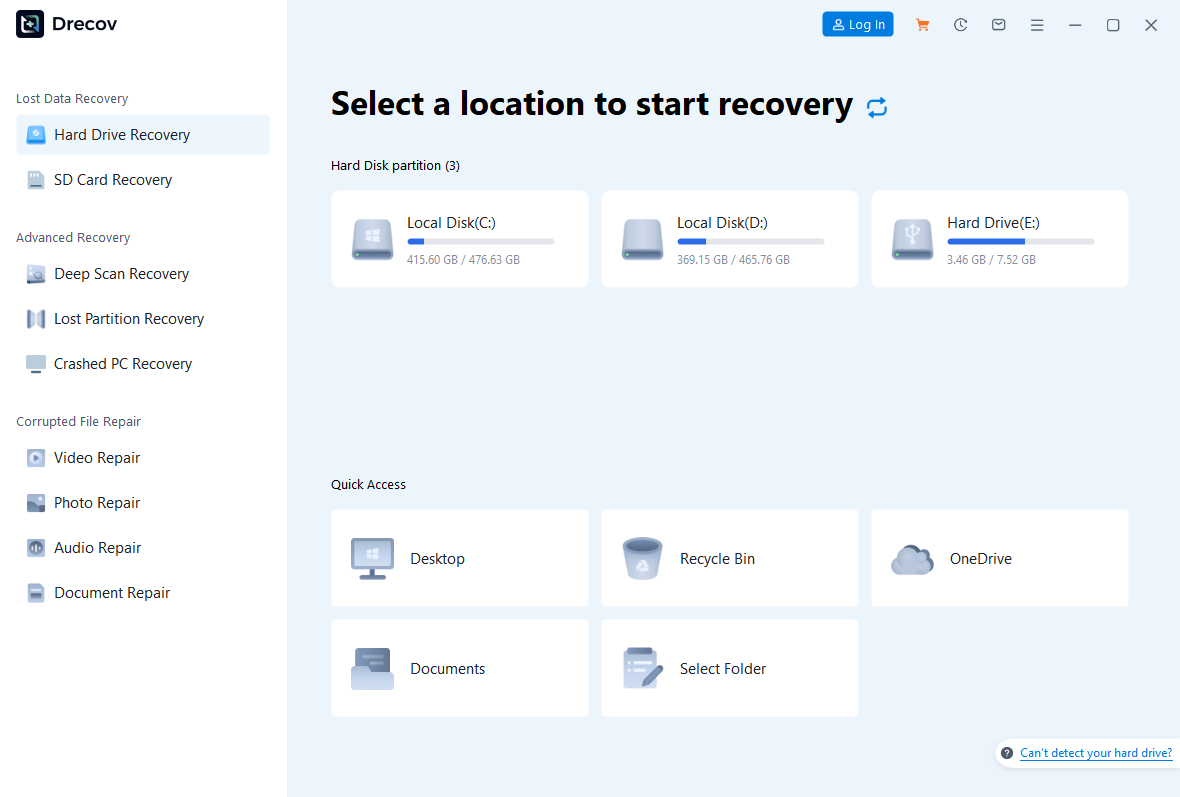
Step 1: Choose the original file location
Connect a separate healthy destination. Open Drecov and select the partition or storage device that originally held the missing files. Do not install the program on that affected partition, and do not save new downloads there.
Step 2: Use Quick Scan first
Start Quick Scan and allow it to complete without running Windows repair at the same time. This first pass is appropriate when files disappeared recently or a repair changed visible folders.
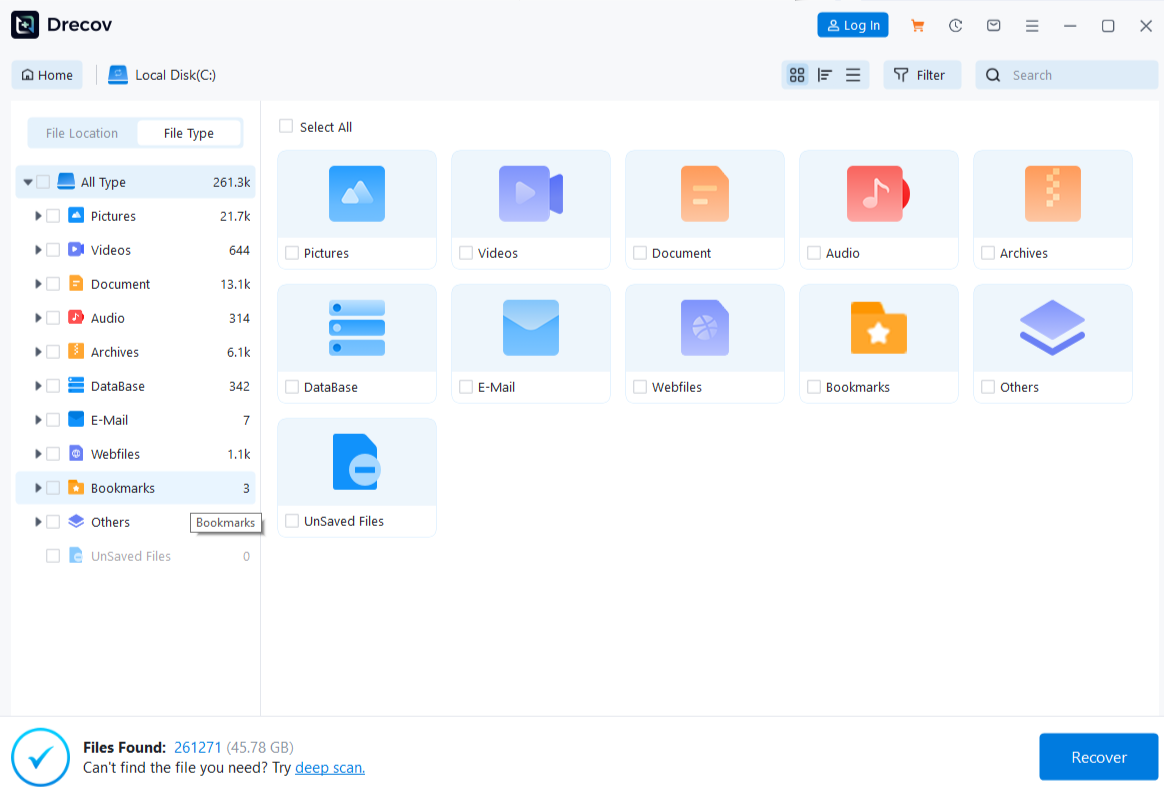
Step 3: Use Deep Scan only if needed
If the required files are absent and the source remains stable, run Deep Scan. Stop if the drive begins disconnecting or stalling. Repeated scans are not a substitute for imaging unstable media.
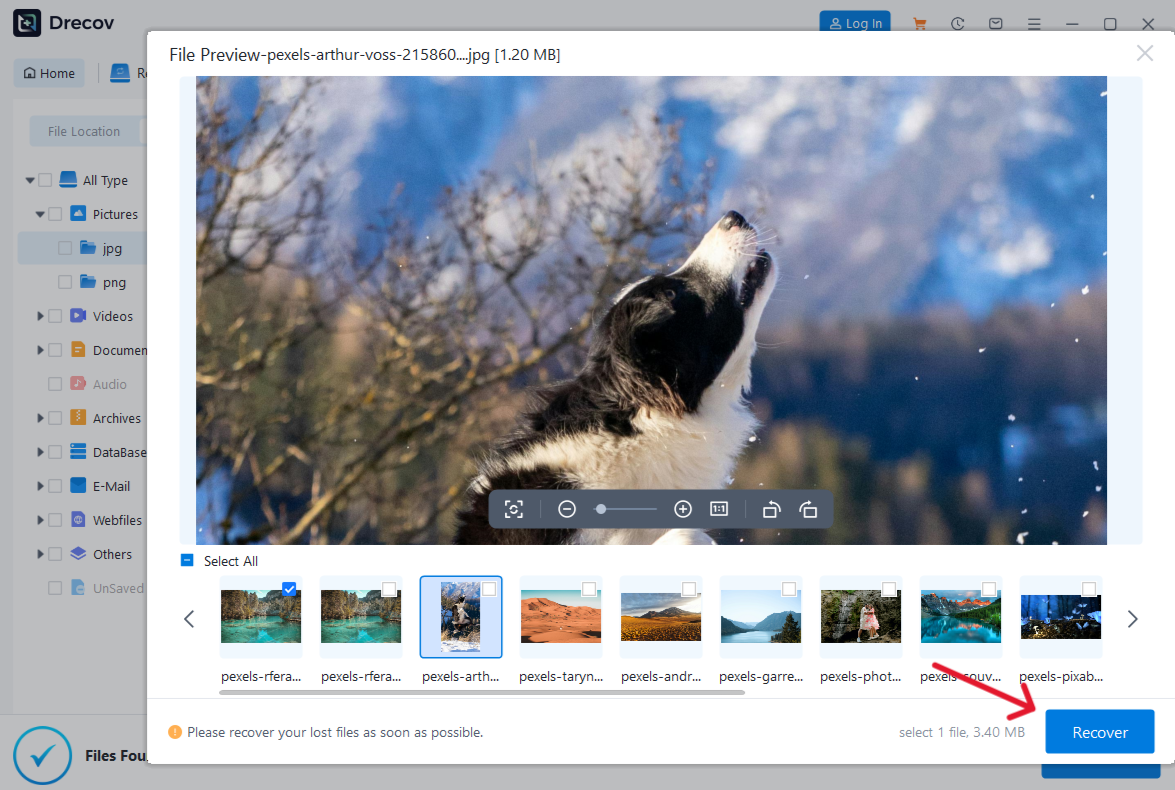
Step 4: Filter, preview, and recover elsewhere
Filter by location or file type, then preview representative files. Recover the critical set to the healthy external destination, never to the source. Open the copies and verify their contents. If an item is not in the expected output location, check the Drecov folder or Recovery folder before scanning again. See why the destination must be separate for the overwrite risk.
Fix a White Screen That Appears After Sign-In
Restart Explorer and isolate startup software
If Task Manager opens, restart Windows Explorer from its process list or run explorer.exe as a new task. Then disable nonessential startup apps one at a time and restart normally. If the desktop works after a clean startup, re-enable items gradually until the symptom returns. This turns a vague white screen into an identifiable software conflict.
Use Safe Mode to test the driver path
Enter Windows Recovery Environment after repeated failed starts or through advanced startup, then choose Safe Mode. Safe Mode uses a limited driver and service set. A normal desktop there suggests a third-party display driver, startup service, or app. It does not guarantee the hardware is good, but it gives you a controlled place to work.
Roll back or reinstall the display driver
If the problem began immediately after a graphics update, open Device Manager in Safe Mode and use Roll Back Driver when available. Otherwise, uninstall the display adapter and restart so Windows can load a basic driver. Obtain the correct current driver from the PC or graphics manufacturer. Avoid third-party driver download sites and do not update every driver at once.
Test a new local user profile
If one account turns white while another account works, the profile or its startup configuration is likely involved. Create a temporary local administrator account from a working session, sign in, and compare. Move personal data only after confirming it is intact; do not delete the old profile as a first step.
Fix a White Screen Limited to One App
When the taskbar and other programs remain normal, treat the affected application as the boundary. End it through Task Manager, reopen it without restoring the previous session, and test a known-good local file or page. Update the app from its official source.
Browser and media apps may render a blank white surface because of corrupted cache, an extension, or hardware acceleration. Test a private window, disable extensions temporarily, and switch hardware acceleration only as a controlled comparison. If a clean app profile works, migrate needed settings carefully rather than wiping all user data. Reinstall only after preserving bookmarks, projects, saves, and license information.
If opening one particular file causes the white window, copy the file before testing it. The application may be reacting to a damaged document or media file, not failing globally.
Use Recovery Options from Least to Most Disruptive
After files are protected, use System Restore when a restore point predates the fault. It can reverse system files, drivers, and settings without serving as a personal-file backup. Next, uninstall the specific recent update or app linked to the timeline.
Startup Repair is appropriate when Windows cannot reach sign-in, but it will not repair a panel or GPU. A reset or clean installation should be the last software step because applications and settings may be removed, and choosing the wrong option can erase data. If you must reinstall, verify two independent copies of important files first. The Windows restore without losing files overview explains the distinctions among restoration choices.
Windows 10 reached the end of free support in October 2025. A working PC can still run it, but a repaired system should be evaluated for a supported Windows upgrade, hardware compatibility, and a reliable backup plan.
windows 10 screen goes white FAQs
Why does the screen turn white but I can still hear Windows?
Windows may be running while the display driver, GPU output, cable, or panel fails to draw the image. Try the graphics-reset shortcut, the security screen, and an external monitor to locate the boundary.
Will Safe Mode delete my files?
No. Safe Mode starts Windows with a reduced set of drivers and services. Actions you take while there can still change files, so use it carefully and back up important data before uninstalling or resetting components.
Can Drecov remove the white screen?
No. Drecov is for recovering data from readable storage. It becomes relevant when files are missing, inaccessible, or endangered by reset or reinstall steps.
Should I reset the PC immediately?
No. First identify whether the fault occurs before boot, after login, or in one app. Test the display path, protect files, and try targeted reversible changes before a reset.
Follow the Failure Stage, Not a Generic Fix List
When a Windows 10 screen goes white, the timing tells you where to investigate. Confirm the display path, test whether Windows still responds, and compare Safe Mode, another account, and another monitor. Protect important data before reset or reinstall. If files have already become inaccessible, Drecov can recover them from a stable readable source to a healthy destination. Hardware symptoms and unstable storage, however, require repair or professional recovery rather than more software experiments.





