







The No EFI System Partition Was Found message means a repair, conversion, or boot tool cannot locate a suitable EFI System Partition. First confirm the computer boots in UEFI mode and the Windows disk uses GPT. Record the entire disk layout and protect important files before resizing, creating, formatting, or deleting partitions. These operations write partition metadata. Do not run DiskPart clean, and do not format an existing unknown partition merely because a guide expects a blank one.
Quick Answer
Open Disk Management or DiskPart in read-only inspection mode and verify the Windows disk is GPT. Look for a small FAT32 EFI System Partition. If it exists, the issue may be selection, drive mapping, or damaged boot files. If it is truly missing, create space and rebuild it only after backup or recovery. Microsoft states that UEFI Windows deployments use GPT and that the EFI System Partition uses FAT32 in its UEFI and GPT partition guidance.
What the Symptom Usually Means
The EFI System Partition stores boot files; it is not the Windows data volume. A GPT disk may also contain a Microsoft Reserved Partition and recovery partitions. Use the partition fundamentals page to identify roles before assigning letters or changing types.
The error can appear during MBR2GPT, BCDBoot, imaging, cloning, or manual startup repair. The exact tool matters. Check firmware mode, disk style, free space, partition count, and whether another disk accidentally holds the active boot files.
| Clue | Likely area | Safest first action |
|---|---|---|
| Disk is MBR | No GPT EFI partition exists | Confirm whether UEFI conversion is actually intended |
| EFI partition exists | Wrong disk, type, or damaged boot files | Identify it and use BCDBoot carefully |
| No suitable free space | Conversion cannot create required partition | Back up before any resize |
| Cloned or multi-disk system | Boot files may be on another disk | Map all disks before changing anything |
Document the GPT Layout Before Creating an ESP
An EFI System Partition is a boot partition, not empty spare space. Before shrinking, formatting, or creating anything, map the Windows partition, existing system partitions, recovery partitions, and unallocated regions on the correct disk.
Check Whether the ESP Is Truly Missing
- Confirm that firmware mode is UEFI and the Windows disk uses GPT.
- Inspect partition type, size, and FAT32 format rather than relying on drive letters.
- Check whether boot files were placed on another attached disk.
- Save the BitLocker recovery key and a verified file backup.
High-Risk ESP Operations
Shrinking a partition, creating an ESP, formatting it as FAT32, and copying boot files all modify the layout. DiskPart clean must never be used to make the disk resemble an example. Recover or image valuable data first if the current layout is uncertain.
Fixes From Lowest to Highest Risk
1. Confirm UEFI and GPT
Open System Information and check BIOS Mode. In Disk Management, view the disk Properties and Volumes tab to check Partition style. A legacy and MBR installation does not use an EFI System Partition in the same way. Do not create one unless the migration plan requires it.
2. Locate an Existing EFI Partition
In DiskPart, list disks, select the confirmed Windows disk, and list partitions. Use detail commands to inspect rather than alter. An existing small FAT32 system partition may only need correct boot files. Never format it without a verified reason and a recovery plan.
3. Run Startup Repair First
Use Windows Recovery Environment and Startup Repair before manual reconstruction. It can address common boot configuration problems with less room for typing the wrong disk or partition. Keep the BitLocker recovery key available.
4. Rebuild Boot Files on an Existing ESP
BCDBoot can copy Windows boot files to an identified EFI System Partition. Drive letters in WinRE may differ from normal Windows, so confirm the Windows folder and ESP every time. The command repair guide provides a cautious preparation sequence.
5. Create an EFI Partition Only After Protection
If no ESP exists and UEFI boot is required, creating one may require shrinking another partition and formatting the new ESP as FAT32. This is advanced, metadata-changing work. Make a restorable backup or recover files first. Never use clean to make the layout match an example.
6. Handle Conversion Failures Separately
If MBR2GPT or another conversion tool raised the message, review its validation result and space requirements. Lost partition recovery becomes relevant if an earlier conversion removed or hid a partition.
7. Use Trusted Recovery Media
When WinRE is unavailable, prepare Windows media on another system. Follow the bootable USB data-safety guide so creating media does not erase the wrong removable drive.
Recover Files Before Resizing or Rebuilding the ESP
If Windows still resides on a stable readable disk, protect personal files before changing partition boundaries. Recovery does not create an EFI System Partition. It provides a safe copy of files so later boot and partition work does not carry the only copy.
Where PandaOffice Drecov Fits
PandaOffice Drecov is Windows data recovery software for supported PC disks, HDDs, SSDs, and external storage. It helps recover files during boot errors—such as when no efi system partition was found—by using read-only recovery mode, Quick Scan, Deep Scan, filters, preview, and export to a healthy destination. It does not format or build the ESP.
⚠ Warning: Install it on a drive different from the one where your data was lost to prevent overwriting.
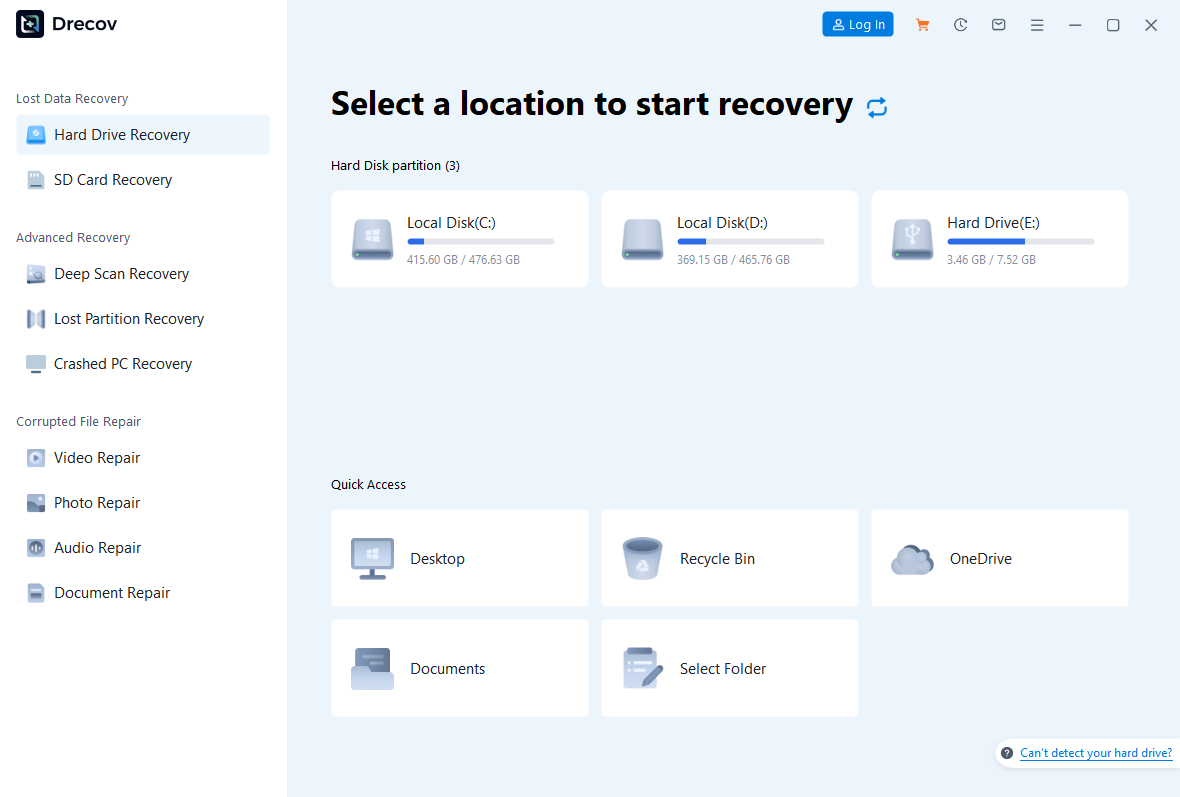
Step 1: Select the Windows Data Location
Open Drecov from a stable Windows environment and select the original Windows partition or disk that holds the needed files. Confirm capacity and folders because recovery environments may assign unexpected letters. Do not install on the source.
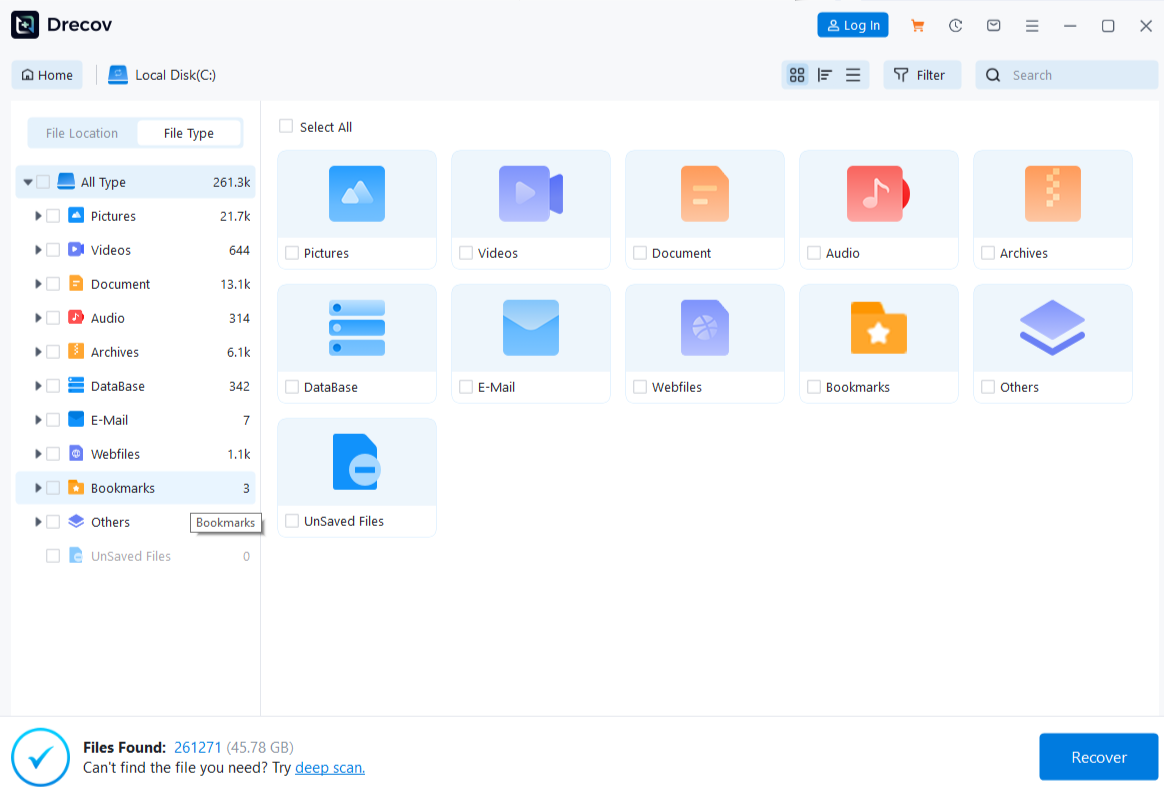
Step 2: Scan Before Partition Modification
Begin with Quick Scan. Use Deep Scan if expected user folders or files remain missing. Stop if the disk disconnects or reports serious read errors, since resizing an unstable disk would add risk.
Step 3: Preview and Verify the Safety Copy
Filter for critical files, preview them, and recover them to another healthy device. If the chosen destination looks empty, check the Drecov folder or Recovery folder. Open the exported files before creating, formatting, or populating a new ESP.
When to Stop DIY Work
Stop if the disk layout is unclear, multiple Windows installations exist, BitLocker keys are unavailable, or the disk is unstable. A specialist should handle high-value systems when imaging, RAID, unusual OEM layouts, or physical errors are involved.
Do not create or resize an EFI partition on media that cannot maintain stable reads. A changing disk map or intermittent firmware detection may indicate a deeper hardware problem. Capture an image when safe, or ask a specialist to preserve the source before editing GPT structures.
Verify the New or Repaired EFI Boot Structure
Inspect the ESP
Confirm that the intended disk remains GPT and the EFI System Partition has the expected system type and FAT32 file system. Do not store personal files or Windows Recovery Environment tools inside it.
Test Windows Boot Manager
Check that firmware lists Windows Boot Manager and that Windows starts without relying on another attached disk. Complete several cold starts and test Windows Recovery Environment.
Preserve the Pre-Repair Evidence
Keep the disk-layout record, BitLocker key, boot media, and verified data copy. These materials provide a rollback path if a later firmware update or partition adjustment exposes another dependency.
Check for Cross-Disk Boot Dependencies
Multi-disk computers sometimes place the EFI boot files on a disk other than the one containing Windows. Shut down before disconnecting hardware, then test only after files are protected. If Windows starts only while a secondary disk is attached, document both layouts and rebuild the boot path deliberately. Do not delete the secondary disk ESP until the primary disk starts independently and recovery tools remain available.
No efi system partition was found FAQs
Can I delete the EFI System Partition?
Deleting it can make a UEFI Windows installation unbootable. Do not remove it merely because it lacks a drive letter or appears small.
Can I copy an EFI partition from another PC?
Boot files and BCD entries must match the installed Windows system. Use supported repair tools and the correct source rather than copying an unrelated partition.
Does formatting the ESP erase personal files?
The ESP normally stores boot files, not documents, but formatting it can prevent Windows from starting. It is still a high-risk change.
Conclusion
Resolve No EFI System Partition Was Found by confirming UEFI, GPT, and the real disk layout before changing anything. Try Startup Repair, then use BCDBoot or partition creation only with verified targets. Recover files with PandaOffice Drecov first when data is at risk.





