







Overview of SD Card Reader Not Working Issues
Why Your SD Card Reader Is Not Working and What It Means
If you’ve ever plugged in a memory card only to find your sd card reader not working, you’re not alone. This is a common issue faced by users across laptops, desktops, and external card readers. Whether the card fails to appear, shows an error, or cannot be accessed, it can interrupt your workflow and risk important data.
When an sd card reader does not work, it typically means your system cannot detect or communicate with the inserted SD card. This can happen due to hardware faults, outdated drivers, or system configuration issues. In some cases, the SD card itself may be damaged or corrupted.
Users often report that their sd card reader is not working after a system update or when switching devices. This is especially common in newer systems, including cases of sd card reader not working Windows 11, where compatibility or driver issues may arise.
Understanding the root cause is key before attempting any fixes. The problem may lie in the card reader, the SD card, or the operating system.
⚠️ Warning: Avoid repeatedly inserting and removing the card, as this may cause further damage to the card or reader.
Common Causes Behind SD Card Reader Problems
Why Is My SD Card Reader Not Working on Different Devices
Many users ask, why is my sd card reader not working, and the answer often depends on several underlying factors. Identifying these causes can help you choose the most effective solution.
One of the most common reasons is outdated or missing drivers. If your system cannot recognize the hardware properly, the SD card reader will fail to function. This is particularly frequent after operating system updates.
Another cause is physical damage. Dust, bent pins, or worn-out connectors can prevent proper contact between the SD card and the reader. Even slight damage can result in detection failure.
File system corruption is also a major factor. If the SD card contains damaged or unreadable data structures, the system may fail to mount it.
Additionally, compatibility issues can occur when using newer SD cards with older card readers that do not support higher capacities or newer formats.
⚠️ Warning: Using incompatible SD cards may lead to detection errors or data loss.
Initial Checks Before Fixing SD Card Reader Issues
Basic Troubleshooting When SD Card Reader Does Not Work
Before applying advanced solutions, it’s important to perform basic checks when your sd card reader not working Windows 11 or other systems.
Start by testing the SD card on another device. This helps determine whether the issue lies with the card or the reader. If the card works elsewhere, the problem is likely with your computer or reader.
Next, try a different SD card in the same reader. If multiple cards fail, the reader itself may be faulty.
You should also check the connection. For external readers, ensure the USB port is functioning properly. Try switching ports or using a different cable if applicable.
Restarting your computer can also resolve temporary glitches that prevent the system from detecting hardware correctly.
Finally, inspect the SD card for visible damage or dirt. Cleaning the card gently can sometimes restore proper contact.
⚠️ Warning: Never use excessive force when inserting an SD card, as this can damage internal components.
How to Fix SD Card Reader Not Working (Effective Methods)
Method 1: Update or Reinstall SD Card Reader Drivers
Test Environment:
Windows 11 laptop, built-in SD card reader, 64GB SD card.
Driver issues are one of the most common reasons an sd card reader is not working. Updating or reinstalling drivers can restore proper functionality.
Steps:
- Right-click the Start menu and open Device Manager
- Expand “Disk drives” or “Universal Serial Bus controllers”
- Locate your SD card reader
- Right-click and select “Update driver”
- Choose “Search automatically for drivers”
- If not resolved, uninstall the device and restart your computer
This method ensures your system uses the latest compatible drivers, especially important for sd card reader not working Windows 11 scenarios.
Method 2: Enable SD Card Reader in BIOS Settings
Test Environment:
Windows 10 desktop, internal card reader disabled in BIOS.
Sometimes, the SD card reader may be disabled at the system level. Enabling it in BIOS can fix the issue when the sd card reader does not work.
Steps:
- Restart your computer
- Enter BIOS/UEFI settings (usually by pressing F2, DEL, or ESC)
- Navigate to Integrated Peripherals or Devices
- Locate the SD card reader option
- Enable it if disabled
- Save changes and restart
This method is particularly useful if the reader does not appear at all in the operating system.
Method 3: Assign a Drive Letter to the SD Card
Test Environment:
Windows 11 PC, SD card detected but not visible in File Explorer.
If your system detects the SD card but it doesn’t appear, assigning a drive letter can fix the issue when your sd card reader not working seems like a display problem.
Steps:
- Press Win + X and open Disk Management
- Locate your SD card in the list
- Right-click the partition
- Select “Change Drive Letter and Paths”
- Click “Add” and assign a new letter
- Confirm and check File Explorer
This method resolves cases where the system recognizes the card but does not display it properly.
Method 4: Recover Data Before Fixing the SD Card Using PandaOffice Drecov
Test Environment:
Windows 11 desktop, corrupted SD card with missing photos.
If your SD card becomes inaccessible and your sd card reader is not working, recovering data should be your first priority before attempting fixes.
Steps:
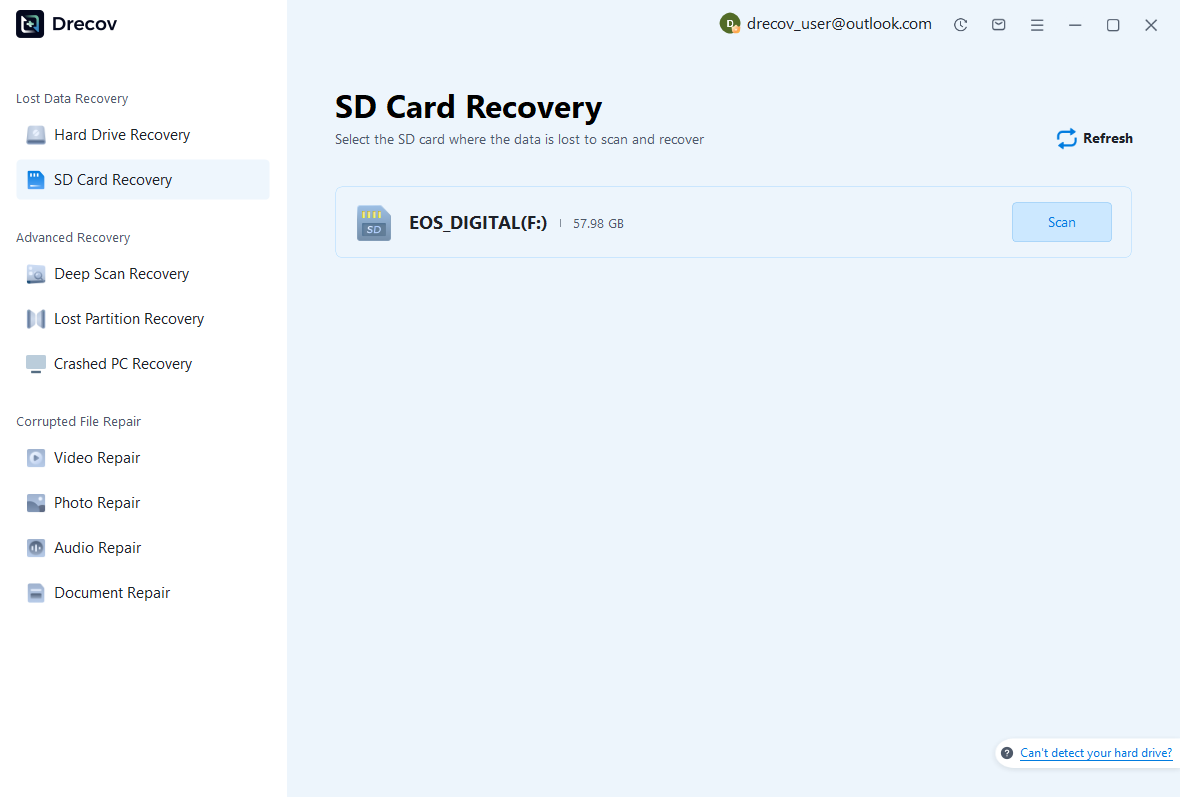
- Install and launch PandaOffice Drecov
- Connect your SD card through the reader
- Select the SD card from the available devices
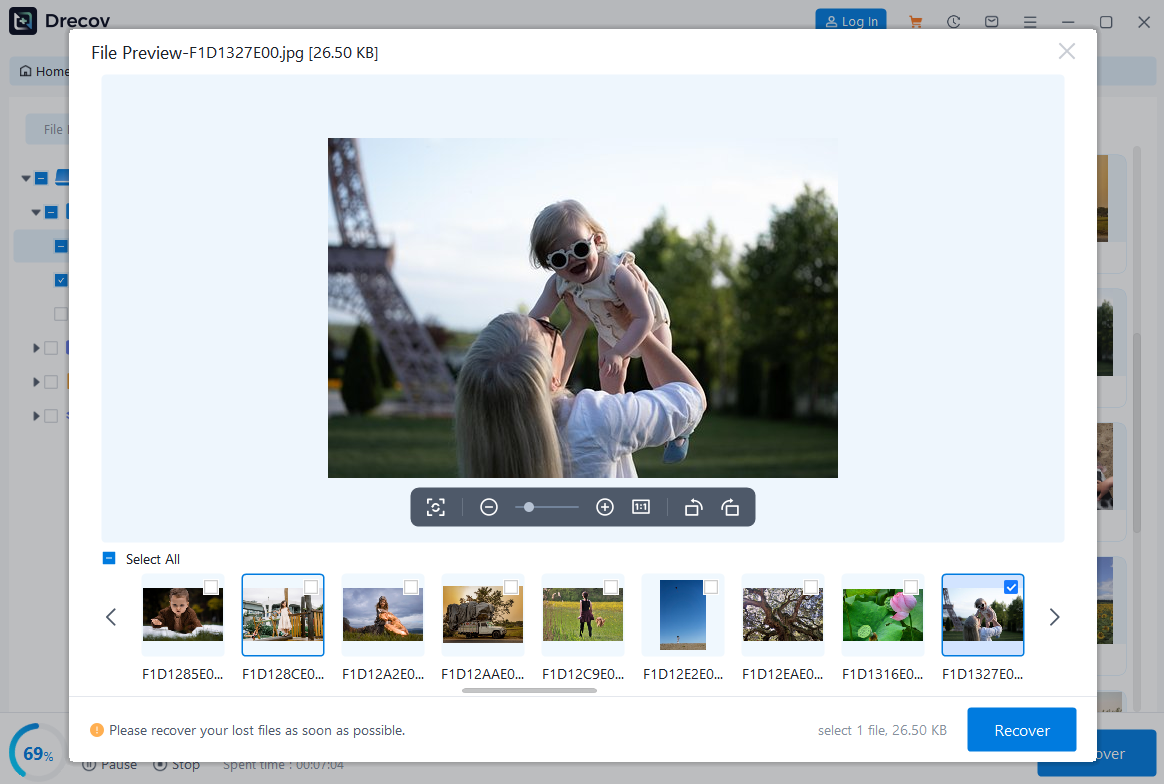
- Run a deep scan
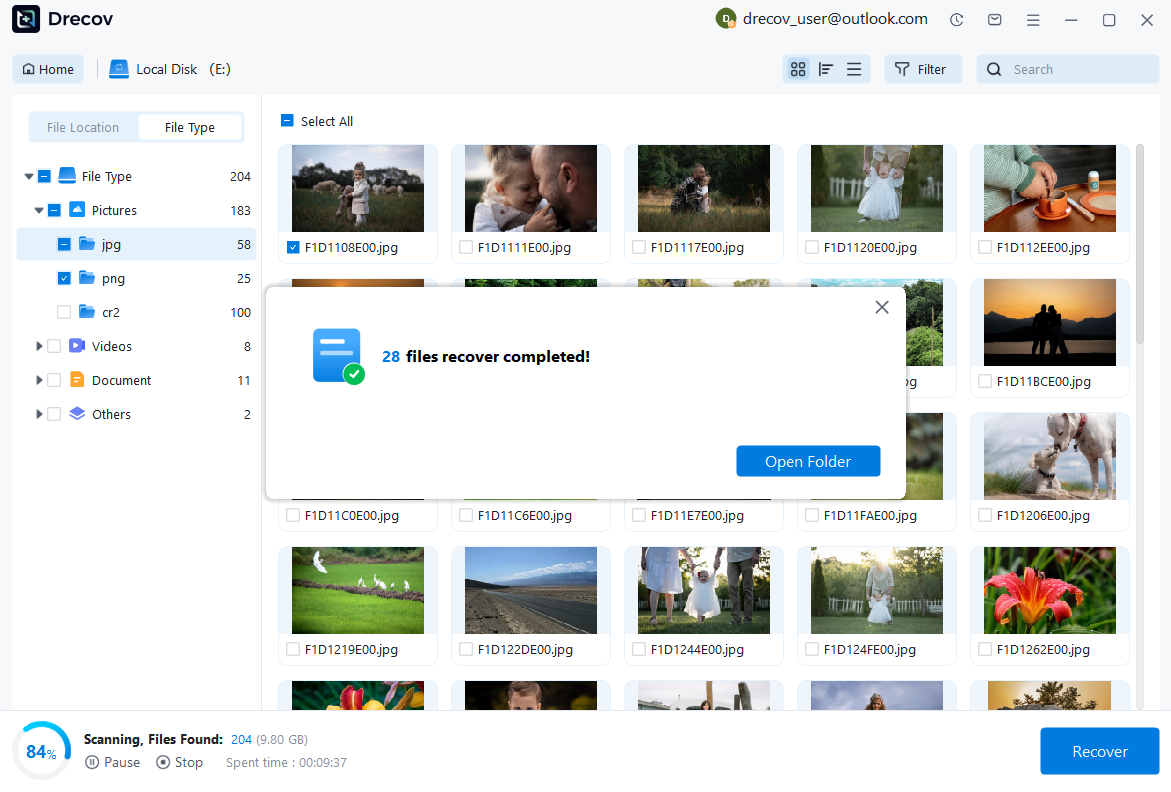
- Preview recoverable files
- Save them to a safe location
This ensures that important data is preserved before performing repairs that might overwrite existing files.
Why Choose PandaOffice Drecov Data Recovery Software?
When it comes to reliable data recovery, PandaOffice Drecov stands out as a powerful, all-in-one solution designed to handle a wide range of data loss scenarios. Whether you’re trying to perform TikTok deleted video recovery, restore files after formatting, or recover important documents, Drecov delivers fast and dependable results.
One of its biggest advantages is versatility. From format data recovery to lost partition recovery, the software can scan deeply and accurately locate files that other tools often miss. Even if your drive has been accidentally formatted or a partition has disappeared, Drecov uses advanced algorithms to reconstruct and retrieve your data with high success rates.
Drecov also supports specialized recovery needs. If you’ve lost important documents, its PDF recovery tool ensures that files retain their original structure and quality. For media users, the audio recovery feature helps restore music, recordings, and other sound files without corruption, making it ideal for both personal and professional use.
Ease of use is another key benefit. The intuitive interface allows beginners to recover files in just a few clicks, while still offering advanced options for more experienced users. Plus, it supports a wide range of storage devices, including HDDs, SSDs, USB drives, and memory cards.
In short, PandaOffice Drecov combines powerful recovery capabilities with user-friendly design, making it a trusted choice for anyone facing data loss.
Method 5: Check and Repair SD Card Errors Using CHKDSK
Test Environment:
Windows 10 laptop, 32GB SD card showing read errors, external USB reader.
If your sd card reader not working issue is caused by file system errors, the CHKDSK command can help repair logical problems and restore access.
Steps:
- Insert the SD card into your computer
- Open Command Prompt as administrator
- Type
chkdsk X: /f(replace X with your SD card drive letter) - Press Enter and allow the scan to complete
- Wait for Windows to fix detected errors
This method scans the SD card for bad sectors and file system corruption. It is particularly useful when your system detects the card but cannot open it.
If the repair is successful, the SD card should become accessible again without needing further formatting.
⚠️ Warning: CHKDSK may modify file structures, so recover important data beforehand if possible.
Method 6: Format the SD Card to Fix Reader Detection Issues
Test Environment:
Windows 11 desktop, 128GB SD card not opening, internal card reader.
When all else fails, formatting can resolve deep corruption issues causing the sd card reader does not work properly.
Steps:
- Open File Explorer and locate your SD card
- Right-click and select “Format”
- Choose file system (FAT32 or exFAT)
- Click Start to begin formatting
- Wait until the process completes
Formatting removes corrupted data structures and rebuilds the file system, allowing the card to function normally again.
This method is effective when the SD card is detected but inaccessible or returning errors.
⚠️ Warning: Formatting will erase all data on the SD card permanently.
Method 7: Try a Different USB Port or External Card Reader
Test Environment:
Windows 10 PC, faulty built-in card reader, external USB card reader used.
Sometimes the issue is not with the SD card itself but with the hardware. If your sd card reader is not working, switching to another port or using an external reader can quickly confirm the cause.
Steps:
- Disconnect the SD card from the current reader
- Insert it into a different USB port or another reader
- Wait for the system to detect the device
- Check if the SD card appears in File Explorer
If the SD card works with another reader, your original reader is likely damaged or malfunctioning.
This is a simple yet highly effective troubleshooting step that many users overlook.
Method 8: Update Windows System to Fix Compatibility Issues
Test Environment:
Windows 11 laptop, outdated system version causing driver conflicts.
Operating system updates often include bug fixes and driver improvements. If your sd card reader not working Windows 11, updating the system may resolve compatibility issues.
Steps:
- Open Settings
- Go to Windows Update
- Click “Check for updates”
- Download and install available updates
- Restart your computer
Keeping your system up to date ensures better hardware compatibility and reduces the chances of driver-related issues.
Frequently Asked Questions About SD Card Reader Problems
Why Is My SD Card Reader Not Working Even After Trying Fixes?
If you still wonder why is my sd card reader not working, the issue may be hardware-related. Physical damage to the card reader or SD card often requires replacement rather than software fixes.
Can a Faulty SD Card Reader Damage My Memory Card?
Yes, a damaged or low-quality reader can cause connection instability, which may lead to file corruption or data loss over time.
How Do I Know If the Problem Is the SD Card or the Reader?
Test the SD card on another device. If it works, the reader is likely faulty. If it fails everywhere, the SD card is the issue.
Is It Safe to Use Third-Party Card Readers?
Yes, but it’s important to choose reliable and high-quality devices to avoid compatibility issues or data corruption.
What Should I Do If My SD Card Is Not Detected at All?
Try different ports, update drivers, and check BIOS settings. If the card is still not detected, it may be physically damaged.
Final Thoughts on Fixing SD Card Reader Not Working
Key Takeaways to Resolve SD Card Reader Issues Effectively
Dealing with an sd card reader not working problem can be frustrating, especially when important data is involved. However, most issues can be resolved by following a structured troubleshooting approach.
Start with simple checks such as testing different devices and connections. Then move on to software-based fixes like updating drivers, assigning drive letters, or repairing file system errors.
For more complex situations, advanced solutions like formatting or using alternative hardware can restore functionality. Understanding the root cause is essential to choosing the right method.
If data is at risk, always prioritize recovery before applying fixes that may overwrite files. This ensures you don’t lose valuable information permanently.
By applying the methods outlined in this guide, you can confidently resolve most SD card reader issues and maintain reliable access to your data across devices.





