







Introduction to SD Card Photo Recovery
Overview of Photo Loss and Recovery Possibilities
Losing photos from an SD card is common, especially after accidental formatting. Many users assume the data is permanently gone, but in reality, formatting usually only removes file system references rather than deleting the actual image data immediately.
This is why photo recovery from sd card is often possible if the card has not been overwritten. Once a file is deleted or a card is formatted, the system marks that space as reusable, but the original data often remains until new files replace it.
A frequently asked question is can you get photos back after formatting sd card. In many cases, the answer is yes—especially when quick formatting was used and no new data has been written.
⚠️ Warning: Stop using the SD card immediately after data loss to increase recovery success rate.
Common Causes of Photo Loss on SD Cards
Accidental Formatting and User Errors
One of the most common reasons for data loss is accidental formatting. This often happens when cameras or phones prompt users to format a card due to compatibility or error issues. Users may proceed without realizing that important images are still stored inside.
Deletion and File Management Mistakes
Another frequent cause is accidental deletion. When transferring or organizing files, photos may be removed unintentionally. Since SD cards do not have a recycle bin, deleted files appear permanently lost without recovery tools.
File System Corruption and Device Issues
File system corruption can occur due to improper ejection, sudden power loss, or malware. When this happens, the SD card may show errors, become unreadable, or prompt for formatting.
Physical Damage and Wear
Over time, SD cards can degrade due to physical stress, heat, or water exposure. While software may help in logical failure cases, physical damage often reduces recovery success significantly.
⚠️ Warning: Do not repeatedly insert a corrupted SD card into multiple devices, as this may worsen the damage.
Is It Possible to Recover Photos from a Formatted SD Card?
Key Conditions That Affect Recovery Success
Recovery success depends mainly on whether the lost data has been overwritten. If new files are saved after formatting, they may permanently replace recoverable photo data.
The type of formatting also matters. Quick formatting usually only removes file indexing, making recovery easier. Full formatting may overwrite more sectors, reducing the chances of successful restoration.
Card condition is another factor. Logical errors can often be handled by sd card photo recovery software, while physically damaged cards may require professional tools.
Another important factor is timing. The sooner recovery is attempted, the higher the success rate, especially for photo recovery sd scenarios.
⚠️ Warning: Avoid saving new files to the SD card after data loss.
Best Methods for Recovering Photos from an SD Card
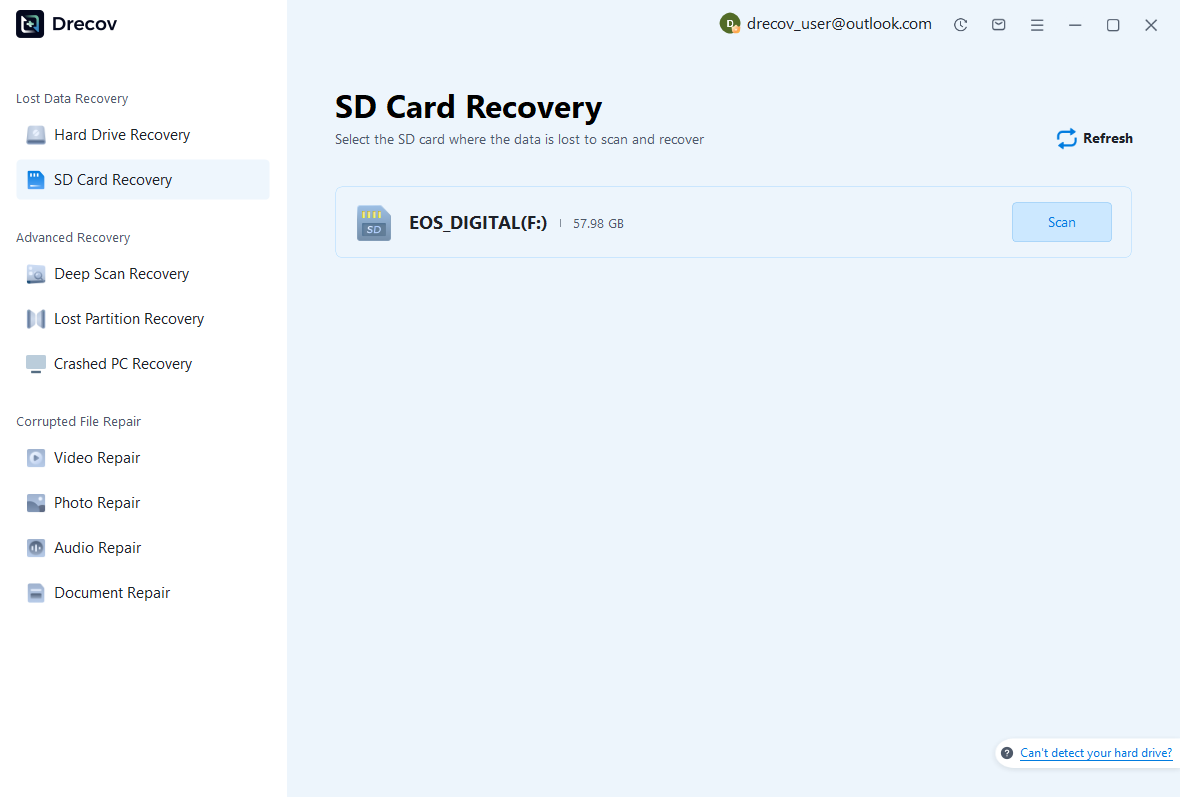
Method 1: Use Professional SD Card Photo Recovery Software
Using dedicated software is one of the most effective ways to perform sd photo recovery free. These tools are designed to scan storage devices deeply and reconstruct lost image files even after formatting.
Test Environment:
- Device: Windows 11 / macOS Ventura
- Storage: 64GB SD card
- Scenario: Quick formatted card with no new data written
Steps:
- Insert the SD card into a computer using a card reader.
- Install a trusted recovery tool such as Pandaoffice Drecov.
- Launch the software and select the SD card.
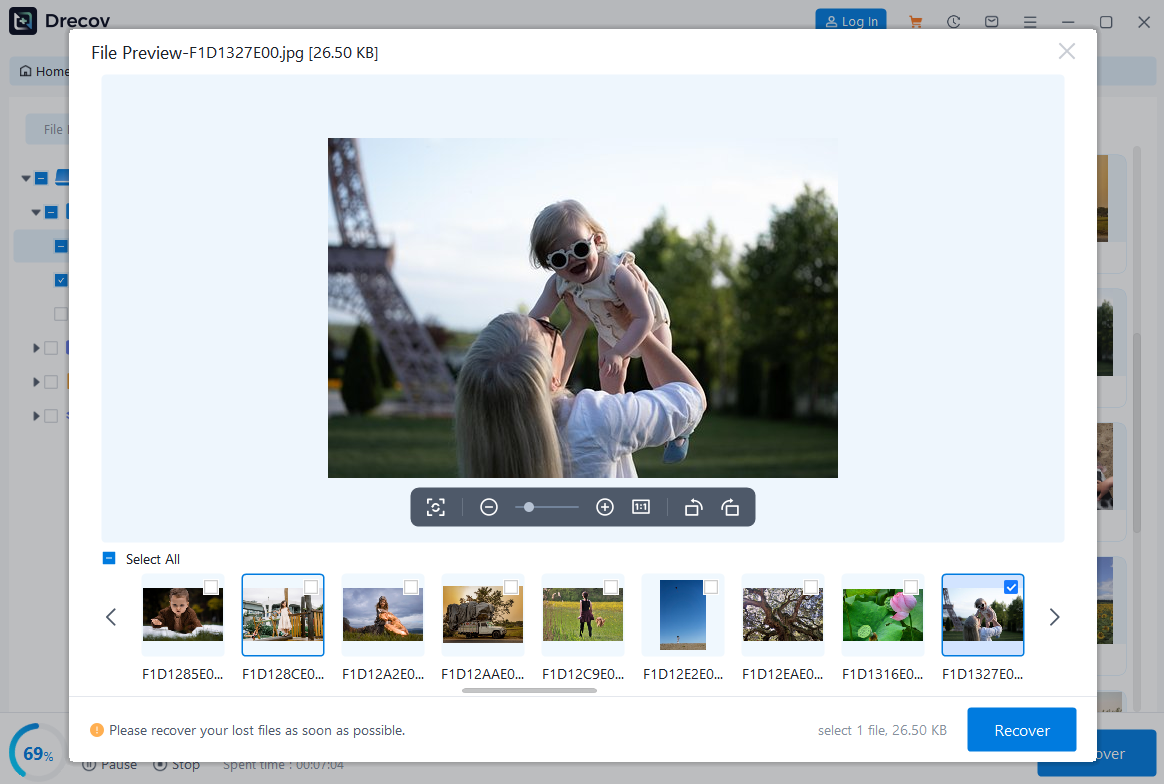
- Start a deep scan to detect recoverable files.
- Preview found photos.
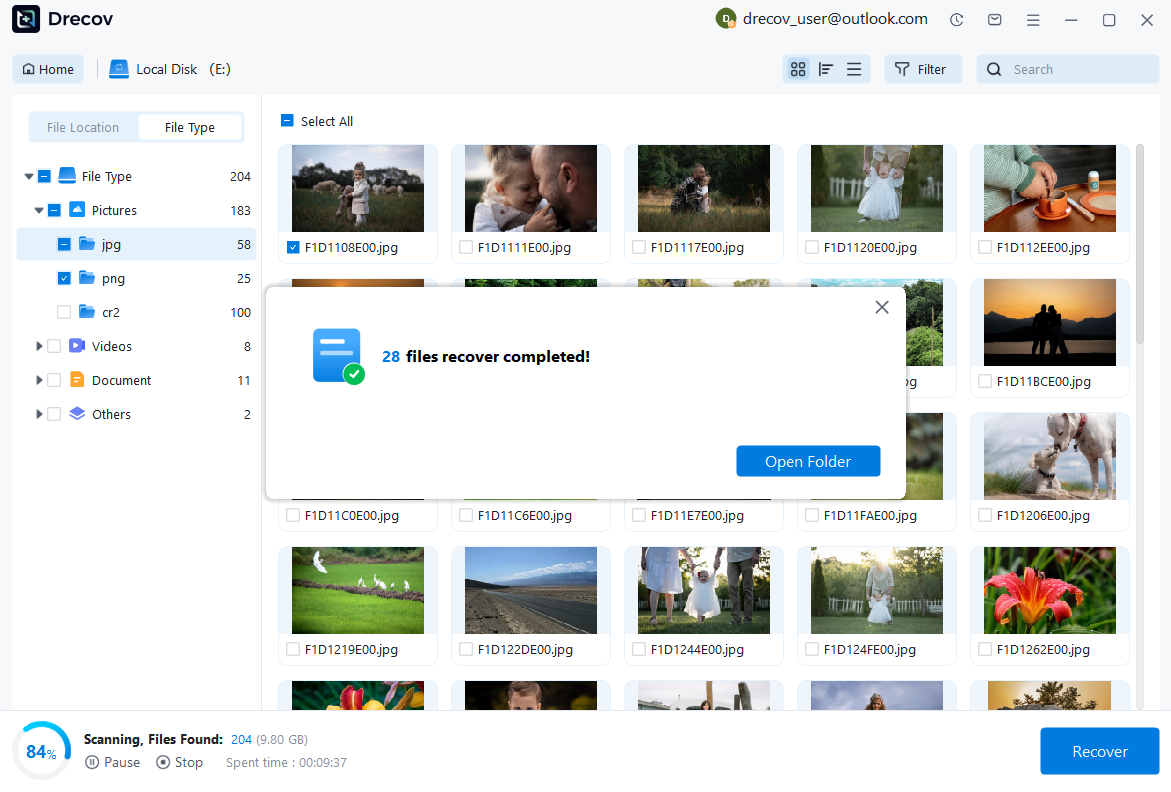
- Restore selected files to a separate storage device.
This method supports multiple formats such as JPG, PNG, and RAW files. It is also suitable for users searching for free photo recovery software mac sd card solutions.
Pandaoffice Drecov is especially useful because it combines deep scanning with simple recovery steps, making it suitable for both beginners and advanced users.
Why Choose PandaOffice Drecov Data Recovery Software?
When it comes to reliable data recovery, PandaOffice Drecov stands out as a powerful, all-in-one solution designed to handle a wide range of data loss scenarios. Whether you’re trying to perform TikTok deleted video recovery, restore files after formatting, or recover important documents, Drecov delivers fast and dependable results.
One of its biggest advantages is versatility. From format data recovery to lost partition recovery, the software can scan deeply and accurately locate files that other tools often miss. Even if your drive has been accidentally formatted or a partition has disappeared, Drecov uses advanced algorithms to reconstruct and retrieve your data with high success rates.
Drecov also supports specialized recovery needs. If you’ve lost important documents, its PDF recovery tool ensures that files retain their original structure and quality. For media users, the audio recovery feature helps restore music, recordings, and other sound files without corruption, making it ideal for both personal and professional use.
Ease of use is another key benefit. The intuitive interface allows beginners to recover files in just a few clicks, while still offering advanced options for more experienced users. Plus, it supports a wide range of storage devices, including HDDs, SSDs, USB drives, and memory cards.
In short, PandaOffice Drecov combines powerful recovery capabilities with user-friendly design, making it a trusted choice for anyone facing data loss.
Method 2: Restore Photos from Backup or Cloud Storage
When SD card data is lost or formatted, one of the safest recovery approaches is restoring files from backups. Many users unknowingly already have copies of their photos stored in cloud services or external drives, which makes recovery significantly easier compared to scanning the SD card itself.
Test Environment:
- Device: MacBook Pro (macOS Ventura)
- Backup Sources: iCloud Photos + External SSD
- Scenario: SD card formatted accidentally, no new data written
In this method, recovery does not depend on the SD card condition, which makes it highly reliable compared to photo recovery from sd card software-based methods.
Steps:
- Log into your cloud storage account (such as iCloud, Google Photos, or OneDrive).
- Navigate to the “Recently Deleted” or archive section.
- Check if the missing images are still available.
- Download and restore them to your local device.
- If using an external drive, locate the original photo folder and copy files back.
Cloud-based recovery is especially useful for users who sync photos automatically from mobile devices. However, it requires prior backup activation—without it, this method cannot help.
⚠️ Warning: Deleted files in cloud storage are often permanently removed after a retention period (usually 30–60 days).
This method is not technically part of sd card photo recovery software solutions, but it is often the fastest and safest recovery option when available.
Method 3: Use Built-in Operating System Recovery Tools
Operating systems such as Windows and macOS provide basic recovery features that can sometimes help restore lost images. While not as powerful as dedicated sd card photo recovery software, these tools can still recover recently deleted or replaced files.
Test Environment:
- Device: Windows 10 laptop
- Tool Used: File History / Previous Versions
- Scenario: Photos deleted before SD card formatting
This method works best when files were stored on a computer before being copied or moved to an SD card.
Steps (Windows):
- Navigate to the folder where SD card photos were previously stored.
- Right-click the folder and select “Properties.”
- Open the “Previous Versions” tab.
- Choose a version before the data loss occurred.
- Click “Restore” to recover files.
Steps (macOS):
- Open Time Machine backup.
- Locate the folder containing the lost photos.
- Browse snapshots from earlier dates.
- Restore the selected version.
While this method does not directly perform photo recovery sd from the SD card itself, it is useful when files were previously synced or copied to a system drive.
⚠️ Warning: System recovery only works if backup features were enabled before data loss occurred.
Advanced SD Card Recovery Scenarios and Troubleshooting
Handling Corrupted or Unreadable SD Cards
In some cases, the SD card may not be recognized by the system at all. This usually indicates file system corruption or hardware issues. Before attempting recovery, ensure the card reader and port are functioning properly.
Test Environment:
- Device: Windows 11 PC
- Condition: SD card not detected in File Explorer
- Scenario: Sudden removal during file transfer
Steps:
- Check Disk Management (Windows) or Disk Utility (Mac).
- See if the SD card appears as an unallocated or raw device.
- If detected, attempt a scan using recovery software.
- If not detected, try another card reader or port.
In such cases, sd card photo recovery software with deep scan capability becomes essential, as it can bypass file system errors and scan raw sectors directly.
Recovering Photos After Full Format
A full format is more destructive than a quick format because it overwrites more data sectors. However, partial recovery may still be possible depending on usage after formatting.
Test Environment:
- Device: Windows 11 workstation
- Storage: 32GB SD card (full formatted)
- Scenario: No immediate reuse after formatting
Steps:
- Connect the SD card via card reader.
- Launch recovery software with deep scan mode enabled.
- Allow full sector-by-sector scanning.
- Filter image file types (JPG, PNG, RAW).
- Preview and recover usable files.
Recovery success in this case is lower, but still possible if the card has not been reused heavily. This is where advanced tools outperform basic sd photo recovery free utilities.
Recovering Photos from Physically Damaged SD Cards
Physical damage requires special handling. If the SD card is bent, burned, or water-damaged, software recovery may not be sufficient.
Test Environment:
- Device: Recovery workstation
- Condition: Partially damaged SD card
- Scenario: Card intermittently detected
Steps:
- Stabilize the SD card connection using a reliable reader.
- Avoid repeated insertion/removal.
- Attempt read-only access mode if available.
- Run recovery scan immediately if detected.
If the device is not detected at all, professional data recovery services may be required.
⚠️ Warning: Do not attempt to physically open or repair the SD card yourself.
Key Takeaways for SD Card Photo Recovery
Best Practices for Maximizing Recovery Success
Recovering lost images from SD cards depends on speed, method selection, and avoiding further data writing. Whether using backup restoration, system tools, or sd card photo recovery software, each method serves a different scenario.
For most users, software-based recovery remains the most effective approach, especially when dealing with formatted cards or missing files. Backup methods offer the safest recovery path, while system tools provide limited but useful support.
Understanding how storage systems handle deletion is essential for improving success rates in photo recovery from sd card cases. Acting quickly and choosing the correct method greatly increases the chances of restoring valuable data.





