







Understanding Video Loss and SD Card Recovery
Why video files disappear from SD cards
Losing video files from an SD card is a common issue for users who rely on cameras, drones, or mobile devices. Videos may disappear due to accidental deletion, formatting, or file system errors. In most cases, the files are not permanently erased but become inaccessible.
This is why many users search for solutions to recover videos from sd card after unexpected data loss. When a video is deleted, the storage system marks its space as reusable, but the actual data often remains until overwritten.
Understanding this mechanism is essential for anyone trying how to recover videos from sd card, because recovery success largely depends on how quickly action is taken after data loss.
⚠️ Warning: Stop using the SD card immediately after losing videos to avoid overwriting recoverable data.
Common signs that videos can still be recovered
Even when videos are not visible, they may still exist on the SD card. Signs that recovery is possible include missing files after deletion, corrupted video playback, or storage showing used space despite no visible files.
Users often encounter scenarios where they need to recover deleted videos from sd card, especially after formatting or accidental removal. In many cases, recovery tools can detect hidden file fragments and rebuild video files successfully.
Main Causes of Video Loss on SD Cards
Accidental deletion and formatting errors
One of the most common reasons users need to how to get deleted videos from sd card is accidental deletion. This can happen during file transfer, editing, or cleanup processes.
Formatting is another major cause. Cameras and phones may prompt formatting when detecting errors, and users may proceed without realizing that important videos will be affected.
File system corruption and transfer interruptions
Improper ejection, sudden shutdowns, or interrupted transfers can damage the file system. When this happens, videos may become unreadable or disappear completely.
In such cases, users typically look for ways to how to recover lost videos from sd card, especially when files still occupy storage space but cannot be accessed.
Physical damage and storage wear
Over time, SD cards can degrade due to repeated use. Exposure to heat, moisture, or physical stress can also cause damage. While logical issues are easier to fix, physical damage reduces recovery success.
Understanding the cause helps determine whether recovery software or advanced solutions are required.
Effective Methods to Recover Videos from SD Card
Method 1: Use Professional Video Recovery Software
Using specialized tools is the most effective way to recover videos from sd card when files are deleted or inaccessible.
Test Environment:
- Device: Windows 11 PC / macOS Ventura
- Storage: 64GB SD card
- Scenario: Deleted and formatted videos, no new data written
Professional tools scan storage deeply to locate deleted video fragments and reconstruct them. One effective solution is Pandaoffice Drecov, which supports various video formats such as MP4, MOV, and AVI.
Steps:
- Insert the SD card into your computer.
- Install and launch Pandaoffice Drecov.
- Select the SD card from available drives.
- Start a deep scan.
- Preview recoverable videos.
- Restore files to another storage device.
This method is highly effective for users searching how to recover videos from sd card, especially after formatting or accidental deletion.
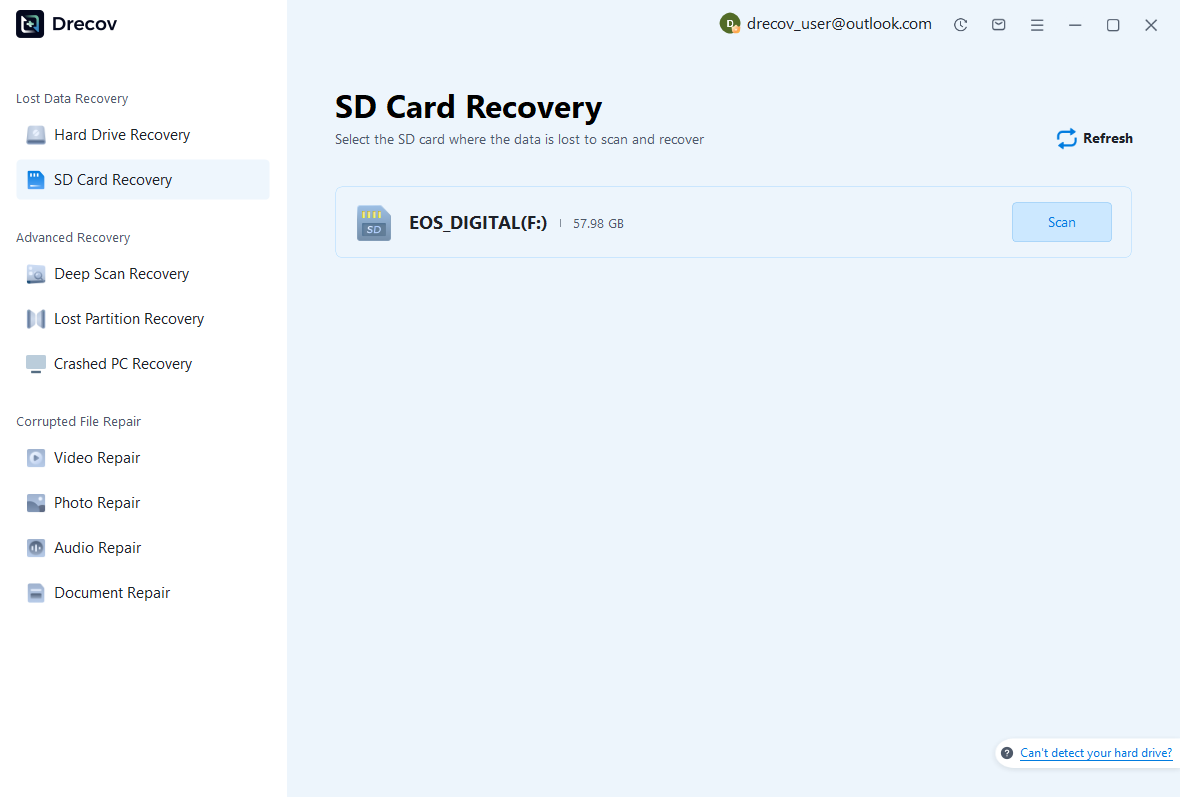


Why Choose PandaOffice Drecov Data Recovery Software?
When it comes to reliable data recovery, PandaOffice Drecov stands out as a powerful, all-in-one solution designed to handle a wide range of data loss scenarios. Whether you’re trying to perform TikTok deleted video recovery, restore files after formatting, or recover important documents, Drecov delivers fast and dependable results.
One of its biggest advantages is versatility. From format data recovery to lost partition recovery, the software can scan deeply and accurately locate files that other tools often miss. Even if your drive has been accidentally formatted or a partition has disappeared, Drecov uses advanced algorithms to reconstruct and retrieve your data with high success rates.
Drecov also supports specialized recovery needs. If you’ve lost important documents, its PDF recovery tool ensures that files retain their original structure and quality. For media users, the audio recovery feature helps restore music, recordings, and other sound files without corruption, making it ideal for both personal and professional use.
Ease of use is another key benefit. The intuitive interface allows beginners to recover files in just a few clicks, while still offering advanced options for more experienced users. Plus, it supports a wide range of storage devices, including HDDs, SSDs, USB drives, and memory cards.
In short, PandaOffice Drecov combines powerful recovery capabilities with user-friendly design, making it a trusted choice for anyone facing data loss.
⚠️ Warning: Always save recovered videos to a different drive to prevent overwriting.
Method 2: Recover Videos from Backup or Cloud Storage
If backups are available, recovery becomes much simpler and safer.
Test Environment:
- Device: MacBook Pro
- Backup: Cloud storage / external drive
- Scenario: Videos deleted from SD card but previously synced
Many users unknowingly have backups stored in cloud services or external drives. This method allows you to how to get back deleted videos from sd card without scanning the SD card itself.
Steps:
- Log into your cloud storage account.
- Check “Recently Deleted” or archive sections.
- Locate missing videos.
- Download them to your device.
This approach avoids risk and ensures original file quality, but it depends on whether backups exist.
Method 3: Use Built-in System Recovery Features
Operating systems sometimes provide recovery features that can help restore lost files.
Test Environment:
- Device: Windows 10 PC
- Tool: File History / Previous Versions
- Scenario: Videos deleted before formatting
Steps:
- Right-click the folder where videos were stored.
- Select “Restore previous versions.”
- Choose an earlier version.
- Restore the files.
Mac users can use Time Machine for similar recovery. While limited, this method can help in certain cases of recover deleted videos from sd card.
Method 4: Recover Videos from SD Card on Mobile Devices
Test Environment:
Android smartphone + OTG adapter + 32GB SD card (recently deleted videos)
When a computer is not available, users can still attempt to recover videos from sd card using mobile devices. This approach is especially useful for quick access or emergency recovery situations.
Many Android devices support OTG connections, allowing SD cards to be accessed directly. Some file manager apps can detect recently deleted files or cached media content.
Steps:
- Connect the SD card using an OTG card reader.
- Open a file manager or recovery-enabled app.
- Navigate to the SD card directory.
- Look for hidden or recently deleted files.
- Copy recoverable videos to internal storage.
This method works best for recent deletions and partial file loss. However, it may not be effective for deeply corrupted or formatted cards when trying how to recover lost videos from sd card.
⚠️ Warning: Avoid installing apps directly on the SD card during recovery attempts.
Advanced Scenarios for SD Card Video Recovery
Recovering videos after SD card formatting
Test Environment:
Windows 11 PC + formatted 64GB SD card (quick format, no overwrite)
Formatting removes the file system but often leaves raw data intact. This means it is still possible to recover deleted videos from sd card if no new data has replaced the original files.
Steps:
- Connect SD card to a computer.
- Use recovery software with deep scan mode.
- Scan the entire card sector-by-sector.
- Filter results by video file formats.
- Preview and recover available videos.
This approach is highly effective for users asking how to get deleted videos from sd card after accidental formatting.
⚠️ Warning: Do not store new files on the SD card before recovery.
Recovering videos from corrupted or unreadable SD cards
Test Environment:
Windows PC + SD card showing “format required” error
When an SD card becomes unreadable, videos may still exist but cannot be accessed normally. In such cases, advanced scanning techniques are required.
Steps:
- Insert SD card via a reliable card reader.
- Check Disk Management for detection.
- Use deep scan recovery tools.
- Extract found video files.
This method is essential for cases where users need to how to recover videos from sd card even when the card appears damaged.
Recovering partially damaged or unplayable video files
Test Environment:
macOS Ventura + SD card with corrupted MP4 files
Sometimes videos are recovered but cannot be played due to corruption. This often happens when recording is interrupted or file headers are damaged.
Steps:
- Use recovery software to extract video files.
- Attempt playback using different media players.
- Use video repair tools to rebuild file structure.
This scenario falls under both recovery and repair, and it is common in drone or camera recording failures.
Frequently Asked Questions About SD Card Video Recovery
How to recover videos from SD card after deletion?
Test Environment: General user scenario (camera SD card)
To recover videos from sd card after deletion, the most effective approach is to use recovery software immediately. Avoid writing new data to the card, then perform a deep scan to locate deleted files.
Recovery success depends on how quickly the process is started and whether the original data has been overwritten.
How to get back deleted videos from SD card without software?
Test Environment: Backup-enabled devices
If backups are available, users can how to get back deleted videos from sd card without using recovery tools. Cloud storage or external backups may contain copies of the lost videos.
Without backups, software-based recovery becomes necessary.
How to recover lost videos from SD card safely?
Test Environment: Mixed usage (mobile + PC + camera)
Safe recovery involves stopping SD card usage, choosing the right method, and saving recovered files to another location. Using trusted tools and avoiding repeated formatting increases success rates.
Conclusion and Key Takeaways
Best practices for preventing video loss on SD cards
Preventing data loss is always easier than recovery. Users can reduce the risk of losing videos by following simple practices.
- Always eject SD cards safely
- Avoid interrupting file transfers
- Keep backups of important videos
- Do not use low-quality or damaged SD cards
- Regularly check storage health
Understanding how storage systems work helps users respond quickly when issues arise. Whether dealing with deletion, formatting, or corruption, there are multiple ways to recover videos from sd card successfully.
By combining recovery software, backup strategies, and proper handling, users can significantly improve their chances of restoring lost video files without permanent damage.





