







Understanding SD Card Backup and Why It Matters
What is SD card backup and how it works
A sd card backup refers to the process of copying and storing all data from an SD card to another secure location such as a computer, external drive, or cloud storage. This ensures that even if the original card fails, your data remains safe and accessible.
When users choose to backup an sd card, they are essentially creating a duplicate copy of important files such as photos, videos, documents, and app data. This is especially important because SD cards are prone to corruption, accidental deletion, and physical damage.
If you are learning how to backup sd card, it’s important to understand that there are multiple methods available depending on your device and storage preference. Each method offers different levels of speed, convenience, and reliability.
A proper backup sd card strategy ensures long-term data protection and reduces the risk of permanent loss.
⚠️ Warning: SD cards have a limited lifespan and can fail without warning—regular backups are essential.
Why You Should Regularly Backup an SD Card
Risks of not creating an SD card backup
Failing to maintain a sd card backup can lead to serious data loss. SD cards are widely used in smartphones, cameras, drones, and other devices, but they are not designed for long-term storage reliability.
One major risk is accidental deletion. Users often lose files unintentionally while managing storage. Without a backup, recovering those files becomes difficult.
Another risk is corruption caused by improper removal or power failure. In such cases, users searching for how to backup sd card often realize too late that their data is already damaged.
Physical damage is also common. SD cards are small and fragile, making them vulnerable to bending, heat, or water exposure.
For users wondering how to sd card backup, understanding these risks highlights why proactive backup is essential rather than optional.
⚠️ Warning: Relying only on SD cards for storage is unsafe due to their instability compared to cloud or hard drives.
How to Backup SD Card Using Different Methods
Method 1: Backup SD Card to Computer (Windows/Mac)
Test Environment:
- Device: Windows 11 laptop
- SD Card: 128GB SanDisk microSD
- Connection: USB card reader
This is one of the most common ways to backup sd card data quickly and efficiently.
Steps:
- Insert the SD card into a card reader.
- Connect it to your computer.
- Open File Explorer (Windows) or Finder (Mac).
- Locate the SD card drive.
- Select all files or specific folders.
- Copy and paste them into a secure folder on your computer.
- Verify that all files are successfully transferred.
This method is ideal for users learning how to backup sd card manually without additional software.
It ensures full control over file selection and storage location.
Method 2: Cloud Storage SD Card Backup
Test Environment:
- Device: Android smartphone
- SD Card: 64GB Samsung EVO
- Service: Google Drive / Dropbox
Cloud storage is a convenient way to create a sd card backup without needing physical devices.
Steps:
- Open your cloud storage app.
- Create a new folder for SD card files.
- Select files from your SD card.
- Upload them to the cloud.
- Wait for synchronization to complete.
- Verify uploaded files online.
This method is especially useful for users who want to backup an sd card automatically and access files from anywhere.
⚠️ Warning: Ensure stable internet connection to avoid incomplete uploads.
Method 3: Backup SD Card to External Hard Drive
Test Environment:
- Device: Windows 10 PC
- SD Card: 256GB Lexar
- Storage: External HDD (1TB)
Using an external hard drive is a reliable method for large-scale backup sd card operations.
Steps:
- Connect both SD card and external hard drive to your computer.
- Open file manager.
- Select SD card data.
- Drag and drop files to the external drive.
- Wait for transfer completion.
- Confirm file integrity.
This method is ideal for photographers, videographers, or users with large SD card storage.
Method 4: Use Pandaoffice Drecov for Backup and Data Protection
Test Environment:
- Device: Windows 11 desktop
- SD Card: 128GB microSD
- Scenario: Mixed backup and file recovery
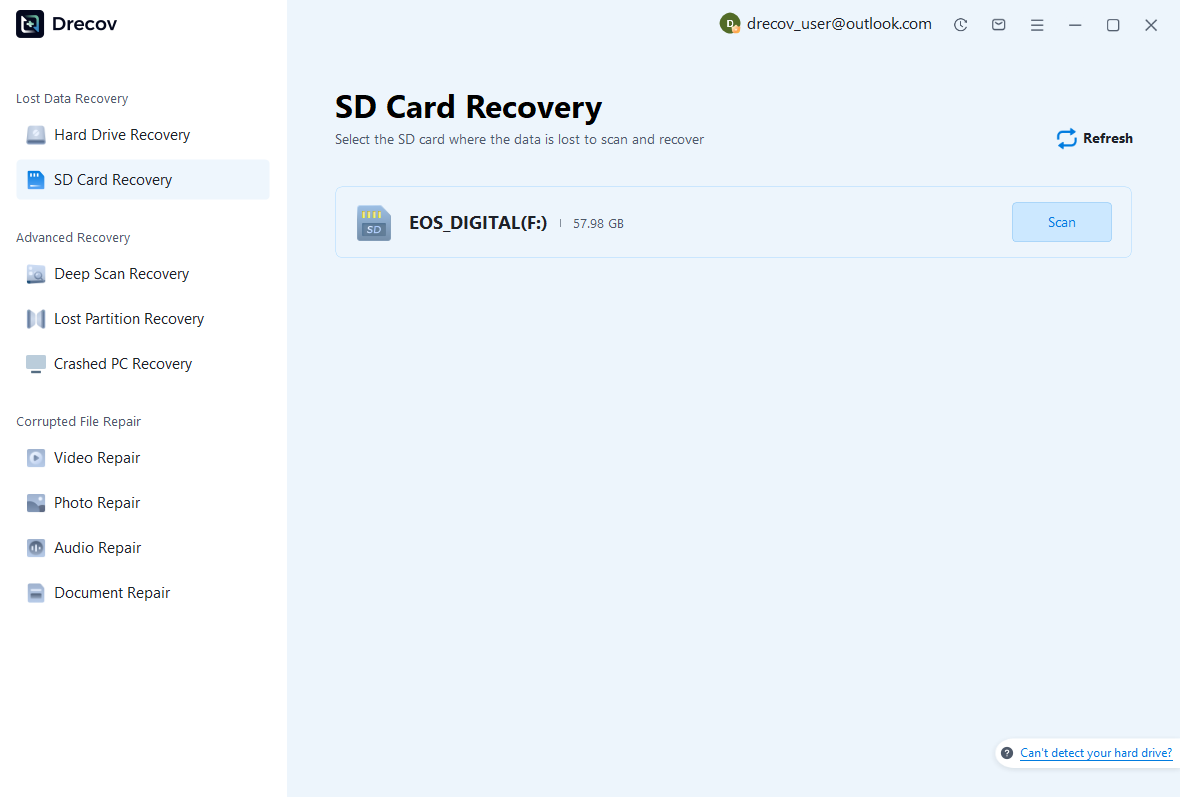
Pandaoffice Drecov can help users organize and protect data before performing a full sd card backup.
Steps:
- Insert SD card into computer.
- Launch Pandaoffice Drecov.
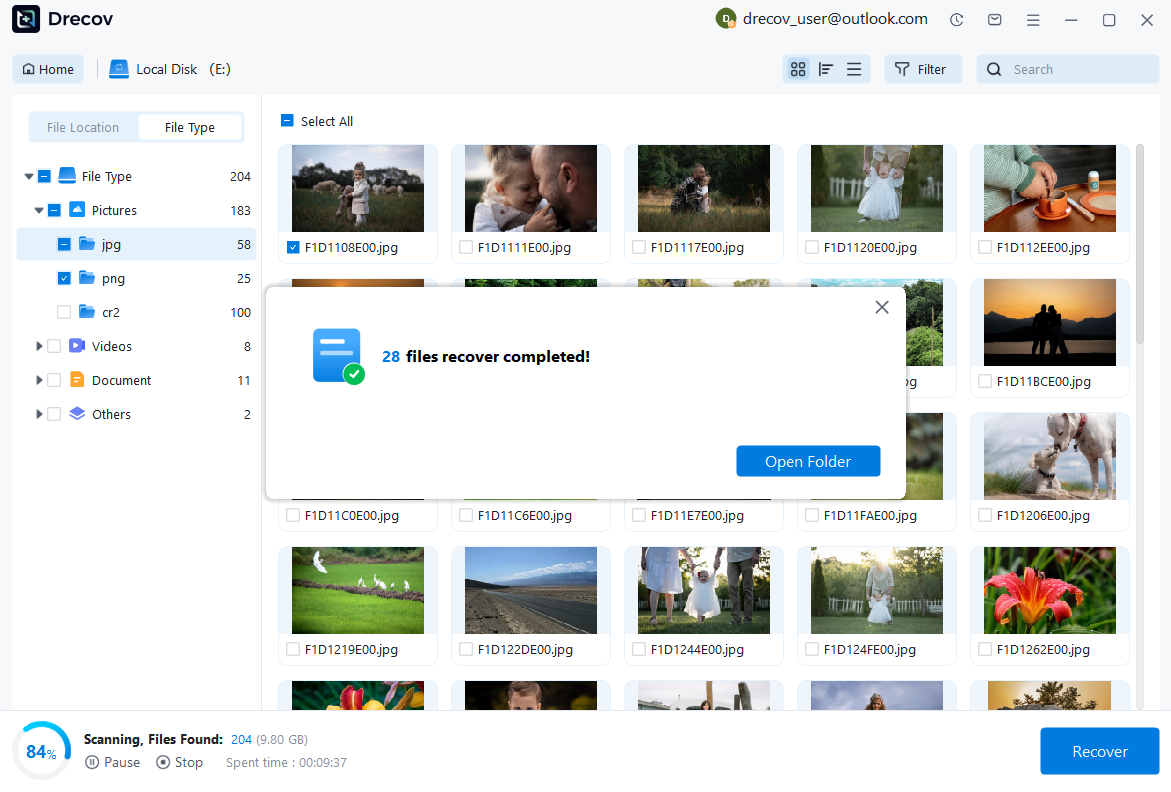
- Scan SD card for files and duplicates.
- Recover important files if needed.
- Export selected data to a safe location.
- Complete backup to external storage or PC.
This method is useful when users want to clean and secure data before they backup sd card content.

Why Choose PandaOffice Drecov Data Recovery Software?
When it comes to reliable data recovery, PandaOffice Drecov stands out as a powerful, all-in-one solution designed to handle a wide range of data loss scenarios. Whether you’re trying to perform TikTok deleted video recovery, restore files after formatting, or recover important documents, Drecov delivers fast and dependable results.
One of its biggest advantages is versatility. From format data recovery to lost partition recovery, the software can scan deeply and accurately locate files that other tools often miss. Even if your drive has been accidentally formatted or a partition has disappeared, Drecov uses advanced algorithms to reconstruct and retrieve your data with high success rates.
Drecov also supports specialized recovery needs. If you’ve lost important documents, its PDF recovery tool ensures that files retain their original structure and quality. For media users, the audio recovery feature helps restore music, recordings, and other sound files without corruption, making it ideal for both personal and professional use.
Ease of use is another key benefit. The intuitive interface allows beginners to recover files in just a few clicks, while still offering advanced options for more experienced users. Plus, it supports a wide range of storage devices, including HDDs, SSDs, USB drives, and memory cards.
In short, PandaOffice Drecov combines powerful recovery capabilities with user-friendly design, making it a trusted choice for anyone facing data loss.
Method 5: Backup SD Card Using File Transfer Apps
Test Environment:
- Device: Android 12 smartphone
- SD Card: 64GB microSD
- Tool: File manager app
Mobile file manager apps make it easy to how to backup sd card without a computer.
Steps:
- Open file manager app.
- Select SD card storage.
- Choose files or folders.
- Tap “Copy” or “Move.”
- Select internal storage or cloud destination.
- Confirm transfer.
This method is useful for quick backups directly from mobile devices.
Advanced Strategies for Reliable SD Card Backup
Best practices to improve backup efficiency and safety
When performing a sd card backup, following advanced strategies can significantly improve reliability and long-term data protection. Many users only copy files once, but a proper backup strategy should be ongoing and structured.
First, always follow the “3-2-1 backup rule”: keep three copies of your data, store them on two different types of storage, and keep one copy offsite. This ensures your backup sd card data remains safe even in case of device failure or loss.
Second, schedule regular backups instead of doing them manually only when storage is full. If you are learning how to backup sd card, automation tools or cloud sync can help reduce human error.
Third, verify your backup after every transfer. Many users assume files are safe, but incomplete transfers can happen silently.
For users asking how to sd card backup, consistency is more important than complexity.
⚠️ Warning: Never rely on a single storage device for backup purposes.
Common Mistakes When Backing Up an SD Card
Errors that lead to incomplete or failed backups
Even though sd card backup is simple, users often make mistakes that reduce effectiveness or lead to data loss.
One common mistake is copying only visible files while ignoring hidden system or app data. This results in incomplete backup sd card copies.
Another mistake is storing backups on the same physical device. If the device fails, both original and backup data may be lost.
Users also often skip verifying files after transfer. Without checking, corrupted or incomplete files may go unnoticed.
Additionally, interrupting the backup process can cause missing or damaged files, especially when handling large SD cards.
For those learning how to backup sd card, avoiding these mistakes is just as important as choosing the right method.
⚠️ Warning: Always safely eject SD cards before removing them to prevent data corruption.
Frequently Asked Questions About SD Card Backup
How often should I backup my SD card?
It is recommended to perform a sd card backup at least once a week or whenever new important files are added. Frequent backups reduce the risk of data loss.
What is the safest way to backup an SD card?
The safest method is using multiple storage locations such as a computer and cloud storage. This ensures your backup sd card is protected even if one system fails.
Can I backup an SD card without a computer?
Yes, you can use cloud apps or mobile file managers. These methods allow users to how to backup sd card directly from smartphones.
Why is my SD card backup incomplete?
This may happen due to interrupted transfer, insufficient storage space, or hidden files not being selected during backup. Always verify after performing how to sd card backup processes.
Is cloud backup better than physical backup?
Both have advantages. Cloud backup offers remote access, while physical backup (like HDDs) provides faster recovery. Combining both is ideal for a complete sd card backup strategy.
Conclusion: Key Takeaways for SD Card Backup
Final thoughts on protecting your SD card data
Creating a reliable sd card backup is essential for protecting important files from unexpected loss. Whether due to accidental deletion, corruption, or hardware failure, SD cards are not risk-free storage devices.
By using methods like computer transfer, cloud storage, external drives, or advanced tools, users can easily backup sd card data and ensure long-term safety.
For anyone still learning how to backup sd card, the key takeaway is consistency. Regular backups, multiple storage locations, and verification are the foundation of strong data protection.
Understanding how to sd card backup properly not only saves time but also prevents irreversible data loss in critical situations.





