







Understanding What Is a Hard Disk Drive on a Computer
What is hard disk and hard drive explained simply
To understand what is a hard disk drive on a computer, think of it as the main storage system where all your data lives. A hard disk drive (HDD) stores operating systems, applications, documents, and media files.
The terms what is hard disk and hard drive are often used interchangeably, although technically they refer to slightly different things. The hard disk is the physical storage medium, while the hard drive includes the entire device that reads and writes data.
Inside an HDD, spinning disks (platters) store data magnetically. A read/write head moves across the surface to access files. This mechanical design is what makes HDDs different from solid-state drives.
What is hard drive disk and how it works
If you’ve ever wondered what is hard drive disk, it refers to the magnetic platters inside the drive. These platters rotate at high speeds, typically 5400 or 7200 RPM, allowing quick access to stored data.
Data is organized into sectors and tracks. When you save a file, the system records its location in a file table, making retrieval fast and efficient.
This system is used across devices, including desktops and hard disk drive laptop models, ensuring compatibility and reliability.
Why Hard Disk Drives Are Still Important Today
What is a hard disk drive used for in modern systems
Many users ask what is a hard disk drive used for in today’s world of SSDs. Despite newer technology, HDDs remain widely used due to their affordability and large storage capacity.
Common uses include:
- Storing large media files (videos, photos)
- Backup and archival storage
- Business data management
- Gaming libraries
For example, a hard disk drive 10tb is ideal for users who need massive storage without high costs.
Advantages of HDD compared to other storage types
Hard disk drives offer several benefits:
- Lower cost per gigabyte
- High storage capacity
- Long-term data storage reliability
While SSDs are faster, HDDs remain practical for bulk storage needs, especially in systems where speed is not the primary concern.
⚠️Warning: HDDs are sensitive to physical damage due to moving parts, so handle them carefully.
Key Components of a Hard Disk Drive
Internal structure of an HDD
Understanding the internal parts helps explain what is hard disk drive laptop and desktop storage systems.
Key components include:
- Platters: Store data magnetically
- Spindle: Rotates platters
- Read/write head: Accesses data
- Actuator arm: Moves the head across platters
These components work together to store and retrieve information efficiently.
How data is written and read
When saving data, the write head magnetizes tiny areas on the platter surface. When reading, it detects magnetic changes and converts them into digital signals.
This process allows the system to access files quickly, even on large drives like a hard disk drive 10tb.
Types of Hard Disk Drives and Their Uses
Internal vs external hard disk drives
Hard disk drives come in different forms depending on their use.
Internal drives are installed inside a computer, while external drives connect via USB or other interfaces. Both types serve similar purposes but offer different levels of portability.
External drives are often used for backups, while internal drives handle operating systems and daily storage.
Hard disk drive laptop vs desktop differences
A hard disk drive laptop is typically smaller (2.5-inch) and designed for portability. Desktop HDDs are larger (3.5-inch) and often provide higher capacity.
Despite size differences, both function similarly and store data using the same principles.
How to Maintain and Use a Hard Disk Drive Properly
Method 1: Regular Disk Cleanup and Optimization
Test Environment
- OS: Windows 11
- Device: Desktop with HDD
- Scenario: Improving drive performance
Regular maintenance helps extend the lifespan of your HDD.
Steps
- Open Disk Cleanup tool
- Select the drive to clean
- Remove temporary files
- Run disk optimization (defragmentation)
- Restart system
This method improves performance and ensures efficient storage usage.
Method 2: Monitor Disk Health and Prevent Failures
Test Environment
- OS: Windows 10/11
- Tool: Built-in disk monitoring tools
- Scenario: Preventing data loss
Monitoring drive health helps avoid unexpected failures.
Steps
- Open Command Prompt
- Run: wmic diskdrive get status
- Check drive health status
- Use third-party tools if needed
Regular monitoring helps detect issues early.
Method 3: Recover Data from a Hard Disk Drive Using PandaOffice Drecov
Test Environment
- OS: Windows 11 / macOS
- Scenario: Accidental file deletion or drive corruption
- Drive Type: Internal HDD / external drive
If data loss occurs, recovery tools can help restore files.
Steps
- Install PandaOffice Drecov on a separate drive
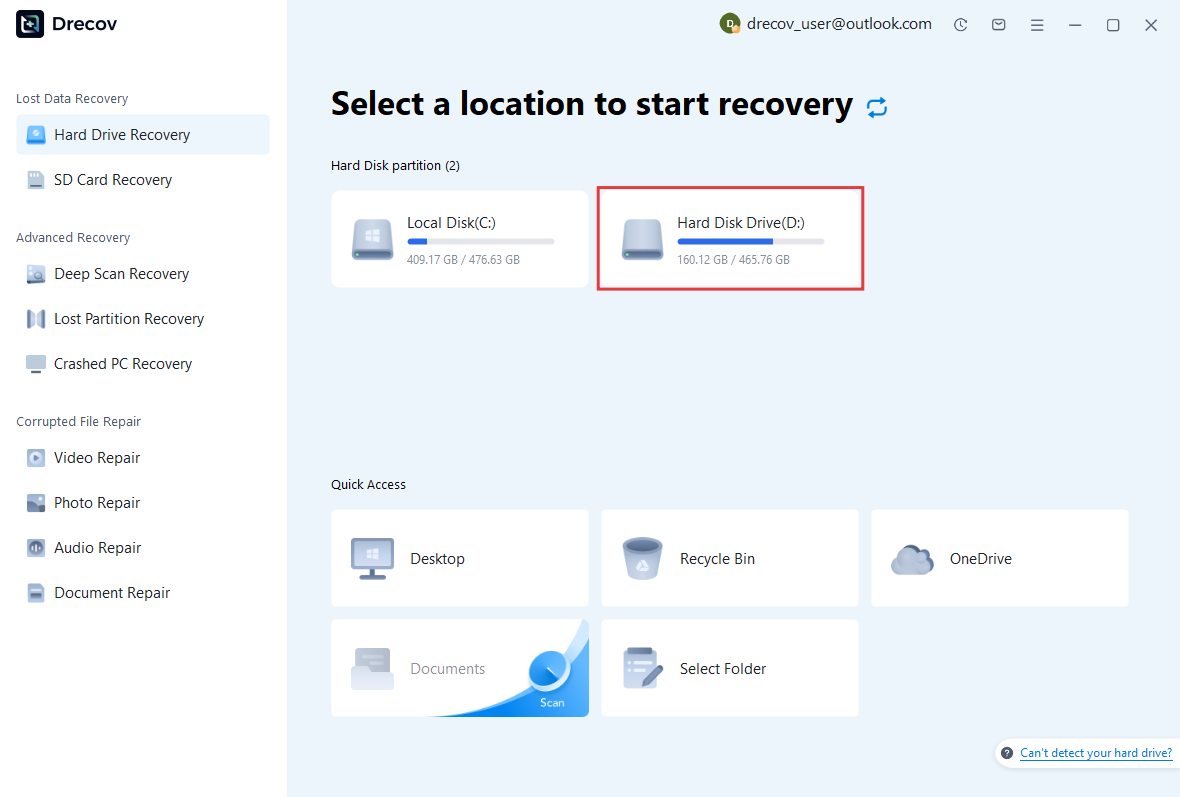
- Select the affected HDD
- Choose recovery mode
- Perform deep scan
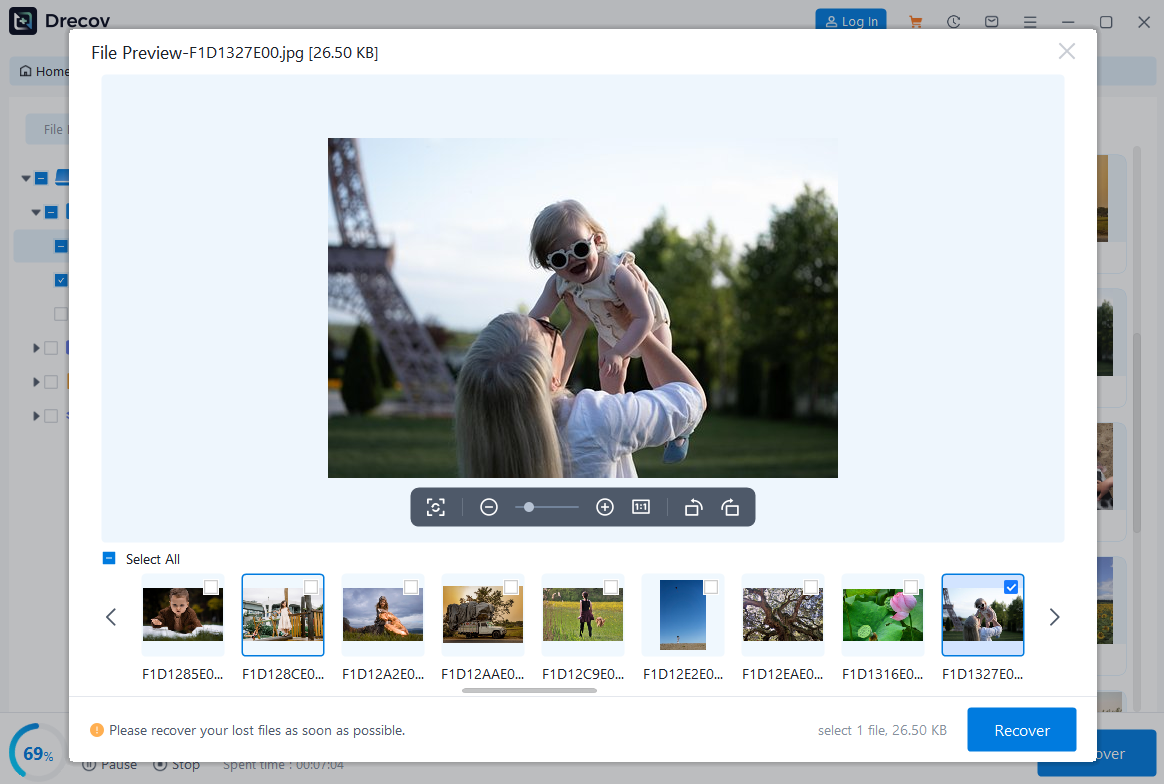
- Preview recoverable files
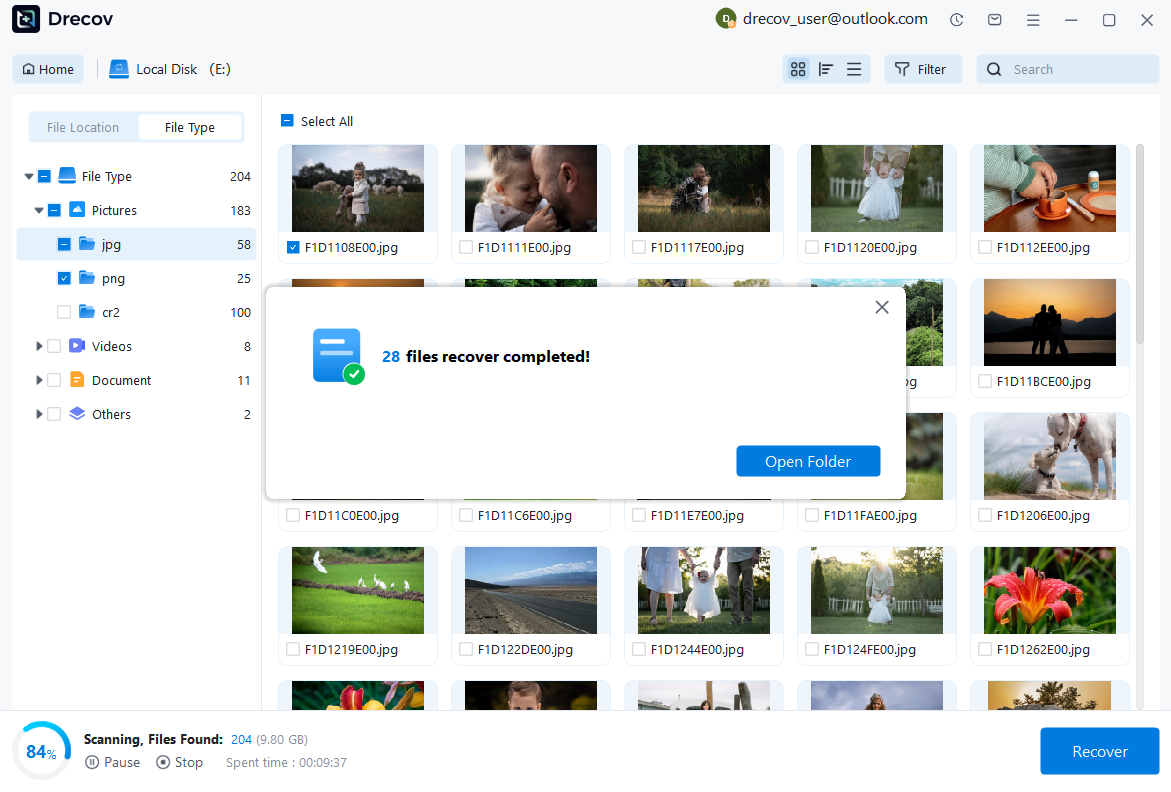
- Restore files to another location
This method is effective for retrieving lost data from damaged or corrupted drives.
Why Choose PandaOffice Drecov Data Recovery Software?
When it comes to reliable data recovery, PandaOffice Drecov stands out as a powerful, all-in-one solution designed to handle a wide range of data loss scenarios. Whether you’re trying to perform TikTok deleted video recovery, restore files after formatting, or recover important documents, Drecov delivers fast and dependable results.
One of its biggest advantages is versatility. From format data recovery to lost partition recovery, the software can scan deeply and accurately locate files that other tools often miss. Even if your drive has been accidentally formatted or a partition has disappeared, Drecov uses advanced algorithms to reconstruct and retrieve your data with high success rates.
Drecov also supports specialized recovery needs. If you’ve lost important documents, its PDF recovery tool ensures that files retain their original structure and quality. For media users, the audio recovery feature helps restore music, recordings, and other sound files without corruption, making it ideal for both personal and professional use.
Ease of use is another key benefit. The intuitive interface allows beginners to recover files in just a few clicks, while still offering advanced options for more experienced users. Plus, it supports a wide range of storage devices, including HDDs, SSDs, USB drives, and memory cards.
In short, PandaOffice Drecov combines powerful recovery capabilities with user-friendly design, making it a trusted choice for anyone facing data loss.
⚠️Warning: Avoid installing recovery software on the affected drive.
Advanced Insights into Hard Disk Drive Performance and Usage
How storage capacity impacts performance
When discussing what is hard disk drive on a computer, storage capacity is a key factor. Larger drives, such as a hard disk drive 10tb, provide significant space for storing data, but they can also influence performance depending on how the data is organized.
As storage fills up, file fragmentation increases. This means files are split across different areas of the disk, requiring the read/write head to move more frequently. As a result, access speeds may slow down.
In systems using a hard disk drive laptop, performance optimization becomes even more important due to limited space and power constraints. Keeping sufficient free space (at least 15–20%) helps maintain efficiency.
Differences between HDD and SSD performance
While HDDs rely on mechanical parts, SSDs use flash memory. This makes SSDs faster, but HDDs remain relevant due to cost efficiency and storage size.
Understanding what is hard drive disk helps clarify why HDDs are slower—they depend on spinning platters and moving components. However, for long-term storage and backups, HDDs are still highly effective.
Common Problems with Hard Disk Drives and How to Avoid Them
Typical issues affecting HDD reliability
Even though HDDs are widely used, they are not immune to problems. Users often encounter:
- Slow performance over time
- Clicking or unusual noises
- Data corruption
- Drive not being detected
These issues can affect both desktop systems and hard disk drive laptop setups.
Preventive measures to extend drive lifespan
To reduce the risk of failure, consider the following practices:
- Avoid physical shocks or drops
- Keep the system cool and well-ventilated
- Perform regular backups
- Run periodic disk checks
⚠️Warning: Ignoring unusual noises from your HDD may lead to permanent data loss.
Best Practices for Choosing the Right Hard Disk Drive
Selecting the right HDD for your needs
Choosing the right drive depends on how you plan to use it. Understanding what is a hard disk drive used for helps determine the best option.
For example:
- General users: 1TB–4TB HDD
- Content creators: 6TB–10TB HDD
- Businesses: High-capacity drives like hard disk drive 10tb
Each option provides different levels of storage and performance.
Factors to consider before buying
When selecting a hard disk drive, consider:
- Storage capacity
- Speed (RPM)
- Reliability and brand reputation
- Compatibility with your system
For laptop users, choosing a compatible hard disk drive laptop model is essential for proper installation and performance.
Frequently Asked Questions About Hard Disk Drives
What is a hard disk drive on a computer used for?
A hard disk drive is used to store all types of data, including operating systems, applications, and personal files. It acts as long-term storage, allowing users to save and retrieve information whenever needed.
This answers the common question: what is a hard disk drive used for in everyday computing.
What is the difference between hard disk and hard drive?
Many users ask about what is hard disk and hard drive differences. The hard disk refers to the physical storage medium (platters), while the hard drive includes the entire unit that reads and writes data.
In practice, both terms are often used interchangeably.
Can a hard disk drive fail suddenly?
Yes, HDDs can fail without warning, especially if they experience physical damage or prolonged wear. Regular backups are essential to prevent data loss.
Final Thoughts on Understanding Hard Disk Drives
Key takeaways about HDD technology
Understanding what is hard disk drive on a computer helps users make better decisions about storage and data management. HDDs remain a reliable and cost-effective solution for storing large amounts of data.
From basic home use to enterprise-level storage, HDDs continue to play an important role in modern computing.
Building a long-term storage strategy
To make the most of your HDD:
- Maintain regular backups
- Monitor drive health
- Choose appropriate storage capacity
- Combine HDD with SSD for balanced performance
By understanding what is hard drive disk and how it functions, users can optimize storage systems and avoid common data loss issues.






