







Understanding PDF Loss on D Drive and File Recovery Basics
What is D Drive and how it stores PDF files
Before learning how to recover PDF from D Drive, it is important to understand what a d_drive actually is. On Windows systems, the D drive is usually a secondary partition or external storage labeled as “D”, often used for documents, backups, or project files.
A pdf document stored on drives d is not saved as a single continuous block. Instead, it is split into fragments stored across the disk, with the file system (NTFS or exFAT) recording its location through metadata.
When a file disappears, the system usually removes only the index entry—not the actual content. This makes recover pdf file operations possible using recovery tools.
Why PDF files get lost from D Drive
Users often need to learn how to recover pdf file from a d_drive due to:
- Accidental deletion
- Formatting the D partition
- File system corruption
- Virus attacks or system crashes
In most cases, the data still physically exists on drives d, but becomes invisible to the operating system.
⚠️Warning: Do not copy or save new files to the affected D drive after data loss.
Common Causes of PDF File Loss on D Drive
User mistakes and accidental deletion
Many recover pdf cases happen due to human error. Users may delete files while cleaning folders or mistakenly move them to unknown locations.
Sometimes files are permanently removed without going through the Recycle Bin, making recovery more complex and requiring deeper scanning tools.
Other causes include:
- Sudden power failure during saving
- Corrupted file system on d_drive
- Bad sectors on storage devices
- Malware or system crashes
Even stable drives d setups can experience these issues over time.
Effective Methods to Recover PDF from D Drive
Method 1: Check Recycle Bin and Temporary Files
Test Environment
- OS: Windows 11
- Scenario: Recently deleted PDF file from D drive
- Application: Adobe Reader / Edge PDF viewer
Before using advanced tools, always check basic recovery options first.
Steps
- Open Recycle Bin on desktop
- Search for deleted PDF files
- Right-click and select “Restore”
- Check original folder in d_drive
- Open file using a PDF reader
This is the fastest way to recover pdf file if deletion was recent and not overwritten.
Method 2: Restore Previous Versions from D Drive
Test Environment
- OS: Windows 10/11
- Feature: File History enabled
- Scenario: File overwritten or missing from drives d
Windows can restore earlier file versions if backups were enabled.
Steps
- Open File Explorer
- Right-click folder on d_drive
- Select “Restore previous versions”
- Choose available restore point
- Restore PDF file
This method is effective for recovering older pdf document versions without third-party tools.
Method 3: Search Hidden or Lost PDF Files
Test Environment
- OS: Windows 11
- Scenario: File not deleted but missing from folder
Sometimes files are not lost but simply hidden or misplaced within d_drive.
Steps
- Open File Explorer
- Search using
*.pdf - Enable “Hidden items” view
- Sort by date modified
- Locate and open file
This method helps users understand how to recover pdf file without software.
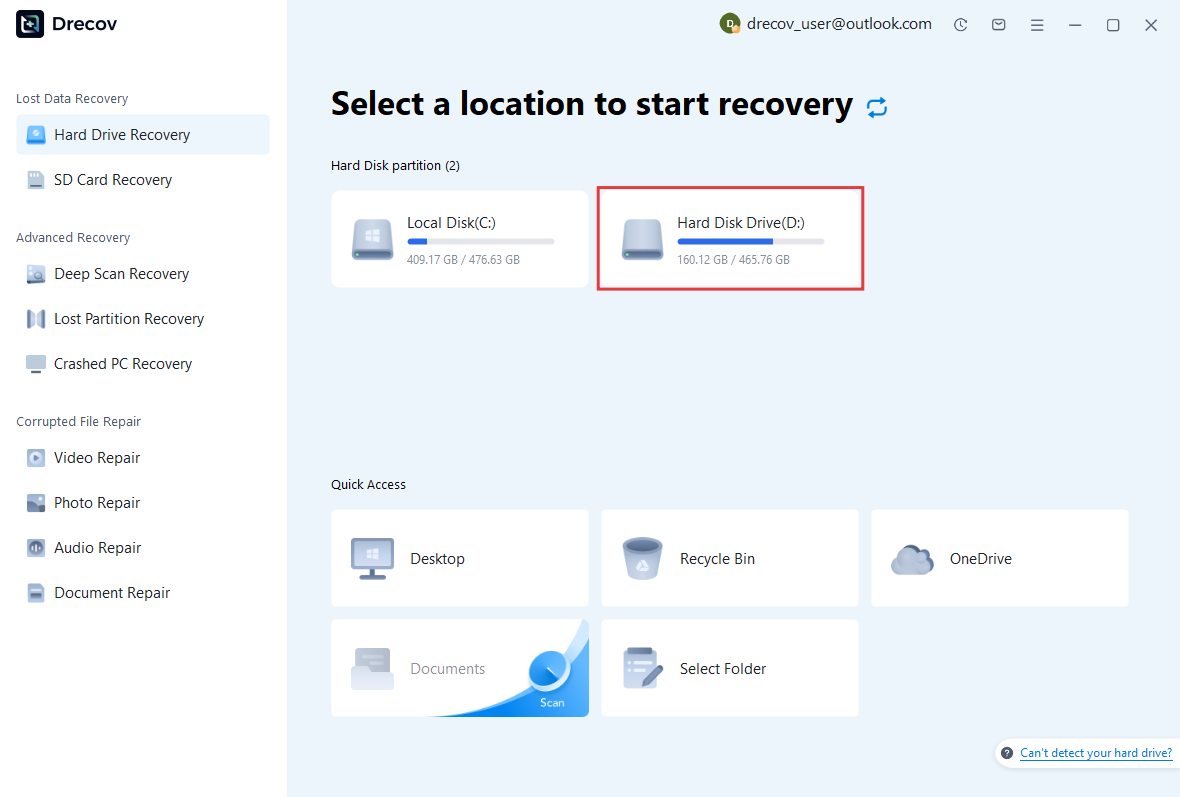
Method 4: Deep Scan Using Professional Recovery Tool (PandaOffice Drecov)
Test Environment
- OS: Windows 11 / macOS
- Scenario: Deleted or formatted d_drive
- Drive Type: HDD / SSD / external storage (drives d)
When basic methods fail, deep scanning is the most reliable solution to recover PDF from D Drive. This method works by scanning raw disk sectors instead of relying on file system records.
Steps
- Install PandaOffice Drecov on a different drive (not d_drive)
- Launch the software and select target d_drive
- Choose “Document Recovery Mode”
- Run deep scan across the entire disk
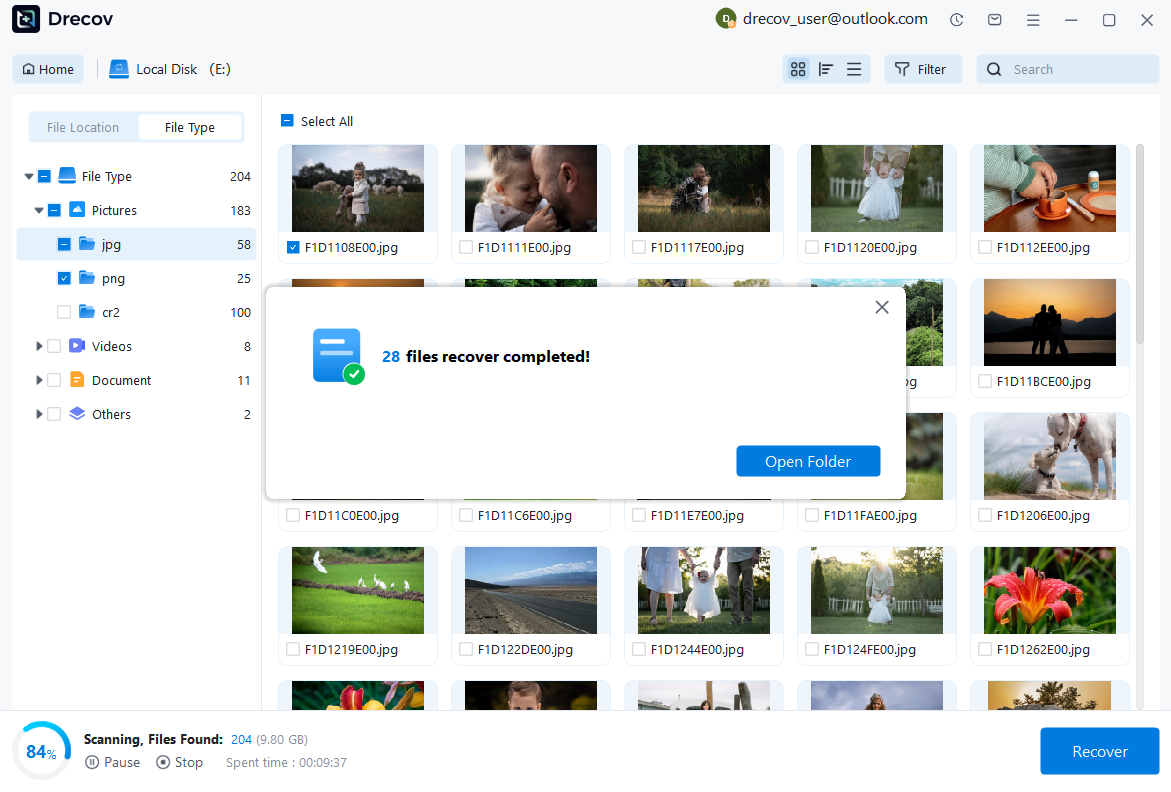
- Filter results by pdf document or file extension (.pdf)
- Preview files before recovery
- Save recovered files to a separate storage location
This method is especially useful when users need to recover pdf file after formatting or corruption of drives d.
Unlike basic tools, PandaOffice Drecov reconstructs fragmented files more effectively.

Why Choose PandaOffice Drecov Data Recovery Software?
When it comes to reliable data recovery, PandaOffice Drecov stands out as a powerful, all-in-one solution designed to handle a wide range of data loss scenarios. Whether you’re trying to perform TikTok deleted video recovery, restore files after formatting, or recover important documents, Drecov delivers fast and dependable results.
One of its biggest advantages is versatility. From format data recovery to lost partition recovery, the software can scan deeply and accurately locate files that other tools often miss. Even if your drive has been accidentally formatted or a partition has disappeared, Drecov uses advanced algorithms to reconstruct and retrieve your data with high success rates.
Drecov also supports specialized recovery needs. If you’ve lost important documents, its PDF recovery tool ensures that files retain their original structure and quality. For media users, the audio recovery feature helps restore music, recordings, and other sound files without corruption, making it ideal for both personal and professional use.
Ease of use is another key benefit. The intuitive interface allows beginners to recover files in just a few clicks, while still offering advanced options for more experienced users. Plus, it supports a wide range of storage devices, including HDDs, SSDs, USB drives, and memory cards.
In short, PandaOffice Drecov combines powerful recovery capabilities with user-friendly design, making it a trusted choice for anyone facing data loss.
⚠️Warning: Do not install recovery software directly on the affected D drive.
Method 5: Use CHKDSK to Repair D Drive Errors
Test Environment
- OS: Windows 10/11
- Tool: Command Prompt
- Scenario: Logical errors on d_drive
If the issue is caused by file system corruption, repairing the drive may restore access to lost PDFs.
Steps
- Open Command Prompt as Administrator
- Run the command: chkdsk D: /f
- Wait for scanning and repair process
- Restart system if needed
- Check recovered or restored files
This method helps users fix what is d drive related corruption issues that prevent file access.
Understanding How PDF Recovery Works Internally
How deleted PDF files still exist on d_drive
When a file is deleted from d_drive, only the file index is removed. The actual binary data remains on the disk until overwritten.
This is why tools designed for pdf recover can still locate and rebuild files.
The system marks space as “free,” but does not erase it immediately.
Why recovery success depends on timing
The success of recover pdf file operations depends heavily on how quickly recovery is attempted.
Key factors include:
- Time since deletion
- Amount of new data written to drives d
- Level of fragmentation
- Disk health condition
The earlier the recovery starts, the higher the success rate.
Common Mistakes During PDF Recovery
Actions that reduce recovery success
Many users unintentionally reduce recovery chances when trying to recover pdf from a d_drive:
- Saving new files to the same drive
- Installing recovery tools on d_drive
- Running multiple recovery programs simultaneously
- Ignoring early warning signs of file corruption
These actions can overwrite lost data permanently.
Safe recovery practices
To safely perform how to recover pdf file, follow these best practices:
- Always use a separate drive for recovery tools
- Scan in read-only mode when possible
- Recover files to a different storage location
- Prioritize important PDFs first
⚠️Warning: Overwriting disk space can make recovery impossible.
Frequently Asked Questions About PDF Recovery from D Drive
Can I recover PDF files after formatting D drive?
Yes, it is often possible to recover PDF from D Drive even after formatting. Formatting usually removes indexing information but does not immediately erase data.
Deep scan tools can reconstruct pdf document files if they have not been overwritten.
Why are my PDF files corrupted on drives d?
PDF corruption may occur due to:
- Sudden system shutdown
- Bad sectors on storage
- Malware infection
- Interrupted file saving process
Corrupted files may still be partially recoverable using advanced tools.
What is the safest way to recover PDF files?
The safest method for recover pdf file recovery is:
- Stop using d_drive immediately
- Run deep scan recovery tools
- Use preview before restoring files
- Save recovered files externally
This reduces the risk of further data damage.
Final Thoughts on PDF Recovery from D Drive
Key takeaways for successful recovery
Recovering PDFs from a d_drive is possible in most cases if proper steps are followed. Whether files are deleted, corrupted, or lost due to formatting, multiple recovery methods exist.
Simple solutions like checking Recycle Bin may work for recent deletions, while advanced tools are required for deeper recovery scenarios.
Understanding how drives d manage data improves your ability to handle file loss situations.
Building a long-term data protection strategy
To avoid repeated recovery situations, users should adopt preventive habits:
- Regular backups of important pdf document files
- Use cloud storage alongside local storage
- Monitor disk health regularly
- Avoid unsafe shutdowns or interruptions
By combining prevention and recovery strategies, you significantly reduce the need to repeatedly recover pdf file or rely on emergency tools.
Ultimately, knowing how to recover pdf file from d_drive ensures your documents remain protected, even in unexpected data loss situations.






