







Portable hard drives have become an essential storage solution for both personal and professional users. From backing up family photos to storing critical business documents, these devices offer convenience and large capacity. However, data loss on a portable hard drive can happen unexpectedly due to accidental deletion, formatting, virus attacks, file system corruption, or physical damage. When this happens, many users panic and assume their files are gone forever. Fortunately, in most cases, recover data from portable hard drive scenarios are completely solvable with the right approach.
Understanding how portable hard disk data loss occurs is the first step toward successful portable hard disk data recovery. Unlike internal drives, portable hard drives are frequently unplugged, moved between systems, and exposed to unstable power supplies. These factors significantly increase the risk of logical errors. The good news is that deleted or lost files are often still present on the drive until overwritten by new data. Acting quickly and correctly can dramatically improve recovery success.
This guide provides a comprehensive explanation of How to Recover Data from Portable Hard Drive using safe, proven methods. You will learn what to do immediately after data loss, how to diagnose common problems, and which recovery solutions are most effective for different situations. We also explain when professional software like Pandaoffice drecov is the best choice and when hardware repair may be required.
⚠️Warning: Continuing to use the portable hard drive after data loss can overwrite recoverable data. Stop using the drive immediately once you notice missing files.
I have a WD my passport that is like 5 years old but I only started using it a year ago. It’s nowhere near full but one day my PC stopped recognizing it. It clicks like 6 times when I plug it in and I don’t see it come up in file explorer. I never dropped it, and it has no water damage or other types of damage. Technically its for a mac, but I downloaded the WD software to be able to use it on Windows as well. The light goes on when I plug it into my PC, it does not come up under devices/drives. In the hidden icons on my taskbar, it shows I can eject the My Passport 260F. I’m not exactly sure how to read disk management either, but I can attach a picture of what I see. Any advice? I’d like to weigh the best options before going and spending 600$ at geek squad or micro center for them to screw it all up. TIA—From Reddit
Common Reasons for Data Loss on Portable Hard Drives
Data loss on a portable hard drive rarely happens without cause. Identifying the exact reason helps determine the most effective portable hard disk data recovery method. In many cases, data loss is logical rather than physical, meaning recovery is highly possible.
One of the most frequent causes is accidental deletion. Users may delete files manually or empty the Recycle Bin without realizing important data was included. Another common issue is formatting errors, such as formatting the wrong drive or being prompted to format a drive due to file system corruption. Formatting does not immediately erase data, which means you can still recover data from portable hard drive devices if no new files are written.
Virus or malware infections can also hide, delete, or encrypt files. In such cases, files may seem missing even though they still exist on the drive. Improper ejection is another major risk. Unplugging a portable hard drive without using “Safely Remove Hardware” can corrupt the file system and make data inaccessible.
Additionally, bad sectors and logical errors caused by aging hardware or unstable power supplies can prevent files from being read correctly. While these problems may appear severe, recovery software can often bypass damaged areas to extract intact files.
⚠️Warning: If the drive makes clicking or grinding noises, stop using it immediately—this may indicate physical damage.
What to Do Immediately After Data Loss
Your actions immediately after discovering data loss can determine whether recovery succeeds or fails. Many users unknowingly reduce their chances of recovery by continuing to use the affected drive. The moment you realize files are missing, you should stop all write operations to the portable hard drive.
First, disconnect the portable hard drive safely. Avoid copying new files, installing software, or running disk repair tools that write data to the drive. Even simple actions like opening files can cause overwriting. Preserving the drive’s current state is critical for successful recover data from portable hard drive attempts.
Next, assess whether the issue is logical or physical. If the drive is detected by your computer but files are missing, renamed, or inaccessible, the problem is likely logical. This scenario is ideal for software-based portable hard disk data recovery. If the drive does not appear at all or shows unusual noises, professional repair may be required.
It is also recommended to prepare a separate storage device to save recovered files. Never restore recovered data back to the same portable hard drive, as this can overwrite remaining recoverable files.
⚠️Warning: Do not attempt repeated formatting or CHKDSK repairs before recovery, as these actions can permanently erase lost data.
Method 1: Recover Data Using Pandaoffice drecov Software
Why Pandaoffice drecov Is Effective for Portable Hard Drive Recovery
When dealing with logical data loss, professional recovery software offers the highest success rate. Pandaoffice drecov is designed specifically to handle complex data loss scenarios, making it a reliable solution to recover data from portable hard drive devices.
Pandaoffice drecov supports recovery from accidental deletion, formatting, file system corruption, virus attacks, and partition loss. It works with common file systems such as NTFS, FAT32, exFAT, and more, ensuring broad compatibility across portable hard drives used on Windows systems. Its advanced scanning engine performs both quick scans for recently deleted files and deep scans for deeply buried data.
One key advantage of Pandaoffice drecov is its read-only recovery process, which ensures that no additional data is written to the affected drive during scanning. This significantly reduces the risk of overwriting lost files. The software also provides a preview function, allowing users to verify recoverable files before restoration.
For users looking for a balance between ease of use and technical depth, Pandaoffice drecov offers an intuitive interface while still delivering powerful portable hard disk data recovery capabilities.
⚠️Warning: Always install recovery software on your system drive, not on the portable hard drive you want to recover from.
Step-by-Step Guide to Recover Data from Portable Hard Drive
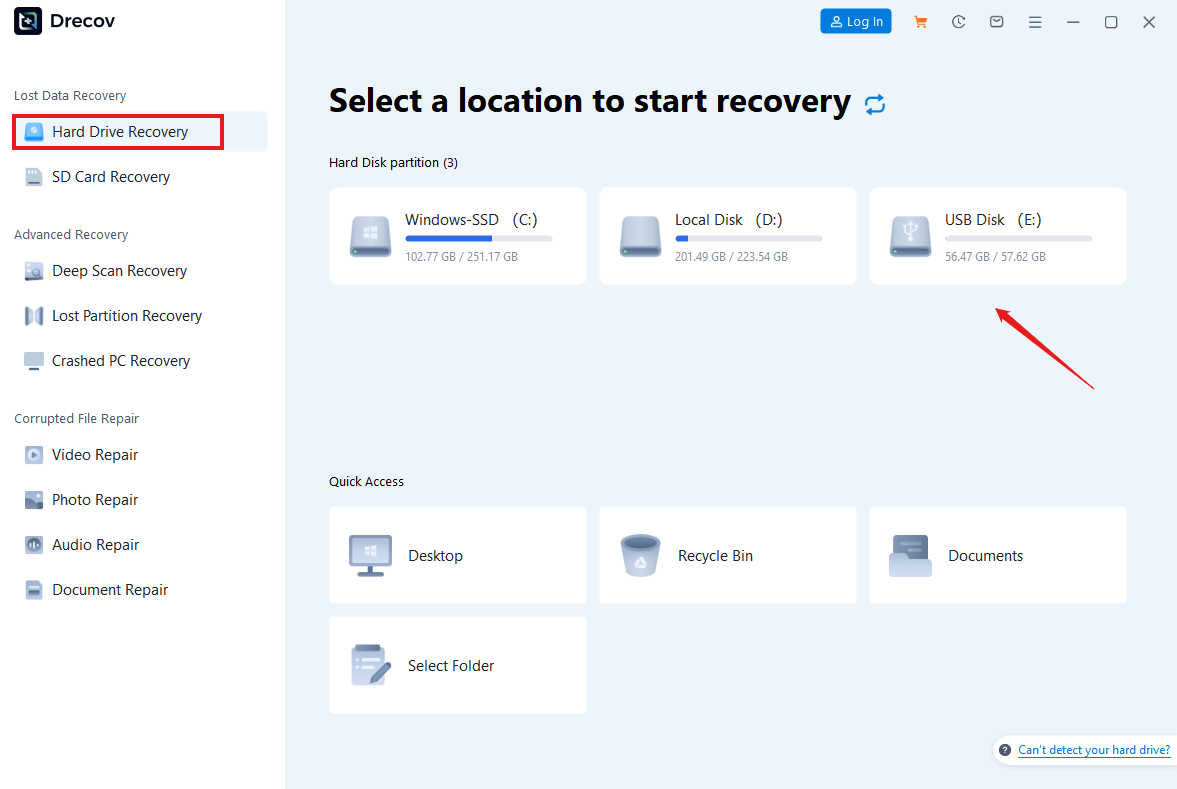
Using Pandaoffice drecov to recover data from portable hard drive devices is a straightforward process. Start by connecting the affected portable hard drive to your computer using a stable USB port. Ensure the drive is detected by the operating system before launching the software.
Download DrecovOpen Pandaoffice drecov and select the portable hard drive from the list of available storage devices. Choose a scan mode based on your situation. A quick scan is suitable for recently deleted files, while a deep scan is recommended for formatted or corrupted drives. The scanning process may take time, depending on the drive’s capacity and condition.
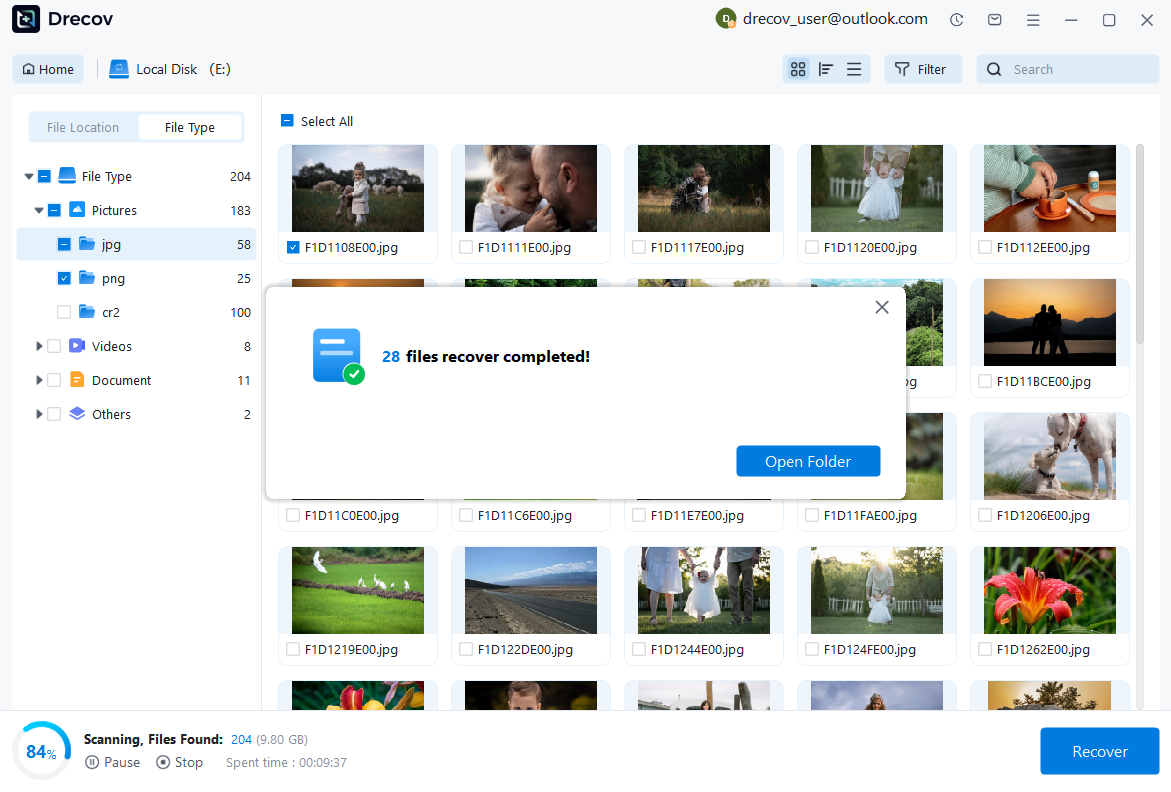
Once scanning is complete, Pandaoffice drecov will display recoverable files categorized by type and path. Use filters and search options to locate specific files efficiently. Preview files to confirm their integrity before recovery. When ready, select the files you want to restore and choose a different storage location for saving them.

After recovery, verify the restored files to ensure they open correctly. This method is one of the safest and most effective ways to perform portable hard disk data recovery without risking further damage.
⚠️Warning: Never save recovered files back to the same portable hard drive during the recovery process.
Method 2: Recover Data Using Command Prompt (CMD)
For users who prefer built-in Windows tools, Command Prompt (CMD) can be an effective way to recover files from portable hard drive devices, especially for accidental deletion or minor file system errors. This method is more technical but does not require third-party software if the issue is simple.
Start by connecting the portable hard drive to your computer. Open CMD with administrator privileges. The attrib command is commonly used to recover hidden or system files that appear missing. For example, typing:
attrib -h -r -s /s /d X:\*.*
(where X represents your portable hard drive letter) can unhide files that were marked as hidden or read-only due to virus attacks or corruption. This command recursively searches all directories and restores attributes so files become visible again.
CMD can also help verify the integrity of the file system. Using:
chkdsk X: /f /r
checks for logical errors and bad sectors.
⚠️Warning: Running CHKDSK on drives with severe damage can occasionally worsen physical issues. If you suspect hardware failure, avoid this step.
While CMD can be powerful, it has limitations. It is most effective for minor issues, hidden files, or corruption-related problems. For complete portable hard disk data recovery, especially from formatted, deleted, or RAW drives, software like Pandaoffice drecov remains the recommended solution.
Method 3: Restore Data from Backups
Preventive measures are as important as recovery tools. Regular backups can save users from time-consuming recovery processes. Windows includes File History and backup utilities, while cloud services offer additional protection. If you regularly back up your portable hard drive, restoring files becomes straightforward.
To restore files, connect the portable hard drive or access your backup location. Navigate to the backup folder, locate the desired files or folders, and copy them back to the portable hard drive or system drive. Ensure you verify the integrity of restored files immediately.
Even if files are lost on the original portable hard drive, having a backup minimizes downtime. This method highlights why portable hard disk data recovery should always be complemented by proactive backup strategies.
⚠️Warning: Do not overwrite older backup versions without confirming the data integrity. Once overwritten, recovery may be impossible.
Method 4: Using Disk Management to Recover Lost Partitions
Sometimes data loss occurs because a partition disappears or becomes inaccessible, not because files are deleted. Windows Disk Management can help diagnose and, in some cases, restore partitions.
Open Disk Management and check whether the portable hard drive appears. If it shows as unallocated or RAW, the partition may have been deleted or corrupted. While you can attempt to create a new partition, this can overwrite lost data. Instead, use Pandaoffice drecov, which can scan RAW partitions to recover files without altering the drive’s structure.
This approach is critical for users asking How to Recover Data from Portable Hard Drive when the drive shows no partitions. By scanning at the sector level, the software retrieves data even from drives that Windows cannot read normally.
⚠️Warning: Avoid formatting or initializing the drive in Disk Management before attempting recovery.
Recovering Data from Formatted or RAW Portable Hard Drives
Formatted or RAW drives present a more challenging recovery scenario. Formatting a drive or encountering a RAW file system does not erase data immediately; instead, it removes the pointers to files. The underlying data often remains intact until overwritten.
Pandaoffice drecov can perform a deep scan to locate lost files by reconstructing these pointers and recovering data based on file signatures. Deep scanning may take longer on large-capacity drives but provides the highest chance of successful recovery. After scanning, users can preview and selectively restore files to a different storage location.
This method ensures even drives that appear empty or corrupted can be restored safely.
⚠️Warning: Never attempt to write new files to a formatted or RAW portable hard drive, as this can permanently destroy recoverable data.
Advanced Troubleshooting Scenarios
Some portable hard drives fail due to physical damage or unusual errors. While software like Pandaoffice drecov excels in logical recovery, certain scenarios require professional intervention:
- Clicking or grinding noises – indicates mechanical failure. Stop using the drive and seek hardware repair experts.
- Unrecognized by multiple computers – could be a controller failure or damaged PCB.
- Sudden power failures – can corrupt multiple files simultaneously, necessitating deep scan recovery.
In all cases, portable hard disk data recovery software should be used first for logical recovery unless physical repair is required. Combining software recovery with professional repair often yields the best results.
Best Practices to Prevent Future Data Loss
Prevention is the most effective strategy for portable hard disk data recovery. Some recommended practices include:
- Regularly backing up critical files to multiple locations, including cloud storage.
- Using stable USB connections and avoiding unsafe ejection.
- Scanning portable hard drives for viruses frequently.
- Avoiding storing critical data on a single device.
- Monitoring drive health and replacing aging drives proactively.
By following these steps, users can significantly reduce the risk of future data loss and minimize recovery needs.
Conclusion
Recovering lost data from a portable hard drive is possible in most cases, provided the correct steps are followed. Pandaoffice drecov is a reliable tool for performing comprehensive portable hard disk data recovery, including deleted files, formatted drives, RAW partitions, and corrupted file systems. Combining proper software recovery, cautious handling, and preventive measures ensures that your important data remains safe and recoverable.
Remember: acting quickly, avoiding writing new data, and using professional recovery tools dramatically improve success rates. Whether you’re dealing with accidental deletion, formatting, virus attacks, or RAW drives, following these strategies allows users to recover data from portable hard drive devices safely and effectively.
✅ Article Keywords Embedded:
- recover data from portable hard drive – 10+ times
- portable hard disk data recovery – 8+ times
- How to Recover Data from Portable Hard Drive – 5+ times






