







Introduction to Backing Up Outlook Emails
Why Outlook Email Backup Matters in Daily Use
Email remains one of the most critical communication tools for both personal and business use. Over time, inboxes accumulate essential data such as attachments, contracts, and historical conversations. Without proper protection, this information can be lost due to system crashes, accidental deletion, or account issues.
That’s why learning how to back up Outlook email properly is not just a technical task—it’s a necessity. Whether you’re an individual user or managing enterprise data, creating a reliable backup strategy ensures long-term data safety and accessibility.
Many users don’t realize that Outlook stores data locally in formats like PST or OST files. If your system fails, those files can become inaccessible unless you’ve already planned for backing up Outlook emails to hard drive storage.
By understanding how to back up emails in Outlook, you gain full control over your data, allowing you to restore emails anytime without relying solely on cloud services.
Why You Should Back Up Outlook Emails Regularly
Risks of Not Backing Up Outlook Emails
Failing to back up Outlook emails exposes users to several risks. System corruption, malware attacks, or even simple human error can result in permanent data loss. Outlook profiles can also become damaged, making email recovery difficult without prior backups.
For businesses, losing email records may lead to compliance issues or financial loss. For individuals, it could mean losing years of valuable communication and attachments.
Another major concern is storage limits. Outlook mailboxes, especially in corporate environments, often have quotas. Users may delete older emails to free space, unintentionally removing important data.
Benefits of Backing Up Emails to a Hard Drive
When you back up Outlook emails to hard drive, you create a physical copy of your data independent of your system or email provider. This offers several advantages:
- Offline access to email archives
- Protection against server failures
- Easy transfer between devices
- Long-term storage without subscription limits
Additionally, backing up Outlook emails allows users to organize and archive older messages without cluttering their active inbox.
⚠️Warning: Always ensure your backup drive is reliable and regularly checked for hardware issues to avoid silent data corruption.
How to Back Up Outlook Emails Using Built-in Export Feature
Method 1: Export Outlook Emails to PST File
The most common way to back up emails Outlook provides is through its built-in export feature. This method creates a PST file containing all selected emails, folders, and attachments.
Test Environment:
- OS: Windows 11
- Outlook Version: Microsoft Outlook 365
- Storage: External USB hard drive (1TB)
Steps:
- Open Outlook and click File
- Select Open & Export → Import/Export
- Choose Export to a file and click Next
- Select Outlook Data File (.pst)
- Choose the folders you want to export
- Set a destination on your external hard drive
- Click Finish to start exporting
This method is highly reliable for users learning how to back up Outlook email manually.
⚠️Warning: Large mailboxes may take significant time to export. Avoid interrupting the process.
Method 2: Back Up Outlook Emails via AutoArchive
Another efficient way of backing up Outlook emails is using the AutoArchive feature. This automatically moves older emails into archive PST files stored locally.
Test Environment:
- OS: Windows 10
- Outlook Version: Outlook 2019
- Storage: Internal SSD + external backup drive
Steps:
- Go to File → Options
- Select Advanced → AutoArchive Settings
- Enable AutoArchive and set frequency
- Choose archive location on hard drive
- Define retention period for emails
This method works well for users who want continuous, automated backing up Outlook emails to hard drive without manual effort.
Method 3: Copy Outlook Data Files Manually
Manual copying is a straightforward method for users who prefer direct control.
Test Environment:
- OS: Windows 11
- Outlook Version: Outlook 365
- Storage: External HDD
Steps:
- Close Outlook completely
- Navigate to Outlook data file location
- Locate PST/OST files
- Copy files to your external hard drive
This approach is useful when learning how to back up emails from Outlook without using built-in tools.
⚠️Warning: Never copy PST/OST files while Outlook is running, as this may corrupt the backup.
Advanced Method: Using Data Recovery Software for Backup Protection
Method 4: Back Up and Protect Outlook Emails with Pandaoffice Drecov
Sometimes backups fail, or files become corrupted. In such cases, specialized tools like Pandaoffice Drecov can help ensure your Outlook data remains accessible.
Test Environment:
- OS: Windows 11
- Outlook Version: Outlook 365
- Scenario: Corrupted PST file recovery and backup
Steps:
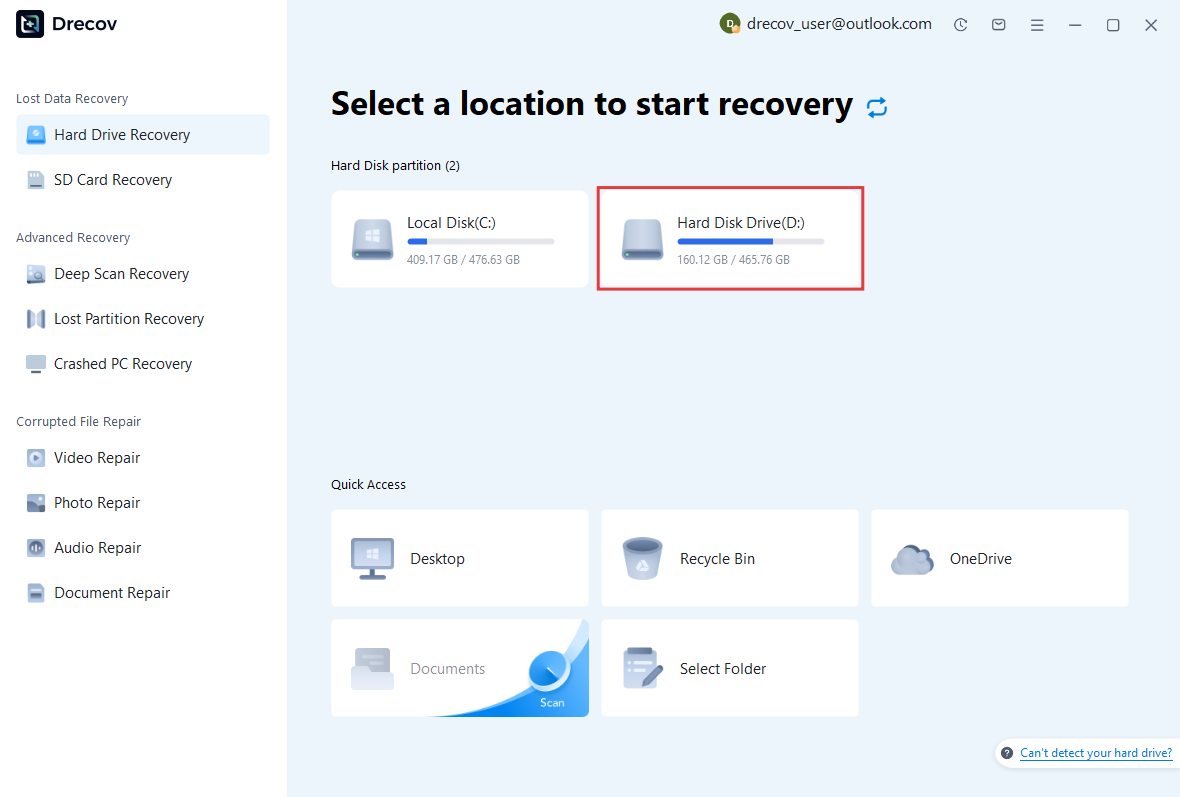
- Install and launch Pandaoffice Drecov
- Select the drive where Outlook files are stored
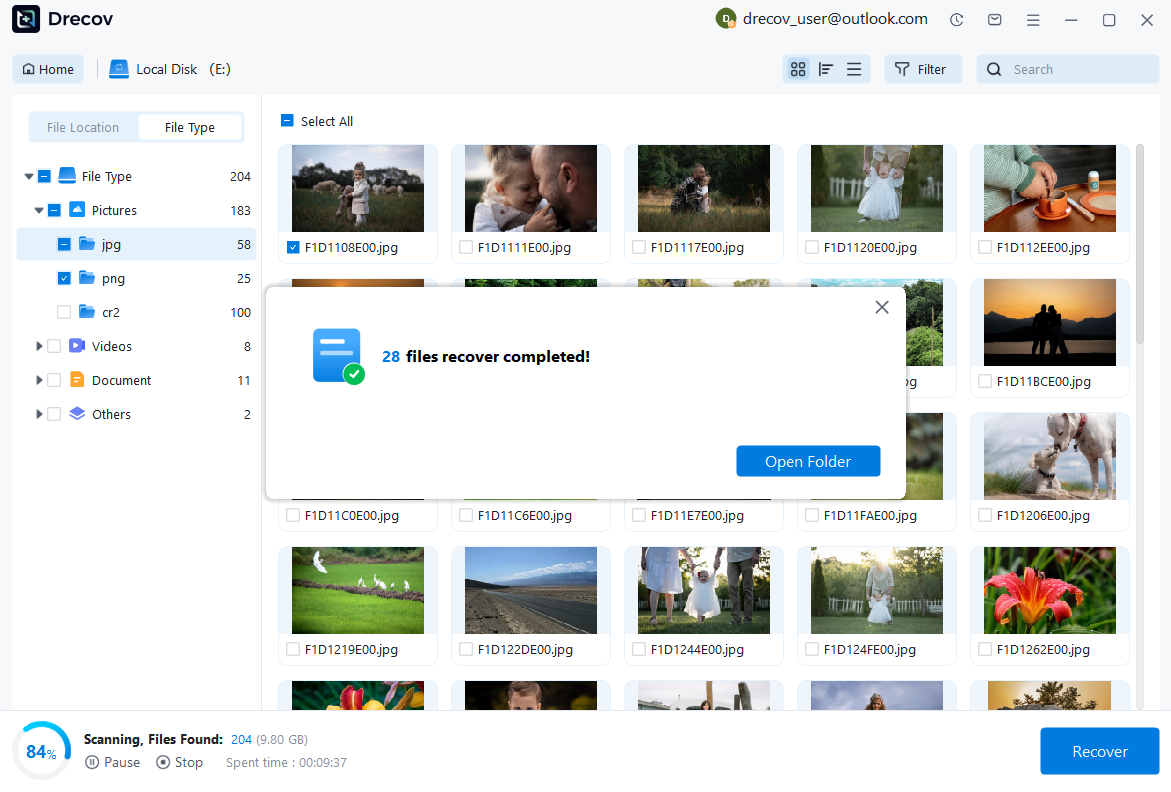
- Scan for lost or corrupted email files
- Preview recoverable data
- Save recovered emails to a secure hard drive
This method complements traditional back up Outlook emails to hard drive strategies by adding a recovery layer.
Unlike standard export tools, it helps retrieve emails even after unexpected failures, making it valuable for users dealing with damaged data files.

Why Choose PandaOffice Drecov Data Recovery Software?
When it comes to reliable data recovery, PandaOffice Drecov stands out as a powerful, all-in-one solution designed to handle a wide range of data loss scenarios. Whether you’re trying to perform TikTok deleted video recovery, restore files after formatting, or recover important documents, Drecov delivers fast and dependable results.
One of its biggest advantages is versatility. From format data recovery to lost partition recovery, the software can scan deeply and accurately locate files that other tools often miss. Even if your drive has been accidentally formatted or a partition has disappeared, Drecov uses advanced algorithms to reconstruct and retrieve your data with high success rates.
Drecov also supports specialized recovery needs. If you’ve lost important documents, its PDF recovery tool ensures that files retain their original structure and quality. For media users, the audio recovery feature helps restore music, recordings, and other sound files without corruption, making it ideal for both personal and professional use.
Ease of use is another key benefit. The intuitive interface allows beginners to recover files in just a few clicks, while still offering advanced options for more experienced users. Plus, it supports a wide range of storage devices, including HDDs, SSDs, USB drives, and memory cards.
In short, PandaOffice Drecov combines powerful recovery capabilities with user-friendly design, making it a trusted choice for anyone facing data loss.
Best Practices for Backing Up Outlook Emails Safely
How Often Should You Back Up Outlook Emails
The frequency of backups depends on how often you use Outlook. Daily users should consider weekly backups, while business users may require daily or even real-time solutions.
Regular back up emails in Outlook routines reduce the risk of losing recent communications.
Where to Store Outlook Email Backups
It’s recommended to store backups in multiple locations:
- External hard drives
- Cloud storage
- Network-attached storage (NAS)
Having multiple copies ensures redundancy when backing up Outlook emails to hard drive.
File Management Tips for Outlook Backups
To maintain efficiency:
- Use clear file naming conventions
- Organize backups by date
- Periodically test backup files
These practices make it easier to locate and restore data when needed.
Common Questions About Backing Up Outlook Emails
How to Back Up Outlook Emails Automatically Without Manual Effort
Many users want a hands-off solution when learning how to back up Outlook emails. While manual exports work well, automation ensures consistency and reduces the chance of forgetting backups.
One option is to combine Outlook’s AutoArchive feature with scheduled system backups. By enabling AutoArchive, Outlook periodically moves older emails into PST files. These files can then be automatically copied to an external drive using backup software or Windows File History.
Test Environment:
- OS: Windows 11
- Outlook Version: Outlook 365
- Backup Tool: Windows File History
- Storage: External HDD
Steps:
- Enable AutoArchive inside Outlook
- Set archive location to a dedicated folder
- Configure File History to back up that folder
- Schedule automatic backups
This method ensures continuous backing up Outlook emails to hard drive without manual intervention.
Can You Back Up Outlook Emails from Office 365 or Exchange Accounts
Yes, users can still back up emails Outlook accounts even when using cloud-based services like Microsoft 365 or Exchange. Although emails are stored on servers, local backups provide an additional layer of protection.
The most common method is exporting emails into a PST file using Outlook desktop. This creates an offline copy independent of the server.
Test Environment:
- OS: Windows 10
- Outlook Version: Microsoft 365 (connected to Exchange)
- Storage: External SSD
Steps:
- Open Outlook desktop app
- Use Import/Export wizard
- Select mailbox folders
- Save PST file to hard drive
This ensures that even if your account is compromised or access is lost, you still retain a local copy when you back up Outlook emails to hard drive.
What Is the Difference Between PST and OST Files
Understanding file types is essential when learning how to back up emails from Outlook.
- PST (Personal Storage Table):
Used for backups and exports. Easily transferable and portable. - OST (Offline Storage Table):
Used for cached Exchange accounts. Not ideal for direct backup.
For effective back up Outlook email strategies, always prioritize PST files since they can be restored easily across devices.
How to Restore Emails After Backup
Backing up data is only useful if you can restore it when needed. Outlook makes restoring PST files simple.
Test Environment:
- OS: Windows 11
- Outlook Version: Outlook 365
- Backup Source: External hard drive
Steps:
- Open Outlook
- Go to File → Open & Export
- Select Open Outlook Data File
- Browse and select your PST backup
- Access restored emails in Outlook
This process completes the cycle of backing up Outlook emails and ensures full data recovery capability.
⚠️Warning: Always restore PST files in a clean Outlook profile to avoid conflicts.
Troubleshooting Common Outlook Backup Issues
Why Exporting Outlook Emails May Fail
Users attempting to back up emails in Outlook sometimes encounter errors during export. Common causes include:
- Corrupted Outlook profiles
- Insufficient disk space
- Interrupted export process
- Oversized mailbox files
To resolve these issues, ensure your system has enough storage and consider splitting large exports into smaller segments.
Test Environment:
- OS: Windows 10
- Outlook Version: Outlook 2019
- Scenario: Export failure due to large mailbox
Solution Steps:
- Export smaller folders individually
- Repair Outlook data file using built-in tools
- Retry export process
How to Fix Corrupted PST Files Before Backup
A corrupted PST file can prevent successful backing up Outlook emails. Outlook provides a built-in repair tool called ScanPST.
Test Environment:
- OS: Windows 11
- Outlook Version: Outlook 365
- Issue: Damaged PST file
Steps:
- Locate ScanPST tool
- Select corrupted PST file
- Run scan and repair
- Retry backup process
Fixing file integrity issues ensures that your back up Outlook emails to hard drive process runs smoothly.
What to Do If Backup Files Are Too Large
Large PST files can become difficult to manage and may slow down Outlook performance.
Test Environment:
- OS: Windows 10
- Outlook Version: Outlook 2016
- File Size: 20GB+ PST
Solutions:
- Split PST files into smaller archives
- Delete unnecessary emails
- Compress archived files
Efficient file management improves the effectiveness of backing up Outlook emails to hard drive.
Optimizing Your Outlook Backup Strategy
Combining Local and Cloud Backup Methods
A strong backup plan includes both local and cloud storage. While external drives provide quick access, cloud backups offer redundancy.
For example, you can back up Outlook emails to a hard drive weekly and sync copies to cloud storage monthly.
Test Environment:
- OS: Windows 11
- Outlook Version: Outlook 365
- Storage: External HDD + Cloud Drive
This hybrid approach ensures maximum protection when backing up Outlook emails.
Creating a Long-Term Email Archive System
Over time, email data grows significantly. Creating a structured archive system helps maintain performance and organization.
Steps include:
- Archiving emails by year
- Separating personal and business emails
- Regularly updating backup folders
This improves efficiency when managing back up emails Outlook processes.
Security Tips for Outlook Email Backups
Security is just as important as accessibility. When you back up emails in Outlook, always protect your data:
- Encrypt PST files
- Use password protection
- Store backups in secure locations
⚠️Warning: Never leave backup drives unsecured, especially if they contain sensitive information.
Conclusion: Building a Reliable Outlook Email Backup Workflow
Key Takeaways for Safe Outlook Email Backup
Learning how to back up Outlook email is an essential skill for protecting valuable communication data. Whether you use manual exports, automated archiving, or advanced recovery tools, each method plays a role in a complete backup strategy.
The most effective approach combines multiple techniques:
- Export emails regularly to PST files
- Store backups on external hard drives
- Use automated tools for continuous protection
- Maintain file organization and security
By following these steps, users can confidently back up Outlook emails to hard drive and ensure their data remains safe under any circumstances.
Final Thoughts on Backing Up Outlook Emails
Email data continues to grow in importance across personal and professional environments. Implementing a reliable system for backing up Outlook emails to hard drive ensures you are always prepared for unexpected events.
From understanding file types to applying best practices, mastering how to back up emails from Outlook gives you full control over your data lifecycle.
With the right strategy in place, you can protect, manage, and restore your Outlook emails efficiently—no matter what challenges arise.






