







Understanding How to Back Up Gmail to Hard Drive
How Gmail stores and manages your emails
When you decide to back up Gmail to hard drive, it’s helpful to understand how Gmail organizes your data. Gmail doesn’t use traditional folders like desktop email clients. Instead, it relies on labels and cloud-based storage. Every email is stored on Google’s servers and accessed through your account rather than being saved locally.
This cloud-based system makes Gmail convenient but also creates risks. If your account is compromised, suspended, or accidentally deleted, you could lose access to years of important emails. That’s why exporting and storing data locally is essential.
Emails include not only text but also attachments, metadata, and timestamps. When backing up Gmail, all these components must be preserved to ensure a complete and usable archive.
What happens when you export Gmail data
When you export emails, they are typically saved in formats like MBOX or PST. These formats allow you to reopen emails later using compatible programs.
The backup process downloads a snapshot of your mailbox at a specific time. This means future emails won’t be included unless you perform another backup.
⚠️Warning: Always verify your backup files after export to ensure they are complete and not corrupted.
Why You Should Back Up Gmail Emails Regularly
Common risks of losing Gmail data
Many users assume Gmail is completely safe because it’s cloud-based. However, several scenarios can lead to data loss:
- Account hacking or unauthorized access
- Accidental deletion of emails
- Sync errors across devices
- Policy violations leading to account suspension
If any of these occur, having a local copy ensures you can still access your information.
In extreme cases, users try to recover my data from hard drive after losing access to backups, which can be much more complicated than preventing the issue in the first place.
Benefits of keeping a local email backup
Backing up Gmail provides multiple advantages:
- Full control over your data
- Offline access to important emails
- Protection against accidental loss
- Easier migration between email platforms
Additionally, storing backups on external drives can support future recover data from hard drive operations if your system fails.
⚠️Warning: Relying only on cloud storage without backups increases the risk of permanent data loss.
Best Methods to Back Up Gmail to Hard Drive
Method 1: Use Google Takeout for Full Gmail Backup
Test Environment
- Platform: Web browser (Chrome)
- OS: Windows 11 / macOS
- Scenario: Full Gmail account export
Google Takeout is the official way to download your Gmail data.
Steps
- Visit Google Takeout
- Select “Deselect all,” then choose “Mail”
- Customize export settings (labels, file size, format)
- Click “Create export”
- Download the archive once ready
- Save the file to your hard drive
This method is reliable and preserves all email data, including attachments.
Method 2: Save Gmail Emails Using an Email Client (Outlook/Thunderbird)
Test Environment
- Software: Outlook / Thunderbird
- OS: Windows 10/11
- Scenario: Continuous syncing and backup
Using an email client allows you to sync Gmail and store emails locally.
Steps
- Add your Gmail account via IMAP
- Allow full synchronization
- Export emails to PST or local folders
- Copy the exported file to your hard drive
This method is ideal for users who want ongoing backups instead of one-time exports.
Method 3: Download Individual Emails as Files
Test Environment
- Platform: Gmail web interface
- Scenario: Backing up selected emails
If you only need specific messages, Gmail allows manual downloads.
Steps
- Open the email in Gmail
- Click the three-dot menu
- Select “Download message”
- Save the file to your hard drive
This method is simple but not suitable for large-scale backups.
Method 4: Back Up Gmail Using PandaOffice Drecov
Test Environment
- OS: Windows 11
- Scenario: Emails lost or partially deleted
- Storage: Local hard drive
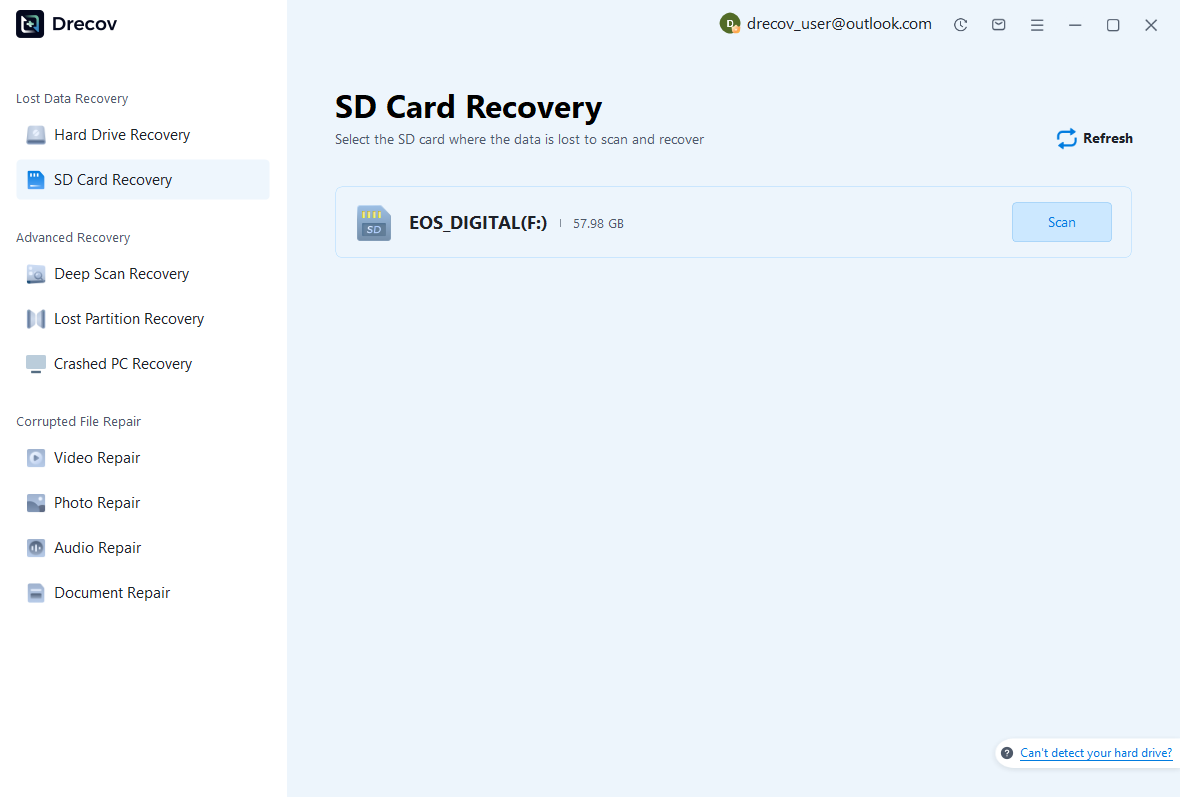
If emails are lost before backup, tools like PandaOffice Drecov can help in recover data hard drive software scenarios.
Steps
- Install PandaOffice Drecov on a separate drive
- Select the hard drive where email data was stored
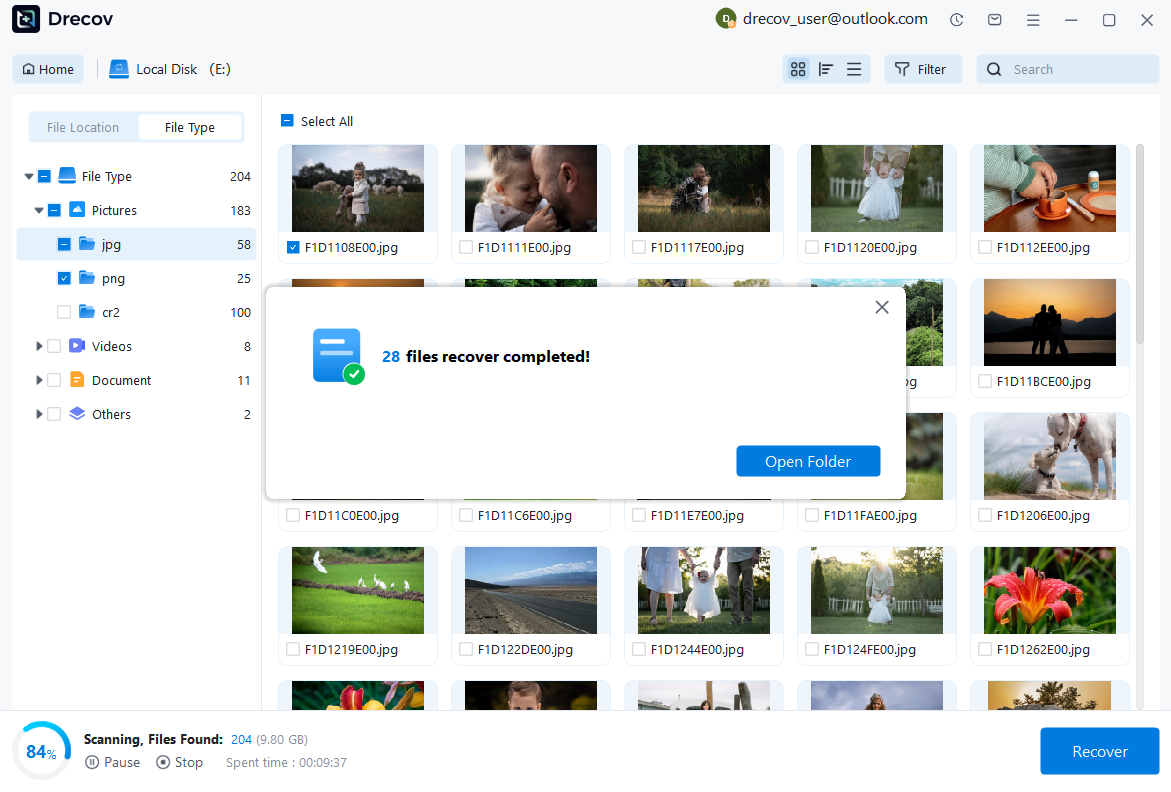
- Start a deep scan
- Locate email-related files (PST, MBOX, temporary files)
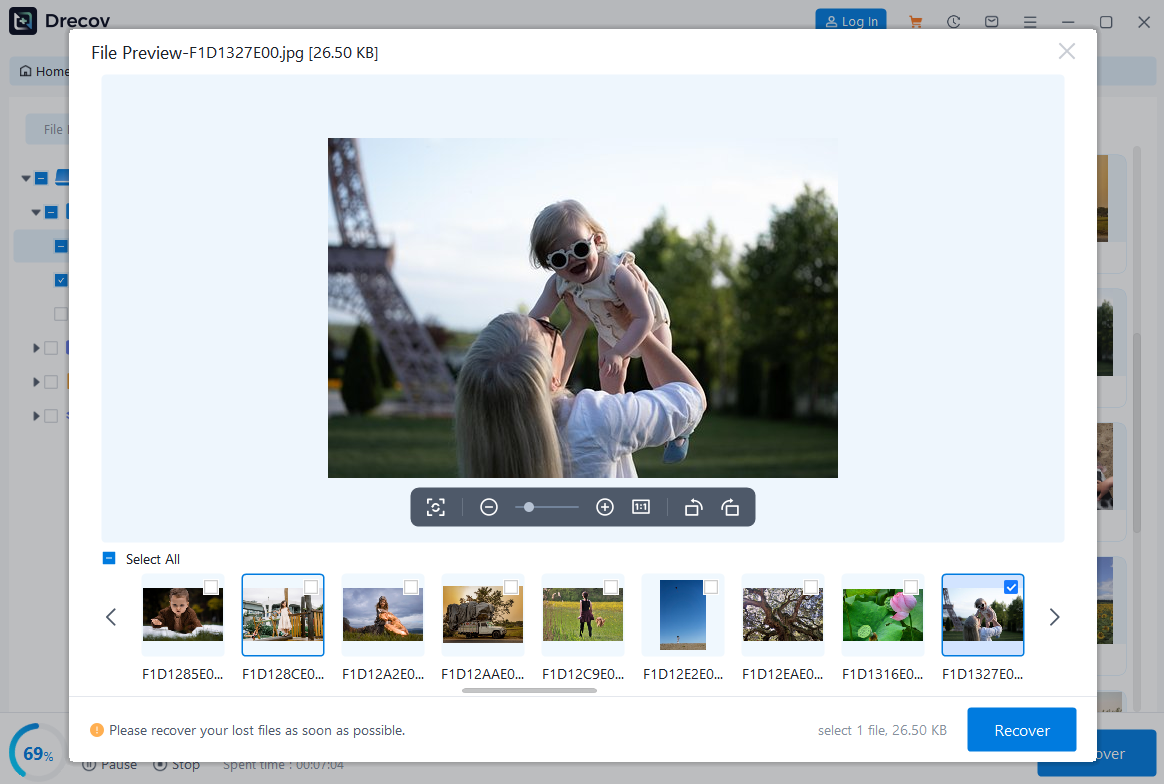
- Preview and recover them
- Save recovered data to another drive
This method is especially useful when users need to recover a hard drive after system failure or accidental deletion.
Unlike manual backups, it helps restore data that was never properly saved.
Why Choose PandaOffice Drecov Data Recovery Software?
When it comes to reliable data recovery, PandaOffice Drecov stands out as a powerful, all-in-one solution designed to handle a wide range of data loss scenarios. Whether you’re trying to perform TikTok deleted video recovery, restore files after formatting, or recover important documents, Drecov delivers fast and dependable results.
One of its biggest advantages is versatility. From format data recovery to lost partition recovery, the software can scan deeply and accurately locate files that other tools often miss. Even if your drive has been accidentally formatted or a partition has disappeared, Drecov uses advanced algorithms to reconstruct and retrieve your data with high success rates.
Drecov also supports specialized recovery needs. If you’ve lost important documents, its PDF recovery tool ensures that files retain their original structure and quality. For media users, the audio recovery feature helps restore music, recordings, and other sound files without corruption, making it ideal for both personal and professional use.
Ease of use is another key benefit. The intuitive interface allows beginners to recover files in just a few clicks, while still offering advanced options for more experienced users. Plus, it supports a wide range of storage devices, including HDDs, SSDs, USB drives, and memory cards.
In short, PandaOffice Drecov combines powerful recovery capabilities with user-friendly design, making it a trusted choice for anyone facing data loss.
Method 5: Print Emails to PDF for Offline Storage
Test Environment
- Platform: Gmail web
- OS: Any
- Scenario: Archiving important emails
Saving emails as PDFs is another practical option.
Steps
- Open the email
- Click “Print”
- Choose “Save as PDF”
- Store the file on your hard drive
This approach ensures readability without requiring email software.
How Backup Supports Hard Drive Data Recovery
Link between backup and recovery processes
Backing up Gmail doesn’t just protect your emails—it also supports broader recover data from hard drive strategies.
If your system crashes, having backups stored on external drives ensures your data remains accessible. Without backups, recovery depends entirely on specialized tools.
When recovery becomes necessary
You may need recovery when:
- Your hard drive fails
- Backup files are accidentally deleted
- System corruption occurs
In such cases, users often rely on recover data hard drive software to retrieve lost files.
⚠️Warning: Always store backups on a separate drive to avoid losing both original and backup data during hardware failure.
Advanced Tips to Secure and Manage Gmail Backups
Best practices for organizing backup files
Once you back up Gmail to hard drive, managing those files properly becomes just as important as creating them. Poor organization can make it difficult to locate specific emails later, especially if your archive is large.
Start by creating a clear folder structure. For example, separate backups by year, project, or account. Naming conventions should include dates and version numbers, such as “Gmail_Backup_Jan_2026.” This makes it easier to track updates and avoid confusion.
It’s also helpful to keep multiple copies of your backups. Store one version on your primary hard drive and another on an external device. This reduces the risk of losing everything due to a single failure.
Additionally, periodically verify your backup files. Open them using compatible software to ensure they are readable and complete. This step is often overlooked but critical for long-term reliability.
⚠️Warning: Never store your only backup on the same drive as your operating system.
How to automate Gmail backup processes
Manual backups can be time-consuming, especially if you receive emails daily. Automation simplifies the process and ensures consistency.
You can use email clients or scripts that automatically sync and store emails locally. Some tools allow scheduled exports, meaning your data is updated without manual effort.
Automation benefits include:
- Reduced risk of forgetting backups
- Consistent data protection
- Time savings for large mailboxes
However, always monitor automated processes occasionally. Errors can occur, and you want to ensure your backups remain accurate.
What to Do If Gmail Backup Files Are Lost
Common causes of backup file loss
Even after successfully backing up Gmail, files can still be lost due to:
- Accidental deletion
- Hard drive failure
- Virus or malware attacks
- File corruption
In such cases, users often need to recover my data from hard drive to retrieve lost backup files.
If backups were stored only in one location, recovery becomes more challenging. This highlights the importance of redundancy.
Steps to recover lost backup files
When backup files disappear, quick action is essential.
Test Environment
- OS: Windows 11
- Scenario: Deleted backup archive (MBOX/PST)
- Drive Type: Internal HDD
Steps
- Stop using the affected drive immediately
- Install recovery software on a different drive
- Scan the affected disk for deleted files
- Filter results by file type (PST, MBOX, ZIP)
- Preview and recover files
- Save them to a safe location
Using reliable recover data hard drive software increases the chances of successful recovery, especially when files haven’t been overwritten.
⚠️Warning: Do not save recovered files to the same drive during recovery.
Comparing Backup Methods for Different Needs
Choosing the right method based on usage
Not all backup methods are suitable for every user. The best approach depends on how you use Gmail and how much data you need to store.
For example:
- Google Takeout is ideal for full account exports
- Email clients are better for continuous backups
- PDF downloads work for small, important email sets
Each method has its own strengths and limitations. Understanding these differences helps you create a more effective backup strategy.
Balancing convenience, security, and storage
When deciding how to back up Gmail to hard drive, consider three key factors:
- Convenience: How easy is the method to use?
- Security: Does it protect your data effectively?
- Storage: How much space does it require?
For instance, full backups consume more space but offer complete protection. Selective backups save space but may miss important data.
Combining multiple methods often provides the best results.
Frequently Asked Questions About Gmail Backup
Can I back up Gmail to an external hard drive?
Yes, you can easily back up Gmail to hard drive, including external drives. After exporting your emails, simply transfer the files to an external device. This adds an extra layer of protection in case your main system fails.
External drives are especially useful for long-term storage and portability.
How can I recover a hard drive containing Gmail backups?
If your storage device fails, you may need to recover a hard drive using specialized tools or professional services.
Recovery steps typically include:
- Diagnosing the type of damage (logical or physical)
- Using recovery software for logical issues
- Consulting experts for physical damage
In many cases, software solutions can restore deleted or corrupted backup files effectively.
Is it possible to recover Gmail data without a backup?
Yes, but it’s more difficult. If no backup exists, recovery depends on whether temporary or cached files remain on your system.
Users often attempt to recover data from hard drive by scanning for email-related files. However, success rates vary depending on how the data was lost.
Having a backup is always the safer option.
Final Thoughts on Backing Up Gmail to Hard Drive
Key takeaways for long-term email protection
Backing up Gmail is no longer optional—it’s a necessary step for protecting valuable information. Whether you’re storing personal messages or business communications, having a local copy ensures your data remains accessible.
Using the right tools and methods allows you to:
- Secure your emails against unexpected loss
- Access data offline
- Simplify migration between platforms
Additionally, integrating backup strategies with recover data from hard drive solutions ensures you are prepared for worst-case scenarios.
Building a reliable backup and recovery strategy
The most effective approach combines prevention and recovery. Regular backups reduce the need for complex recovery processes, while recovery tools act as a safety net when things go wrong.
To create a strong strategy:
- Schedule regular backups
- Store copies in multiple locations
- Test backup files periodically
- Use trusted recover data hard drive software when needed
By following these practices, you can confidently manage your Gmail data and avoid the stress of unexpected loss.






