







Understanding HDD Repair and Bad Sector Issues
What Is HDD Repair and Why It Matters
HDD repair refers to the process of identifying and fixing errors that prevent a hard drive from functioning properly. These issues may include corrupted sectors, file system errors, or physical damage. Over time, even high-quality drives can develop problems that impact performance or data accessibility.
Bad sectors are one of the most common reasons users search for an hdd repair tool. These are small areas on the disk that become unreadable or unstable, making it difficult for the system to retrieve stored data. If left untreated, they can spread and lead to serious data loss.
Using reliable hdd repair software allows users to scan, detect, and sometimes isolate or fix these problematic sectors. In many cases, early detection can prevent further damage and extend the lifespan of the drive.
Understanding how to repair hdd issues early is essential for both personal and professional users. Whether you’re dealing with slow performance, system crashes, or missing files, proper repair techniques can restore functionality without requiring immediate replacement.
Common Signs That Your HDD Needs Repair
Recognizing early warning signs can help you take action before the damage becomes irreversible. A failing drive rarely stops working suddenly—it usually shows symptoms first.
Here are the most common signs:
- Frequent system freezes or crashes
- Slow file access or delayed response
- Files becoming corrupted or disappearing
- Clicking or unusual noises from the drive
- Errors when opening or copying files
These issues often indicate the need to repair hdd before the condition worsens.
⚠️Warning: If your hard drive starts making loud clicking noises, stop using it immediately. This may indicate mechanical failure, and continued use could cause permanent data loss.
In many cases, using an effective hdd repair tool early can prevent these symptoms from escalating into complete drive failure.
What Causes HDD Damage and Bad Sectors?
Physical Damage and Hardware Wear
Hard drives are mechanical devices, which means they are vulnerable to physical wear and tear over time. Continuous use can degrade internal components such as the read/write head and spinning platters.
Common physical causes include:
- Overheating due to poor ventilation
- Sudden impacts or drops
- Power surges or unstable electricity
- Aging components
These factors can lead to bad sectors that require hdd repair software to manage or isolate.
Logical Errors and File System Corruption
Not all bad sectors are physical. Logical errors occur when the file system becomes corrupted, often due to improper shutdowns or software conflicts.
Typical causes:
- Sudden power loss
- Malware or virus attacks
- Interrupted file transfers
- System crashes
These issues can often be resolved using tools designed to repair hdd without replacing hardware.
Improper Usage and Lack of Maintenance
Many users unknowingly shorten the lifespan of their drives through poor usage habits.
Examples include:
- Running the system continuously without rest
- Ignoring disk errors or warnings
- Failing to update system drivers
- Not performing regular scans
Learning how to repair hdd properly also involves preventive care to reduce future risks.
How to Repair HDD: Proven Methods and Tools
Method 1 – Use CHKDSK Command to Fix Errors (Test Environment Included)
The built-in CHKDSK utility is one of the simplest ways to perform hdd repair.
Test Environment:
- OS: Windows 10
- Scenario: Drive showing file system errors
Steps:
- Open Command Prompt as administrator
- Type:
chkdsk X: /f /r(replace X with your drive letter) - Press Enter
- Wait for the scan and repair process to complete
This command checks for logical errors and attempts to fix them automatically. It also marks bad sectors to prevent future use.
Method 2 – Use Disk Management to Reformat the Drive (Test Environment Included)
Formatting is a practical solution when the drive becomes inaccessible.
Test Environment:
- OS: Windows 10
- Scenario: Drive detected but not accessible
Steps:
- Open Disk Management
- Right-click the affected partition
- Select “Format”
- Choose NTFS or another file system
- Complete the process
Formatting rebuilds the file system and can resolve many issues requiring hdd repair.
⚠️Warning: Formatting will erase all existing data. Always back up important files before proceeding.
Method 3 – Scan and Repair Using Pandaoffice Drecov (Test Environment Included)
When data recovery is also needed, specialized hdd repair software becomes essential.
Test Environment:
- OS: Windows 10
- Scenario: Corrupted drive with inaccessible files
Steps:
- Install Pandaoffice Drecov
- Launch the program and select the damaged HDD
- Perform a full scan
- Preview recoverable files
- Recover data to a safe location
This method is ideal when you need both hdd repair and data recovery in one process.


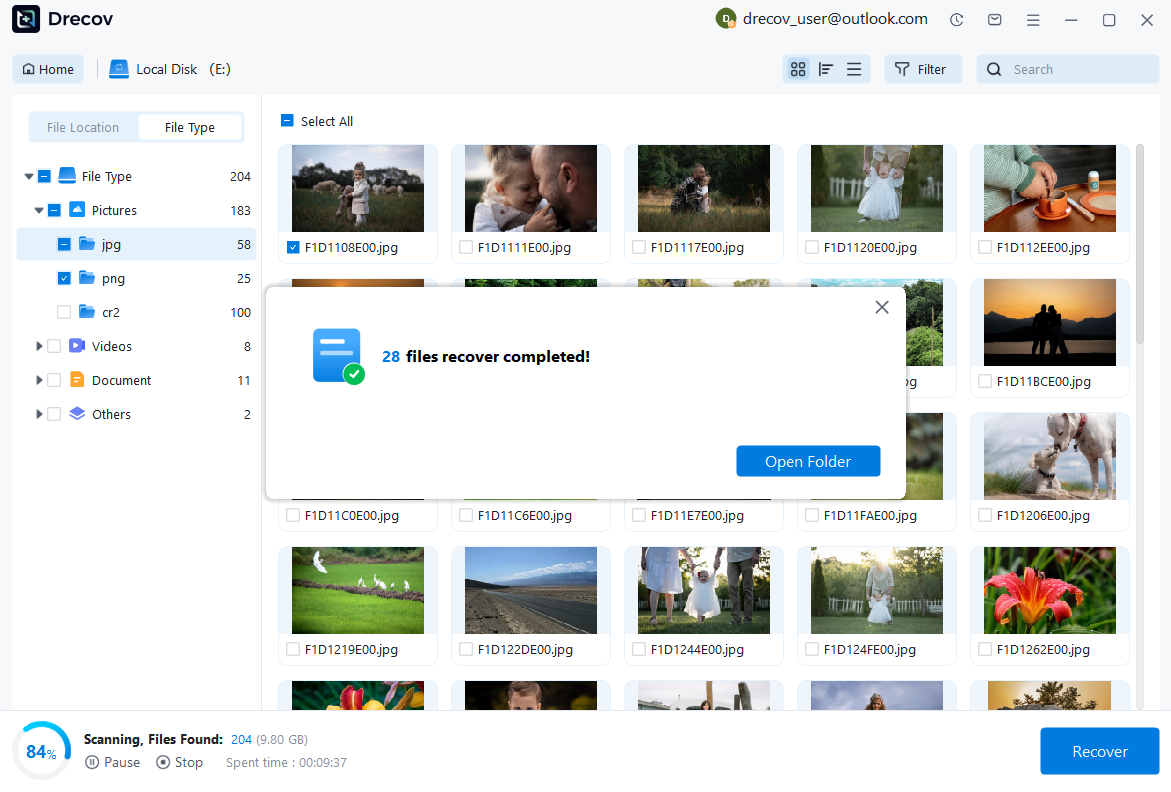
Why Choose PandaOffice Drecov Data Recovery Software?
When it comes to reliable data recovery, PandaOffice Drecov stands out as a powerful, all-in-one solution designed to handle a wide range of data loss scenarios. Whether you’re trying to perform TikTok deleted video recovery, restore files after formatting, or recover important documents, Drecov delivers fast and dependable results.
One of its biggest advantages is versatility. From format data recovery to lost partition recovery, the software can scan deeply and accurately locate files that other tools often miss. Even if your drive has been accidentally formatted or a partition has disappeared, Drecov uses advanced algorithms to reconstruct and retrieve your data with high success rates.
Drecov also supports specialized recovery needs. If you’ve lost important documents, its PDF recovery tool ensures that files retain their original structure and quality. For media users, the audio recovery feature helps restore music, recordings, and other sound files without corruption, making it ideal for both personal and professional use.
Ease of use is another key benefit. The intuitive interface allows beginners to recover files in just a few clicks, while still offering advanced options for more experienced users. Plus, it supports a wide range of storage devices, including HDDs, SSDs, USB drives, and memory cards.
In short, PandaOffice Drecov combines powerful recovery capabilities with user-friendly design, making it a trusted choice for anyone facing data loss.
Method 4 – Run Error Checking via Windows Tools (Test Environment Included)
Windows also provides a graphical interface for disk repair.
Test Environment:
- OS: Windows 10
- Scenario: Minor disk errors
Steps:
- Open File Explorer
- Right-click the drive → Properties
- Go to “Tools” tab
- Click “Check” under Error Checking
- Follow on-screen instructions
This method is user-friendly and effective for minor issues.
Method 5 – Use Third-Party HDD Repair Tool (Test Environment Included)
Advanced tools can handle deeper scanning and repair tasks.
Test Environment:
- OS: Windows 10
- Scenario: Multiple bad sectors
Steps:
- Install a trusted hdd repair tool
- Run a deep scan
- Identify bad sectors
- Repair or isolate damaged areas
These tools often provide more detailed diagnostics than built-in utilities.
Why Using an HDD Repair Tool Is Important
Benefits of Using Dedicated HDD Repair Software
Using specialized hdd repair software offers several advantages over manual fixes. These tools are designed to detect issues that standard system utilities might miss.
Key benefits include:
- Deep scanning capabilities
- Automatic repair processes
- User-friendly interfaces
- Advanced diagnostics
They are especially useful when learning how to repair hdd effectively without technical expertise.
When Should You Repair HDD vs Replace It
Not all drives can or should be repaired. Knowing when to stop trying is just as important as knowing how to repair hdd.
Repair is recommended when:
- Errors are logical, not physical
- The drive is still detectable
- Data can be recovered
Replacement is necessary when:
- Severe physical damage occurs
- The drive fails repeatedly
- Performance remains unstable after repair
Method 6 – Use SFC Scan to Fix System-Related Disk Issues (Test Environment Included)
Sometimes, disk errors are linked to corrupted system files rather than the drive itself. In such cases, running a System File Checker scan can support hdd repair indirectly.
Test Environment:
- OS: Windows 10
- Scenario: System instability affecting disk access
Steps:
- Open Command Prompt as administrator
- Type:
sfc /scannow - Press Enter and wait for the scan to complete
- Restart your computer after the process finishes
This method helps repair system-level corruption that may interfere with disk recognition and performance. It is often used alongside other hdd repair software for better results.
Method 7 – Perform Disk Surface Test (Test Environment Included)
A disk surface test is designed to detect bad sectors and evaluate the health of your hard drive.
Test Environment:
- OS: Windows 10
- Scenario: Suspected bad sectors causing slow performance
Steps:
- Install a reliable hdd repair tool with surface testing features
- Launch the software and select your HDD
- Start a surface scan
- Review the results for damaged sectors
- Mark or isolate bad sectors if supported
This method provides a visual map of disk health and is useful for identifying whether you need to repair hdd or replace it.
Method 8 – Update Disk Drivers and Firmware (Test Environment Included)
Outdated drivers or firmware can contribute to disk errors and detection issues.
Test Environment:
- OS: Windows 10
- Scenario: Drive behaving inconsistently
Steps:
- Open Device Manager
- Expand “Disk drives”
- Right-click your HDD → “Update driver”
- Follow the prompts to install updates
Updating firmware (if available from the manufacturer) can also improve stability and performance, making this an important step in how to repair hdd effectively.
Method 9 – Repartition the Hard Drive (Test Environment Included)
If the partition structure is severely damaged, repartitioning may be required.
Test Environment:
- OS: Windows 10
- Scenario: Corrupted partition table
Steps:
- Open Disk Management
- Delete existing partitions (if data is already backed up)
- Create new partitions
- Format them with a file system
This process rebuilds the disk structure and can resolve persistent issues requiring hdd repair.
⚠️Warning: Repartitioning will remove all data. Always back up important files before proceeding.
Method 10 – Check for Physical Damage and Replace If Needed (Test Environment Included)
If all software methods fail, the issue may be physical.
Test Environment:
- Scenario: HDD not detected or making unusual noises
Steps:
- Listen for clicking or grinding sounds
- Test the drive on another system
- Check cables and power supply
- Replace the drive if necessary
Physical damage cannot be fixed using any hdd repair tool, so recognizing this limitation is crucial.
⚠️Warning: Do not attempt to open a hard drive yourself. This can permanently damage the internal components.
Frequently Asked Questions About HDD Repair
What Is the Best HDD Repair Tool to Use?
The best hdd repair tool depends on your needs. Built-in tools like CHKDSK are effective for basic repairs, while advanced hdd repair software offers deeper scanning and recovery features.
For users dealing with data loss alongside disk issues, tools like Pandaoffice Drecov can provide both recovery and repair support in one solution.
Can Bad Sectors Be Permanently Fixed?
Bad sectors can sometimes be repaired if they are logical errors. However, physical bad sectors cannot be truly fixed—they can only be isolated.
Using an hdd repair tool helps mark these sectors so the system avoids using them, preventing further data corruption.
How Often Should I Repair My HDD?
You should not need to frequently repair hdd if the drive is healthy. However, regular maintenance checks are recommended.
Best practices include:
- Running disk checks every few months
- Monitoring drive health
- Backing up data regularly
Preventive care reduces the need for emergency repairs.
Is It Safe to Use HDD Repair Software?
Yes, most reputable hdd repair software is safe when used correctly. However, improper use or choosing unreliable tools can cause data loss.
Always:
- Use trusted tools
- Follow instructions carefully
- Back up important data before repairs
Conclusion: How to Repair HDD Safely and Effectively
Learning how to repair hdd is essential for maintaining your system’s performance and protecting your data. From simple tools like CHKDSK to advanced hdd repair software, there are multiple ways to address disk errors and bad sectors.
For minor issues, built-in Windows utilities are often enough. However, more complex problems may require specialized tools or even hardware replacement. Understanding the difference between logical and physical damage helps you choose the right approach.
If your data is important, always prioritize recovery before performing destructive actions like formatting or repartitioning. Using a reliable hdd repair tool ensures that you can diagnose problems accurately and take the correct steps.
By combining proper maintenance, timely repairs, and safe usage habits, you can extend the lifespan of your hard drive and avoid unexpected failures in the future.






